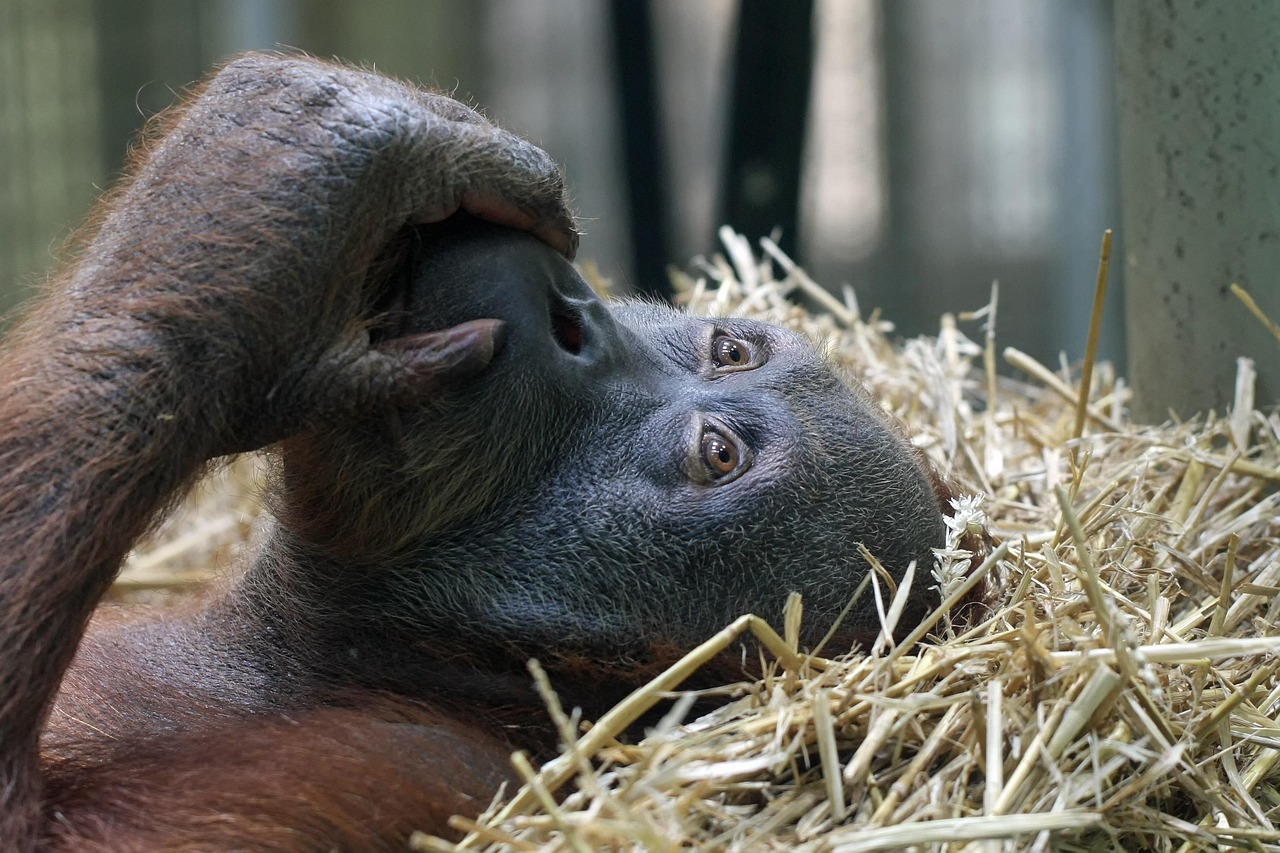
Orangutans are endangered because of a single dominant cause: deforestation. The three remaining orangutan species have all been reduced to small, fragmented populations in what remains of the lowland and peat-swamp forests of Borneo and Sumatra — and the rate of habitat loss continues to outpace the rate of rescue and rehabilitation.
How many orangutans are left?
Current IUCN population estimates:
- Bornean orangutan (Pongo pygmaeus): approximately 104,700 — listed as Endangered
- Sumatran orangutan (Pongo abelii): approximately 13,846 — listed as Critically Endangered
- Tapanuli orangutan (Pongo tapanuliensis): fewer than 800 — listed as Critically Endangered, the most endangered great ape on Earth
The Bornean population may seem large, but it represents a decline of over 50% from population levels 60 years ago — and surveys show it is still falling.
Why palm oil threatens orangutans
Palm oil is found in approximately 50% of supermarket products — from bread and biscuits to cosmetics and biofuel. The oil palm industry in Indonesia and Malaysia has been responsible for the largest portion of Bornean and Sumatran deforestation over the past four decades. When lowland forest is cleared for a plantation, orangutans lose their food sources, their shelter, and their ability to move through the landscape.
Isolated by cleared land they cannot cross, they starve, are killed by plantation workers who view them as pests, or are captured by traffickers. Infant orangutans are particularly vulnerable: mothers are killed so their infants can be sold as pets — a trade that WARN's partner rescue programmes in Indonesia and Malaysia respond to directly.
Beyond palm oil: the other drivers
- Illegal logging removes individual large trees — the kind that orangutans nest in and that provide their main food sources.
- Peatland fires, often deliberately set to clear land, create mass mortality events. The 2015 Indonesian fires killed thousands of orangutans directly.
- Infrastructure development — roads built through forest fragment populations and provide access for hunters and traffickers.
- Plantation expansion into secondary forest, which many orangutans rely on as primary habitat has become unavailable.
What orangutans need to survive in the wild
Orangutans are slow-reproducing primates. Females give birth approximately every 7–8 years and invest years teaching their offspring survival skills. Each death is a significant population setback. Each adult male needs up to 6 km² of forested range, with diverse fruiting trees available year-round. They cannot survive in plantation monocultures. After rescue and rehabilitation, released orangutans require intact, connected forest to establish a territory, find a mate and access the food diversity their diet requires. If the forest isn't there, release isn't possible — and the rescue becomes a permanent sanctuary burden.
WARN's response
WARN funds partner rescue centres in Indonesia and Malaysia for orangutans confiscated from the illegal wildlife trade or displaced by plantation operations. But rescue without habitat restoration is a revolving door. WARN's Restore Natural Habitats appeal funds the native tree planting and corridor restoration that gives rehabilitated orangutans a viable future — turning rescue into genuine recovery.
Help WARN restore the habitats our rescued animals need
WARN's Restore Natural Habitats appeal funds native tree planting, forest corridor protection and reforestation projects across all ten of our operational countries — giving the animals we rescue somewhere safe to return to after rehabilitation.
Read the appeal or donate today to fund your first trees planted and your first corridor protected. Every pound goes directly to on-the-ground habitat work in Borneo, the Amazon, East Africa or Southeast Asia.