Animal Comparison
Camel vs Dromedary
A dromedary is a camel. Compare one-humped dromedaries with two-humped Bactrian camels, including coat, habitat, diet and the separate wild camel species.
By WARN Research & Conservation TeamLast updated
In brief — Camel vs Dromedary
A dromedary is a one-humped camel. The useful comparison is with the two-humped Bactrian camel: both are camels, with different coats and adaptations.
Camel is the broader name; dromedary identifies Camelus dromedarius. Domestic Bactrian camels are Camelus bactrianus, and the wild camel, Camelus ferus, is a separate living species. The table compares the two domestic species, then explains why wild camels need a separate conservation discussion.
See the difference
Images are shown at different scales. Read each caption for the species, source and context.
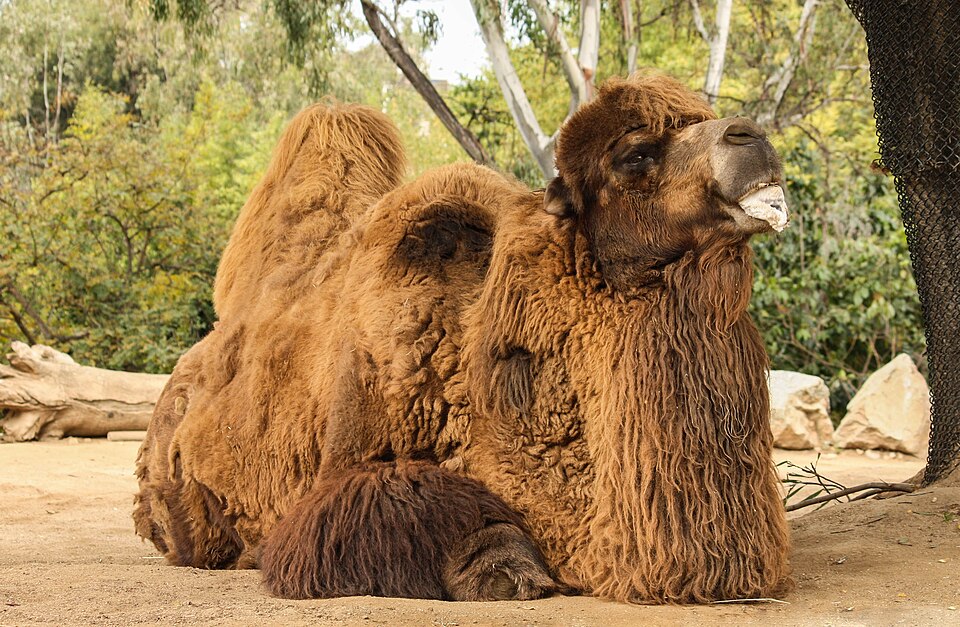
Domestic Bactrian camel: two humps. San Diego Zoo, 22 March 2013; not the wild species Camelus ferus.
Photo: Bernard Gagnon / Wikimedia Commons (CC BY-SA 3.0). Resized by Wikimedia; displayed without cropping.

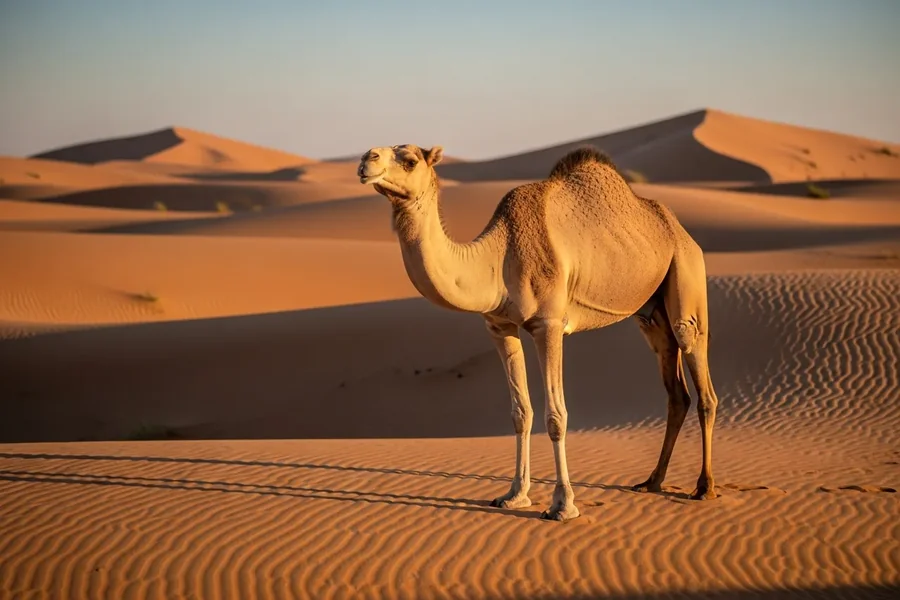
Dromedary camel: one hump. Educational illustration, not a documentary photograph.
AI-generated educational wildlife portrait — World Animal Rescue Network
Camel vs Dromedary: At a Glance
| Feature | Domestic Bactrian camel | Dromedary camel |
|---|---|---|
| Scientific name | Camelus bactrianus | Camelus dromedarius |
| Humps | Two | One |
| Coat | A thick winter coat that sheds as conditions warm | Generally shorter hair; longer hair around areas such as the throat and hump |
| Typical setting | Central Asian drylands with cold winters | Arid regions of North Africa, the Middle East and parts of South Asia |
| Adult weight examples | 450–500 kg in San Diego Zoo’s guide; varies by individual | 400–600 kg in the same guide; varies by individual |
| Food | Grasses, shrubs and other vegetation | Browse, grasses and other vegetation, including thorny plants |
| Social life | Social animals; herd structure is influenced by management | Social animals; family groups and other groupings occur |
| Relationship with people | Domestic camel used for transport and animal products | Domestic camel used for transport and animal products |
| Conservation distinction | Different from the wild camel, Camelus ferus | Feral dromedaries are descended from domestic animals |
Size and physical differences
Their adult size overlaps. San Diego Zoo gives illustrative adult weights of 450–500 kg for Bactrian camels and 400–600 kg for dromedaries; these are reference examples, not universal limits. Hump number and coat are more useful identification clues than apparent height.
If you searched for “camel vs dromedary”, the short answer is that the names overlap. A dromedary is not an alternative to being a camel, just as a domestic Bactrian camel is not the only animal entitled to that name. For a useful side-by-side comparison, look at one-humped dromedaries and two-humped domestic Bactrians. Keep the separate wild camel species in mind when reading conservation claims: a photograph of a farmed camel does not document a threatened wild population.
A dromedary is a camel: the three species
The American Society of Mammalogists’ Mammal Diversity Database treats the dromedary, Camelus dromedarius, and domestic Bactrian camel, Camelus bactrianus, as separate taxa. The Wild Camel Protection Foundation explains that Camelus ferus is also a distinct species, rather than simply a domestic Bactrian that escaped.
This distinction matters in captions and conservation reporting. “Two-humped camel” alone does not establish that an animal is a wild camel. Likewise, “living wild” can describe a feral dromedary’s circumstances without making it a surviving population of the dromedary’s wild ancestor. Use the species name and the original location when those details are available.
One hump or two, and what humps contain
Dromedaries have one hump; Bactrian camels have two. These humps contain stored fat. They are not hollow tanks of drinking water. San Diego Zoo explains that a hump can become smaller or droop as the animal draws on its reserves.
For identification, view the whole back from the side. A saddle, a tightly cropped photograph or a second animal standing behind the first can conceal the outline. The Bactrian photograph above shows an animal in San Diego Zoo, not a wild camel in Mongolia. The dromedary portrait is labelled as an educational illustration. Neither image documents a WARN rescue.
Coat and climate: cold deserts are deserts too
Bactrian camels grow a substantial seasonal coat, an adaptation to the cold winters of Central Asian drylands. Shedding can leave them looking patchy as temperatures rise. Dromedaries are associated with hotter arid regions and generally have shorter coats, although hair length varies across the body.
A desert is defined by low precipitation, not permanently hot weather. Coat alone is still a weaker clue than an unobstructed view of the humps: season, grooming, breed and age affect appearance. The comparison should explain these adaptations rather than assume every camel lives among hot sand dunes.
Size: why the ranges overlap
San Diego Zoo’s guide gives Bactrian adults at 450–500 kg and dromedaries at 400–600 kg. These illustrative ranges overlap. A species account in Mammalian Species gives male dromedaries around 400–600 kg; it should not be treated as an exact weight for every female, calf or breed.
For a useful height comparison, establish whether a source measured the shoulder or the top of the hump. For weight, check sex, maturity and the population measured. Comparing one photograph with another adds an uncontrolled change of scale. This page therefore uses sourced examples rather than declaring that every two-humped camel is taller, heavier or stronger.
Food, water and herd life
Both domestic species feed on vegetation. Dromedaries can browse coarse and thorny plants with their thickened lips, and their diet changes with what the landscape or their keepers provide. The Mammalian Species account describes their desert physiology and feeding; a camel’s ability to conserve water is an adaptation, not a reason to deny a managed animal access to water.
Camels are social. University of Michigan’s Animal Diversity Web describes dromedary family groups and other associations. Herd size and composition in domestic animals are also shaped by how people keep them. “Dromedaries live alone; Bactrians live in herds” would be a misleading contrast. Respect distance and follow a competent handler’s advice around large animals.
Where do wild and feral camels live?
Domestic Bactrians are associated with Central Asia, while dromedaries are widespread across arid parts of Africa and Asia. Australia’s free-ranging camels descend from introductions of domestic animals. They are feral; they are not Camelus ferus.
The Wild Camel Protection Foundation’s 2026 account places surviving wild camels in separated desert regions of China and Mongolia. Their use of scarce water sources and routes across the landscape makes habitat connections important. A large domestic camel population elsewhere does not replace this distinct wild species or remove the threats it faces.
Wild camel conservation: use the updated assessment
Older pages frequently call the wild camel Critically Endangered. The Wild Camel Protection Foundation’s March 2026 account explains that the October 2025 IUCN update reassessed Camelus ferus as Endangered. The change reflects updated evidence; it should not be presented as proof that its threats have disappeared. The current assessment is linked below.
The Foundation identifies water scarcity, mining and infrastructure, habitat fragmentation and hybridisation with domestic Bactrian camels as concerns. These are threats to a particular wild species. Domestic camel welfare involves a different set of practical questions, including appropriate food, water, handling and care. Support should match the actual need rather than treating all camels as one conservation category.
Camel vs Dromedary: FAQs
Is a dromedary a camel?
What is a camel with two humps called?
Do camel humps store water?
Is a Bactrian camel always bigger than a dromedary?
Are the camels in Australia wild camels?
Are wild camels still Critically Endangered?
Help protect animals
Habitat protection supports wildlife by addressing the places and resources animals need. Read the appeal’s actual scope and funding status before giving. This guide does not establish a dedicated WARN camel project or a grant to any organisation cited here.
Sources
- American Society of Mammalogists — dromedary taxonomy
- American Society of Mammalogists — domestic Bactrian camel taxonomy
- San Diego Zoo — camel humps, coat and size examples
- Köhler-Rollefson (1991), Mammalian Species — Camelus dromedarius
- University of Michigan, Animal Diversity Web — dromedary behaviour
- Wild Camel Protection Foundation — the distinct wild camel species
- Wild Camel Protection Foundation (March 2026) — updated status and threats
- IUCN Red List — current Camelus ferus assessment