Animal Comparison
Pig vs Boar
Domestic pigs descend from wild boar; “boar” often means the wild form or an adult male. Build, tusks and context separate farm pigs from wild boar.
By WARN Research & Conservation TeamLast updated
In brief — Pig vs Boar
Farm breeds mean pig in everyday speech; lean, hairy wild Sus scrofa means wild boar — and “boar” can also mean a male domestic pig.
Domestic pigs are suids shaped by human breeding for meat and other products; wild boar are the wild Eurasian species (Sus scrofa) from which domestic pigs were derived. In farm speech, “boar” can also mean an intact adult male pig. Wild boar typically look leaner and hairier, with longer snouts and prominent tusks, while domestic breeds vary from compact pink commercial types to hairy heritage forms.
See the difference
Images are shown at different scales. Read each caption for the species, source and context.
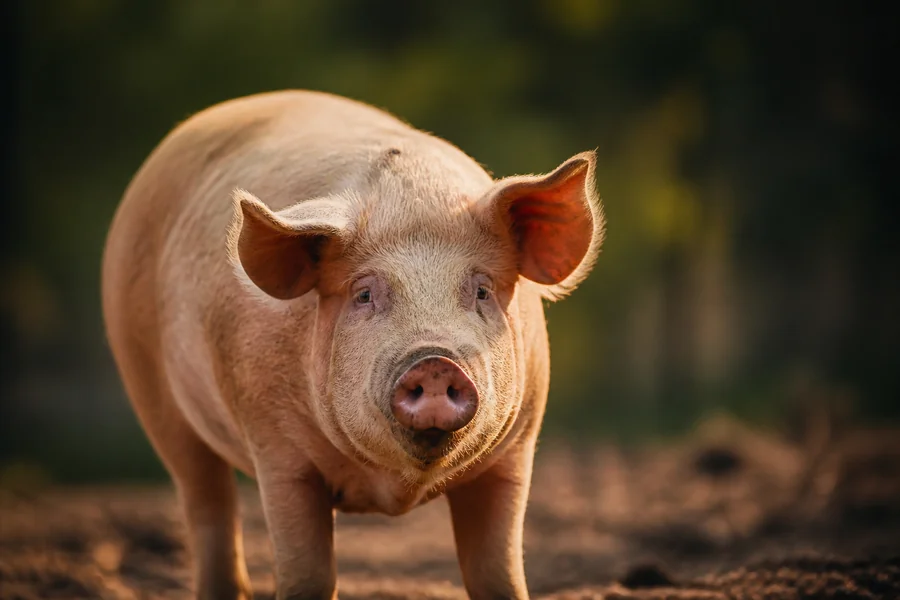
Pig — domestic form
AI-generated educational wildlife portrait — World Animal Rescue Network
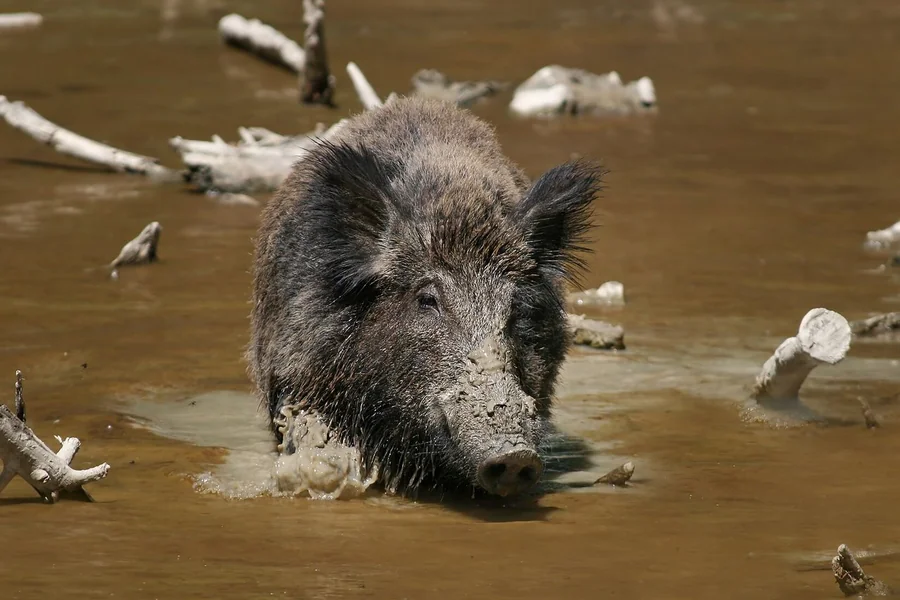
Boar — wild Sus form
AI-generated educational wildlife portrait — World Animal Rescue Network
Pig vs Boar: At a Glance
| Feature | Pig | Boar |
|---|---|---|
| Core meaning A | Domestic suid (many breeds) | Wild Sus scrofa (or male pig) |
| Coat | Often sparse in commercial breeds | Dense bristly hair in wild form |
| Snout | Often shorter in domestic breeds | Longer, stronger rooting snout |
| Tusks | Reduced in many breeds | Prominent in adult wild boar |
| Build | Breed-dependent; often heavier hind | Leaner, more athletic wild type |
| Habitat | Farms, villages | Woodland, scrub, farmland edges |
| Behaviour toward people | Varies; domestication history | Wary; can be defensive if cornered |
| Hybrid risk | Can hybridise with wild boar | Same — hybrids complicate ID |
| Word “boar” on farm | Male breeding pig | Also the wild species name |
| Origin link | Derived from wild boar | Wild ancestor/form |
Size and physical differences
Adult weights overlap hugely by breed and sex — from modest farm pigs to very large commercial or wild animals — so use habitat, coat and tusks rather than one number.
Pig versus boar is partly a domestication story and partly a vocabulary story. Genetically, domestic pigs trace to wild boar. Centuries of selection created bodies that can look nothing like a forest boar — short snouts, sparse hair, heavy hindquarters. Meanwhile, hunters and biologists use wild boar for free-living Sus scrofa, including populations that damage crops and hybridise with free-ranging domestic pigs in some regions.
On farms, boar specifically means a breeding male, sow a breeding female, and hog or barrow other categories depending on region. A comparison page has to hold both the wild-versus-domestic contrast and the male-title meaning without pretending they are the same issue.
This comparison sticks to marks you can use without laboratory gear: size, shape, behaviour and the words people actually type into a search box. Scientific names are given where they prevent a regional mix-up. Where a popular belief is wrong, the correction leads; where two animals are simply different, the decisive field mark leads. Ranges and masses are given as working bands from standard natural-history references, not as courtroom measurements for every individual.
Domestication changed the body
Selection for rapid growth, litter size and tractability altered skull shape, coat and fat distribution. A commercial pink pig is still Sus scrofa in broad taxonomy discussions, yet it would not be mistaken for a forest boar in silhouette. Heritage breeds with more hair sit in between and confuse casual observers. Use more than one mark before you decide — single-trait IDs fail on juveniles, regional forms and poor light. In practice, people meet these animals in brief glances. Slow down long enough to check the two or three marks in the table above before accepting the first common name that comes to mind. Mislabeling spreads through photos and social posts faster than corrections do, which is why a short, checkable comparison page earns its keep. When experts disagree on subspecies or English names, the underlying biology — diet, body plan, reproductive cycle — remains the stable part of the answer.
Tusks, snout and hair as wild clues
Adult wild boar show developed canines, a longer rooting snout and a thick grizzled coat with a clear dorsal ridge of bristles in many animals. Tracks and rooting damage in woodland floors accompany them. Domestic escapees can grow hair and tusks too, which is why “wild-looking” is not always genetically pure wild boar. Geography matters: the same English names attach to different species on different continents, and range often settles an argument faster than colour. In practice, people meet these animals in brief glances. Slow down long enough to check the two or three marks in the table above before accepting the first common name that comes to mind. Mislabeling spreads through photos and social posts faster than corrections do, which is why a short, checkable comparison page earns its keep. When experts disagree on subspecies or English names, the underlying biology — diet, body plan, reproductive cycle — remains the stable part of the answer.
The male-title meaning
If a farmer says boar, they may mean the breeding male in the barn, not a woodland animal. Context sentences matter. This dual meaning fuels search traffic and frustration. Clarify wild boar versus boar (male pig) before giving advice. Behaviour at the moment of observation — feeding, escape, nesting — is evidence, not a personality story about the whole species. In practice, people meet these animals in brief glances. Slow down long enough to check the two or three marks in the table above before accepting the first common name that comes to mind. Mislabeling spreads through photos and social posts faster than corrections do, which is why a short, checkable comparison page earns its keep. When experts disagree on subspecies or English names, the underlying biology — diet, body plan, reproductive cycle — remains the stable part of the answer.
Hybrids and free-ranging pigs
In regions with both wild boar and free-ranging domestic pigs, hybridisation occurs and identification becomes probabilistic. Behaviour and location help; absolute claims from one photo may overreach. Honest comparison pages admit the blur. Conservation status is assessed taxon by taxon; a group label like 'wasp' or 'antelope' is not an IUCN status. In practice, people meet these animals in brief glances. Slow down long enough to check the two or three marks in the table above before accepting the first common name that comes to mind. Mislabeling spreads through photos and social posts faster than corrections do, which is why a short, checkable comparison page earns its keep. When experts disagree on subspecies or English names, the underlying biology — diet, body plan, reproductive cycle — remains the stable part of the answer.
Ecology and people
Wild boar rooting reshapes soil and understory and can conflict with farming. Domestic pigs are livestock with welfare and husbandry frameworks. Policy and fencing advice differ. Mixing the words mixes the responses. If you are managing conflict with people or pets, identify first, then choose a proportionate response; misidentification wastes effort and can harm the wrong animal. In practice, people meet these animals in brief glances. Slow down long enough to check the two or three marks in the table above before accepting the first common name that comes to mind. Mislabeling spreads through photos and social posts faster than corrections do, which is why a short, checkable comparison page earns its keep. When experts disagree on subspecies or English names, the underlying biology — diet, body plan, reproductive cycle — remains the stable part of the answer.
Did you know?
On a farm, “boar” can mean the boar in the barn; in a forest, “wild boar” means the bristly ancestor that still roots under oaks.
Pig vs Boar: FAQs
What is the difference between a pig and a boar?
Are domestic pigs descended from wild boar?
Is a boar just a male pig?
Can pigs and wild boar breed?
Which is bigger?
Do wild boar have tusks?
Help protect animals
Learning about animals can help more people understand their needs. WARN raises funds for eligible animal-welfare organisations. Read the relevant appeal’s purpose, recipient status and fund terms, or share this free guide to raise awareness.