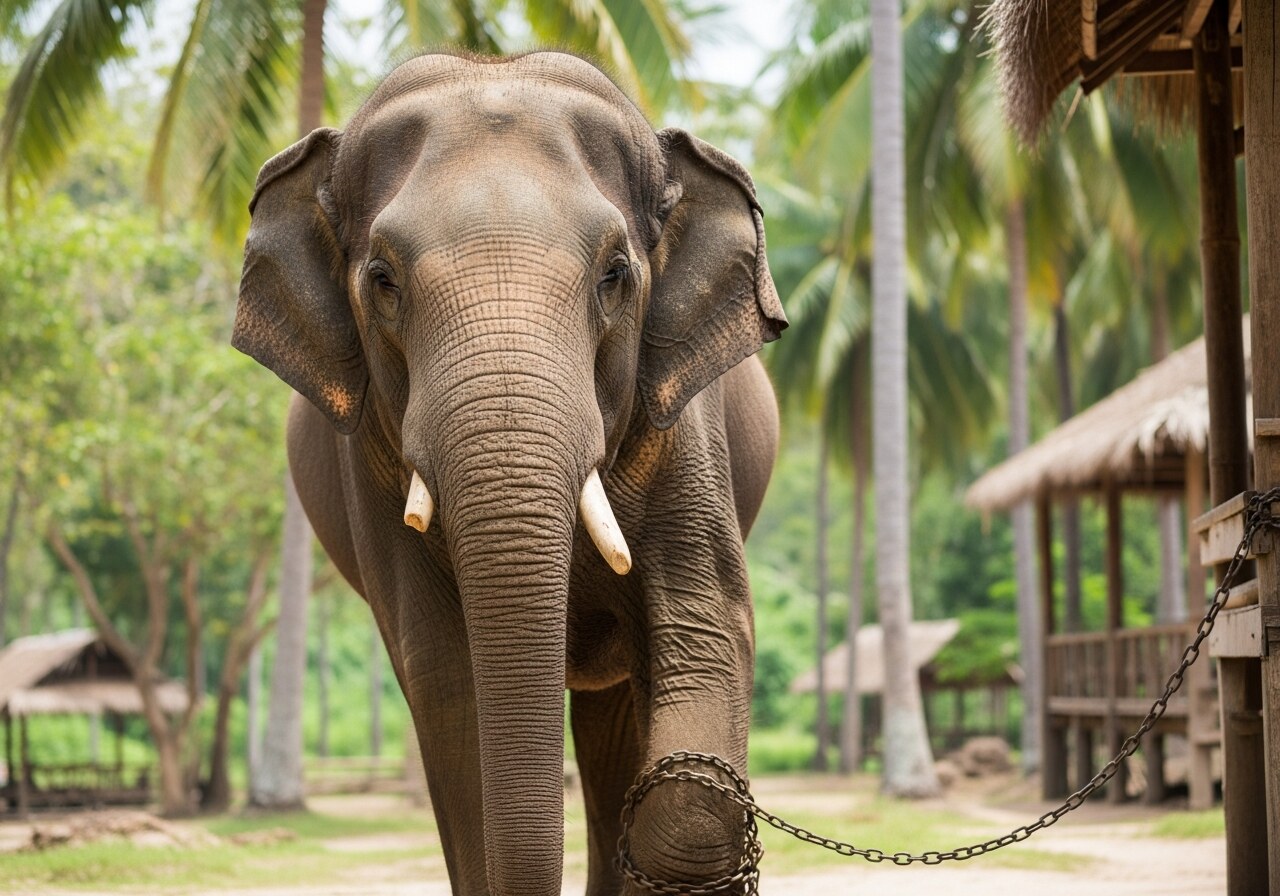
The Asian elephant (Elephas maximus) is one of the most heavily intertwined large mammals with human society — and one of the most welfare-compromised. Around a third of every Asian elephant alive today is in captivity, in working camps, religious institutions or tourist attractions.
WARN is preparing to operate in Thailand and Cambodia, two of the major Asian elephant range states. Thailand alone holds an estimated 3,000-4,000 captive elephants — a number that, for the size of the country, indicates a captive-welfare crisis as much as a wild-population crisis.
How Asian elephants differ from African elephants
- Smaller body size; adults typically 2.5-3 tonnes.
- Rounded ears, more domed forehead, smaller tusks (often only in males).
- Two body humps along the back rather than one.
- Far more often kept in captivity, with a long cultural history of working-elephant traditions.
See our explainer on Asian vs African elephants for a fuller comparison.
The threats
- Habitat loss. Forest conversion to agriculture, plantations and infrastructure has fragmented Asian elephant range across all thirteen countries.
- Human-elephant conflict. Crop-raiding elephants are killed in retaliation; elephant retaliation kills hundreds of people each year. Both sides of the conflict cause unacceptable welfare outcomes.
- Captive-welfare crisis. The tourism industry in Thailand, working camps in Myanmar and Laos, and temple-elephant traditions in India and Sri Lanka all hold elephants under conditions that frequently fail basic welfare standards — chained for long hours, denied conspecific contact, and trained with aversive methods.
- Illegal trade. Live calves are still trafficked into the tourism trade; ivory from male tuskers continues to enter international markets despite CITES controls.
What good captive-elephant welfare looks like
The World Organisation for Animal Health (WOAH) and credible elephant-welfare specialists agree on a short list of core minimums: no chaining for routine handling, no riding, no performance shows, large-area soft substrates, daily conspecific contact, expert-led foot care and a published veterinary plan.
How WARN fits in
Our planned Thailand and Cambodia work focuses on the welfare end of the elephant problem — supporting partner sanctuaries that provide lifetime care for retired tourism elephants, and contributing to capacity-building for high-quality captive-elephant veterinary teams. We do not currently operate our own elephant sanctuary and we will not claim otherwise. Wild Asian elephant work is critical, but it is the field of established Asian conservation organisations whose capacity our launch funding aims to support, not replace.
Sources: IUCN Red List, CITES Appendix I, WOAH captive-elephant welfare guidance, UNEP-WCMC.
We need your support to make this happen
World Animal Rescue Network is at the launch stage of this work. We do not yet have rescue numbers to share — and that is exactly why your support matters now. Every donation helps us put trained teams on the ground, secure veterinary supplies and equipment, and reach the first animals before they are lost.
Donate today to fund our first deployments, or sponsor an animal to back a specific species through rehabilitation. You can also join the network as a volunteer, fundraiser, or monthly supporter.