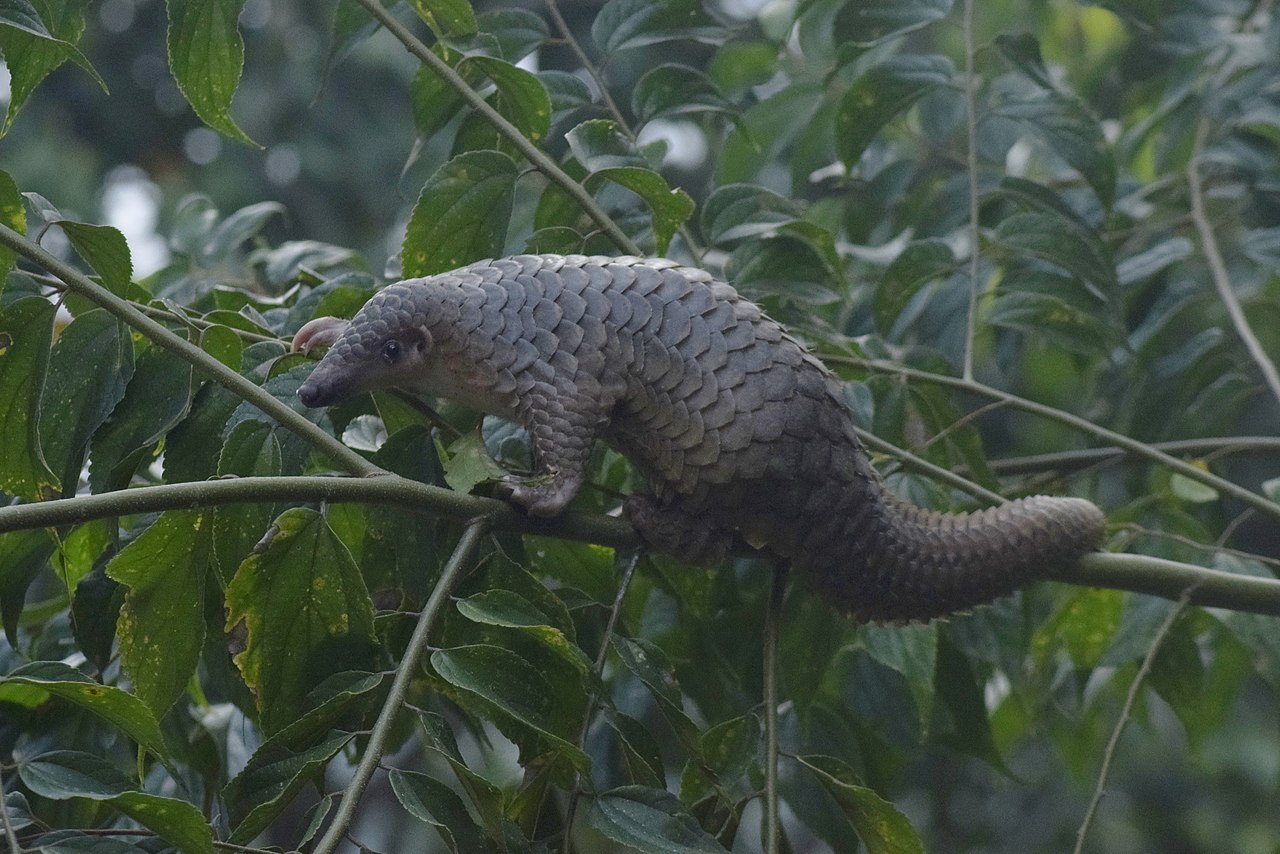
The pangolin is the most trafficked mammal in the world by recorded seizure tonnage. There are eight species — four Asian and four African — and all eight are listed on CITES Appendix I.
The four Asian pangolins
- Chinese pangolin (Manis pentadactyla) — Critically Endangered. Range across southern China, Vietnam, Laos, Bhutan, Nepal and northern India.
- Indian pangolin (Manis crassicaudata) — Endangered. India, Pakistan, Sri Lanka, Bangladesh.
- Sunda pangolin (Manis javanica) — Critically Endangered. Indonesia, Malaysia, Thailand, Vietnam, Cambodia, Laos, Myanmar.
- Philippine pangolin (Manis culionensis) — Critically Endangered. Endemic to the Palawan island group.
The four African pangolins
- White-bellied (tree) pangolin (Phataginus tricuspis) — Endangered. Central and West African rainforests.
- Black-bellied (long-tailed) pangolin (Phataginus tetradactyla) — Vulnerable. Central African rainforests.
- Giant ground pangolin (Smutsia gigantea) — Endangered. Equatorial Africa.
- Temminck's ground pangolin (Smutsia temminckii) — Vulnerable. East and Southern Africa, including Kenya and Tanzania.
Why pangolins are trafficked
Pangolin scales — made of the same keratin as human fingernails and hair — are used in some traditional-medicine markets despite no clinically demonstrated medicinal effect. Pangolin meat is also a luxury food in parts of East Asia. The combination drove Asian populations to functional collapse over the past two decades, which is why African pangolins are now under intensifying trafficking pressure.
How pangolins are seized
UNODC's World Wildlife Crime Report documents seizures of multiple-tonne pangolin-scale shipments at major Asian and African ports. A single shipping container can hold the scales of thousands of pangolins.
How WARN fits in
WARN's planned pangolin work aims to support partner rehabilitation work in Malaysia, Vietnam and East Africa. Pangolins seized in raids urgently need expert care — they are notoriously hard to keep alive in captivity, which is exactly why dedicated pangolin sanctuaries matter so much.
Sources: IUCN Red List, CITES Appendix I, UNODC World Wildlife Crime Report, UNEP-WCMC.
We need your support to make this happen
World Animal Rescue Network is at the launch stage of this work. We do not yet have rescue numbers to share — and that is exactly why your support matters now. Every donation helps us put trained teams on the ground, secure veterinary supplies and equipment, and reach the first animals before they are lost.
Donate today to fund our first deployments, or sponsor an animal to back a specific species through rehabilitation. You can also join the network as a volunteer, fundraiser, or monthly supporter.