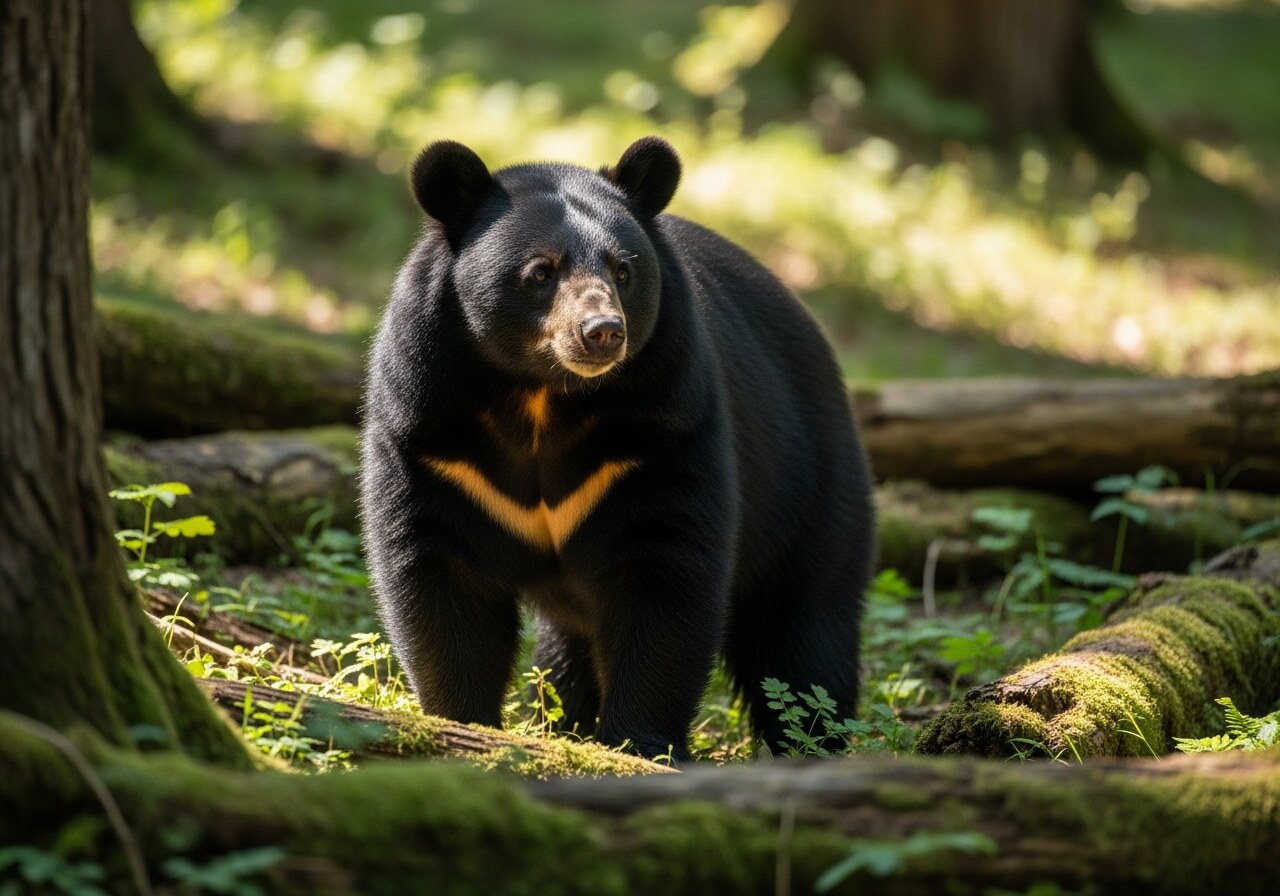
The sun bear (Helarctos malayanus) is the smallest bear species in the world. Adults rarely exceed 70 kg, with a sleek black coat, a distinctive U-shaped or crescent-shaped cream chest patch, and an unusually long tongue adapted for extracting insects and honey. It is sometimes called the "honey bear" or "Malayan sun bear."
Sun bears live in five of WARN's ten operating countries — Indonesia, Malaysia, Vietnam, Thailand and Cambodia — which makes them one of the more directly relevant species for the kind of work our launch programmes are being built to support.
What makes sun bears unique
- Smallest of the eight extant bear species, with a body length of 120-150 cm.
- Diet is omnivorous but unusually insect-heavy — termites, beetle larvae and bee colonies are major food sources.
- One of the most arboreal bears: they build daytime nests in trees and rest 5-10 m above ground.
- Critically dependent on dipterocarp lowland rainforest, which is the most heavily logged forest type in Southeast Asia.
Why sun bears are Vulnerable
- Deforestation. Sun bear habitat overlaps almost exactly with the highest-demand timber and palm-oil concessions in Borneo, Sumatra, Peninsular Malaysia and the lower Mekong. UNEP reports consistent annual primary-forest loss across all five range countries.
- Illegal pet trade. Sun bear cubs are taken from killed mothers and sold openly in some urban wildlife markets. They grow large, strong and dangerous, and are routinely abandoned to wildlife authorities within 2-3 years of capture.
- Bear-bile industry. Sun bear gall bladders are trafficked into the same traditional-medicine market that drives the bile-farming of Asiatic black bears (moon bears) in Vietnam, Laos and China. The World Organisation for Animal Health (WOAH) has identified bear-bile farming as a serious welfare and biosecurity concern.
- Snares and conflict killing. Snares set for bushmeat species regularly catch sun bears as bycatch; bears that raid bee-hives or crops are killed in retaliation.
Rescue work
Most rescued sun bears in the region come from one of three sources: confiscation from the pet trade, surrender from defunct bile farms, or rescue from wildlife markets. Almost none can be released — most have been hand-reared, have skeletal deformities from cage life, or carry diseases that disqualify them from soft-release. They become lifetime sanctuary residents.
How WARN fits in
Sun bears are not yet a stand-alone WARN appeal, but they will be a major beneficiary of our planned Southeast Asia anti-trafficking and sanctuary support work. Our orangutan appeal in Borneo, our dog and cat meat trade briefing in Vietnam and Cambodia, and our planned Indonesia and Malaysia deployments will all operate in the same forests, against the same traffickers, and through the same partner networks that rescue sun bears.
Sources: IUCN Red List, CITES Appendix I, UNEP-WCMC, WOAH bear-bile policy positions.
We need your support to make this happen
World Animal Rescue Network is at the launch stage of this work. We do not yet have rescue numbers to share — and that is exactly why your support matters now. Every donation helps us put trained teams on the ground, secure veterinary supplies and equipment, and reach the first animals before they are lost.
Donate today to fund our first deployments, or sponsor an animal to back a specific species through rehabilitation. You can also join the network as a volunteer, fundraiser, or monthly supporter.