Wildlife Guide · Sub-Saharan Africa
Aardvark
Orycteropus afer (Pallas, 1766)
Africa's solitary digger — one species, an entire order, built for termites.
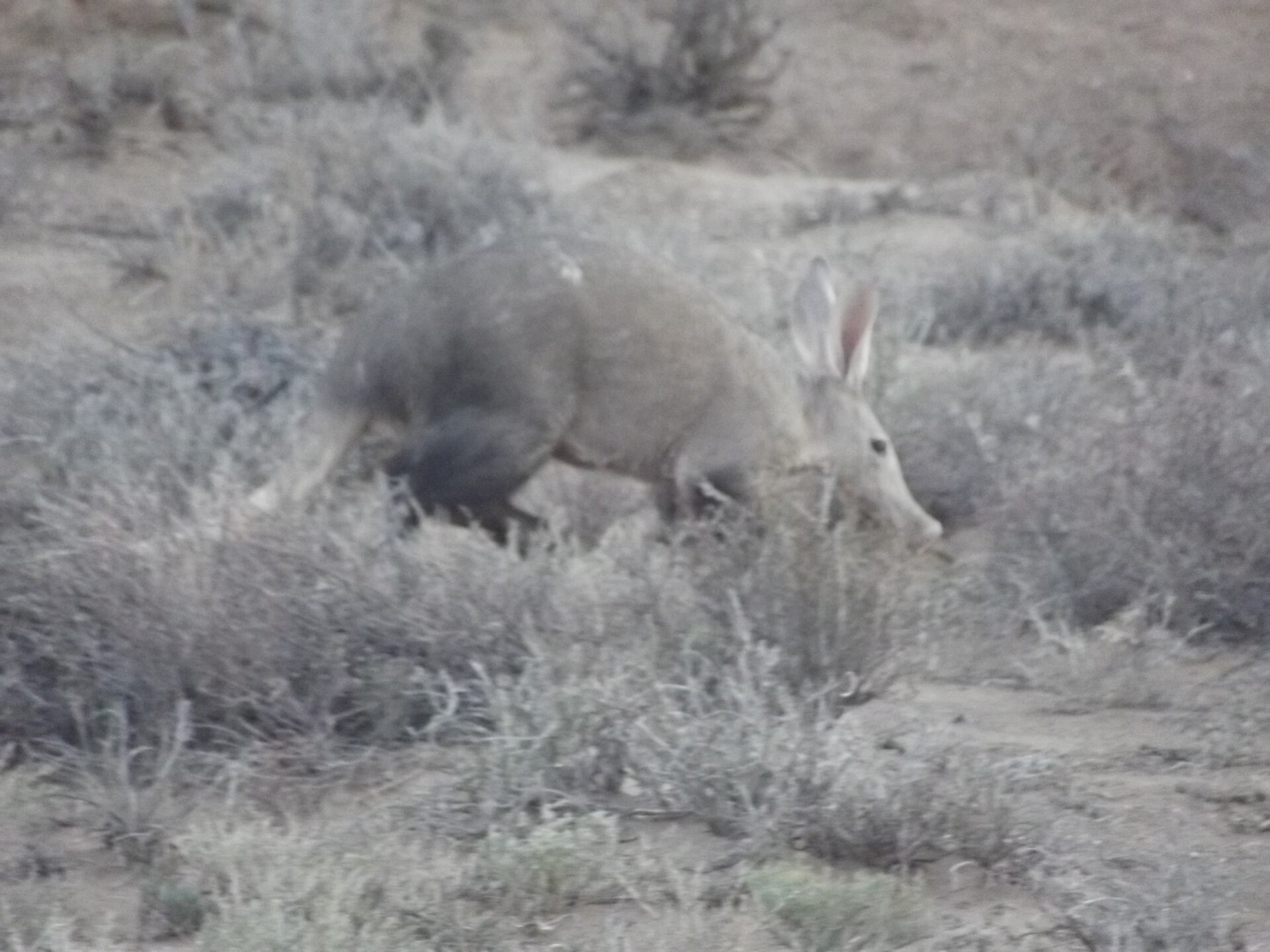
Photo: Ludwig Xu En Muller / Wikimedia Commons (CC0)
In brief
The aardvark (Orycteropus afer) is the only living species of its order, a nocturnal insectivore of sub-Saharan Africa listed as Least Concern; it digs for termites and its burrows shelter dozens of other species.
Also in Animals A to Z · Animals that start with A
By WARN Research & Conservation TeamLast updated
The aardvark is the sole living species of the order Tubulidentata — one of Africa's most evolutionary distinctive mammals. With a pig-like snout, rabbit-like ears and a kangaroo-like tail, it is adapted for eating ants and termites, which it locates by smell and excavates with powerful claws. Aardvarks are strictly nocturnal and solitary, roaming territories of up to 4 km². Listed as Least Concern, they remain widespread but are hunted for bushmeat and threatened by pesticide use that reduces insect prey. Their abandoned burrows provide shelter for warthogs, hyenas, pythons and many other species.
Least Concern
IUCN Red List status (2016 assessment)
1 species
The sole living Tubulidentata on Earth
40–65 kg
Typical adult weight
Not listed
CITES status
Figures sourced from IUCN Red List — Orycteropus afer, Encyclopaedia Britannica — aardvark, San Diego Zoo Wildlife Alliance — aardvark .
Aardvark: Quick Facts
| Weight | 40–65 kg |
|---|---|
| Diet | Ants and termites — up to 50,000 per night |
| Tongue | Up to 30 cm — sticky for lapping insects |
| Activity | Strictly nocturnal and solitary |
| Burrows | Up to 13 m long; used by many other species |
| CITES | Not listed |
Scientific Classification
| Kingdom | Animalia |
|---|---|
| Phylum | Chordata |
| Class | Mammalia |
| Order | Tubulidentata |
| Family | Orycteropodidae |
| Species | Orycteropus afer (Pallas, 1766) |
Conservation Status
- IUCN Status
- Least Concern (IUCN, 2016). Stable across most of sub-Saharan Africa.
- Population
- No global estimate; widespread and locally common
- Trend
- Stable globally; decreasing locally from hunting and pesticides
- Assessed
- 2016
- CITES
- Not listed under CITES
Key Facts: Aardvark
- Aardvarks are the only living species of the order Tubulidentata.
- They eat up to 50,000 termites in a single night using a 30 cm tongue.
- Abandoned aardvark burrows shelter warthogs, hyenas, pythons and wild dogs.
- Aardvarks are strictly nocturnal and solitary.
- Pesticide use on termites and bushmeat hunting are the main threats.
- Their name means 'earth pig' in Afrikaans — a reference to their digging habit.
An evolutionary oddity
The aardvark occupies its own order, Tubulidentata, with no close living relatives. Genetic studies suggest affinity with elephants, hyraxes and sirenians — the superorder Afrotheria. Its teeth are unique: hexagonal prisms of dentine without enamel, which grow continuously and are worn down by ingested soil. The body combines features that confuse casual observers: a long tubular snout, elongated ears, a thick tail and powerful digging claws.
Aardvarks range across sub-Saharan Africa wherever termites and ants are abundant, from open savanna to woodland.
Termite hunting by night
Aardvarks leave their burrows after dark to forage, covering several kilometres per night. They detect termite and ant colonies by smell, then rip open mounds and runways with chisel-like claws. A sticky tongue up to 30 cm long laps up insects — an adult may consume 50,000 in one night.
Aardvarks also eat the aardvark cucumber (Cucumis humifructus), the only fruit whose seeds are dispersed exclusively by aardvarks. During the day they sleep in self-dug burrows up to 13 m long, entering tail-first.
Burrows and ecosystem services
Aardvark burrows are a critical resource for other species. Warthogs, porcupines, hyenas, wild dogs and pythons use abandoned or shared burrows for shelter and denning. In arid areas, burrows provide the only shade and refuge for smaller animals. Aardvarks therefore act as ecosystem engineers — their digging aerates soil, recycles nutrients and creates habitat. Declining aardvark populations may cascade to dependent species.
Conservation status
The IUCN lists the aardvark as Least Concern with a stable population across most of its range. Local declines occur from bushmeat hunting, road mortality and pesticide use that reduces termite prey. Aardvarks are not listed under CITES. Because they are solitary and nocturnal, population trends are hard to monitor. Protecting insect-rich habitat and reducing indiscriminate pesticide application benefit aardvarks and the species that depend on their burrows.
What WARN Does
WARN publishes this aardvark guide as free public education. Ecosystem engineers like aardvarks illustrate how losing one species can affect many others — a principle central to habitat protection.
If this guide helps you understand wildlife and the pressures it faces, a gift to WARN supports habitat protection and free public education in our partner countries.
Aardvark: Frequently Asked Questions
What does an aardvark eat?
Is an aardvark related to an anteater?
Why are aardvark burrows important?
Are aardvarks endangered?
Are aardvarks active during the day?
Where does an aardvark live?
Are aardvarks dangerous?
How heavy is an aardvark?
How long do aardvarks live?
Sources & References
Population figures, conservation status and biological facts on this page are drawn from authoritative scientific and intergovernmental sources.
Terms used on this page
Plain-English definitions, from our wildlife and conservation glossary.
Latest Aardvark Stories
Quick, fact-checked reads on the aardvark — amazing facts, key questions and the threats it faces.
Species
Tiger vs Lion: 7 Key Differences Between the Two Biggest Cats
Tigers are bigger, stripier and solitary; lions are social and live in prides. Here's how the two largest cats really differ in size, habitat and behaviour.
Read the storySpecies
12 Astonishing Facts About the Pangolin, the World's Only Scaly Mammal
From a tongue anchored near its pelvis to scales that weigh a fifth of its body, the pangolin is one of nature's strangest mammals. Here are 12 facts that explain why.
Read the storySpecies
How Big Is a Pangolin — and How Long Is Its Tongue?
Pangolins range from house-cat size to over 30 kg, and the largest have a tongue longer than their entire body. Here are the real numbers.
Read the storyExplore more animals
Discover more animals, their habitats and their conservation status in the WARN wildlife-guide library.