Wildlife Guide · Europe & Western Asia
Badger
Meles meles (Linnaeus, 1758)
The burrow architect of Old World woodlands — social underground and solitary above ground.
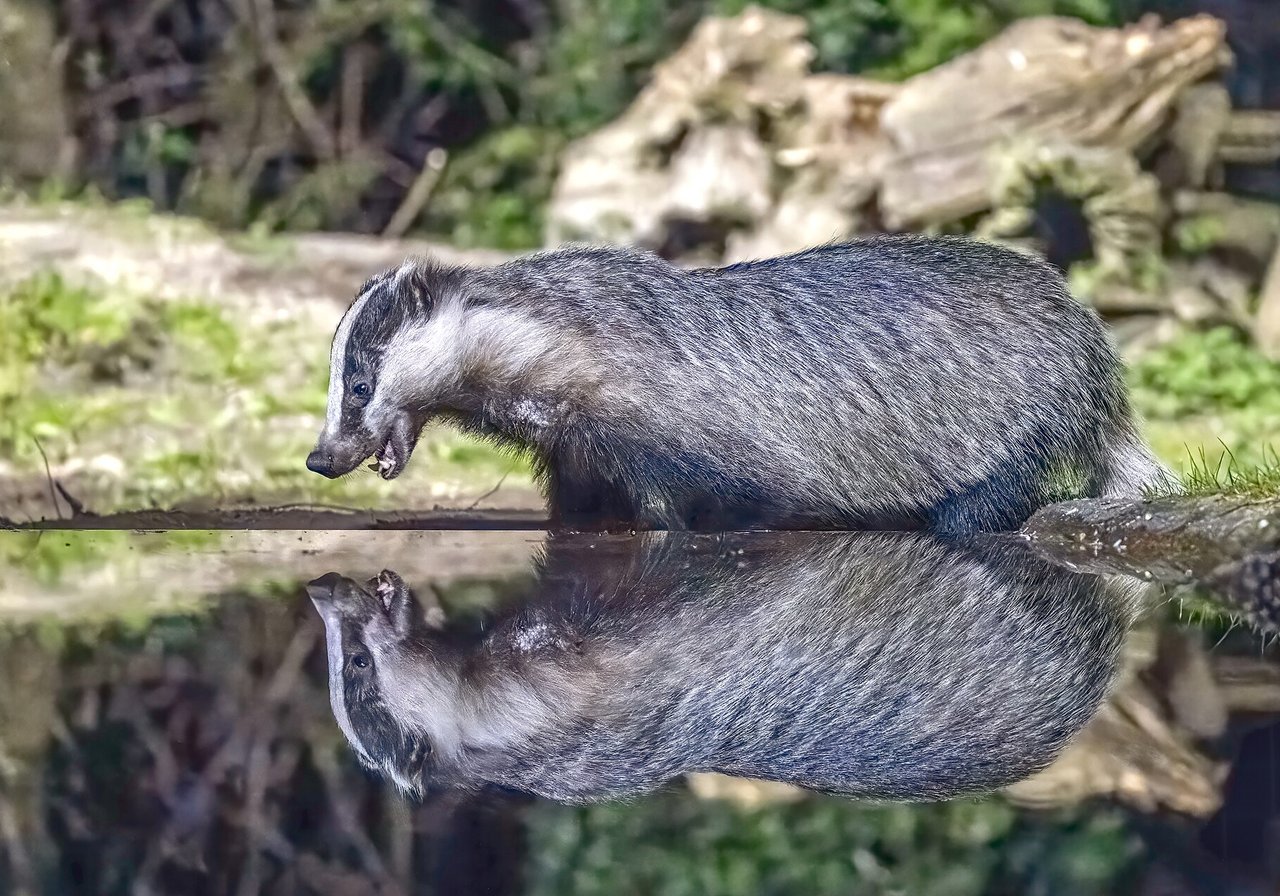
Source: Wikimedia Commons
In brief
The European badger (Meles meles) is a Least Concern mustelid of European and Asian woodlands, living in social groups in extensive underground setts and feeding on earthworms, fruit and small vertebrates.
Also in Animals A to Z · Animals that start with B
By WARN Research & Conservation TeamLast updated
The European badger is a stocky carnivoran of the family Mustelidae, widespread across Europe and western Asia. Its black-and-white facial stripes, powerful forelimbs and complex underground setts make it one of the most familiar wild mammals in Britain and continental Europe. Badgers are omnivorous, mainly nocturnal and live in social groups sharing large burrow systems. Listed as Least Concern by the IUCN, populations are stable across most of the range. Badgers elsewhere — American, honey and hog badgers — belong to separate lineages. In Pakistan and parts of the Middle East, badgers persist in scrub and mountain foothills where habitat protection overlaps with WARN's regional education work.
Least Concern
IUCN Red List status (2016 assessment)
8–15 kg
Typical adult weight
8+ species
Badger species worldwide in three families
Appendix III
CITES listing (Ukraine)
Figures sourced from IUCN Red List — Meles meles, Encyclopaedia Britannica — badger, The Wildlife Trusts — European badger .
Badger: Quick Facts
| Weight | 8–15 kg |
|---|---|
| Distinctive feature | Black-and-white striped face |
| Diet | Mainly earthworms; also fruit, insects, small vertebrates |
| Social structure | Family groups sharing large setts |
| Activity | Mainly nocturnal |
| CITES | Appendix III (Ukraine) |
Scientific Classification
| Kingdom | Animalia |
|---|---|
| Phylum | Chordata |
| Class | Mammalia |
| Order | Carnivora |
| Family | Mustelidae |
| Genus | Meles |
| Species | Meles meles (Linnaeus, 1758) |
Conservation Status
- IUCN Status
- Least Concern (IUCN, 2016). Stable across most of European range.
- Population
- Roughly 250,000–400,000 in Britain; widespread across Europe
- Trend
- Stable
- Assessed
- 2016
- CITES
- Appendix III (Ukraine)
Key Facts: Badger
- European badgers live in social groups sharing large underground setts.
- A single sett may have dozens of entrances and chambers used for generations.
- Earthworms form the bulk of the diet — up to 200 per night in summer.
- American badgers, honey badgers and hog badgers are not closely related.
- Bovine tuberculosis in badgers is a contentious issue in British cattle farming.
- Badgers persist in scrub and foothills from Europe to Pakistan.
Badgers across three families
The name 'badger' covers roughly eight species in three families. The European badger (Meles meles) belongs to Mustelidae alongside otters and weasels. The American badger (Taxidea taxus) is in Mustelidae but a separate genus. Honey badgers (Mellivora capensis) and hog badgers (Arctonyx) occupy distinct lineages.
European badgers are stocky animals with grey fur, a white head stripe running from nose to shoulder and short powerful legs built for digging. Adults weigh 8–15 kg. They are the most social mustelids — family groups of up to 20 individuals share setts, though they forage alone.
Other badger species occupy different continents and habitats. Honey badgers range across Africa and Asia with legendary fearlessness. Hog badgers inhabit South-east Asian forest — including Malaysia and Indonesia where WARN partners work on rainforest protection.
Setts, society and foraging
European badger setts are among the most complex mammal burrows. Excavated in woodland, hedgerows and pasture, a large sett may have 40 or more entrances, chambers for sleeping and latrines, and tunnels extending over 300 m. Setts are maintained across decades and passed between generations.
Badgers are mainly nocturnal. They emerge at dusk to forage, using sensitive snouts to locate earthworms — the primary summer food. A single badger may consume 200 earthworms per night. They also eat fruit, nuts, insects, wasp larvae, small mammals, birds and carrion. In autumn they fatten on windfall fruit and cereals.
Social structure centres on matrilineal groups — related females share a sett while males roam between groups. Cubs born in spring remain with the group for over a year. Grooming and scent marking maintain group cohesion.
Range and habitat
European badgers range from Ireland and Spain east to Russia, Iran and western China. They inhabit woodland, pasture, hedgerows, scrub and suburban edges wherever soil allows digging and food is available. Britain holds an estimated 250,000–400,000 badgers — one of the densest populations globally.
In the Middle East and Pakistan, badgers occupy mountain foothills, scrubland and agricultural margins. They are adaptable omnivores that benefit from mixed farming landscapes with hedgerows and pasture — habitats declining under intensive agriculture.
Road mortality is a significant cause of death across Europe. Badgers also face persecution from sett digging, baiting with dogs (illegal but persistent in some regions) and government culling programmes linked to bovine tuberculosis transmission to cattle in Britain and Ireland.
Conservation and disease conflict
The IUCN lists the European badger as Least Concern with a stable population across most of its range. Legal protection in Britain, Germany and much of the EU has helped maintain populations. CITES Appendix III in Ukraine regulates exports.
Bovine tuberculosis (bTB) in badgers and its transmission to cattle has driven controversial culling programmes in Britain and Ireland since the 1970s. Science shows badgers contribute to bTB spread but culling alone does not eliminate the disease — biosecurity, cattle testing and vaccination are essential components. Public debate remains intense.
Outside Europe, badger populations face habitat loss from agricultural intensification and hunting. Protecting hedgerow networks, reducing road mortality with wildlife crossings and managing disease through vaccination rather than culling support badger persistence.
What WARN Does
WARN publishes this badger guide as free public education. Badgers persist in scrub and foothill habitats across the Middle East and Pakistan — regions where habitat stewardship connects to broader conservation education.
If this guide helps you understand wildlife and the pressures it faces, a gift to WARN supports habitat protection and free public education in our partner countries.
Badger: Frequently Asked Questions
Are badgers and wolverines related?
What do badgers eat?
Are badgers endangered?
How big is a badger sett?
Do badgers live in groups?
Why are badgers culled in Britain?
Where do badgers live?
Are badgers dangerous?
How long do badgers live?
Sources & References
Population figures, conservation status and biological facts on this page are drawn from authoritative scientific and intergovernmental sources.
Terms used on this page
Plain-English definitions, from our wildlife and conservation glossary.
Latest Badger Stories
Quick, fact-checked reads on the badger — amazing facts, key questions and the threats it faces.
Species
12 Amazing Facts About Grey Wolves (And Why Alpha Wolves Aren't Real)
A howl that carries 16 km, a pack that is really a family, and the debunked study behind the 'alpha wolf' myth. Twelve verified facts.
Read the storySpecies
12 Amazing Facts About Flamingos (They Are Born Grey and Eat Upside Down)
Pink from diet, a bill that filters upside down, and milk produced by both parents. Twelve verified flamingo facts.
Read the storySpecies
12 Amazing Facts About Beavers (Iron in Their Teeth, and They Rebuild Rivers)
Orange iron-hardened incisors, transparent eyelids, and a keystone role that reduces flooding and drought. Twelve facts.
Read the storyExplore more animals
Discover more animals, their habitats and their conservation status in the WARN wildlife-guide library.