Wildlife Guide · North America & Canada
Black Bear
Ursus americanus (Pallas, 1780)
North America's most common bear — adaptable, omnivorous and widely misunderstood.
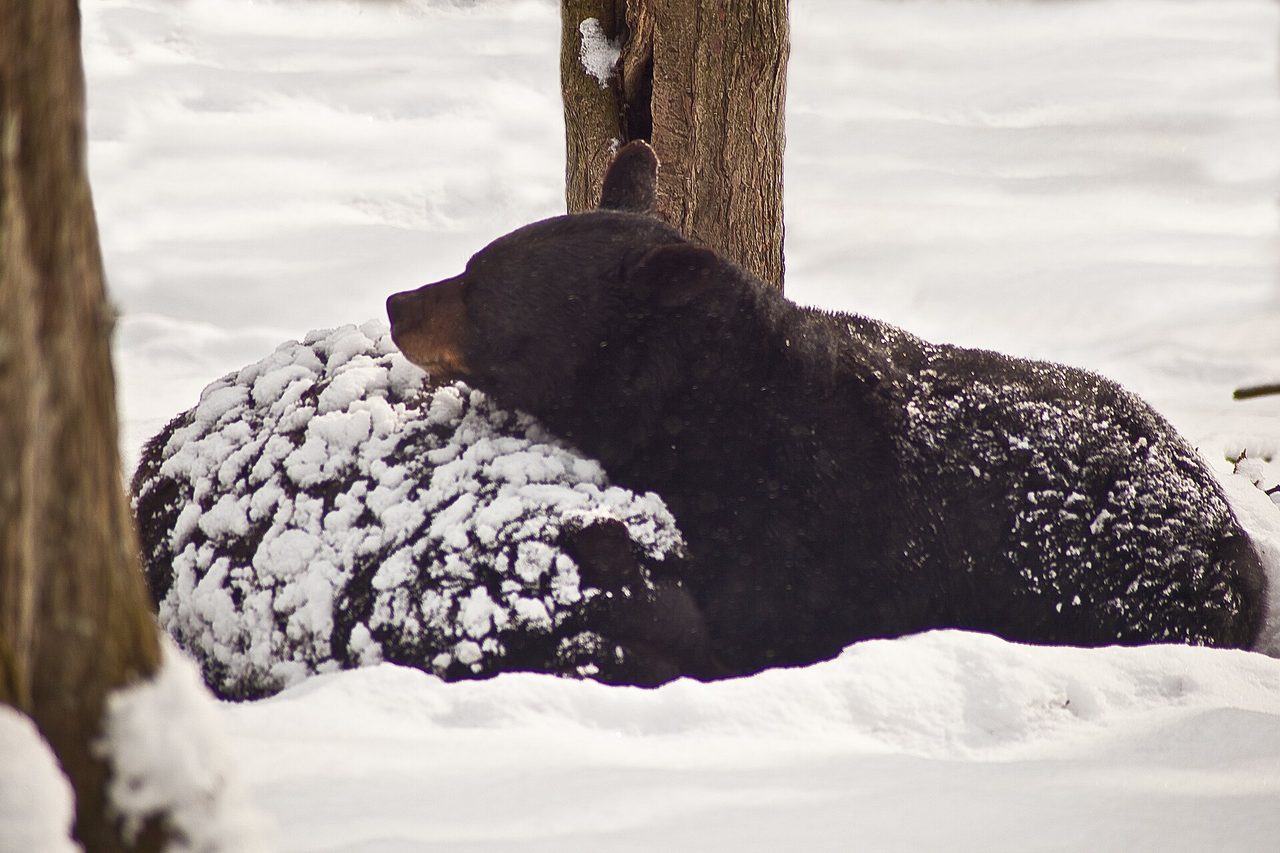
Photo: ForestWander / Wikimedia Commons (CC BY-SA 3.0 us)
In brief
The American black bear (Ursus americanus) is listed as Least Concern by the IUCN, with an estimated 800,000+ individuals across North America — the continent's most common and widespread bear species.
Also in Animals A to Z · Animals that start with B
By WARN Research & Conservation TeamLast updated
The American black bear is the most widespread and numerous bear species on the continent, ranging from Alaska and Canada through the United States to northern Mexico. Despite the name, coat colour varies from black to cinnamon, blonde and even white (the Kermode or 'spirit bear' of British Columbia). Black bears are smaller and less aggressive than grizzlies, yet they frequently appear in suburban news stories when attracted to rubbish, bird feeders and unsecured food. Listed as Least Concern by the IUCN, the population is estimated at 800,000 or more and increasing in many areas. Human conflict, road mortality and habitat loss remain local concerns.
800,000+
Estimated North American population
Least Concern
IUCN Red List status (2016 assessment)
57–250 kg
Typical adult weight range
16 subspecies
Recognised across North America
Figures sourced from IUCN Red List — Ursus americanus, CITES — Checklist of CITES Species, BearWise — coexistence resources .
Black Bear: Quick Facts
| Weight | 57–250 kg (varies by region and sex) |
|---|---|
| Coat colours | Black, cinnamon, blonde, white (spirit bear) |
| Diet | Omnivorous — berries, nuts, insects, carrion |
| Climbing | Excellent tree climber, especially juveniles |
| Lifespan | Up to ~25 years in the wild |
| CITES | Appendix II (most populations) |
Scientific Classification
| Kingdom | Animalia |
|---|---|
| Phylum | Chordata |
| Class | Mammalia |
| Order | Carnivora |
| Family | Ursidae |
| Genus | Ursus |
| Species | Ursus americanus (Pallas, 1780) |
Conservation Status
- IUCN Status
- Least Concern (IUCN, 2016). Population increasing in much of North America.
- Population
- More than 800,000 individuals
- Trend
- Increasing
- Assessed
- 2016
- CITES
- Appendix II (most populations)
Key Facts: Black Bear
- Black bears are the most common bear in North America, numbering 800,000 or more.
- Coat colour varies — black, cinnamon, blonde and white (spirit bear) — despite the name.
- Black bears lack the shoulder hump of grizzlies and are generally smaller and less aggressive.
- They are skilled climbers and often escape danger by ascending trees.
- Human food attractants — bins, bird feeders, pet food — are the main cause of conflict.
- Populations are increasing in many eastern US states as forests recover.
Identification and colour morphs
American black bears are smaller than grizzlies, with no shoulder hump, a straight facial profile, shorter claws and prominent ears. Fur colour is highly variable: most bears in the eastern United States are black, while western populations include cinnamon, blonde and brown morphs. The Kermode bear of coastal British Columbia carries a recessive gene producing white or cream fur — the 'spirit bear' revered by First Nations.
Colour alone does not distinguish black bears from grizzlies; body shape, hump presence and claw length are more reliable. Black bears are adept climbers, particularly juveniles, which retreat up trees when threatened.
Ecology and behaviour
Black bears are omnivorous generalists. Spring diet includes emerging vegetation and carrion; summer brings berries, nuts and insects; autumn is dominated by calorie-rich foods such as acorns and beechnuts to build fat reserves for winter. They enter dens — hollow trees, rock cavities or excavated burrows — and enter a state of torpor, though not true hibernation.
Females give birth in the den to one to four cubs. Home ranges vary from roughly 5 km² for females in rich habitat to over 500 km² for males in sparse country. Black bears are mainly crepuscular and avoid open areas during daylight where hunting pressure is high.
Living alongside black bears
As black bear populations recover in the eastern United States, encounters with suburban and exurban residents increase. Bears are attracted to rubbish bins, bird feeders, barbecue grease and pet food left outdoors. Once habituated, they lose fear of people and may damage property. Wildlife agencies recommend bear-proof bins, removing feeders in spring, and never feeding bears intentionally. Relocation rarely works for food-conditioned animals. Regulated hunting in many states helps manage population density and fund conservation. Education programmes — such as 'BearWise' — reduce conflict by teaching communities coexistence practices.
Conservation status
The IUCN lists the American black bear as Least Concern with an increasing population trend in much of its range. Louisiana black bear (Ursus americanus luteolus) was delisted from the US Endangered Species Act in 2016 after recovery. CITES lists most populations on Appendix II. Habitat fragmentation and road mortality suppress local populations, but overall numbers are robust. The species serves as a model for how large carnivores can recover when hunting is regulated and forest habitat returns. Continued public education on attractant management remains essential as bears and people share more landscape.
What WARN Does
WARN publishes this black bear guide as free public education. Coexistence with black bears in North America offers lessons for bear conservation worldwide, including the sun bears and moon bears our partners protect in Asia.
If this guide helps you understand wildlife and the pressures it faces, a gift to WARN supports habitat protection and free public education in our partner countries.
Black Bear: Frequently Asked Questions
How can you tell a black bear from a grizzly?
Are black bears dangerous?
What is a spirit bear?
How many black bears are in North America?
Do black bears hibernate?
What do black bears eat?
Where do black bears live?
How long do black bears live?
How big is a black bear?
Sources & References
Population figures, conservation status and biological facts on this page are drawn from authoritative scientific and intergovernmental sources.
Terms used on this page
Plain-English definitions, from our wildlife and conservation glossary.
Latest Black Bear Stories
Quick, fact-checked reads on the black bear — amazing facts, key questions and the threats it faces.
Species
12 Amazing Facts About Grey Wolves (And Why Alpha Wolves Aren't Real)
A howl that carries 16 km, a pack that is really a family, and the debunked study behind the 'alpha wolf' myth. Twelve verified facts.
Read the storySpecies
12 Amazing Facts About Narwhals (The Tusk Is a Tooth, and It Can Sense)
A left canine that grows through the lip, ten million nerve endings, and dives past 1,500 metres. Twelve narwhal facts.
Read the storySpecies
12 Amazing Facts About Beavers (Iron in Their Teeth, and They Rebuild Rivers)
Orange iron-hardened incisors, transparent eyelids, and a keystone role that reduces flooding and drought. Twelve facts.
Read the storyExplore more animals
Discover more animals, their habitats and their conservation status in the WARN wildlife-guide library.