Wildlife Guide · United Kingdom and Ireland & Mainland Europe
Blue Tit
Cyanistes caeruleus
The acrobatic blue-and-yellow regular of European gardens.
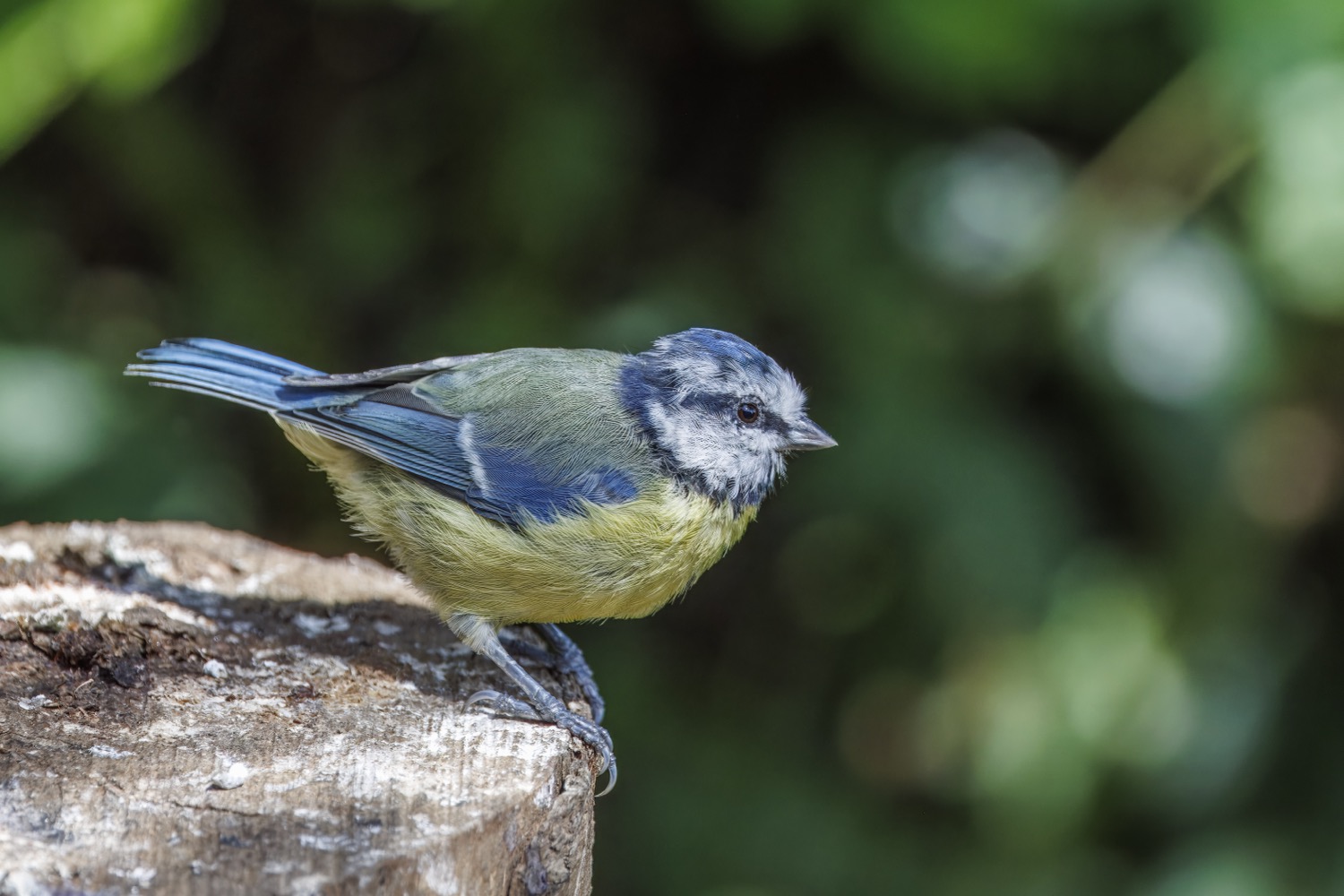
Source: Wikimedia Commons — “Eurasian blue tit (Cyanistes caeruleus) Heligan” by Charles J. Sharp, CC BY-SA 4.0
In brief
A blue tit (Cyanistes caeruleus) is a small European songbird with a blue cap and wings, white cheeks and a yellow breast. Weighing about 11 grams, it is a common, acrobatic garden-feeder visitor across Britain, Ireland and much of Europe, and an IUCN Least Concern species.
Also in Animals A to Z · Animals that start with B
By WARN Research & Conservation TeamLast updated
The Eurasian blue tit (Cyanistes caeruleus) is a small, instantly recognisable songbird with a sky-blue cap and wings, white cheeks and a sunshine-yellow breast. Weighing around 11 grams, it is one of the most familiar visitors to garden feeders across Britain, Ireland and much of Europe. Agile and inquisitive, it hangs upside-down from the thinnest twigs to reach insects and seeds, and famously learned to peck open foil milk-bottle tops on doorsteps from the 1920s onwards. Blue tits are cavity-nesters that readily take to nest boxes, raising a single large brood each spring timed to a glut of caterpillars. Though tiny, they are bold, social and easy to watch.
~11 g
Adult body weight
10.5-12 cm
Body length
8-12
Eggs in a typical clutch
20-44 million
Breeding pairs in Europe
Figures sourced from Eurasian blue tit - Wikipedia, IUCN Red List - Cyanistes caeruleus, Cyanistes caeruleus - Encyclopaedia Britannica and other references on this page.
Blue Tit: Quick Facts
| Common name | Eurasian blue tit |
|---|---|
| Scientific name | Cyanistes caeruleus |
| Family | Paridae (tits and chickadees) |
| Body length | 10.5-12 cm |
| Wingspan | 17.5-20 cm |
| Weight | About 11 g |
| Diet | Insects, spiders, seeds, nuts and fruit |
| Typical clutch | Around 8 eggs, sometimes a dozen or more |
| Lifespan | Usually a few years; up to 10+ years recorded |
| IUCN status | Least Concern |
Scientific Classification
| Kingdom | Animalia |
|---|---|
| Phylum | Chordata |
| Class | Aves |
| Order | Passeriformes |
| Family | Paridae |
| Genus | Cyanistes |
| Species | Cyanistes caeruleus |
Conservation Status
- IUCN Status
- Least Concern. The Eurasian blue tit is assessed as Least Concern on the IUCN Red List. It has a very large range and a large population, and is one of the most common and widespread birds across Europe, showing no signs of the rapid declines that would warrant a threatened category.
- Population
- Roughly 20 to 44 million breeding pairs in Europe, with a global population of many tens of millions of mature individuals.
- Trend
- Stable
- Assessed
- 2018
- CITES
- Not listed on CITES
Although abundant, blue tits remain sensitive to local pressures such as habitat loss, reduced insect food from pesticide use, and mismatches between chick-rearing and the timing of caterpillar peaks as springs warm.
Key Facts: Blue Tit
- The blue tit is a small blue-capped, yellow-breasted songbird widespread across Europe and into western Asia and North Africa.
- It is listed as Least Concern by the IUCN, with a large and broadly stable European population.
- Agile and acrobatic, it forages upside-down on thin twigs and is a confident visitor to garden feeders.
- Blue tits famously learned to peck open foil milk-bottle tops in Britain, a behaviour recorded from the 1920s.
- They are cavity-nesters that readily use nest boxes, laying unusually large clutches of up to a dozen or more eggs.
- Breeding is finely timed so chicks hatch during the spring peak in caterpillar abundance.
What does a blue tit look like?
The blue tit is among the most colourful small birds in Europe, and its palette makes it hard to confuse with anything else at a feeder. Adults have a bright blue crown bordered by a white forehead and cheeks, a thin dark line running through the eye, and a dark bib beneath the bill. The back is a soft yellow-green, the wings and tail are blue, and the underparts are a vivid yellow, often with a faint dark stripe down the belly. Males and females look broadly alike, though males tend to show slightly more brilliant blue, which is enhanced by ultraviolet reflectance that birds can see but humans cannot. It is a compact bird, measuring 10.5 to 12 centimetres in length with a wingspan of roughly 17.5 to 20 centimetres, and weighing only about 11 grams. Juveniles are duller and greener, with yellowish rather than white cheeks. The combination of blue cap, white face and yellow breast, together with its small size and restless, acrobatic movements, makes the blue tit one of the easiest garden birds to identify with confidence.
Where do blue tits live and what do they eat?
Blue tits are found across most of Europe, extending into parts of western Asia, the Middle East and north-west Africa. They favour deciduous and mixed woodland but adapt readily to parks, hedgerows, orchards and gardens, which is why they are such a familiar presence around homes. Most are resident year-round rather than long-distance migrants, though some northern and eastern birds move in response to harsh winters. Their diet shifts with the seasons. In spring and summer they feed heavily on insects, spiders and other small invertebrates, with caterpillars especially important for feeding nestlings. Outside the breeding season they broaden their menu to include seeds, fruits and nuts, and they are enthusiastic users of garden feeders stocked with sunflower seeds and fat. This adaptability and willingness to exploit human-provided food has helped the species remain abundant. Their boldness around people also produced one of ornithology's most famous learned behaviours: from the 1920s, British blue tits learned to peck through the foil caps of doorstep milk bottles to reach the cream beneath, a habit that appeared to spread through populations before doorstep deliveries declined.
How do blue tits breed and nest?
Blue tits are cavity-nesters. In the wild they use holes in trees and walls, but they take very readily to garden nest boxes, which has made them a favourite subject for nest-cam watchers. The female builds a cup of moss, grass and other plant material, lining it with hair, wool and feathers. Blue tits lay notably large clutches for their size, typically around seven or eight eggs but sometimes a dozen or more; exceptionally large single-female clutches have been verified in Britain. They usually raise a single brood each year, and the timing is critical: laying is judged so that the hungry chicks hatch to coincide with the spring flush of caterpillars, the key food for growing young. A pair may need to deliver hundreds of caterpillars a day to feed a full brood. This tight link between breeding and caterpillar abundance makes blue tits a useful indicator of how warming springs are shifting the timing of natural events. Most blue tits live only a few years, with high mortality among young birds, although ringing has shown individuals can reach ten years or more.
Blue tit vs great tit
| Feature | Blue tit | Great tit |
|---|---|---|
| Size | Smaller, about 11 g | Larger, about 18 g |
| Head | Blue cap, white cheeks | Black head, white cheeks |
| Breast | Yellow, no bold stripe | Yellow with bold black central stripe |
| Wings | Blue | Blue-grey with white wing-bar |
| Voice | High, trilling notes | Loud, ringing two-note 'teacher-teacher' |
| Behaviour | Acrobatic, hangs from thin twigs | Bolder and more dominant at feeders |
What WARN Does
World Animal Rescue Network does not run field projects specifically for the blue tit, which is a common and widespread species well outside the countries where WARN's partners work partner countries. This guide is part of WARN's free educational work, written to help people understand and value the wildlife around them. The threats that do affect blue tits in places, such as habitat loss, pesticide use that reduces insect food, and the changing timing of seasons, are the same broad pressures that bear down on the more vulnerable animals WARN does work to protect.
If learning about the blue tit brought you a moment of joy, you might consider supporting the educational and rescue work that helps people protect wildlife everywhere.
Blue Tit: Frequently Asked Questions
What is a blue tit?
What do blue tits eat?
Are blue tits and great tits the same bird?
Do blue tits really open milk bottles?
How long do blue tits live?
Will blue tits use a nest box?
Where do eurasian blue tits live?
Are eurasian blue tits dangerous?
How big is an eurasian blue tit?
Sources & References
Population figures, conservation status and biological facts on this page are drawn from authoritative scientific and intergovernmental sources.
Terms used on this page
Plain-English definitions, from our wildlife and conservation glossary.
Explore more animals
Discover more animals, their habitats and their conservation status in the WARN wildlife-guide library.