Wildlife Guide · Sub-Saharan Africa
Buffalo
Syncerus caffer (Sparrman, 1779)
Africa's formidable bovid — herd power, horn boss and savanna dominance.
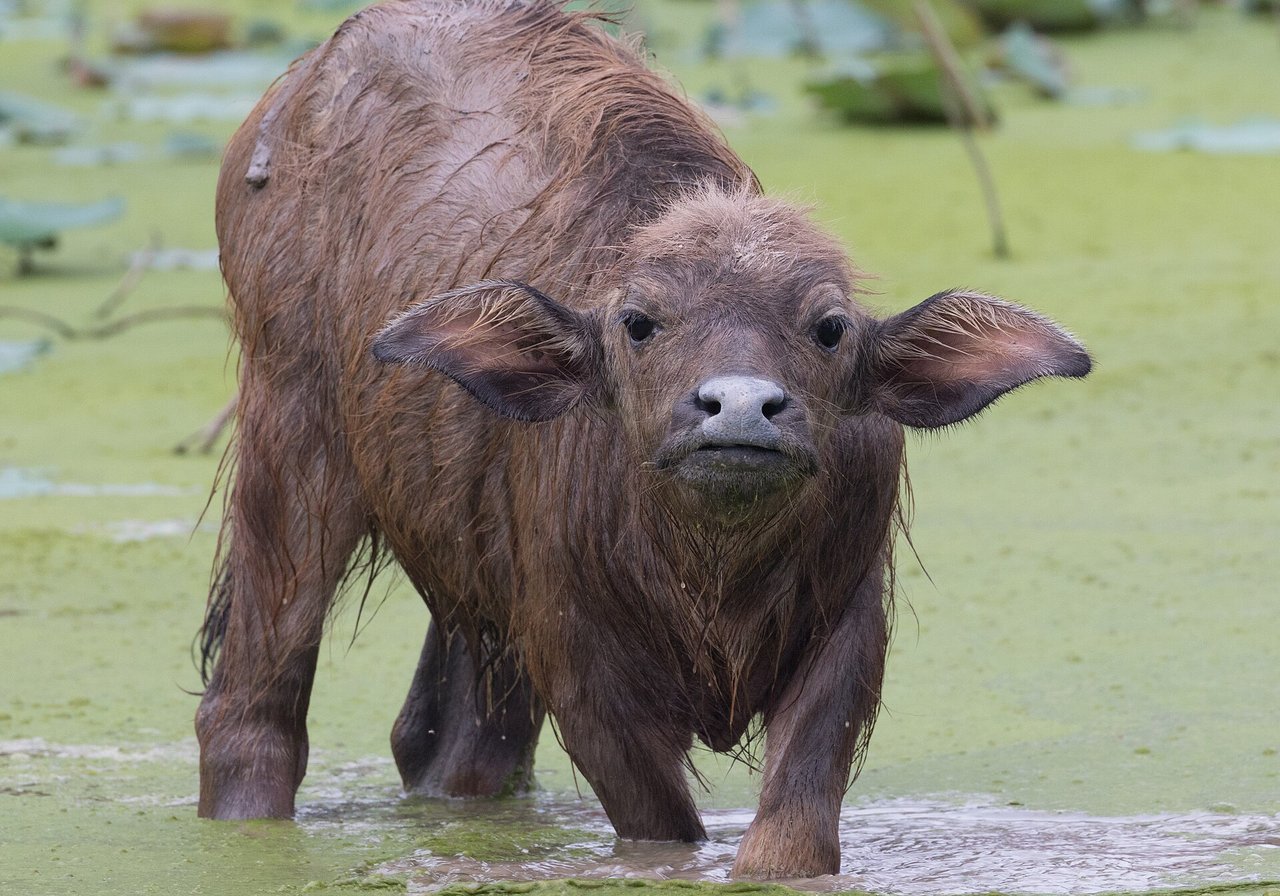
Source: Wikimedia Commons
In brief
The African buffalo (Syncerus caffer) is a Near Threatened bovid of sub-Saharan Africa — a 900 kg herd grazer and formidable prey for lions, with roughly 400,000 individuals; Asian wild water buffalo is a separate Endangered species.
Also in Animals A to Z · Animals that start with B
How you can help
You can support the related appeal — read its purpose, recipient status and fund terms first — or give once to where it is needed most. Sharing accurate information helps too.
By WARN Research & Conservation TeamLast updated
The African buffalo is one of the largest and most dangerous bovids in Africa, weighing up to 900 kg with a heavy horn boss that fuses into a shield on mature males. Syncerus caffer ranges across sub-Saharan savanna, woodland and forest from Senegal to South Africa. Herds of hundreds graze grasslands by day and drink at waterholes where lions hunt them — one of the few prey species that can kill lions in defence. Listed as Least Concern, African buffalo number roughly 400,000 but face habitat loss, disease and hunting pressure outside protected areas. Asian wild water buffalo — a separate species — is Endangered in remnant populations from India to Indonesia.
Least Concern
IUCN Red List status (2016 assessment)
~400,000
Estimated African buffalo population
900 kg
Maximum weight — large males
Appendix II
CITES listing — African buffalo
Figures sourced from IUCN Red List — Syncerus caffer, Encyclopaedia Britannica — African buffalo, African Wildlife Foundation — buffalo .
Buffalo: Quick Facts
| Weight | 300–900 kg |
|---|---|
| Horns | Boss fused across forehead in mature males |
| Diet | Bulk grazer — grasses and sedges |
| Predators | Lions primary; hyenas and crocodiles take calves |
| Population | Roughly 400,000 across sub-Saharan Africa |
| CITES | Appendix II |
Scientific Classification
| Kingdom | Animalia |
|---|---|
| Phylum | Chordata |
| Class | Mammalia |
| Order | Artiodactyla |
| Family | Bovidae |
| Genus | Syncerus |
| Species | Syncerus caffer (Sparrman, 1779) |
Conservation Status
- IUCN Status
- Least Concern (IUCN, 2016). Roughly 400,000 individuals; stable in protected areas.
- Population
- Roughly 400,000 across sub-Saharan Africa
- Trend
- Stable in southern Africa; decreasing locally from hunting and habitat loss
- Assessed
- 2016
- CITES
- Appendix II
Asian wild water buffalo (Bubalus arnee) is a separate Endangered species.
Key Facts: Buffalo
- African buffalo are among the most dangerous prey for lions — herds can kill attacking cats.
- Four subspecies range from savanna to forest across sub-Saharan Africa.
- Mature males develop a fused horn boss — a solid shield across the forehead.
- African buffalo are a major prey species sustaining lion populations across savanna.
- Wild Asian water buffalo (Bubalus arnee) is Endangered — separate from African buffalo.
- Disease outbreaks including bovine tuberculosis and rinderpest have historically devastated herds.
African buffalo across the continent
The African buffalo belongs to the family Bovidae alongside antelope, cattle and bison. Syncerus caffer is distinct from Asian water buffalo (Bubalus bubalis) and American bison — all called 'buffalo' in common English but separate species. Four subspecies are recognised: the Cape buffalo (S. c. caffer) of southern and East Africa; the savanna buffalo (S. c. brachyceros) of West Africa; the Nile buffalo (S. c. aequinoctialis) of Central Africa; and the forest buffalo (S. c. nanus) — a smaller reddish form of Congo Basin rainforest.
Adults weigh 300–900 kg. Both sexes carry horns; in males the bases fuse into a continuous boss across the forehead by age seven. Coat colour ranges from dark brown to black in savanna forms to reddish-brown in forest buffalo. Buffalo have poor eyesight but acute hearing and smell.
Herds structure around matriarchal groups of females and young, with bachelor herds of males and solitary old bulls — dagga boys — that are notoriously aggressive.
Grazing, herds and predator defence
African buffalo are bulk grazers, eating grasses and sedges in savanna and woodland. Herds of 50–500 aggregate near water daily, travelling up to 17 km from grazing areas to drink. During the dry season, larger aggregations form around permanent water sources.
Lions are the primary predator, hunting buffalo in coordinated ambushes. Buffalo herds mob lions aggressively — documented cases show herds killing lions that attack calves or wounded members. Hyenas and crocodiles take calves and weak animals. Buffalo alarm calls alert herds to danger; the species is among the most dangerous to hunters due to ambush charges.
Males fight for dominance during the rut, clashing horns in spectacular battles. Females give birth during the rainy season when grass quality peaks. Calves are hidden in thick cover for the first weeks before joining the herd.
Disease, hunting and habitat loss
African buffalo populations crashed historically from rinderpest — a cattle disease that swept Africa in the 1890s killing millions of buffalo and ungulates. Bovine tuberculosis persists in buffalo herds and can transmit to cattle where ranges overlap. Foot-and-mouth disease cycles through populations with variable mortality.
Hunting for bushmeat and trophy harvest affects populations outside protected areas. Snaring kills buffalo indiscriminately in Central and West Africa. Habitat loss from agricultural expansion and livestock encroachment reduces range in East and West Africa, though southern African populations remain robust in large reserves.
The forest buffalo of Congo Basin rainforest faces deforestation pressure — habitat loss in Central Africa mirrors forest threats in WARN partner countries Brazil and Colombia. Asian wild water buffalo (Bubalus arnee) survives in small populations from India to Cambodia and Indonesia, listed as Endangered with fewer than 4,000 individuals.
Conservation status
The IUCN lists the African buffalo as Least Concern with an estimated 400,000 individuals and a stable population trend in well-managed protected areas. Southern African reserves — Kruger, Chobe, Serengeti — hold large populations that sustain tourism revenue. West and Central African populations are more fragmented and less monitored.
CITES Appendix II regulates international trade in African buffalo trophies and products. Community conservancies in southern Africa generate income from regulated hunting and tourism that incentivises habitat protection. Anti-snaring patrols in Central Africa reduce indiscriminate killing.
Maintaining protected area networks and migration corridors between reserves supports buffalo herds and the lion populations that depend on them as primary prey.
What WARN Does
WARN publishes this buffalo guide as free public education. African buffalo anchor savanna predator ecosystems; Asian wild water buffalo in Indonesia face Endangered status — both illustrate how large bovids connect to habitat protection.
If this guide helps you understand wildlife and the pressures it faces, a gift to WARN supports habitat protection and free public education in our partner countries.
How can I help save the buffalo?
Explore practical ways to support the buffalo, from everyday choices and sharing reliable information to reviewing a related appeal before giving.
Explore ways to support
Read the related appeal’s purpose, recipient status and fund terms. Choose an affordable gift after checking what is proposed and what has been reported.
Ease the pressures
Avoid the wildlife trade and souvenirs, never buy wild animals as pets, and choose sustainable, habitat-friendly products — the threats behind the buffalo's decline fall when demand does.
Spread the word
Share accurate, sourced information about the buffalo. Wider awareness is what turns concern into lasting protection.
Buffalo: Frequently Asked Questions
How can I help save the buffalo?
Is an African buffalo the same as a water buffalo?
Are buffalo dangerous?
How many African buffalo are left?
What do lions eat — buffalo?
Are buffalo endangered?
What is a dagga boy?
Where do buffalos live?
How long do buffalos live?
How big is a buffalo?
Sources & References
Population figures, conservation status and biological facts on this page are drawn from authoritative scientific and intergovernmental sources.
Terms used on this page
Plain-English definitions, from our wildlife and conservation glossary.
Latest Buffalo Stories
Quick, fact-checked reads on the buffalo — amazing facts, key questions and the threats it faces.
Species
Tiger vs Lion: 7 Key Differences Between the Two Biggest Cats
Tigers are bigger, stripier and solitary; lions are social and live in prides. Here's how the two largest cats really differ in size, habitat and behaviour.
Read the storySpecies
12 Astonishing Facts About the Pangolin, the World's Only Scaly Mammal
From a tongue anchored near its pelvis to scales that weigh a fifth of its body, the pangolin is one of nature's strangest mammals. Here are 12 facts that explain why.
Read the storySpecies
How Big Is a Pangolin — and How Long Is Its Tongue?
Pangolins range from house-cat size to over 30 kg, and the largest have a tongue longer than their entire body. Here are the real numbers.
Read the storyExplore more animals
Discover more animals, their habitats and their conservation status in the WARN wildlife-guide library.