Wildlife Guide · Kenya & Tanzania
Cheetah
Acinonyx jubatus
The fastest land animal on Earth, racing toward a fragile future.
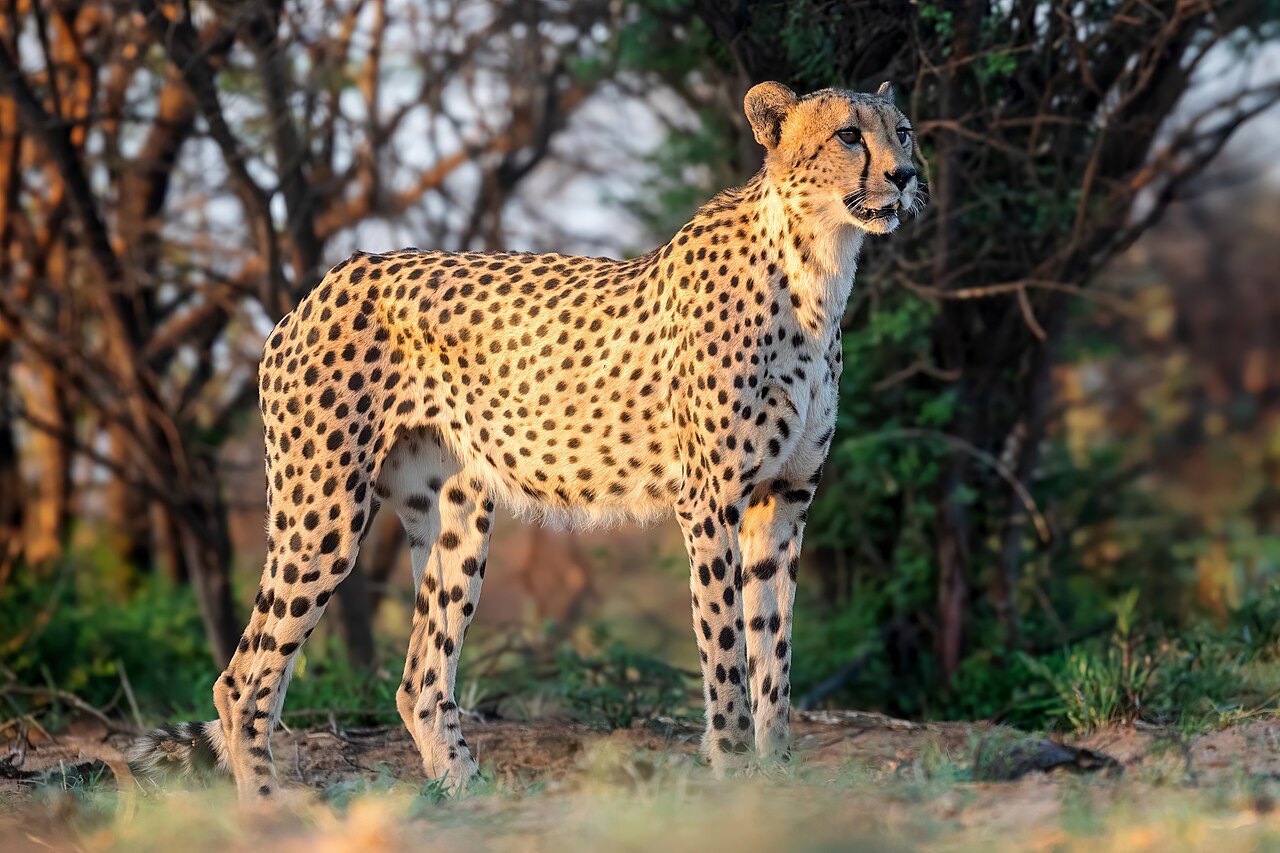
Source: Wikimedia Commons via Wikipedia “Cheetah”
In brief
The cheetah (Acinonyx jubatus) is the fastest land animal, reaching roughly 100-120 km/h (about 60-75 mph) in short bursts, and is classified as Vulnerable by the IUCN, with the Asiatic cheetah in Iran listed as Critically Endangered.
Also in Animals A to Z · Animals that start with C
How you can help
You can support the related appeal — read its purpose, recipient status and fund terms first — or give once to where it is needed most. Sharing accurate information helps too.
By WARN Research & Conservation TeamLast updated
The cheetah (Acinonyx jubatus) is the world's fastest land animal, built for explosive bursts of speed across open grassland. With a lean frame, a long muscular tail for balance, and a flexible spine, it can accelerate faster than most sports cars to chase down gazelles and other small ungulates. Once widespread across Africa and southwest Asia, the cheetah has lost most of its historic range and is now classified as Vulnerable, with only a few thousand mature individuals remaining in the wild. The Asiatic cheetah, surviving only in Iran, is among the rarest cats on the planet and is Critically Endangered. This guide covers the cheetah's speed, biology, diet, conservation status, and the threats it faces.
~100-120 km/h
Top speed in short bursts
~6,500
Mature individuals remaining
Vulnerable
Global IUCN Red List status
Fewer than 50
Asiatic cheetahs left in Iran
Figures sourced from IUCN Red List: Acinonyx jubatus (Cheetah), CITES: Cheetahs, Wikipedia: Cheetah and other references on this page.
Cheetah: Quick Facts
| Lifespan | About 10-12 years in the wild |
|---|---|
| Weight | 21-65 kg (46-143 lb) |
| Size | Head and body 1.1-1.5 m (3.7-4.9 ft) |
| Diet | Carnivore (gazelles, impala, springbok, hares) |
| Gestation | About 3 months |
| Young | Usually 3-4 cubs per litter |
| Baby name | Cub |
| Group name | Coalition (males) |
| Top speed | ~100-120 km/h (about 60-75 mph) in short bursts |
| CITES | Appendix I |
Scientific Classification
| Kingdom | Animalia |
|---|---|
| Phylum | Chordata |
| Class | Mammalia |
| Order | Carnivora |
| Family | Felidae |
| Genus | Acinonyx |
| Species | Acinonyx jubatus |
Conservation Status
- IUCN Status
- Vulnerable
- Population
- Approximately 6,500 mature individuals
- Trend
- Decreasing
- Assessed
- 2021 (published 2022)
- CITES
- Appendix I
The Asiatic cheetah subspecies (Acinonyx jubatus venaticus), restricted to Iran, is Critically Endangered with fewer than 50 individuals estimated to remain.
Did you know?
A cheetah's tear-mark stripes, the black lines running from its eyes to its mouth, are thought to cut glare from the sun and help it focus on distant prey, much like the eye-black athletes wear.
Key Facts: Cheetah
- The cheetah is the fastest land animal, sprinting at roughly 100-120 km/h (about 60-75 mph) in short bursts of a few hundred metres.
- It is built for speed: a lightweight body, long legs, a flexible spine, semi-retractable claws for grip, and a long tail that acts as a rudder.
- Globally the cheetah is listed as Vulnerable, with around 6,500 mature individuals estimated in the wild.
- The Asiatic cheetah survives only in Iran, where fewer than 50 are thought to remain, making it Critically Endangered.
- Main threats include habitat loss, conflict with farmers, loss of prey, illegal cub trafficking, and high cub mortality.
- Cheetahs are listed on CITES Appendix I, the highest level of international trade protection.
How fast is a cheetah and how does it hunt?
The cheetah is the fastest land animal, capable of roughly 100-120 km/h (about 60-75 mph) in short bursts, with the highest reliably recorded speed around 104 km/h (65 mph). It can accelerate from a standstill to top speed in just a few seconds, but sustains a full sprint only for a few hundred metres before overheating. Everything about its anatomy serves the chase: a small head, deep chest, long thin legs, an extremely flexible spine that lengthens each stride, blunt semi-retractable claws that grip like running spikes, and a long tail used as a counterbalance for sharp turns. Cheetahs hunt by day, relying on eyesight to spot prey, then stalk close before unleashing a high-speed dash and tripping the animal with a swipe of the paw.
What does a cheetah eat and how does it live?
Cheetahs are carnivores that target small to medium ungulates, typically prey weighing 20-60 kg such as gazelles, impala, and springbok, along with hares and the young of larger species. Because they are lighter than lions and leopards, cheetahs often lose their kills to these stronger competitors and to hyenas, so they eat quickly after a hunt. Females are largely solitary and raise cubs alone, while males sometimes form small bonded groups called coalitions, often brothers, that defend a territory together. Cubs are born blind and helpless after a gestation of about three months, with litters commonly of three to four, though cub mortality in the wild is very high.
Why is the cheetah endangered?
The cheetah has disappeared from the great majority of its historic range and now occupies only a fraction of it. The IUCN lists the species as Vulnerable, with the global population estimated at around 6,500 mature individuals and declining. Key pressures include the loss and fragmentation of open habitat, declining wild prey, conflict with livestock farmers, vehicle collisions, and the illegal trafficking of cubs for the exotic pet trade. Because cheetahs range widely and live at low densities, much of the remaining population exists outside protected areas, which makes them especially exposed. The Asiatic cheetah subspecies (Acinonyx jubatus venaticus), now confined to Iran's central drylands with fewer than 50 individuals, is Critically Endangered and at serious risk of extinction.
African cheetah vs Asiatic cheetah
| Feature | African cheetah | Asiatic cheetah |
|---|---|---|
| Range | Eastern and southern Africa | Central Iran only |
| IUCN status | Vulnerable | Critically Endangered |
| Estimated number | Several thousand | Fewer than 50 |
| Build | Larger, longer-legged | Smaller, thicker coat, more powerful neck |
| Spots | Larger, more spaced | Smaller, denser spots |
What WARN Does
The cheetah lives outside the countries where the World Animal Rescue Network currently funds on-the-ground projects. WARN does not fund cheetah field work, and at our current launch stage we are honest about that scope. This guide is educational and search-focused content: it exists to build global awareness of an iconic, threatened species and to support WARN's broader mission of protecting wildlife and the habitats they depend on. The conservation challenges cheetahs face, including habitat loss and the illegal wildlife trade, are the same forces WARN tackles in the regions where it does operate.
The cheetah falls outside the regions WARN currently funds, but the threats it faces, habitat loss and the illegal wildlife trade, are exactly what your support helps us fight where we do work. Backing WARN's habitat protection efforts strengthens a global mission to keep wild places intact for vulnerable species everywhere.
How can I help save the cheetah?
Explore practical ways to support the cheetah, from everyday choices and sharing reliable information to reviewing a related appeal before giving.
Explore ways to support
Read the related appeal’s purpose, recipient status and fund terms. Choose an affordable gift after checking what is proposed and what has been reported.
Ease the pressures
Avoid the wildlife trade and souvenirs, never buy wild animals as pets, and choose sustainable, habitat-friendly products — the threats behind the cheetah's decline fall when demand does.
Spread the word
Share accurate, sourced information about the cheetah. Wider awareness is what turns concern into lasting protection.
Cheetah: Frequently Asked Questions
How can I help save the cheetah?
How fast can a cheetah run?
Is the cheetah endangered?
Where do cheetahs live?
What do cheetahs eat?
What is a baby cheetah called?
What is the difference between a cheetah and a leopard?
Are cheetahs dangerous?
How long do cheetahs live?
How big is a cheetah?
Sources & References
Population figures, conservation status and biological facts on this page are drawn from authoritative scientific and intergovernmental sources.
Terms used on this page
Plain-English definitions, from our wildlife and conservation glossary.
Latest Cheetah Stories
Quick, fact-checked reads on the cheetah — amazing facts, key questions and the threats it faces.
Explore more animals
Discover more animals, their habitats and their conservation status in the WARN wildlife-guide library.