Wildlife Guide · North America & Europe
Crow
Corvus
Among the cleverest birds on Earth — tool-users, problem-solvers and faces in the crowd.
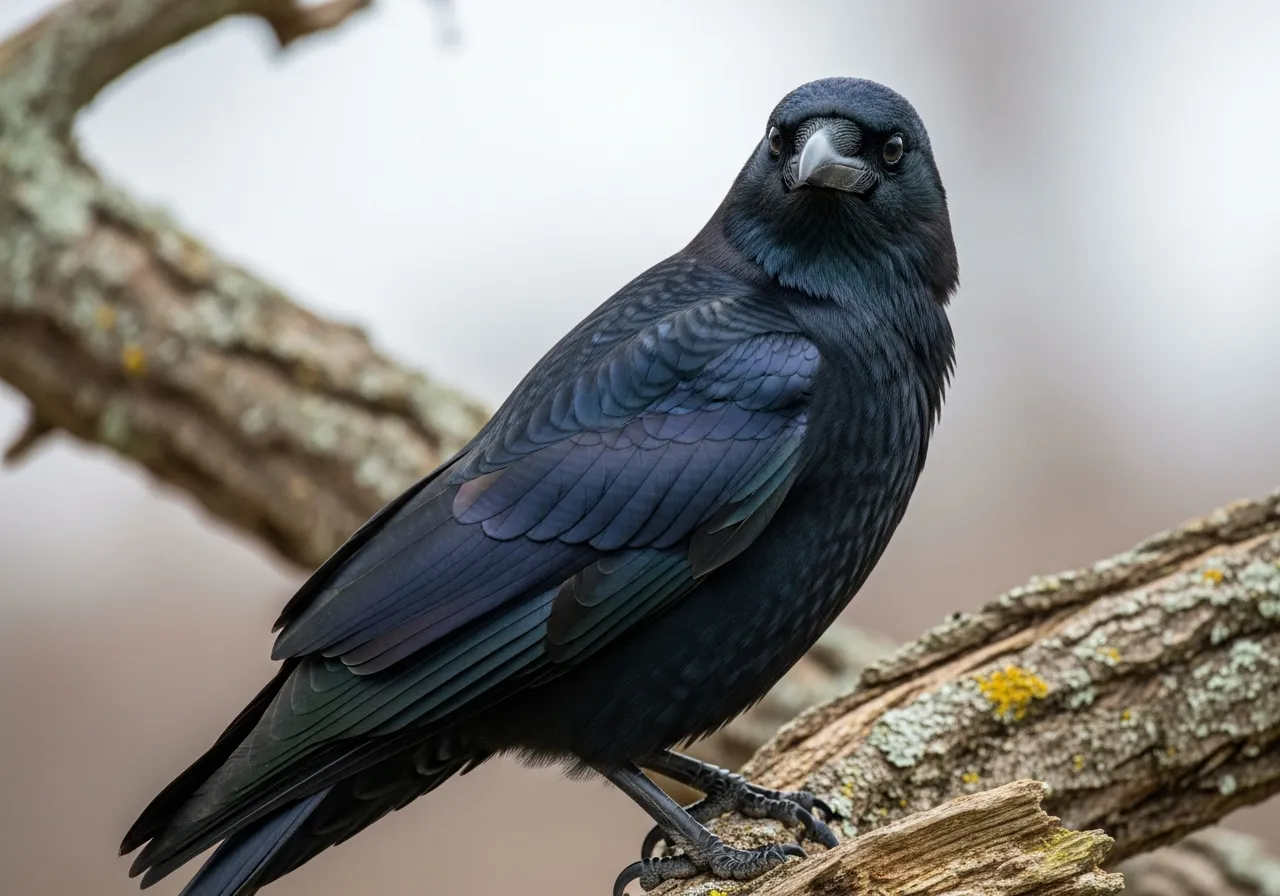
Source: Global Animal Guide (WARN)
In brief
A crow is a medium-to-large, mostly black bird of the genus Corvus, part of the corvid family that includes ravens and jays. Found on most continents, crows are among the world's most intelligent birds — using tools, solving problems and recognising individual human faces.
Also in Animals A to Z · Animals that start with C
By WARN Research & Conservation TeamLast updated
Crows are medium-to-large, all-black or black-and-grey birds of the genus Corvus, part of the corvid family that also includes ravens, rooks, jackdaws, magpies and jays. Found on every continent except South America and Antarctica, they are best known for extraordinary intelligence: many species use and even shape tools, solve multi-step puzzles, remember individual human faces and pass information between generations. Most familiar crows — such as the American crow and the carrion crow — are highly adaptable and abundant, thriving in farmland, woodland and city streets alike. With roughly four to five dozen species worldwide, "crow" describes a remarkably successful, social and curious group of birds.
~45+
species in the genus Corvus worldwide
6
continents where crows live (all but S. America & Antarctica)
Up to ~2 yrs
crows can remember a specific human face
Tool use
documented in several crow species
Figures sourced from Crow — Wikipedia, Corvus (genus) — Wikipedia, American crow — Wikipedia and other references on this page.
Crow: Quick Facts
| Common name | Crow |
|---|---|
| Genus | Corvus |
| Family | Corvidae (corvids) |
| Number of species | Roughly 45+ species worldwide |
| Range | All continents except South America and Antarctica |
| Diet | Omnivore — insects, seeds, fruit, carrion, scraps |
| Notable trait | Tool use, problem-solving, face recognition |
| Social behaviour | Highly social; often roost in large flocks |
| Typical status | Common species Least Concern; varies by species |
| CITES | Most crow species not CITES-listed |
Scientific Classification
| Kingdom | Animalia |
|---|---|
| Phylum | Chordata |
| Class | Aves |
| Order | Passeriformes |
| Family | Corvidae |
| Genus | Corvus |
Conservation Status
- IUCN Status
- Varies by species. The familiar common crows — including the American crow (Corvus brachyrhynchos) and the carrion crow (Corvus corone) — are assessed by the IUCN as Least Concern, with several populations stable or increasing. The genus Corvus is large, however, and some island and specialist species are threatened; the Hawaiian crow ('Alala) is among the most endangered birds in the world.
- Population
- Common species number in the millions globally; no single figure applies to the whole genus.
- Trend
- Stable or increasing for most common crows; declining for some rare specialist species.
- Assessed
- Common crows assessed Least Concern in recent IUCN Red List assessments.
- CITES
- Most crow species are not listed on the CITES appendices.
Because "crow" spans dozens of species, broad-brush statements can mislead: abundance of common crows sits alongside genuine extinction risk for a handful of rarer relatives.
Key Facts: Crow
- "Crow" refers to birds of the genus Corvus, part of the wider corvid (crow) family.
- Crows are among the most intelligent of all birds, with brain-to-body ratios comparable to some primates.
- Several species make and use tools, plan ahead and solve multi-step problems in experiments.
- Crows recognise individual human faces and can hold a grudge — or a favour — for a long time.
- Common species such as the American and carrion crow are Least Concern and often increasing.
- A few island and specialist crows are threatened, so conservation status varies across the genus.
What makes crows so intelligent?
Crows possess one of the highest brain-to-body ratios among birds, rivalling that of some non-human primates. This is reflected in behaviour that was once thought uniquely mammalian. In laboratory tests, crows solve multi-step puzzles, choose between tools, and appear to plan for future needs rather than acting only on immediate reward. New Caledonian crows, the most famous tool-makers, fashion hooked twigs and barbed leaf-edges to winkle grubs from crevices, and will even use one tool to obtain another. Beyond tools, crows recognise individual human faces, remember those who have threatened them, and can communicate that information to other crows, including their own offspring. They cache food, track who is watching them and re-hide stores when they suspect a thief is nearby — a behaviour linked to perspective-taking. This combination of memory, social learning and flexible problem-solving is why crows are studied so intensively by scientists interested in how intelligence evolves. Importantly, much of this cleverness is practical: it helps crows exploit an enormous range of foods and habitats, from rubbish-strewn cities to remote forests, making them one of the most adaptable bird groups on the planet.
Where do crows live and what do they eat?
Crows occur across North America, Europe, Asia, Africa and Australasia, occupying almost every habitat from coastal cliffs and open farmland to dense woodland and busy city centres. The genus is conspicuously absent only from South America and Antarctica. This wide range reflects an unfussy, opportunistic diet: crows are omnivores that eat insects, worms, seeds, grain, fruit, eggs, small animals, carrion and human food waste. Their adaptability around people is a major reason familiar species have flourished while many specialist birds decline. Most crows are highly social. Many roost communally, sometimes in flocks numbering thousands, and species such as the rook nest in colonies. Outside the breeding season, large gatherings offer warmth, safety and shared information about where food can be found. Crows are also famously vocal, with a varied repertoire of caws, rattles and clicks used to signal alarm, defend territory and keep contact within the group. Some can even mimic sounds, including elements of human speech in captivity. This blend of dietary flexibility, sociality and intelligence allows crows to live alongside humans more successfully than almost any other wild bird.
Are crows a single species, and are they endangered?
"Crow" is not one species but a common name for many birds in the genus Corvus, which holds roughly four to five dozen species depending on how they are classified. The same genus also contains ravens, rooks and jackdaws, so the line between a "crow" and a "raven" is more about naming tradition than strict biology. The familiar large black crows of the Northern Hemisphere — the American crow in North America and the carrion and hooded crows across Eurasia — are all assessed by the IUCN as Least Concern, and several are stable or increasing thanks to their comfort around farmland and towns. Because the genus is so large and widespread, conservation status varies considerably. While the common crows are abundant, a number of island-dwelling and habitat-specialist species are far more vulnerable: the Hawaiian crow, for example, is among the most threatened birds in the world. Most crows are not listed on CITES, reflecting that they are not generally traded at levels of concern, though the threatened specialists need targeted protection of their shrinking habitats.
Crow vs Raven: how to tell them apart
| Feature | Crow | Raven |
|---|---|---|
| Size | Smaller, pigeon-to-medium | Larger, up to buzzard-sized |
| Call | Sharp, repeated "caw" | Deep, hoarse "cronk" or croak |
| Tail in flight | Fan-shaped, rounded | Wedge or diamond-shaped |
| Bill | Slimmer, neat | Heavier, with shaggy throat feathers |
| Typical grouping | Often seen in flocks | Usually in pairs |
| Flight | Steady wingbeats | Soars and tumbles more readily |
What WARN Does
World Animal Rescue Network does not run field projects dedicated specifically to crows, which are widespread and, in their common forms, not threatened. This guide is part of WARN's free educational work to help people understand and value wildlife. The habitat loss, persecution and pollution that threaten the rarer crows of the world are the same pressures bearing down on the animals WARN does protect in its partner countries — so caring about crows is part of caring about the wider web of life.
If crows have ever made you look twice, you can help WARN keep teaching people to see wildlife with the same curiosity.
Crow: Frequently Asked Questions
What is the difference between a crow and a raven?
How intelligent are crows really?
Do crows remember human faces?
What do crows eat?
Are crows endangered?
Where do crows live?
Are crows dangerous?
How long do crows live?
How big is a crow?
Sources & References
Population figures, conservation status and biological facts on this page are drawn from authoritative scientific and intergovernmental sources.
Terms used on this page
Plain-English definitions, from our wildlife and conservation glossary.
Latest Crow Stories
Quick, fact-checked reads on the crow — amazing facts, key questions and the threats it faces.
Species
Slow Loris: Why the Internet's Favourite Pet Is a Conservation Disaster
The slow loris looks like a cartoon character — and that has nearly destroyed the species. Here is the truth behind the viral videos.
Read the storySpecies
The Snow Leopard: Why the Ghost of the Mountains Is Still Vulnerable
The snow leopard is one of the most elusive big cats on earth, with an estimated 4,000-6,500 individuals across twelve range states — including Pakistan, where WARN is preparing to operate. This briefing explains why the species was downlisted from Endangered to Vulnerable in 2017 and why that is not the success story it sounds like.
Read the storyGuides
Sun Bear vs Moon Bear: The Two Most Trafficked Asian Bears
The sun bear and the Asiatic black bear (moon bear) are the two most commonly trafficked bears in Asia — for the pet trade, for traditional medicine and for bear-bile farming. Here is how to tell them apart.
Read the storyExplore more animals
Discover more animals, their habitats and their conservation status in the WARN wildlife-guide library.