Wildlife Guide · Worldwide — domestic; wild ancestor in North-east Africa
Donkey
Equus asinus (Linnaeus, 1758)
The patient backbone of rural transport — domestic companions and wild ancestors under pressure.
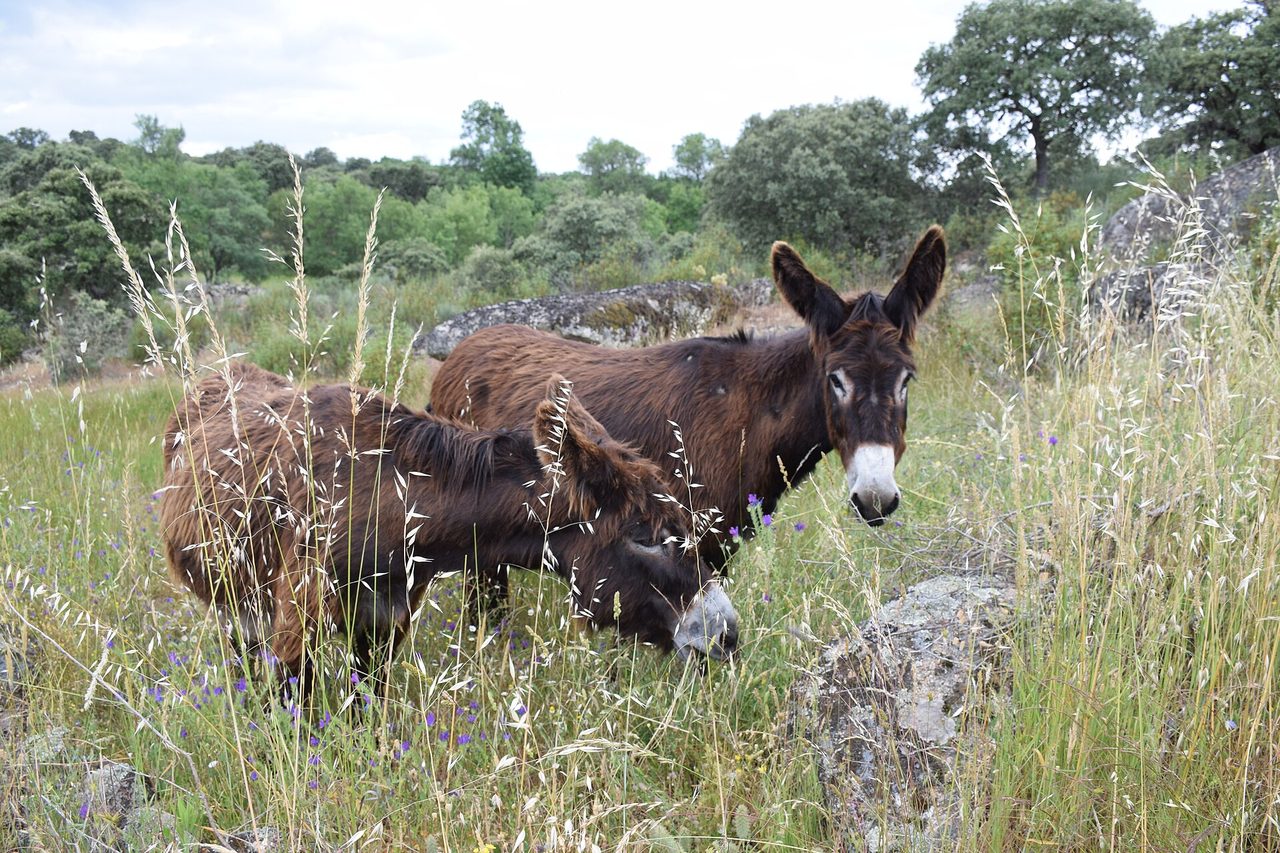
Photo: Juan Lagunilla / Wikimedia Commons (CC BY-SA 4.0)
In brief
Donkeys (Equus asinus) are domestic equids used worldwide for transport and companionship — their wild ancestor is Critically Endangered; millions are killed yearly for the ejiao skin trade.
Also in Animals A to Z · Animals that start with D
By WARN Research & Conservation TeamLast updated
The donkey (Equus asinus) is a domesticated equid descended from the African wild ass, used worldwide for transport, pack work and companionship. Roughly 50 million donkeys serve communities where motor vehicles cannot reach — carrying water, firewood and goods across arid and mountainous terrain. The wild ancestor — African wild ass (Equus africanus) — is Critically Endangered with fewer than 600 individuals in Eritrea, Ethiopia and Somalia. Donkeys face a separate crisis: the global skin trade for ejiao, a gelatin used in traditional Chinese medicine, kills millions annually. WARN's working donkey guide covers welfare for animals in transport and agriculture.
50 million
Domestic donkeys worldwide
Critically Endangered
African wild ass — fewer than 600 wild
Millions
Donkeys killed annually for ejiao skin trade
CITES I
African wild ass — commercial trade banned
Figures sourced from IUCN Red List — Equus africanus, The Donkey Sanctuary, Brooke — working equids .
Donkey: Quick Facts
| Domestic population | ~50 million worldwide |
|---|---|
| Wild ancestor | African wild ass — Critically Endangered |
| Related guide | Working donkey |
| Main threat | Ejiao skin trade |
| Uses | Transport, pack work, guarding, companionship |
| CITES | Appendix I — African wild ass |
Scientific Classification
| Kingdom | Animalia |
|---|---|
| Class | Mammalia |
| Order | Perissodactyla |
| Family | Equidae |
| Species | Equus asinus (Linnaeus, 1758) |
Conservation Status
- IUCN Status
- Domestic donkey abundant but trade-threatened; African wild ass Critically Endangered.
- Population
- ~50 million domestic; African wild ass fewer than 600 wild
- Trend
- Decreasing for African wild ass and in ejiao-export regions
- Assessed
- 2020 (African wild ass)
- CITES
- Appendix I — African wild ass
Key Facts: Donkey
- Donkeys are domestic equids — wild ancestor is the Critically Endangered African wild ass.
- Roughly 50 million donkeys support rural transport where vehicles cannot reach.
- The ejiao skin trade kills millions of donkeys annually — a global welfare crisis.
- Working donkeys need hoof care, shelter, water and rest — not disposable tools.
- WARN's working donkey guide covers welfare for animals in transport and agriculture.
- Donkeys are intelligent, social animals with strong bonds to companions.
Domestic donkeys and wild ancestors
Domestic donkeys descend from the African wild ass, domesticated roughly 6,000 years ago in North-east Africa and the Middle East. Today breeds range from the miniature Mediterranean donkey to large American mammoth jacks used for mule production. Donkeys carry loads, pull carts, guard livestock against predators and serve as companions — particularly for horses, whose calm presence reduces equine stress.
The African wild ass — ancestor of the domestic donkey — persists in Critically Endangered populations in Eritrea, Ethiopia and Somalia. Hybridisation with feral donkeys and hunting threaten the last wild lineages. The onager and kiang are related wild equids of Asia.
This hub introduces donkeys as a group. WARN's working donkey guide addresses welfare for animals carrying loads in Pakistan, Colombia and other partner regions where donkeys remain essential infrastructure.
Working donkey welfare
Working donkeys often lack basic care: overgrown hooves, ill-fitting tack, excessive loads and no access to shade or water. Heat stress, wounds from poor harnessing and colic from irregular feeding are common. Donkeys mask pain — stoic behaviour leads owners to overlook suffering until collapse.
Effective welfare programmes provide farriery, harness padding, load limits and owner education. Rest days, companion donkeys and shelter from sun and rain dramatically improve working lives. In Pakistan — a WARN partner country — donkeys transport goods in urban and rural settings where veterinary access is limited.
Donkeys are not small horses: they need lower-sugar diets, careful parasite management and patient handling. Fear-based training creates dangerous animals; positive reinforcement builds cooperative working partners.
The ejiao skin trade crisis
Ejiao is a gelatin extracted from donkey skins, used in traditional Chinese medicine and cosmetics. Demand surged in the 2010s, triggering mass slaughter across Africa, South America and Asia. Countries including Burkina Faso, Niger and Kenya banned donkey export after local populations collapsed.
The trade kills animals inhumanely — stolen, transported long distances without food or water, slaughtered for skin while meat is discarded. Rural communities lose essential transport overnight. Illegal smuggling routes persist through borders with weak enforcement.
Campaigns for synthetic alternatives, CITES listing proposals and national export bans are conservation and welfare priorities. Consumers can refuse ejiao products and support donkey welfare charities operating farriery clinics.
Donkeys and people
Donkeys appear in biblical narrative, Aesop's fables and rural economies on every continent. They are patient, intelligent and form strong pair bonds — separating companions causes measurable distress.
Responsible ownership means veterinary access, appropriate nutrition, hoof trimming every six to eight weeks and retirement rather than disposal when working life ends. Supporting WARN's working animal appeals funds farriery and harness repair where partners operate alongside horse welfare programmes.
What WARN Does
WARN supports working animal welfare through partner programmes — farriery, harness repair and owner education for donkeys and horses in Pakistan, Colombia and beyond. This hub is free education explaining why donkeys are not disposable tools.
If this guide helps you understand wildlife and the pressures it faces, a gift to WARN supports habitat protection and free public education in our partner countries.
Donkey: Frequently Asked Questions
How many donkeys are there in the world?
Are donkeys endangered?
What is ejiao?
How are donkeys different from horses?
Where do donkeys live?
Are donkeys dangerous?
How long do donkeys live?
Sources & References
Population figures, conservation status and biological facts on this page are drawn from authoritative scientific and intergovernmental sources.
Terms used on this page
Plain-English definitions, from our wildlife and conservation glossary.
Explore more animals
Discover more animals, their habitats and their conservation status in the WARN wildlife-guide library.