Wildlife Guide · Britain and Ireland & Western Europe
Hazel Dormouse
Muscardinus avellanarius
The sleepy golden rodent of Europe's hedgerows, asleep for half the year.
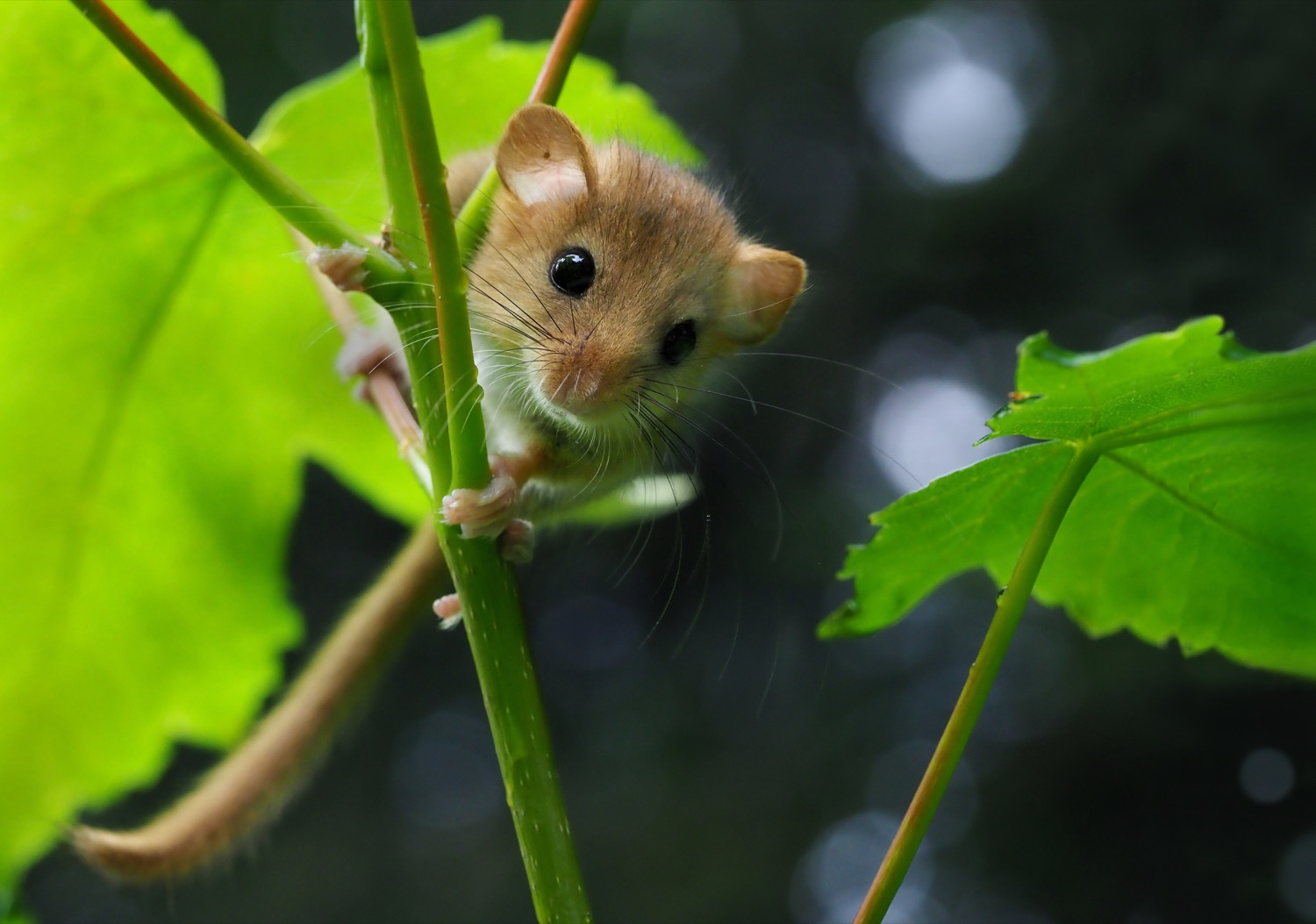
Source: Wikimedia Commons — “Hazel dormouse (Muscardinus avellanarius), Skole, Lviv Oblast, Ukraine (48236079657)” by Frank Vassen from Brussels, Belgium, CC BY 2.0
In brief
The hazel dormouse (Muscardinus avellanarius) is a small golden-brown European rodent, weighing about 17-20 g, that lives in woodland and hedgerows. Nocturnal and arboreal, it eats flowers, fruit, nuts and insects, and hibernates for roughly half the year, from autumn until spring.
Also in Animals A to Z · Animals that start with H
By WARN Research & Conservation TeamLast updated
The hazel dormouse (Muscardinus avellanarius) is a small, golden-brown rodent famous for its long winter sleep. Weighing only about 17-20 g, it lives in deciduous woodland, hedgerows and scrub across much of Europe and into Asia Minor, and is the only dormouse native to Britain. Strictly nocturnal and an agile climber, it spends summer nights feeding in the branches on flowers, fruit, nuts and insects, rarely touching the ground. From about October it curls into a tight ball and hibernates near ground level until spring. Though listed globally as Least Concern, it has declined sharply in Britain and is strictly protected there, making it a much-loved flagship for woodland and hedgerow conservation.
~17-20 g
Typical body weight
~6 months
Spent in hibernation each year
~30-40 g
Pre-hibernation fattened weight
up to 5 yrs
Lifespan in the wild
Figures sourced from Hazel dormouse - Wikipedia, Muscardinus avellanarius - IUCN Red List, Dormouse - Encyclopaedia Britannica and other references on this page.
Hazel Dormouse: Quick Facts
| Common name | Hazel dormouse (common dormouse) |
|---|---|
| Scientific name | Muscardinus avellanarius |
| Family | Gliridae (dormice) |
| Typical weight | ~17-20 g (30-40 g pre-hibernation) |
| Body length | ~6-9 cm, plus a similar furry tail |
| Diet | Flowers, pollen, fruit, nuts (esp. hazelnuts), insects |
| Activity | Nocturnal and arboreal |
| Hibernation | ~October to April/May (about half the year) |
| Lifespan | ~3 years, up to about 5 in the wild |
| Range | Europe and Asia Minor; only dormouse native to Britain |
Scientific Classification
| Kingdom | Animalia |
|---|---|
| Phylum | Chordata |
| Class | Mammalia |
| Order | Rodentia |
| Family | Gliridae (dormice) |
| Genus | Muscardinus |
| Species | Muscardinus avellanarius |
Conservation Status
- IUCN Status
- Globally assessed as Least Concern by the IUCN (2023), as the species remains widespread across much of Europe. However, it has declined in parts of its northern and western range, with a steep, well-documented decline in Britain, where it is strictly protected by law. It is regarded as a flagship for woodland and hedgerow conservation.
- Population
- No reliable global total; widespread across Europe but locally declining, with marked losses recorded in Britain.
- Trend
- Stable to declining; declines noted in several northern and western European countries, including Britain.
- Assessed
- 2023
- CITES
- Not listed on the CITES Appendices.
Sensitive to loss and fragmentation of hedgerows and woodland and to the decline of traditional habitat management; strictly protected under UK and European wildlife law.
Key Facts: Hazel Dormouse
- The hazel dormouse is a small golden-brown rodent of European woodland, scrub and hedgerows, and the only dormouse native to Britain.
- It is one of the longest-hibernating British mammals, sleeping curled up from around October until April or May.
- Largely nocturnal and arboreal, it rarely descends to the ground and seldom travels more than about 70 m from its nest.
- It weaves distinctive summer nests from stripped honeysuckle bark, leaves and grasses, often near hazel and bramble.
- Globally it is assessed as Least Concern (IUCN, 2023), but it has declined steeply in Britain and is strictly protected there.
- Its fortunes track the health of hedgerows and managed woodland, making it a flagship for these threatened habitats.
What does a hazel dormouse look like and how does it live?
The hazel dormouse is a small, rounded rodent with thick, soft fur that ranges from reddish through golden-brown to yellow-orange. Its body is roughly 6-9 cm long, with a furry tail of similar length, large black eyes suited to night vision, and small, neat ears. Unusually among British rodents, its tail is fully covered in fur rather than scaly, a useful identification feature. Adults typically weigh around 17-20 g in summer, fattening to 30-40 g before winter. It is strictly nocturnal and highly arboreal, moving confidently through the canopy and the dense lattice of hedgerows on slender feet that grip thin twigs. It rarely comes down to the ground and seldom ventures more than about 70 m from its nest, so connected vegetation is vital. By day it sleeps in woven nests tucked into shrubs, tree cavities or nest boxes, built from shredded honeysuckle bark, fresh leaves and grasses. This combination of small size, golden coat and arboreal habits makes it one of Europe's most distinctive small mammals.
Why does the hazel dormouse hibernate for so long?
The hazel dormouse is one of the deepest and longest hibernators among British mammals, which is reflected in its name (from the French dormir, to sleep). It typically hibernates from around October until April or May, spending close to half the year asleep. Before winter it gorges on energy-rich foods, especially hazelnuts, to lay down fat reserves, then builds a tightly woven hibernation nest at or near ground level, where temperatures are more stable. Curled into a ball, it drops its body temperature and metabolism dramatically to save energy, surviving on stored fat and losing a significant proportion of its body weight by spring. Even outside true hibernation, in cool, wet summer weather when food is scarce, it can enter shorter bouts of torpor, switching off to conserve energy rather than forage in poor conditions. This energy-saving strategy suits an animal that depends on seasonal, patchy food. The downside is that mild, unsettled winters and cold, wet summers can disrupt its careful energy budget, one reason the species is sensitive to changing weather and habitat quality.
What does the hazel dormouse eat and how does it breed?
The hazel dormouse is an opportunistic feeder that follows the seasons through the canopy. In spring it takes flowers and pollen, notably hawthorn and bramble blossom; in summer it adds insects such as aphids and caterpillars; and in autumn it switches to energy-rich fruits, berries and nuts, above all hazelnuts, which it opens with a characteristic smooth, round hole edged by toothmarks. This need for a continuous, varied larder is why diverse, well-connected woodland and hedgerow is so important. Breeding generally runs from around June into autumn. After a pregnancy of about three to four weeks, females usually give birth to litters of around four young, often in late summer, raising them in a nursery nest until they are independent enough to fatten for their first winter. In the wild dormice commonly live around three years and can reach about five, a long life for so small a rodent, helped by the energy they save through hibernation and torpor.
Dormouse vs house mouse: how to tell them apart
| Feature | Hazel dormouse | House mouse |
|---|---|---|
| Family | Gliridae (dormice) | Muridae (true mice) |
| Tail | Thick and fully furry | Thin, scaly, almost hairless |
| Fur colour | Golden to reddish-brown | Grey-brown |
| Activity | Nocturnal, mainly arboreal | Nocturnal, ground and buildings |
| Hibernation | Yes, about half the year | No, active all year |
| Typical habitat | Woodland and hedgerows | Often near human dwellings |
What WARN Does
WARN does not run field projects specifically for the hazel dormouse, which lives mainly in Europe, outside the countries where our partners work. This guide is part of WARN's free educational mission to help people understand and value wildlife worldwide. The threats that press on the dormouse, especially loss and fragmentation of hedgerows and woodland and the decline of traditional habitat management, are the same forces of habitat loss that endanger many of the animals WARN does protect on the ground.
If this small golden sleeper made you smile, a gift to WARN helps us keep wildlife education free and support the animals our partners protect.
Hazel Dormouse: Frequently Asked Questions
Is a dormouse actually a mouse?
How long does a hazel dormouse hibernate?
Where do hazel dormice live?
What do hazel dormice eat?
Are hazel dormice endangered?
How big is a hazel dormouse and how long does it live?
Are hazel dormice dangerous?
Sources & References
Population figures, conservation status and biological facts on this page are drawn from authoritative scientific and intergovernmental sources.
Terms used on this page
Plain-English definitions, from our wildlife and conservation glossary.
Explore more animals
Discover more animals, their habitats and their conservation status in the WARN wildlife-guide library.