Wildlife Guide · Worldwide except Antarctica
Eagle
Family Accipitridae — ~60 eagle species in genera Aquila, Haliaeetus, Harpia, Pithecophaga and others
The apex raptors of sky and forest — power, vision and cultural reverence on every continent.
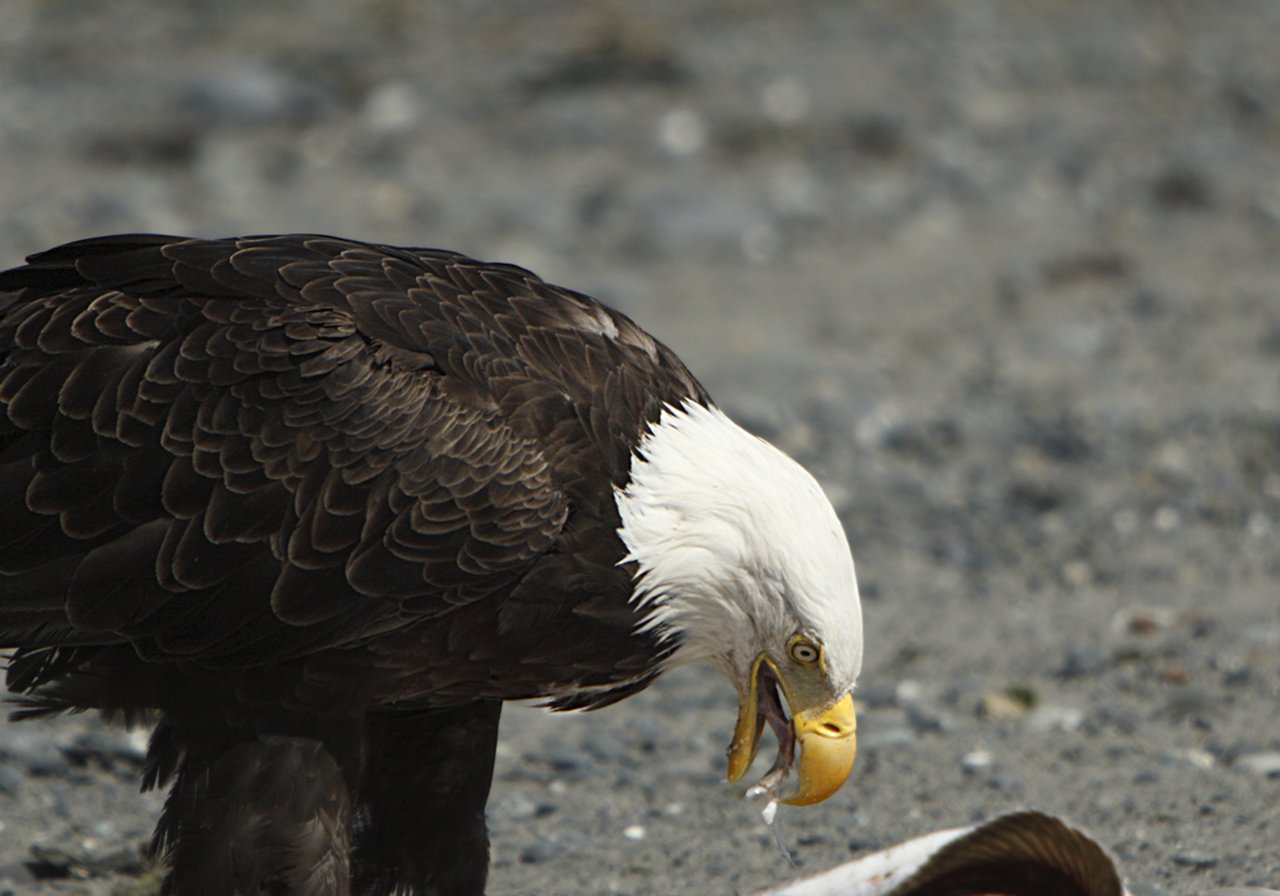
Source: Wikimedia Commons
In brief
Eagles are large birds of prey in the family Accipitridae — roughly 60 species worldwide; they are apex raptors with powerful talons and keen eyesight, with conservation status ranging from recovered (bald eagle) to Critically Endangered (Philippine eagle).
Also in Animals A to Z · Animals that start with E
By WARN Research & Conservation TeamLast updated
Eagles are large birds of prey in the family Accipitridae, found on every continent except Antarctica. Roughly 60 species share the eagle name, from the golden eagle of the Northern Hemisphere to the bald eagle of North America, the wedge-tailed eagle of Australia and the critically endangered Philippine eagle. Eagles are defined by size, power and hunting ecology rather than a single taxonomic group — they occupy the top of the raptor hierarchy with broad wings, massive talons and exceptional eyesight. Conservation status varies sharply: bald eagles recovered from DDT extinction to over 300,000 individuals, while the Philippine eagle and Spanish imperial eagle remain Critically Endangered. This guide covers eagles as a group; see WARN's harpy eagle guide for that specific species.
~60
Recognised eagle species worldwide
8×
Visual acuity compared with humans
300,000+
Bald eagles in North America after DDT recovery
Appendix I/II
CITES listing for most eagle species
Figures sourced from IUCN Red List — Accipitridae assessments, BirdLife International — Data Zone, Cornell Lab of Ornithology — eagle species .
Eagle: Quick Facts
| Species | ~60 recognised eagle species |
|---|---|
| Vision | ~8× sharper than human sight |
| Groups | Sea eagles, booted eagles, forest eagles, snake eagles |
| Nests | Massive eyries reused for decades |
| Recovery | Bald eagle restored from near extinction after DDT ban |
| CITES | Appendix I or II for most species |
Scientific Classification
| Kingdom | Animalia |
|---|---|
| Phylum | Chordata |
| Class | Aves |
| Order | Accipitriformes |
| Family | Accipitridae |
| Genera | Aquila, Haliaeetus, Harpia, Pithecophaga and others |
Conservation Status
- IUCN Status
- Varies by species. Bald eagle Least Concern after recovery; Philippine eagle Critically Endangered; Spanish imperial eagle Endangered.
- Population
- Varies — bald eagle 300,000+; Philippine eagle fewer than 400 pairs
- Trend
- Increasing for recovered species; decreasing for forest specialists
- Assessed
- Varies by species
- CITES
- Appendix I or II for most eagle species
See WARN harpy eagle guide for Harpia harpyja — distinct from this generic eagle hub.
Key Facts: Eagle
- Eagles are large Accipitridae raptors — defined by size and power, not a single genus.
- Roughly 60 eagle species range across every continent except Antarctica.
- The bald eagle recovered from DDT near-extinction to over 300,000 individuals.
- The Philippine eagle and Spanish imperial eagle are Critically Endangered.
- Eagles pair for life and reuse massive nest structures for decades.
- Habitat loss, persecution and pesticide poisoning remain threats for many species.
What makes an eagle?
'Eagle' is a common name for the largest and most powerful Accipitridae raptors, rather than a strict taxonomic category. Sea eagles (Haliaeetus — bald eagle, white-tailed eagle) fish in coastal and river habitats. Booted eagles (Aquila — golden eagle, wedge-tailed eagle) hunt mammals on open ground and mountains. Forest eagles (Harpia, Pithecophaga, Morphnus) are giant specialists of tropical canopy. Snake eagles (Circaetus) feed on reptiles. Each group occupies a distinct ecological niche.
What unites them is size — most eagles weigh 3–7 kg or more — powerful grasping talons, broad wings for soaring and exceptional long-distance vision. An eagle's eyes fill much of the skull, with two foveae for forward and side focus simultaneously. That optical hardware lets a golden eagle spot a hare from three kilometres while riding a thermal.
Because 'eagle' spans multiple genera, conservation status varies enormously. Always check species-level assessments rather than assuming all eagles share the same trajectory.
Sea eagles, golden eagles and forest giants
The bald eagle (Haliaeetus leucocephalus) is North America's national symbol, recovered from fewer than 500 breeding pairs in the lower 48 states to over 300,000 individuals after DDT was banned. The white-tailed eagle rebounded similarly across Europe. Golden eagles (Aquila chrysaetos) range across the Northern Hemisphere, hunting hares, marmots and ground birds on open terrain.
At the other extreme, the Philippine eagle (Pithecophaga jefferyi) — Critically Endangered with fewer than 400 pairs — hunts monkeys and flying lemurs in remnant rainforest. The harpy eagle of Central and South America is covered in a separate WARN guide with full conservation detail for Brazil and Colombia.
Steller's sea eagle of Russia and Japan, the wedge-tailed eagle of Australia and the African fish eagle each fill similar apex roles on different continents — proof that eagle ecology repeats wherever large prey and open air meet.
Threats and recovery
Eagles face diverse threats. DDT and other pesticides caused eggshell thinning and near-extinction for bald and white-tailed eagles before bans enabled recovery. Habitat loss — deforestation for forest eagles, wetland drainage for sea eagles — removes nesting and hunting grounds. Persecution persists: golden eagles are still poisoned and shot on grouse moors in Scotland; wedge-tailed eagles were persecuted by ranchers in Australia.
Wind turbine collisions kill eagles at coastal and mountain migration routes. Lead ammunition in carrion poisons eagles that scavenge shot game. Illegal trade in feathers and live birds affects crested and forest eagle species.
Recovery stories matter: the bald eagle's rebound shows that removing a chemical cause can restore a population within decades when habitat remains. Forest eagles lack that easy fix — they need intact canopy and anti-poaching patrols.
Eagles and human culture
Eagles hold extraordinary cultural significance. The bald eagle adorns the Great Seal of the United States; the golden eagle appears on flags and coats of arms across Eurasia; the Philippine eagle is a national symbol of the Philippines. Indigenous peoples across North America, Siberia and Australia revere eagles in ceremony and art.
That cultural weight can aid conservation — public outrage over DDT-driven eagle declines helped catalyse pesticide regulation — or hinder it, when demand for eagle feathers or live birds fuels illegal trade. Ethical ecotourism that values living eagles supports habitat protection in range countries.
For students and searchers, eagles exemplify why apex predators need space: huge territories, stable prey bases and freedom from poisoned carrion.
What WARN Does
WARN publishes this eagle guide as free public education. Our harpy eagle guide covers that Critically Endangered forest giant in detail; this page helps searchers understand the wider eagle family and the threats apex raptors face worldwide.
If this guide helps you understand wildlife and the pressures it faces, a gift to WARN supports habitat protection and free public education in our partner countries.
Eagle: Frequently Asked Questions
How many eagle species are there?
What is the difference between an eagle and a hawk?
Are bald eagles endangered?
Which eagle is most endangered?
Do eagles mate for life?
What do eagles eat?
Where do eagles live?
Are eagles dangerous?
How big is an eagle?
How long do eagles live?
Sources & References
Population figures, conservation status and biological facts on this page are drawn from authoritative scientific and intergovernmental sources.
Terms used on this page
Plain-English definitions, from our wildlife and conservation glossary.
Explore more animals
Discover more animals, their habitats and their conservation status in the WARN wildlife-guide library.