Wildlife Guide · Europe & North Africa
Eel
Anguilla anguilla (Linnaeus, 1758)
A serpent of rivers and mystery — Critically Endangered after decades of decline.
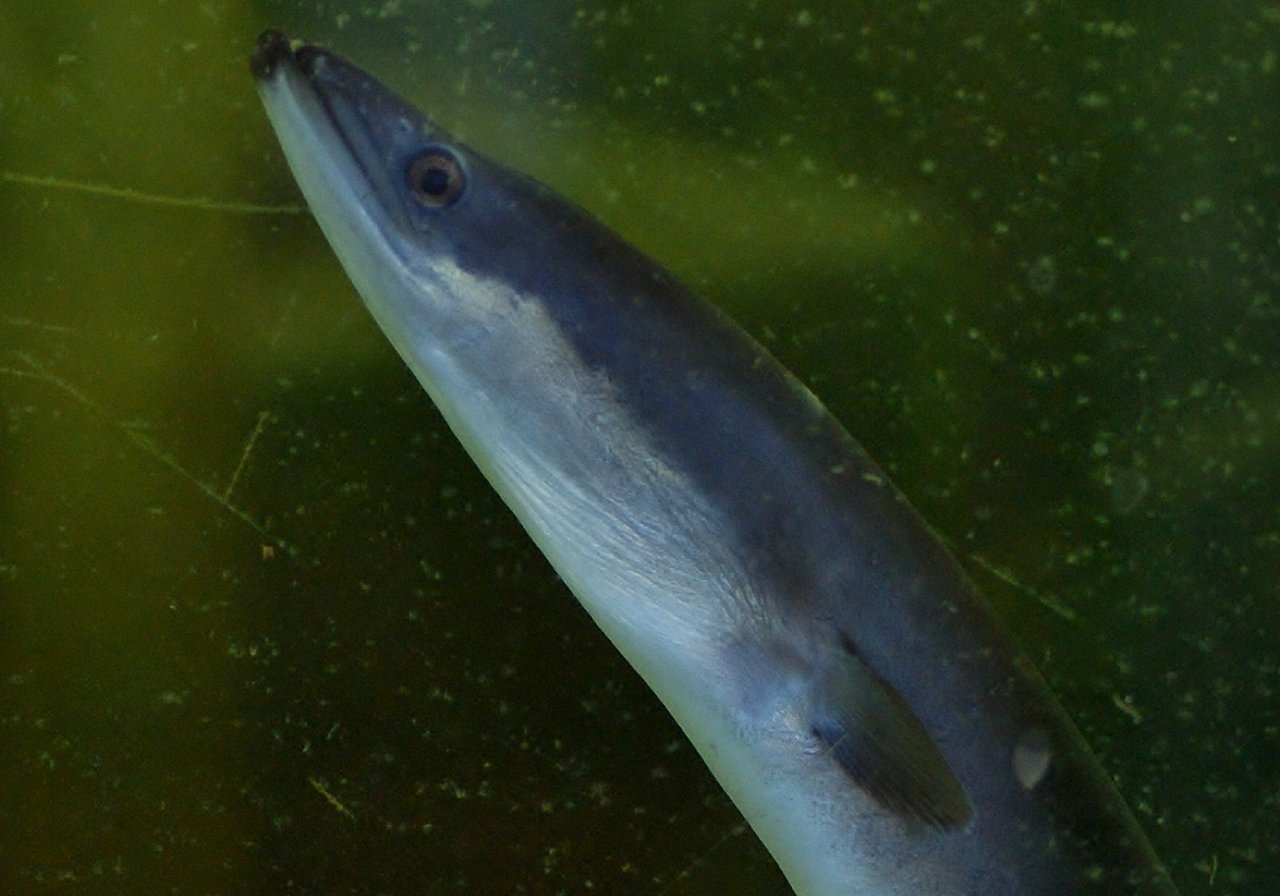
Source: Wikimedia Commons
In brief
The European eel (Anguilla anguilla) is a Critically Endangered catadromous fish spawning in the Sargasso Sea; populations have declined over 90% since the 1970s from dams, pollution, fisheries and illegal trade.
Also in Animals A to Z · Animals that start with E
How you can help
You can support the related appeal — read its purpose, recipient status and fund terms first — or give once to where it is needed most. Sharing accurate information helps too.
By WARN Research & Conservation TeamLast updated
The European eel is a serpentine fish that has puzzled naturalists for millennia. Born in the Sargasso Sea, leaf-like larvae drift on ocean currents toward European rivers, transforming into glass eels, then elvers that ascend streams and lakes. After years — sometimes decades — in freshwater, silver eels migrate thousands of kilometres back to the Sargasso to spawn and die. Listed as Critically Endangered by the IUCN, European eel populations have collapsed by over 90% since the 1970s. Dams block migration, pollution degrades habitat, disease spreads in aquaculture and illegal trafficking of glass eels feeds Asian farming.
Critically Endangered
IUCN Red List status (2020 assessment)
90%+
Population decline since the 1970s
6,500 km
Migration from Europe to Sargasso Sea
Appendix II
CITES listing — trade regulated
Figures sourced from IUCN Red List — Anguilla anguilla, Sustainable Eel Group, CITES — European eel .
Eel: Quick Facts
| Length | 60–100 cm (females larger) |
|---|---|
| Spawning | Sargasso Sea — North Atlantic |
| Migration | Up to 6,500 km each way |
| Lifespan | Up to 80+ years in freshwater |
| Population trend | 90%+ decline since 1970s |
| CITES | Appendix II |
Scientific Classification
| Kingdom | Animalia |
|---|---|
| Phylum | Chordata |
| Class | Actinopterygii |
| Order | Anguilliformes |
| Family | Anguillidae |
| Genus | Anguilla |
| Species | Anguilla anguilla (Linnaeus, 1758) |
Conservation Status
- IUCN Status
- Critically Endangered (IUCN, 2020). Over 90% decline since the 1970s.
- Population
- Declining; no reliable global count
- Trend
- Decreasing
- Assessed
- 2020
- CITES
- Appendix II
Key Facts: Eel
- European eels spawn in the Sargasso Sea — their exact spawning grounds were mystery until recently.
- Populations have declined over 90% since the 1970s — Critically Endangered.
- Dams and weirs block upstream migration of elvers and downstream passage of silver eels.
- Illegal trafficking of glass eels to Asia is a multi-million-pound criminal trade.
- Eels can live 80+ years in freshwater before returning to sea to spawn once.
- Eel passes and dam removal are essential for migration recovery.
A life cycle spanning ocean and river
European eels are catadromous — they spawn in salt water and grow in fresh water, the reverse of salmon. Adults leave European rivers each autumn as silver eels, descending to the Atlantic and swimming roughly 6,500 km to the Sargasso Sea to spawn. All eels die after spawning; larvae hatch as leaf-shaped leptocephali that drift toward Europe over one to three years.
Near continental shelves, larvae metamorphose into transparent glass eels — entering estuaries in spring. They darken into elvers, ascending rivers, climbing wet walls and even crossing wet grassland to reach lakes and streams. Yellow eels grow in freshwater for 5–20 years — occasionally over 80 — before transforming into silver eels for the final ocean migration.
This extraordinary life cycle, once opaque to science, was pieced together over centuries. Johannes Schmidt confirmed the Sargasso spawning ground in the 1920s after decades of ocean surveys.
Ecology and cultural importance
Eels are nocturnal predators, eating invertebrates, fish and carrion. They occupy diverse habitats — rivers, lakes, canals and estuaries — tolerating low oxygen better than most fish. As apex freshwater predators, they regulate invertebrate and fish communities.
Eels hold deep cultural significance in Europe. Jellied eels are an East End London tradition; smoked eel is prized in the Netherlands and Scandinavia. Eel fishing supported rural economies for centuries. Decline has silenced traditions tied to seasonal runs.
The American eel (Anguilla rostrata) shares the Sargasso spawning ground and faces similar threats — Endangered on the IUCN Red List. Japanese eels (Anguilla japonica) are Endangered; demand for glass eels drives illegal trade from Europe.
Why eels are collapsing
Multiple pressures compound. Hydropower dams and weirs block migration — elvers cannot ascend; silver eels cannot descend, dying in turbines or starving downstream of barriers. Thousands of barriers fragment European rivers.
Pollution — pesticides, industrial chemicals and microplastics — accumulates in eel tissue. Anguillicoloides crassus, a parasitic nematode introduced from Asia, damages swim bladders and migration ability.
Fisheries target glass eels for restocking and export to Asian aquaculture. Illegal trafficking — smuggling live glass eels in luggage — is organised crime worth millions annually. Climate change may alter ocean currents that carry larvae toward Europe.
Conservation and recovery efforts
The IUCN lists the European eel as Critically Endangered with a continuing decline. The EU Eel Regulation requires member states to restore escapement of silver eels. Eel passes — ramps and lifts at dams — improve connectivity. Dam removal on rivers like the Rhine tributaries shows measurable recovery in passage.
CITES Appendix II regulates international trade. Europol coordinates enforcement against glass eel smuggling. Captive breeding has not yet replaced wild glass eel collection for aquaculture.
Citizen science — eel monitoring in rivers — tracks recruitment. Reducing pollution, removing obsolete barriers and refusing to buy illegally sourced eel supports recovery.
Eels and the future of rivers
The eel's decline is a measure of river health across Europe. Restoring eel populations requires free-flowing rivers — the same connectivity that benefits salmon, otters and freshwater biodiversity.
Asian eel farming depends heavily on wild-caught glass eels from Europe and Morocco — an unsustainable pipeline that criminal networks exploit. Sustainable aquaculture must develop captive breeding or accept reduced production.
WARN publishes this eel guide as free public education about a Critically Endangered species whose recovery depends on river restoration, trade enforcement and the political will to reconnect waterways across a continent.
What WARN Does
WARN publishes this eel guide as free public education. Freshwater connectivity — free-flowing rivers — benefits eels, otters and entire aquatic ecosystems across Europe and beyond.
If this guide helps you understand wildlife and the pressures it faces, a gift to WARN supports habitat protection and free public education in our partner countries.
How can I help save the eel?
Explore practical ways to support the eel, from everyday choices and sharing reliable information to reviewing a related appeal before giving.
Explore ways to support
Read the related appeal’s purpose, recipient status and fund terms. Choose an affordable gift after checking what is proposed and what has been reported.
Ease the pressures
Avoid the wildlife trade and souvenirs, never buy wild animals as pets, and choose sustainable, habitat-friendly products — the threats behind the eel's decline fall when demand does.
Spread the word
Share accurate, sourced information about the eel. Wider awareness is what turns concern into lasting protection.
Eel: Frequently Asked Questions
How can I help save the eel?
Are European eels endangered?
Where do eels come from?
Why are eels declining?
How long do eels live?
What is glass eel trafficking?
Can eels climb dams?
Are european eels dangerous?
How big is an european eel?
What do european eels eat?
Sources & References
Population figures, conservation status and biological facts on this page are drawn from authoritative scientific and intergovernmental sources.
Terms used on this page
Plain-English definitions, from our wildlife and conservation glossary.
Latest Eel Stories
Quick, fact-checked reads on the eel — amazing facts, key questions and the threats it faces.
Species
12 Amazing Facts About Grey Wolves (And Why Alpha Wolves Aren't Real)
A howl that carries 16 km, a pack that is really a family, and the debunked study behind the 'alpha wolf' myth. Twelve verified facts.
Read the storySpecies
12 Amazing Facts About Flamingos (They Are Born Grey and Eat Upside Down)
Pink from diet, a bill that filters upside down, and milk produced by both parents. Twelve verified flamingo facts.
Read the storySpecies
12 Amazing Facts About Hyenas (They Are Not Dogs, and Females Rule)
Closer to cats than dogs, female-dominated clans, and hunting far more than they scavenge. Twelve verified facts.
Read the storyExplore more animals
Discover more animals, their habitats and their conservation status in the WARN wildlife-guide library.