Wildlife Guide · Australia
Emu
Dromaius novaehollandiae
Australia's largest bird — a flightless wanderer where doting fathers raise the chicks.
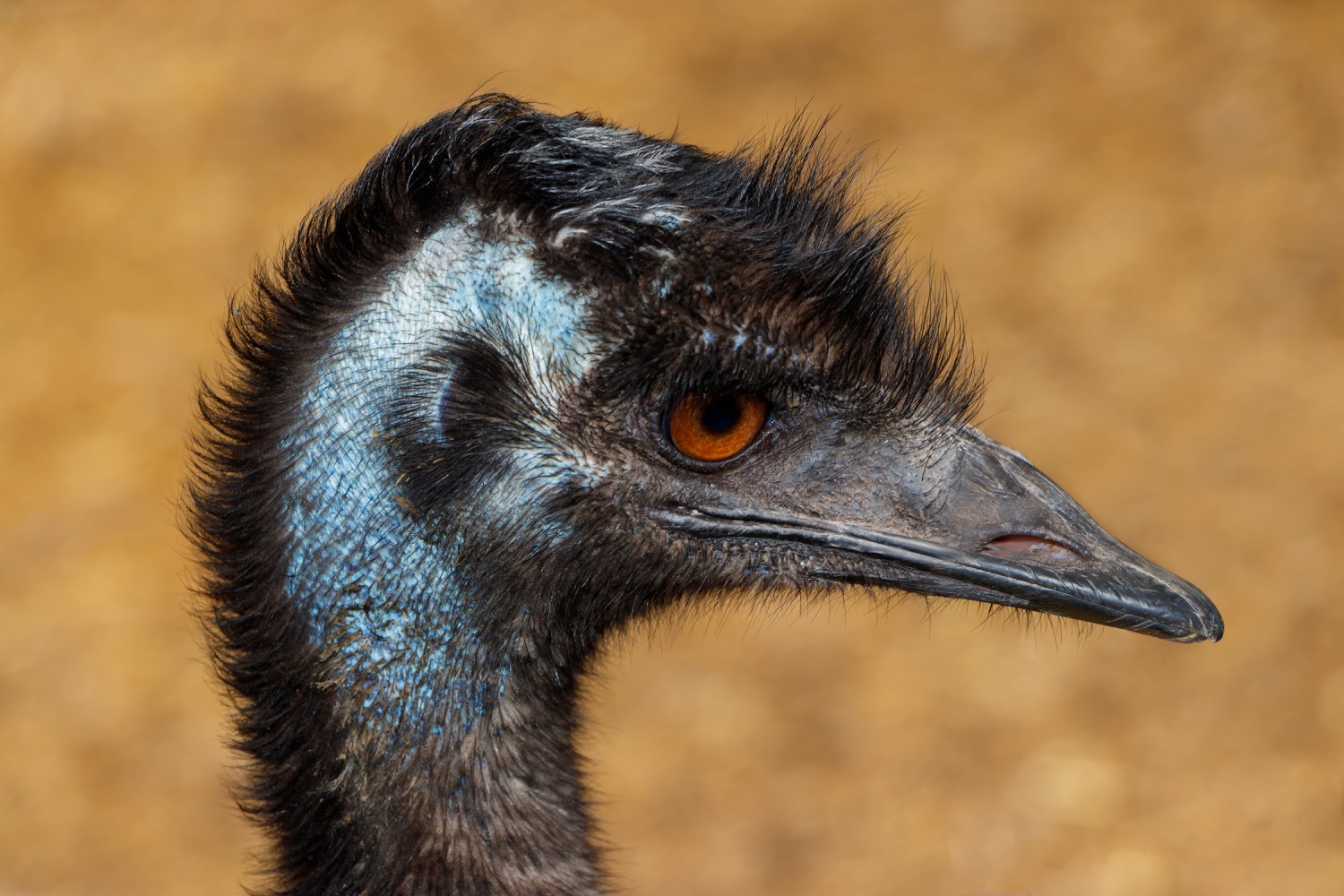
Source: Wikimedia Commons — “Dromaius novaehollandiae - Maroparque 01” by H. Zell, CC BY-SA 3.0
In brief
An emu (Dromaius novaehollandiae) is a large flightless bird native to Australia. The country's tallest bird and the second-tallest living bird after the ostrich, it reaches about 1.9 metres, runs nearly 50 km/h, and is unusual in that males incubate the eggs and raise the chicks.
Also in Animals A to Z · Animals that start with E
By WARN Research & Conservation TeamLast updated
The emu (Dromaius novaehollandiae) is Australia's largest native bird and, after the ostrich, the second-tallest living bird on Earth. Standing up to around 1.9 metres, this soft-feathered, flightless giant roams woodland, grassland and arid scrub across mainland Australia, striding on powerful three-toed legs that can carry it at speeds approaching 50 km/h. Emus are famous for their reversed family roles: the male alone incubates the dark-green eggs and then guards and raises the striped chicks for many months. Highly nomadic, emus follow rainfall and food across vast distances. Listed as Least Concern by the IUCN, the species remains widespread and is also farmed for meat, oil and leather.
1.9 m
Maximum standing height
~48 km/h
Top running speed
56 days
Male-only incubation
Least Concern
IUCN Red List status
Figures sourced from Emu — Wikipedia, IUCN Red List: Dromaius novaehollandiae, Emu — Encyclopaedia Britannica and other references on this page.
Emu: Quick Facts
| Common name | Emu |
|---|---|
| Scientific name | Dromaius novaehollandiae |
| Native range | Mainland Australia |
| Height | Up to about 1.9 m |
| Weight | About 18–60 kg (typically ~31–37 kg) |
| Top speed | Around 48 km/h |
| Diet | Omnivore: seeds, fruit, shoots, insects |
| Incubation | By the male, about 56 days |
| Lifespan | Around 10 years wild; up to ~20 in captivity |
| IUCN status | Least Concern |
Scientific Classification
| Kingdom | Animalia |
|---|---|
| Phylum | Chordata |
| Class | Aves |
| Order | Casuariiformes |
| Family | Casuariidae (or Dromaiidae) |
| Genus | Dromaius |
| Species | Dromaius novaehollandiae |
Conservation Status
- IUCN Status
- Least Concern (IUCN Red List). The emu is widespread and common across mainland Australia, with a large and stable population. Three island subspecies — the Tasmanian, Kangaroo Island and King Island emus — became extinct following European settlement, but the mainland species is not currently threatened. The emu is not listed under CITES.
- Population
- Estimated at roughly 630,000–725,000 mature individuals
- Trend
- Stable
- Assessed
- 2018
- CITES
- Not listed
Local threats include habitat clearance, vehicle collisions, fencing and feral predators, but none currently endanger the species as a whole. Emus are also widely farmed for meat, oil and leather.
Key Facts: Emu
- The emu is Australia's largest bird and the world's second-tallest living bird after the ostrich.
- It is flightless but a powerful runner, reaching speeds of around 48 km/h on long three-toed legs.
- Males take sole charge of reproduction, incubating the eggs for about eight weeks and raising the chicks.
- Emus lay large, thick-shelled dark-green eggs, typically a clutch of around 5 to 15.
- Highly nomadic, emus travel long distances to follow rainfall and seasonal food.
- The IUCN lists the emu as Least Concern, though three island subspecies became extinct after European settlement.
What does an emu look like and how big is it?
The emu is an unmistakable bird: tall, long-necked and covered in shaggy, soft, grey-brown plumage that hangs loosely and gives it a slightly dishevelled appearance. Adults stand up to roughly 1.9 metres tall and weigh anywhere from about 18 to 60 kilograms, with most birds averaging in the low-to-mid thirties. Unusually, each feather has a double shaft, and the loose structure helps insulate the bird against both heat and cold. The head and upper neck are sparsely feathered, exposing bluish skin that is most visible during the breeding season. Emus are flightless — their wings are reduced to small stubs roughly the size of a hand — but they more than compensate on land. Three-toed feet and strong legs let them stride at a relaxed pace over huge distances and sprint at close to 48 km/h when alarmed, with a stride that can exceed two metres at full speed. They are also capable swimmers. Only the ostrich stands taller among living birds, making the emu the second-tallest bird on Earth and the largest native to Australia.
Why do male emus raise the young?
Emus reverse the parental roles seen in most birds. After a female courts a male and they pair for a breeding season, the female lays a clutch of large, thick-shelled, dark-green eggs — commonly around 5 to 15 — in a simple ground nest. From that point the male takes over entirely. He incubates the eggs for about 56 days, during which he barely eats, drinks or leaves the nest, often losing a significant share of his body weight and surviving on stored fat. Females may wander off and sometimes mate again with other males, occasionally laying in more than one nest. Once the chicks hatch, the striped, cream-and-brown youngsters follow their father, who fiercely defends them and leads them to food. He may care for the brood for five to seven months, and young birds can remain with him for up to a year and a half. This male-centred system, combined with communal nests that sometimes hold eggs from several females, makes emu family life one of the most distinctive among large birds.
Where do emus live and what do they eat?
Emus are found across most of mainland Australia, occupying a remarkable range of habitats from sclerophyll forest and savanna woodland to semi-arid grassland and shrubland. They tend to avoid only the densest forests and the most extreme deserts and the heavily cleared, settled regions. Because so much of Australia is dry and unpredictable, emus are strongly nomadic, travelling long distances — sometimes hundreds of kilometres — in response to rainfall and the food it brings. Their diet is broad and opportunistic. Emus are omnivores that feed mainly on the parts of plants richest in nutrients: seeds, fruits, flowers, fresh shoots and young foliage. They also eat insects and other small invertebrates such as grasshoppers, beetles and caterpillars, especially when feeding growing chicks. Like many birds, they swallow stones, glass and other hard objects (gastroliths) to help grind food in the gizzard, and they will travel to drink when water is available. By eating fruits and moving widely, emus act as important seed dispersers, spreading native plants across the landscape — a quiet but valuable ecological role for such a large and far-ranging bird.
Emu vs ostrich: how do the world's two tallest birds differ?
| Feature | Emu | Ostrich |
|---|---|---|
| Native range | Australia | Africa |
| Height | Up to ~1.9 m | Up to ~2.7 m |
| Toes per foot | Three | Two |
| Who incubates | Male only | Male and female share |
| Egg colour | Dark green | Cream / off-white |
| Standing among living birds | Second tallest | Tallest |
What WARN Does
WARN does not run field projects specifically for emus, which are widespread across Australia and lie outside the countries where WARN's partners work on the ground. This guide is part of WARN's free educational work, helping people understand the world's wildlife. The broad threats that touch emus — habitat clearance, road collisions and changing rainfall — are the same pressures that fall on the animals WARN does protect in its partner countries.
If you enjoy learning about wildlife like the emu, a small gift helps keep these guides free and supports the everyday animals in WARN's care.
Emu: Frequently Asked Questions
Can emus fly?
How fast can an emu run?
Do male or female emus sit on the eggs?
What colour are emu eggs and how big are they?
What do emus eat?
Are emus endangered?
Where do emus live?
Are emus dangerous?
How long do emus live?
Sources & References
Population figures, conservation status and biological facts on this page are drawn from authoritative scientific and intergovernmental sources.
Terms used on this page
Plain-English definitions, from our wildlife and conservation glossary.
Latest Emu Stories
Quick, fact-checked reads on the emu — amazing facts, key questions and the threats it faces.
Species
Why Are Dugongs Disappearing — and What's Being Done to Save Them?
Dugongs are vanishing from waters where they once thrived, declared functionally extinct in China and critically endangered in East Africa. Here's why — and the work that offers hope.
Read the storySpecies
12 Amazing Facts About Koalas (They Are Not Bears, and They Have Fingerprints)
Fingerprints indistinguishable from ours, 20 hours of sleep a day, and a diet that would poison most animals. Twelve koala facts.
Read the storySpecies
12 Amazing Facts About Kangaroos (They Cannot Walk Backwards)
Tendons that work like springs, a tail used as a fifth leg, and the ability to pause a pregnancy. Twelve verified kangaroo facts.
Read the storyExplore more animals
Discover more animals, their habitats and their conservation status in the WARN wildlife-guide library.