Wildlife Guide · Northern Hemisphere
Red Fox
Vulpes vulpes
The world's most widespread wild carnivore — equally at home in forests, farmland and city streets.
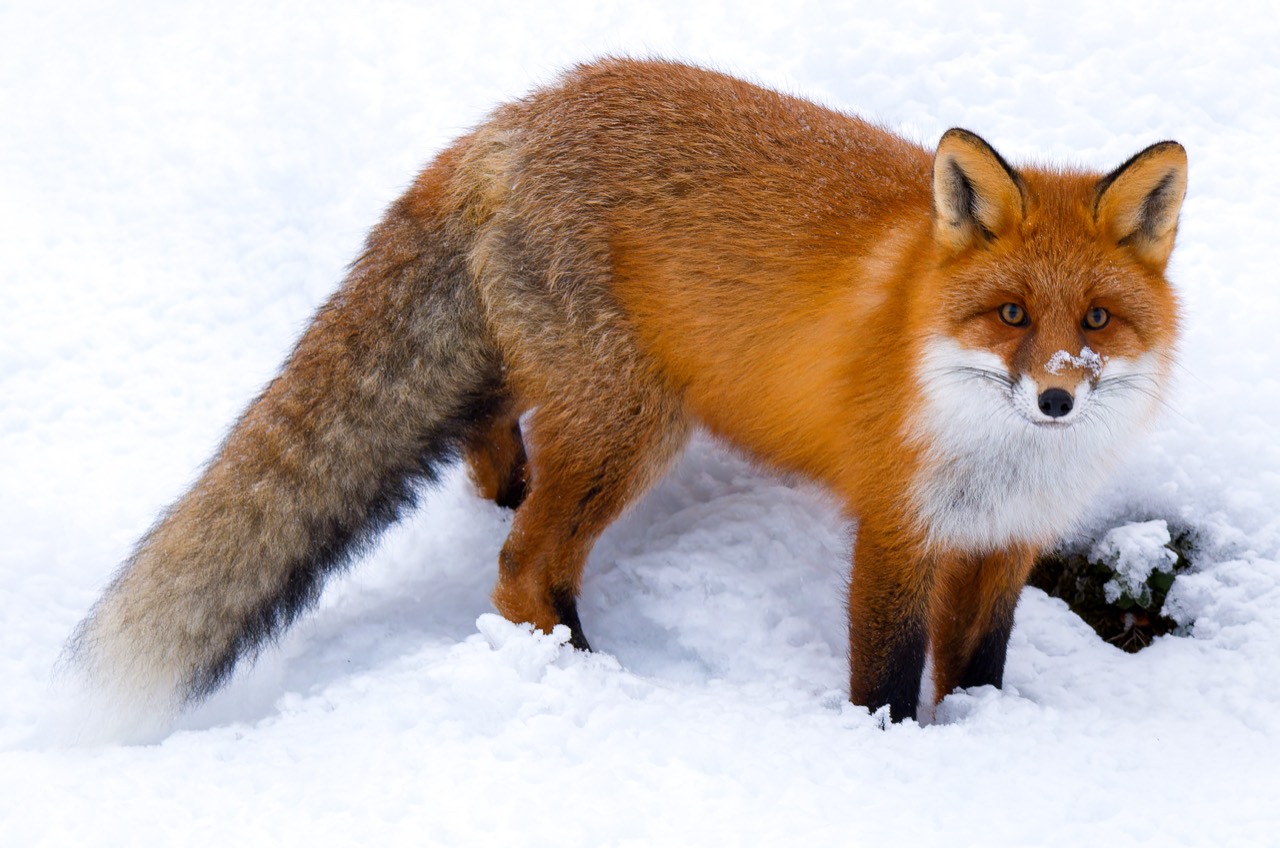
Source: Wikimedia Commons via Wikipedia “Red fox”
In brief
The red fox (Vulpes vulpes) is the world's most widely distributed wild carnivore, living across the Northern Hemisphere; the IUCN lists it as Least Concern with a stable population.
Also in Animals A to Z · Animals that start with R
By WARN Research & Conservation TeamLast updated
The red fox (Vulpes vulpes) is the most widely distributed wild member of the dog family and the most far-ranging carnivore on Earth, found across most of the Northern Hemisphere from the Arctic tundra to North African deserts. Famous for its rust-coloured coat, sharp muzzle and bushy white-tipped tail, the red fox is a supremely adaptable omnivore that has thrived alongside people — colonising suburbs and city centres where other predators cannot. Although the species is abundant and classified as Least Concern, individual foxes still face welfare pressures from the fur trade, culling and snaring. This guide explains where red foxes live, what they eat, how they raise their young, and the conservation and animal-welfare issues that surround them.
~50 km/h
Top running speed
2.2–14 kg
Adult weight range
3–6
Typical cubs per litter
Least Concern
IUCN Red List status
Figures sourced from IUCN Red List — Vulpes vulpes (Red Fox), Wikipedia — Red fox, National Geographic — Red Fox and other references on this page.
Red Fox: Quick Facts
| Lifespan | 2–5 years in the wild (longer in captivity) |
|---|---|
| Weight | 2.2–14 kg (4.9–31 lb); males larger than females |
| Size | Body 45–90 cm, plus a 30–55 cm tail |
| Diet | Omnivore — rodents, rabbits, birds, insects, fruit, scraps |
| Gestation | Approximately 49–58 days |
| Young per litter | 3–6 cubs on average |
| Baby name | Cub or kit |
| Group name | A skulk, leash or earth of foxes |
| Top speed | Around 50 km/h (31 mph) |
| CITES | Not listed on the CITES appendices |
Scientific Classification
| Kingdom | Animalia |
|---|---|
| Phylum | Chordata |
| Class | Mammalia |
| Order | Carnivora |
| Family | Canidae |
| Genus | Vulpes |
| Species | Vulpes vulpes |
Conservation Status
- IUCN Status
- Least Concern
- Population
- Not quantified globally; abundant and widespread across the Northern Hemisphere
- Trend
- Stable
- Assessed
- 2016
- CITES
- Not listed on the CITES appendices
Assessed as Least Concern because it has the widest range of any carnivore and is highly adaptable. Conservation focus is on animal welfare — the fur trade, snaring and culling — rather than extinction risk.
Did you know?
Red foxes use the Earth's magnetic field to hunt: when pouncing on hidden prey, they tend to leap in a north-easterly direction, which may help them judge the distance to their unseen target.
Key Facts: Red Fox
- The red fox has the widest natural range of any carnivore, spanning most of the Northern Hemisphere across North America, Europe, Asia and North Africa.
- It is an opportunistic omnivore, eating rodents, rabbits, birds, insects, fruit and human food scraps.
- Highly adaptable, it readily colonises farmland, suburbs and dense urban areas.
- The IUCN classifies the red fox as Least Concern with a stable global population (2016 assessment).
- It is not listed on the CITES appendices, but is heavily exploited for fur and routinely culled in many regions.
- Welfare concerns centre on the fur trade, snaring, poisoning and lethal control rather than extinction risk.
Range and habitat
The red fox occupies an enormous range across the Northern Hemisphere, from Arctic and boreal zones through temperate Europe and Asia to the fringes of North Africa, and it has also been introduced to Australia, where it is now an invasive predator. No other member of the order Carnivora is so widely distributed. Its success comes from extreme habitat flexibility: red foxes live in forests, grasslands, mountains, wetlands, farmland and increasingly in towns and cities. Urban foxes den under sheds and in parks, adjusting their diet and behaviour to human surroundings while keeping the territorial habits of their rural cousins.
Diet and behaviour
Red foxes are opportunistic omnivores. Their core diet is small rodents such as voles and mice, supplemented by rabbits, ground-nesting birds, reptiles, earthworms, beetles and seasonal fruit. In built-up areas they readily scavenge discarded food. Foxes hunt mostly at dawn, dusk and night, using sharp hearing to locate prey before the characteristic high pounce. They cache surplus food, burying it to recover later. Largely solitary when foraging, they communicate through a wide range of calls and scent marks, and family groups may share and defend a territory.
Reproduction and life cycle
Red foxes typically breed once a year, with mating in late winter and a gestation of roughly 49–58 days. A vixen gives birth to an average of three to six cubs (also called kits) in an underground den. The cubs are born blind and rely on the mother, while the male and sometimes other group members help provision food. Young foxes are weaned at around a month and begin to disperse in autumn to establish their own territories. In the wild most foxes live only a few years because of road traffic, disease and human control, though individuals can reach a greater age in safer conditions.
Welfare, the fur trade and human conflict
Because the red fox is abundant, conservation attention focuses less on extinction risk and more on animal welfare. Millions of foxes are killed each year for fur, both trapped in the wild and raised on fur farms, and many regions carry out lethal control through shooting, snaring and poisoning over concerns about livestock and game. These practices raise significant welfare questions about suffering, indiscriminate trapping and non-target species. Coexistence measures — secure poultry housing, humane deterrents and reduced food waste — can ease conflict in both rural and urban settings without resorting to culling.
Red fox compared with other common foxes
| Species | Scientific name | Main range | IUCN status |
|---|---|---|---|
| Red fox | Vulpes vulpes | Northern Hemisphere (widest of any carnivore) | Least Concern |
| Arctic fox | Vulpes lagopus | Arctic tundra | Least Concern |
| Fennec fox | Vulpes zerda | Sahara and North African deserts | Least Concern |
| Grey fox | Urocyon cinereoargenteus | North and Central America | Least Concern |
What WARN Does
The red fox lives across the Northern Hemisphere and falls outside the countries where the World Animal Rescue Network currently funds frontline work. WARN does not fund red fox rescue or field projects, and at this launch stage we are honest about that limited scope. This guide is educational, search-focused content created to build global awareness of wildlife and to support WARN's broader mission: protecting habitats and tackling the wildlife and fur trade that harm animals everywhere. By raising the profile of an adaptable, widely exploited species like the red fox, we hope to deepen public understanding of the welfare issues — fur farming, snaring and culling — that connect to the conservation causes WARN is working to grow.
The red fox is thriving, but countless wild animals are not. Your gift to the World Animal Rescue Network supports habitat protection and the fight against the wildlife and fur trade — helping the species and places that need it most.
Red Fox: Frequently Asked Questions
Is the red fox endangered?
Where do red foxes live?
What do red foxes eat?
How fast can a red fox run?
What is a baby fox called?
Are red foxes protected by CITES?
Sources & References
Population figures, conservation status and biological facts on this page are drawn from authoritative scientific and intergovernmental sources.
Terms used on this page
Plain-English definitions, from our wildlife and conservation glossary.
Latest Red Fox Stories
Quick, fact-checked reads on the red fox — amazing facts, key questions and the threats it faces.
Explore more animals
Discover more animals, their habitats and their conservation status in the WARN wildlife-guide library.