Wildlife Guide · Western Canada & Alaska
Grizzly Bear
Ursus arctos horribilis (Ord, 1815)
North America's iconic brown bear — powerful, omnivorous and fiercely protected.
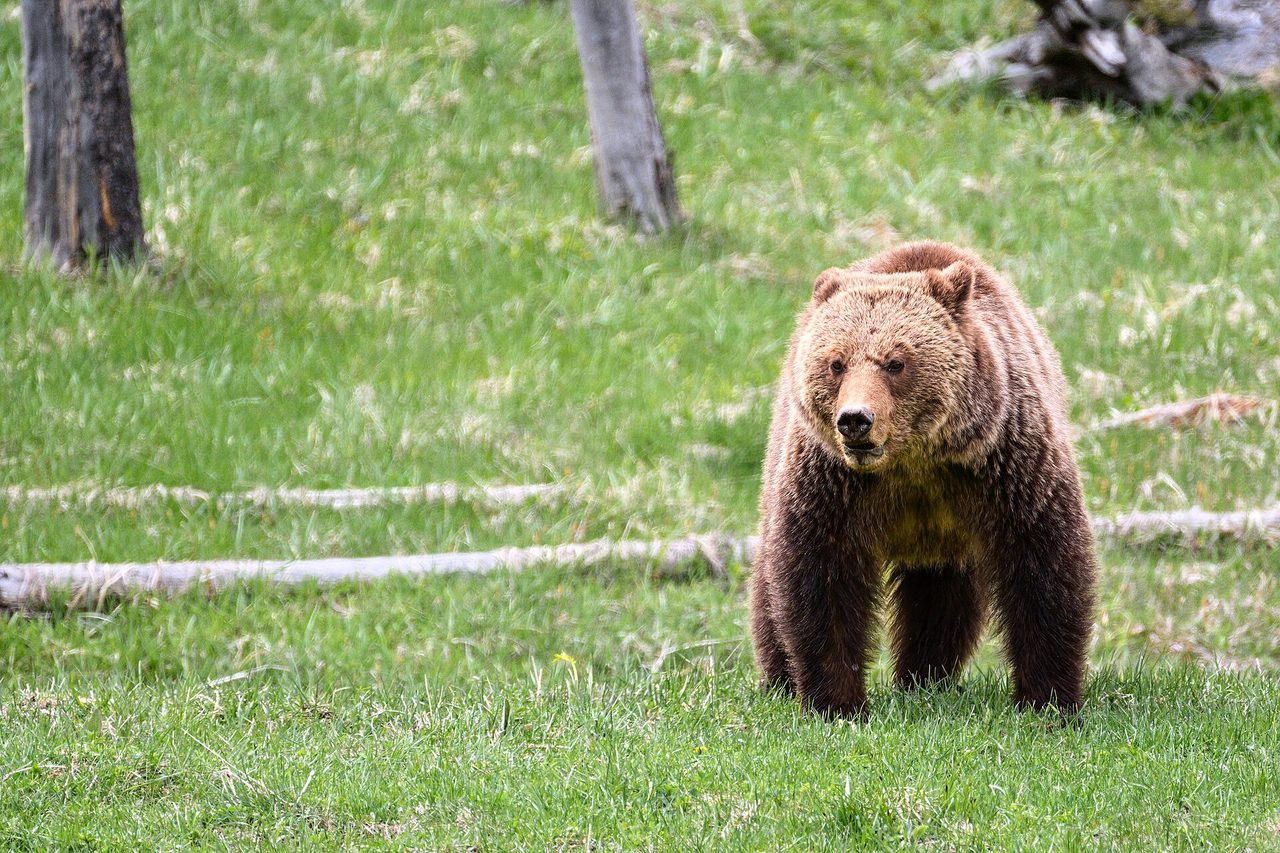
Photo: Eric Kilby / Wikimedia Commons (CC BY-SA 4.0)
In brief
The grizzly bear (Ursus arctos horribilis) is a North American brown bear subspecies; the brown bear is Least Concern globally, but grizzlies in the contiguous United States are protected under the Endangered Species Act with roughly 1,900 individuals south of Canada.
Also in Animals A to Z · Animals that start with G
By WARN Research & Conservation TeamLast updated
The grizzly bear is a North American subspecies of the brown bear, named for the silver-tipped 'grizzled' appearance of its fur. Grizzlies once ranged across western North America from Alaska to Mexico; today they occupy roughly 2% of their historic range in the contiguous United States, centred on the Northern Rocky Mountains, Greater Yellowstone and parts of Montana, Idaho and Washington. In Alaska and Canada, populations remain robust. Grizzlies are omnivorous generalists — eating berries, roots, fish, rodents and ungulates — and are a keystone species shaping forest and river ecosystems. The brown bear is Least Concern globally; grizzlies in the lower 48 US states are protected under the Endangered Species Act.
~1,900
Grizzlies in the lower 48 United States
180–360 kg
Typical adult male weight
Least Concern
Brown bear species (IUCN, 2016)
Appendix II
CITES listing (most populations)
Figures sourced from IUCN Red List — Ursus arctos, U.S. Fish and Wildlife Service — grizzly bear, CITES — Checklist of CITES Species .
Grizzly Bear: Quick Facts
| Weight | 180–360 kg (males); females ~90–200 kg |
|---|---|
| Distinctive feature | Shoulder hump; silver-tipped fur |
| Diet | Omnivorous — plants, fish, rodents, ungulates |
| Hibernation | Pregnant females den; torpor over winter |
| Lifespan | Up to ~25 years in the wild |
| CITES | Appendix II (most populations) |
Scientific Classification
| Kingdom | Animalia |
|---|---|
| Phylum | Chordata |
| Class | Mammalia |
| Order | Carnivora |
| Family | Ursidae |
| Species | Ursus arctos (Linnaeus, 1758) |
| Subspecies | Ursus arctos horribilis (Ord, 1815) |
Conservation Status
- IUCN Status
- Brown bear Least Concern globally (IUCN, 2016). Grizzly in lower 48 US states listed as threatened under Endangered Species Act.
- Population
- ~1,900 in contiguous USA; 30,000+ in Alaska; large populations in Canada and Russia
- Trend
- Increasing in lower 48 USA; stable in Alaska and Canada
- Assessed
- 2016 (brown bear species)
- CITES
- Appendix II (most populations)
Key Facts: Grizzly Bear
- Grizzlies are a subspecies of brown bear — Ursus arctos horribilis.
- The shoulder hump of muscle distinguishes grizzlies from black bears.
- Grizzlies are omnivores, eating plants, fish, rodents and ungulates.
- They once ranged across western North America but now occupy ~2% of historic US range.
- Alaska and Canada hold the largest remaining grizzly populations.
- Human conflict and habitat fragmentation are the main threats in the lower 48 states.
Grizzly or brown bear?
Taxonomists classify the grizzly as Ursus arctos horribilis — a subspecies of the brown bear (Ursus arctos), which also includes the Eurasian brown bear, Kodiak bear and Alaskan coastal brown bear. Coastal brown bears in Alaska grow larger than interior grizzlies because of abundant salmon. The name 'grizzly' refers to the grey-tipped guard hairs that give the coat a frosted appearance, though fur colour ranges from nearly blonde to dark brown.
The prominent shoulder hump — a mass of muscle for digging — and a dished facial profile distinguish grizzlies from American black bears, which lack the hump and have a straighter nose profile.
Ecology and diet
Grizzlies are among the most omnivorous of bears. Spring diet includes emerging plants, roots and carrion from winter-killed ungulates. Summer brings berries, ants and grubs.
Where salmon run, coastal grizzlies gather at rivers to catch fish — a caloric bonanza that supports large body size. Grizzlies also prey on moose calves, elk calves and ground squirrels. They disperse seeds through scat and enrich soil by digging for roots. Home ranges vary from roughly 70 km² for females to over 1,000 km² for males in interior habitats. Dens are dug into slopes; pregnant females enter torpor over winter, giving birth in the den.
Grizzlies and people
Grizzly encounters capture public attention because of the potential for injury, yet attacks are rare and usually involve surprise encounters, food-conditioned bears or mothers defending cubs. Bear spray is more effective than firearms in deterring charges. In Yellowstone and Glacier national parks, millions of visitors coexist with grizzlies through food-storage rules, trail closures and education. Outside parks, livestock depredation and game-hunting competition create conflict with ranchers and hunters. Relocation and aversive conditioning reduce problem behaviour. In Alaska and Canada, regulated hunting is permitted under management plans.
Conservation status
The brown bear is Least Concern globally with an estimated 200,000 individuals, mostly in Russia, Alaska and Canada. Grizzlies in the contiguous United States were listed as threatened under the Endangered Species Act in 1975; the population has recovered from roughly 700–800 to about 1,900, leading to repeated delisting debates. Connectivity between the Yellowstone, Northern Continental Divide and Cabinet-Yaak ecosystems remains a conservation priority. CITES Appendix II regulates international trade. Protecting large connected landscapes and reducing attractants near human settlement are essential for long-term grizzly persistence south of Canada.
What WARN Does
WARN publishes this grizzly bear guide as free public education. Large carnivore recovery in North America shows what is possible when hunting is regulated and habitat is protected — lessons relevant to bear conservation worldwide.
If this guide helps you understand wildlife and the pressures it faces, a gift to WARN supports habitat protection and free public education in our partner countries.
Grizzly Bear: Frequently Asked Questions
What is the difference between a grizzly bear and a brown bear?
How can you tell a grizzly from a black bear?
Are grizzly bears endangered?
What do grizzly bears eat?
How many grizzly bears are left?
Where do grizzly bears live?
Are grizzly bears dangerous?
How long do grizzly bears live?
How big is a grizzly bear?
Sources & References
Population figures, conservation status and biological facts on this page are drawn from authoritative scientific and intergovernmental sources.
Terms used on this page
Plain-English definitions, from our wildlife and conservation glossary.
Latest Grizzly Bear Stories
Quick, fact-checked reads on the grizzly bear — amazing facts, key questions and the threats it faces.
Explore more animals
Discover more animals, their habitats and their conservation status in the WARN wildlife-guide library.