Wildlife Guide · Europe & Asia
Hedgehog
Erinaceinae
Spiny night-foragers, 17 species strong and quietly disappearing from the countryside.
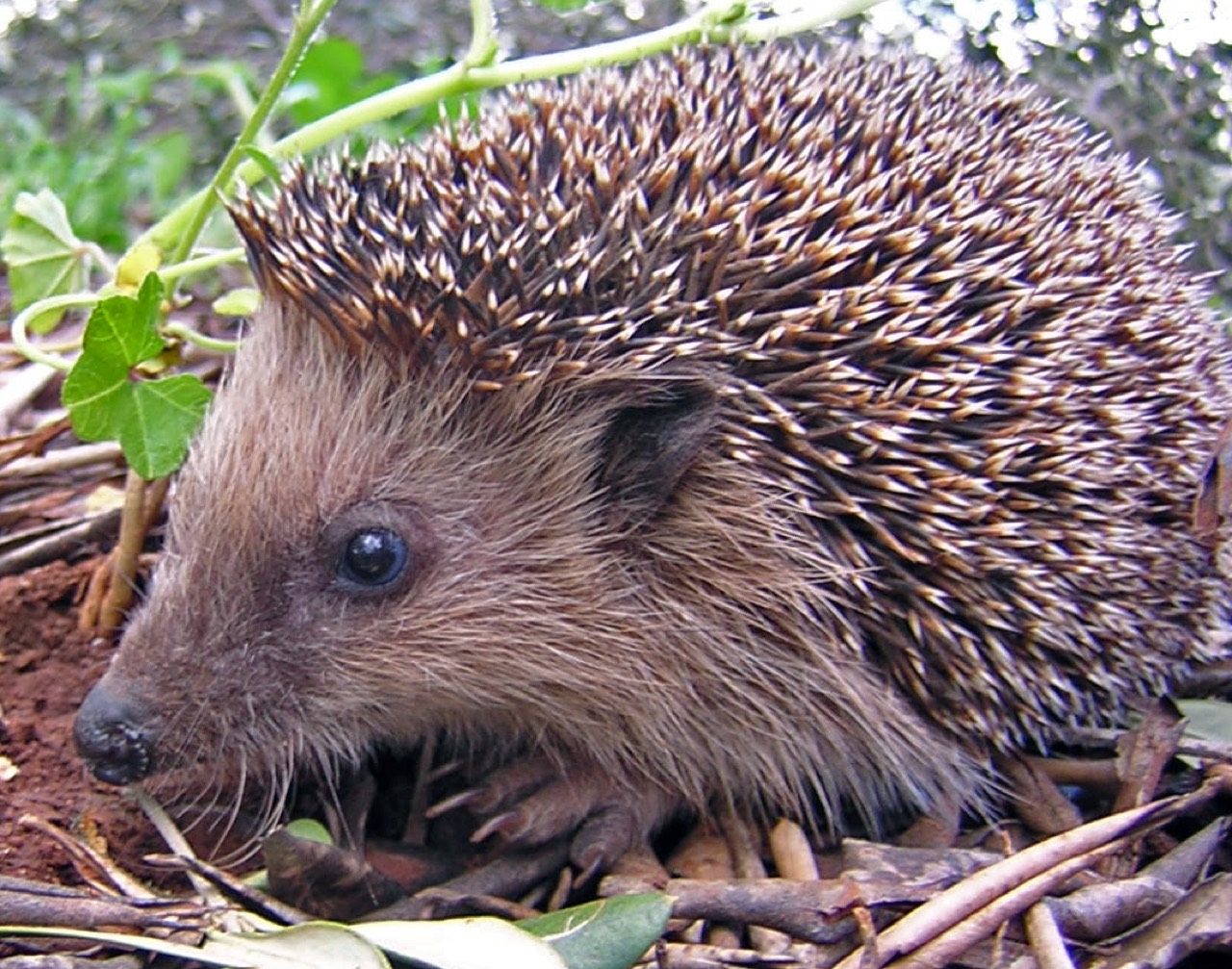
Source: Wikimedia Commons via Wikipedia “Hedgehog”
In brief
A hedgehog is a small spiny insectivorous mammal of the subfamily Erinaceinae; there are 17 species across Europe, Asia and Africa, and the widespread European hedgehog was listed as Near Threatened on the IUCN Red List in 2024 after sharp declines.
Also in Animals A to Z · Animals that start with H
By WARN Research & Conservation TeamLast updated
Hedgehogs are small, spine-covered mammals that have shuffled through gardens, hedgerows and woodlands for tens of millions of years. The group is not a single species but a subfamily, Erinaceinae, of 17 species spread across Europe, Asia and Africa. All share the same signature defence: a coat of thousands of stiff spines and the ability to curl into a near-impregnable ball. Despite that armour, hedgehogs face mounting pressure from people. The familiar European hedgehog, once considered common, was reclassified as Near Threatened on the IUCN Red List in 2024 after steep declines linked to roads, pesticides, habitat loss and everyday garden hazards. This guide answers the most-searched questions about hedgehogs and explains why their numbers are falling.
17
Species worldwide, in 5 genera
~5,000–7,000
Spines on an adult European hedgehog
~30%
Estimated decline in 10 years (Western Europe)
3 years
Typical lifespan in the wild
Figures sourced from Hedgehog — Wikipedia, European hedgehog — Wikipedia, IUCN Red List — Erinaceus europaeus (Western European Hedgehog) and other references on this page.
Hedgehog: Quick Facts
| Lifespan | ~3 years in the wild (up to 10+) |
|---|---|
| Weight | ~400 g to over 1 kg (varies by species) |
| Size | ~20–30 cm body length |
| Diet | Insectivore (beetles, worms, slugs, caterpillars) |
| Gestation | ~31–35 days |
| Young per litter | Usually 4–6 (range 2–10) |
| Baby name | Hoglet |
| Group / collective noun | Sometimes called an array; hedgehogs are solitary |
| Spines | ~5,000–7,000 on an adult European hedgehog |
| CITES | Not listed (no CITES Appendix listing for the group) |
Scientific Classification
| Kingdom | Animalia |
|---|---|
| Phylum | Chordata |
| Class | Mammalia |
| Order | Eulipotyphla |
| Family | Erinaceidae |
| Subfamily | Erinaceinae |
| Genera | Erinaceus, Atelerix, Hemiechinus, Mesechinus, Paraechinus |
Conservation Status
- IUCN Status
- Near Threatened (European hedgehog); varies by species
- Population
- No global total; many species widespread, but the European hedgehog has declined sharply in much of its range
- Trend
- Decreasing for the European hedgehog (~30% in 10 years in parts of Western Europe)
- Assessed
- 2023
- CITES
- Not listed in CITES Appendices
Status differs across the 17 species; the figures cited here are for the widely studied European hedgehog (Erinaceus europaeus), listed Near Threatened on the IUCN Red List in 2024.
Did you know?
A hedgehog's spines are simply specialised hairs stiffened with keratin, the same material as your fingernails, and an adult European hedgehog carries roughly 5,000 to 7,000 of them.
Key Facts: Hedgehog
- Hedgehogs are not one species but a group of 17, united by their spines and curl-up defence.
- They are insectivores at heart, eating beetles, earthworms, slugs, caterpillars and other invertebrates.
- Spines are modified hairs without barbs, so unlike a porcupine a hedgehog cannot shoot or shed them at will.
- The European hedgehog was moved to Near Threatened in 2024 after declines approaching or exceeding 30% in a decade.
- Roads, pesticides that wipe out prey, tidy fenced gardens and hazards like strimmers and netting are major killers.
- Simple garden help, such as hedgehog-sized gaps in fences and avoiding slug pellets, can make a real difference.
What is a hedgehog?
A hedgehog is a small mammal belonging to the subfamily Erinaceinae, within the family Erinaceidae. Scientists recognise 17 species split across five genera: Erinaceus, Atelerix, Hemiechinus, Mesechinus and Paraechinus. They live naturally across Europe, Asia and Africa, and were introduced to New Zealand by people; none are native to the Americas or Australia. The most familiar is the European or West European hedgehog, Erinaceus europaeus. Every species shares a coat of spines, modified hairs stiffened with keratin, and most can roll into a tight ball when threatened, presenting a predator with nothing but points. Adults are typically about 20 to 30 centimetres long and weigh from roughly 400 grams to over a kilogram depending on species and season.
Diet, behaviour and life cycle
Hedgehogs are mainly nocturnal and largely solitary, coming together only to breed. They are classic insectivores, hoovering up beetles, earthworms, slugs, snails, caterpillars, millipedes and earwigs, and will opportunistically take eggs, carrion or small vertebrates. After a gestation of about 31 to 35 days, females give birth to a litter usually of four to six young, called hoglets, born blind with soft spines hidden beneath the skin that harden within hours. In cooler climates, hedgehogs hibernate through winter, dropping their body temperature and surviving on fat reserves. In the wild they typically live around three years, though some reach ten or more.
Why hedgehogs are declining
For decades the European hedgehog was treated as a common backyard animal, but long-term monitoring revealed a worrying slide. In 2024 the IUCN reclassified it as Near Threatened, citing a decline approaching or exceeding 30 percent over ten years across much of its range, with populations in some countries, including the UK and Germany, falling by more than half. The drivers are overwhelmingly human. Roads kill huge numbers each year; pesticides and intensive farming strip away the insect prey they depend on; hedges and rough ground are cleared; and gardens have become hazardous, with strimmers, slug pellets, netting, ponds with steep sides and bonfires all taking a toll. Notably, rural declines have been steeper than urban ones, making wildlife-friendly gardens and connected green spaces increasingly important refuges.
Hedgehog vs Porcupine
| Feature | Hedgehog | Porcupine |
|---|---|---|
| Animal group | Insectivore (Erinaceinae) | Rodent (Hystricidae / Erethizontidae) |
| Typical size | ~20–30 cm | Up to ~90 cm in large species |
| Spines | Short (~2–3 cm), no barbs | Long quills (5–8 cm+), often barbed |
| Spine count | ~5,000–7,000 | Up to ~30,000 |
| Defence | Rolls into a tight ball | Raises and reverses into quills |
| Can detach spines? | No (not at will) | Yes, quills release on contact |
What WARN Does
Hedgehogs fall outside the countries where the World Animal Rescue Network currently funds frontline rescue work, and as a group spread across Europe, Asia and Africa they sit beyond our present funded footprint. We are honest about that: WARN does not run or fund hedgehog projects today. This guide is educational and search content, created to support our broader mission of raising global awareness about wildlife and the habitat loss, pesticide use and human pressures that threaten species worldwide. The most truthful way to help through WARN is to support the habitat protection and wildlife-welfare work we do fund, which addresses the same root causes hurting hedgehogs elsewhere.
If you would like to help, read /appeals/ and choose a purpose that matches your intentions. WARN is raising funds towards assessed support; donations do not guarantee a treatment or rescue. Sharing accurate information is another welcome way to help.
Hedgehog: Frequently Asked Questions
Are hedgehogs endangered?
How many species of hedgehog are there?
What do hedgehogs eat?
What is a baby hedgehog called?
What is the difference between a hedgehog and a porcupine?
Where do hedgehogs live?
Are hedgehogs dangerous?
How long do hedgehogs live?
How big is a hedgehog?
Sources & References
Population figures, conservation status and biological facts on this page are drawn from authoritative scientific and intergovernmental sources.
Terms used on this page
Plain-English definitions, from our wildlife and conservation glossary.
Latest Hedgehog Stories
Quick, fact-checked reads on the hedgehog — amazing facts, key questions and the threats it faces.
Explore more animals
Discover more animals, their habitats and their conservation status in the WARN wildlife-guide library.