Wildlife Guide · Alps & Central Asia
Ibex
Capra ibex (Linnaeus, 1758)
The cliff kings of the mountains — horns, gravity and thin air.
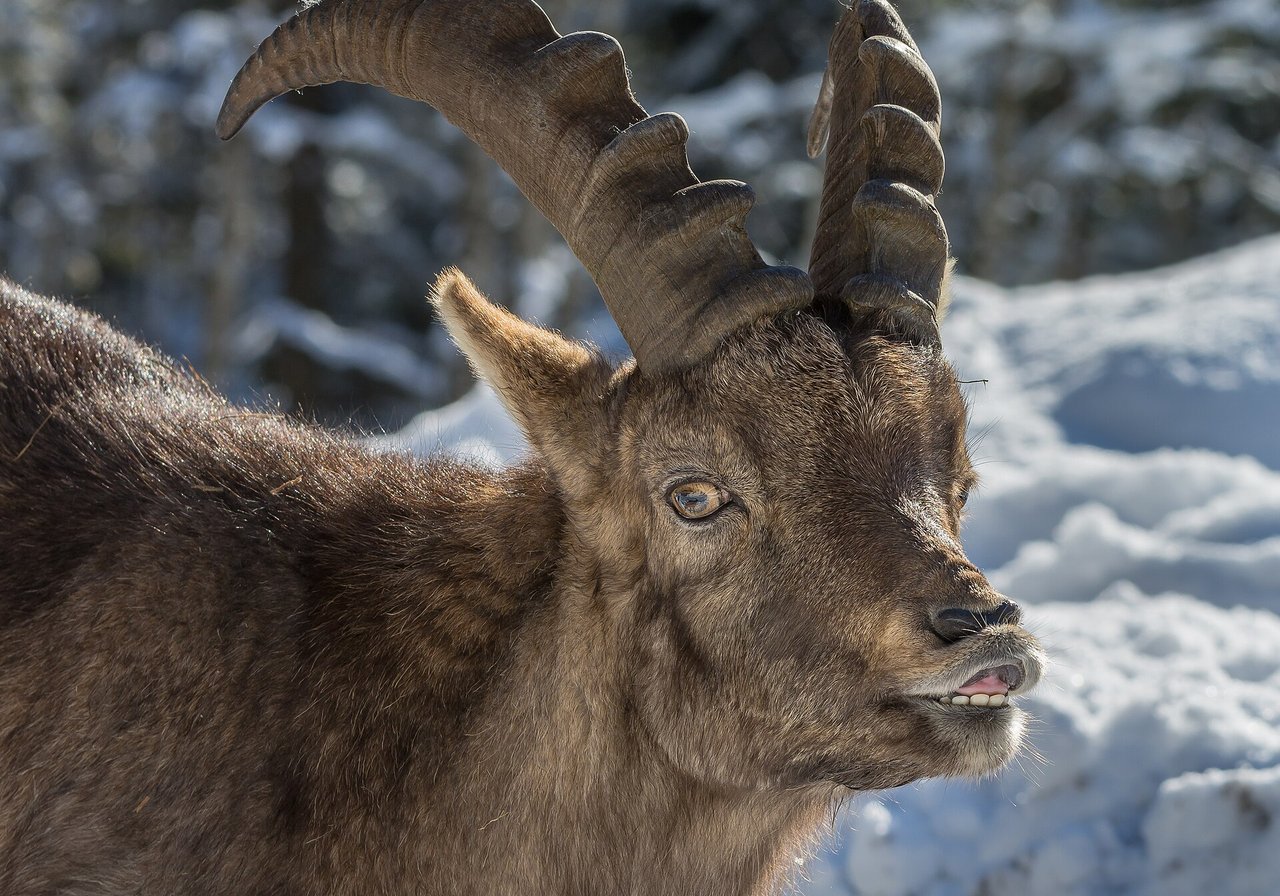
Source: Wikimedia Commons
In brief
Ibex are wild mountain goats of the genus Capra; the Alpine ibex (Capra ibex) is Least Concern after recovery from near extinction, with males carrying curved horns up to a metre long on cliffs across Europe and Asia.
Also in Animals A to Z · Animals that start with I
By WARN Research & Conservation TeamLast updated
Ibex are wild goats of the genus Capra, adapted to life on steep mountain cliffs from the Alps to the Himalayas, Atlas Mountains and Ethiopian highlands. The Alpine ibex — restored from near extinction in the nineteenth century — is the best-known species, with males carrying horns up to a metre long that curve backwards. Ibex graze alpine meadows and descend to salt licks; their split hooves grip rock faces that deter most predators. Several ibex species are Least Concern after recovery programmes, but the Walia ibex of Ethiopia and the Spanish ibex subspecies face ongoing threats from hunting and habitat competition with livestock.
Least Concern
IUCN status — Alpine ibex (2015)
1 m
Maximum horn length (Alpine ibex males)
7+
Ibex and wild goat species in genus Capra
Appendix III
CITES listing (Algeria — Barbary sheep/ibex)
Figures sourced from IUCN Red List — Capra ibex, IUCN Red List — Capra walie (Walia ibex), Encyclopaedia Britannica — ibex .
Ibex: Quick Facts
| Weight | 35–100 kg (varies by species and sex) |
|---|---|
| Horns | Up to ~1 m in Alpine ibex males |
| Habitat | Steep mountain cliffs and alpine meadows |
| Diet | Grazer — grasses, herbs, mosses, lichens |
| Recovery | Alpine ibex restored from near extinction to 50,000+ |
| CITES | Varies by species and population |
Scientific Classification
| Kingdom | Animalia |
|---|---|
| Phylum | Chordata |
| Class | Mammalia |
| Order | Artiodactyla |
| Family | Bovidae |
| Genus | Capra |
| Species | Capra ibex (Linnaeus, 1758) |
Conservation Status
- IUCN Status
- Alpine ibex Least Concern (IUCN, 2015). Walia ibex Endangered.
- Population
- Over 50,000 Alpine ibex; Walia ibex roughly 1,200
- Trend
- Increasing for Alpine ibex; stable for Walia ibex after recovery
- Assessed
- 2015 (Alpine ibex)
- CITES
- Varies by species
Key Facts: Ibex
- Ibex are wild goats of the genus Capra, adapted to steep mountain terrain.
- Alpine ibex males carry horns up to a metre long, curved backwards.
- The Alpine ibex was hunted to near extinction before nineteenth-century protection.
- Nubian ibex, Siberian ibex and Walia ibex are separate species with different ranges.
- Ibex graze alpine meadows and visit salt licks; split hooves grip cliff faces.
- Competition with livestock and hunting threaten ibex in parts of Africa and Asia.
Ibex species across three continents
The genus Capra includes ibex and related wild goats across Europe, Asia and Africa. The Alpine ibex (C. ibex) inhabits the Alps and reintroduced populations in Slovenia, Austria and Bulgaria. The Nubian ibex (C. nubiana) ranges across the Middle East; the Siberian ibex (C. sibirica) across Central Asia; the Walia ibex (C. walie) is endemic to Ethiopia's Simien Mountains and is Endangered. The Spanish ibex (C. pyrenaica) includes several subspecies, one of which — the Pyrenean ibex — was the first animal to go extinct twice.
All ibex share muscular bodies, short legs, split hooves with rubbery pads and horns that grow throughout life.
Life on the cliff edge
Ibex exploit terrain too steep for most predators. They graze grasses, herbs, mosses and lichens on alpine meadows, moving to cliff ledges to rest and escape wolves, leopards and eagles.
Males and females form separate herds for much of the year, joining during the rut when males clash horns in spectacular fights. Horns are used for display and combat, not defence against predators. Salt licks draw ibex to predictable locations, where they have been hunted historically. In winter, ibex descend to lower slopes where snow is less deep.
Recovery and reintroduction
The Alpine ibex was reduced to a single valley — Italy's Gran Paradiso — by the 1820s before hunting bans and protected areas allowed recovery to over 50,000 individuals. Reintroduction programmes spread ibex across the Alps and into Slovenia and Austria. Similar efforts helped the Spanish ibex and Nubian ibex in some areas. The Walia ibex of Ethiopia recovered from roughly 250 to over 1,200 after Simien Mountains National Park protection, but remains Endangered. These recoveries demonstrate that mountain ungulates can rebound when hunting stops and habitat is secured.
Current threats
Most ibex species are Least Concern or Near Threatened after recovery. Persistent threats include competition with domestic goats and sheep for grazing, habitat fragmentation from roads and ski development, and illegal hunting in Central Asia and the Middle East. Climate change may shift alpine vegetation zones, altering ibex forage. The Walia ibex remains Endangered with a small, isolated population. CITES regulates trade in some Capra species. Maintaining protected areas and managing livestock grazing are essential for long-term ibex persistence.
What WARN Does
WARN publishes this ibex guide as free public education. Mountain wildlife recovery stories like the Alpine ibex show what legal protection and habitat stewardship can achieve.
If this guide helps you understand wildlife and the pressures it faces, a gift to WARN supports habitat protection and free public education in our partner countries.
Ibex: Frequently Asked Questions
What is the difference between an ibex and a goat?
How long are ibex horns?
Are ibex endangered?
Where do ibex live?
What do ibex eat?
Can ibex climb cliffs?
Are ibexs dangerous?
How long do ibexs live?
How big is an ibex?
Sources & References
Population figures, conservation status and biological facts on this page are drawn from authoritative scientific and intergovernmental sources.
Terms used on this page
Plain-English definitions, from our wildlife and conservation glossary.
Latest Ibex Stories
Quick, fact-checked reads on the ibex — amazing facts, key questions and the threats it faces.
Species
Clouded Leopard vs Snow Leopard: Key Differences Between Two Misnamed Cats
Despite the shared name, neither cat is a true leopard, and they differ sharply in size, habitat and looks. Here is how to tell the clouded leopard from the snow leopard.
Read the storySpecies
12 Amazing Facts About Hyenas (They Are Not Dogs, and Females Rule)
Closer to cats than dogs, female-dominated clans, and hunting far more than they scavenge. Twelve verified facts.
Read the storyExplore more animals
Discover more animals, their habitats and their conservation status in the WARN wildlife-guide library.