Wildlife Guide · Australia
Koala
Phascolarctos cinereus
Australia's eucalyptus specialist, a tree-dwelling marsupial under pressure from habitat loss and bushfire.
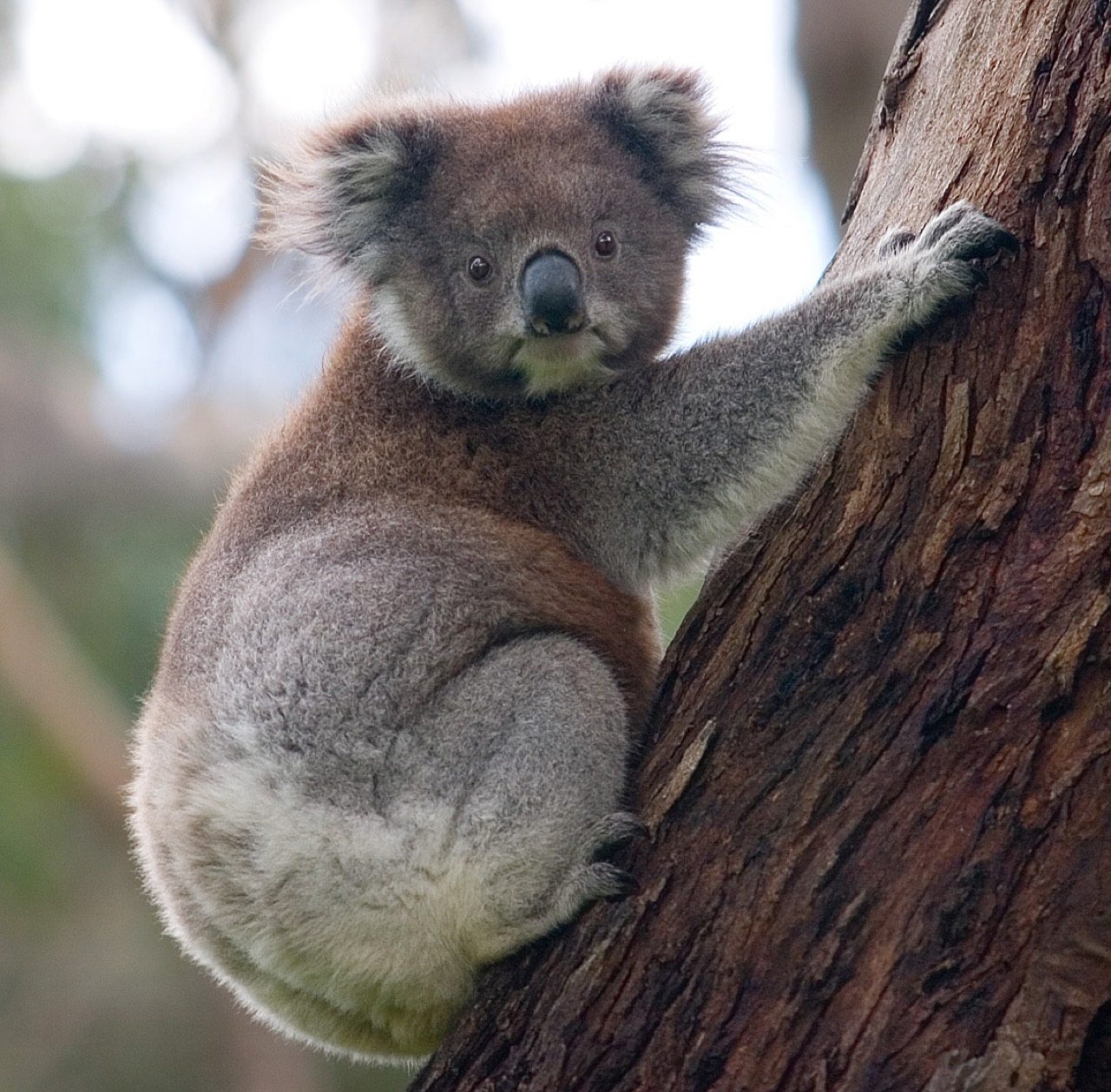
Source: Wikimedia Commons via Wikipedia “Koala”
In brief
The koala is a Vulnerable eucalyptus-eating marsupial native only to Australia, where habitat loss, disease and bushfire have made its eastern populations Endangered under national law as of 2022.
Also in Animals A to Z · Animals that start with K
How you can help
You can support the related appeal — read its purpose, recipient status and fund terms first — or give once to where it is needed most. Sharing accurate information helps too.
By WARN Research & Conservation TeamLast updated
The koala (Phascolarctos cinereus) is an iconic tree-dwelling marsupial found only in the eucalyptus forests and woodlands of eastern and southern Australia. Often mistaken for a bear, it is in fact a pouched mammal more closely related to wombats. Koalas are extreme dietary specialists, feeding almost entirely on the leaves of a few dozen eucalyptus species, and they spend most of their lives high in the canopy. Habitat clearing, drought, disease, vehicle strikes and catastrophic bushfires have driven steep declines across much of the species' northern range, and in 2022 koala populations in Queensland, New South Wales and the Australian Capital Territory were listed as Endangered under Australian federal law. Globally the species is assessed as Vulnerable on the IUCN Red List.
Vulnerable
IUCN Red List status (assessed 2014)
~30
Preferred eucalyptus species, of 600+ available
33–35 days
Gestation before a tiny joey is born
Australia only
The koala's entire natural range
Figures sourced from IUCN Red List: Phascolarctos cinereus (Koala), Wikipedia: Koala, Australian DCCEEW: Conservation Advice for Phascolarctos cinereus (Koala) combined populations and other references on this page.
Koala: Quick Facts
| Lifespan | About 13–18 years in the wild |
|---|---|
| Weight | 4–15 kg (males up to 50% larger than females) |
| Body length | 60–85 cm (24–33 in) |
| Diet | Herbivore; almost entirely eucalyptus leaves |
| Gestation | 33–35 days |
| Young | Usually a single joey, occasionally twins |
| Baby name | Joey |
| Group name | No true social group; sometimes called a colony where ranges overlap |
| Activity | Mostly nocturnal; rests up to 18–20 hours a day |
| CITES | Not listed on CITES appendices |
Scientific Classification
| Kingdom | Animalia |
|---|---|
| Phylum | Chordata |
| Class | Mammalia |
| Order | Diprotodontia |
| Family | Phascolarctidae |
| Genus | Phascolarctos |
| Species | Phascolarctos cinereus |
Conservation Status
- IUCN Status
- Vulnerable
- Population
- No precise global figure; widely cited estimates range from the low tens of thousands to several hundred thousand, with sharp declines in northern (Queensland and NSW) populations
- Trend
- Decreasing
- Assessed
- 2014 (IUCN Red List)
- CITES
- Not listed on CITES appendices
Globally assessed by the IUCN as Vulnerable; in 2022 the Queensland, New South Wales and Australian Capital Territory populations were listed as Endangered under Australia's Environment Protection and Biodiversity Conservation Act.
Did you know?
A koala's fingerprints are so similar to a human's that, under a microscope, they can be almost impossible to tell apart.
Key Facts: Koala
- Koalas are marsupials, not bears, and carry their young in a pouch like kangaroos and wombats.
- They are eucalyptus specialists, eating the leaves of roughly 30 preferred species from more than 600 eucalypts.
- The species lives only in Australia, in forests and woodlands across the eastern and southern states.
- The IUCN lists the koala as Vulnerable, with a decreasing global population trend.
- In 2022, koala populations in Queensland, New South Wales and the ACT were listed as Endangered under Australian federal law.
- Major threats include habitat clearing, drought, disease (especially chlamydia), vehicle strikes and severe bushfires.
What is a koala and where does it live?
The koala is a marsupial endemic to Australia, meaning it is found in the wild nowhere else on Earth. Despite the common nickname 'koala bear,' it is not a bear at all; its closest living relatives are wombats, and like all marsupials it raises its young in a pouch. Koalas inhabit eucalyptus forests and woodlands stretching from northern Queensland down through New South Wales and into Victoria and South Australia. They are highly arboreal, spending almost the entire day and night in trees, where they rest, feed and sleep for up to 18–20 hours a day to conserve the limited energy their leaf diet provides. Individuals occupy overlapping home ranges centred on favoured food trees, and densities vary enormously between regions, from healthy southern populations to severely depleted northern ones.
Diet and adaptations to a eucalyptus life
Few animals are as specialised as the koala. It feeds almost exclusively on eucalyptus leaves, which are tough, low in nutrients and laced with toxins that would sicken most mammals. Koalas cope through a long digestive tract and a large caecum full of microbes that ferment and detoxify the foliage, plus a slow metabolism and long rest periods. They select around 30 preferred eucalyptus species out of more than 600, and local populations often specialise on whichever species grow nearby. Their cheek teeth are adapted to shear and grind fibrous leaves, and they obtain most of their water from foliage, though they will drink during heatwaves and drought. This deep reliance on specific trees is also their greatest vulnerability: when those trees are cleared or burned, koalas have little ability to switch foods or move elsewhere.
Why koala numbers are falling
Koala declines are driven by a stack of overlapping pressures. The clearing and fragmentation of eucalyptus woodland for agriculture, forestry and urban growth removes the trees koalas depend on and forces them to cross roads and open ground, where vehicle strikes and dog attacks take a heavy toll. Disease is a major factor in many populations, particularly chlamydia, which can cause blindness, infertility and death, and koala retrovirus, which weakens the immune system. Drought and extreme heat add further stress, and catastrophic bushfires, such as those of the 2019–2020 fire season, killed or displaced large numbers of koalas and destroyed vast areas of habitat. Northern populations in Queensland and New South Wales have fallen sharply, which is why those populations were uplisted to Endangered under Australian federal law in 2022, even though the species globally remains classified as Vulnerable.
Conservation and what helps koalas recover
Protecting and reconnecting eucalyptus habitat is the single most important action for koala survival. Conservation efforts focus on safeguarding remaining forest, restoring corridors between fragmented patches, planting preferred food trees, reducing land clearing, and managing threats such as roads, dogs and disease. Wildlife hospitals and carers rehabilitate sick, burned and injured koalas, while research into chlamydia vaccines and population monitoring aims to slow disease spread and track recovery. Because the koala depends so completely on intact, connected woodland, habitat protection delivers the broadest long-term benefit, sheltering not only koalas but the many other species that share Australia's eucalyptus ecosystems.
Koala vs other marsupials people confuse it with
| Animal | Family | Main diet | Lifestyle | Conservation note |
|---|---|---|---|---|
| Koala | Phascolarctidae | Eucalyptus leaves | Tree-dwelling (arboreal) | Vulnerable; eastern populations Endangered (2022) |
| Wombat (common) | Vombatidae | Grasses and roots | Ground-dwelling, burrowing | Least Concern overall |
| Kangaroo (red) | Macropodidae | Grasses and herbs | Ground-dwelling, hopping | Least Concern |
| Sugar glider | Petauridae | Sap, nectar and insects | Tree-dwelling, gliding | Least Concern |
What WARN Does
WARN publishes this guide for education and is developing support through assessed animal-welfare grants. A species range, source citation or photograph does not establish a recipient or funding agreement. Check /about/where-your-money-goes/#grant-register for published grant and payment records; records not yet published must not be read as zero activity. Browse /appeals/ for the purposes currently available to support.
Koalas live outside the regions WARN currently funds, so your gift will not be spent on koala projects. If this guide inspired you, you can support the nearest relevant WARN work, protecting wildlife habitat in the countries where we operate, through our Support Habitat Protection appeal, where habitat safeguards help threatened species much as they would for koalas.
How can I help save the koala?
Explore practical ways to support the koala, from everyday choices and sharing reliable information to reviewing a related appeal before giving.
Explore ways to support
Read the related appeal’s purpose, recipient status and fund terms. Choose an affordable gift after checking what is proposed and what has been reported.
Ease the pressures
Avoid the wildlife trade and souvenirs, never buy wild animals as pets, and choose sustainable, habitat-friendly products — the threats behind the koala's decline fall when demand does.
Spread the word
Share accurate, sourced information about the koala. Wider awareness is what turns concern into lasting protection.
Koala: Frequently Asked Questions
How can I help save the koala?
Is a koala a bear?
What do koalas eat?
Where do koalas live?
Are koalas endangered?
Why are koala populations declining?
What is a baby koala called?
Are koalas dangerous?
How long do koalas live?
How big is a koala?
Sources & References
Population figures, conservation status and biological facts on this page are drawn from authoritative scientific and intergovernmental sources.
Terms used on this page
Plain-English definitions, from our wildlife and conservation glossary.
Latest Koala Stories
Quick, fact-checked reads on the koala — amazing facts, key questions and the threats it faces.
Explore more animals
Discover more animals, their habitats and their conservation status in the WARN wildlife-guide library.