Wildlife Guide · Caribbean & Gulf of Mexico
Manatee
Trichechus manatus, T. inunguis and T. senegalensis — three living species
Gentle sirenians of warm shallows — slow, plant-eating and vulnerable to boats.
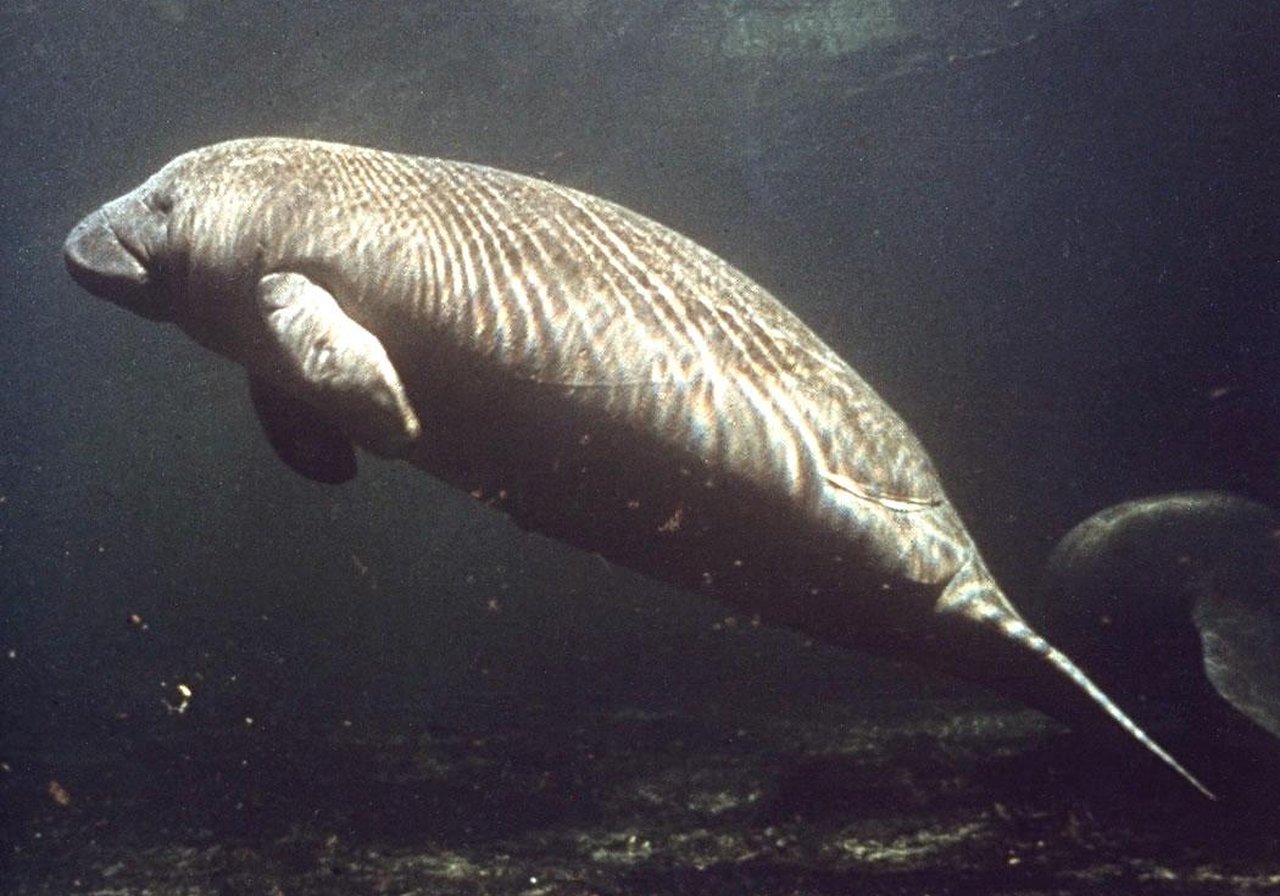
Source: Wikimedia Commons
In brief
Manatees are plant-eating sirenians with three species in the Americas and West Africa — slow-moving mammals threatened by boat collisions, habitat loss and pollution, with IUCN status from Vulnerable to Endangered.
Also in Animals A to Z · Animals that start with M
By WARN Research & Conservation TeamLast updated
Manatees are large aquatic mammals of the order Sirenia, grazing seagrasses and freshwater vegetation in tropical and subtropical waters. Three species survive: the West Indian, Amazonian and African manatees. Often called sea cows, they lack hind limbs and propel themselves with paddle-shaped tails. Manatees surface to breathe every few minutes and tolerate only narrow temperature ranges. Boat strikes, habitat loss and entanglement cause thousands of injuries annually in Florida alone.
3
Living manatee species
4 m
Maximum length for West Indian manatee
Vulnerable
West Indian manatee IUCN status
CITES I
International commercial trade prohibited
Figures sourced from IUCN Red List — West Indian manatee, Smithsonian Ocean — manatee, Encyclopaedia Britannica — manatee and other references on this page.
Manatee: Quick Facts
| Species | West Indian, Amazonian, African |
|---|---|
| Diet | Herbivorous — seagrass and aquatic plants |
| Length | Up to ~4 m; 500 kg typical adult |
| Main threat | Boat strikes and habitat loss |
| Breath hold | Up to ~20 minutes when resting |
| CITES | Appendix I |
Scientific Classification
| Kingdom | Animalia |
|---|---|
| Phylum | Chordata |
| Class | Mammalia |
| Order | Sirenia |
| Family | Trichechidae |
| Genus | Trichechus |
Conservation Status
- IUCN Status
- West Indian Vulnerable; Amazonian Vulnerable; African Vulnerable. Regional subspecies may be Endangered.
- Population
- West Indian ~13,000; Amazonian ~10,000; African unknown but declining
- Trend
- Increasing in Florida; decreasing in parts of Amazon and West Africa
- Assessed
- 2017 (West Indian); varies by species
- CITES
- Appendix I
Antillean manatee subspecies faces higher extinction risk than Florida population.
Key Facts: Manatee
- Manatees are more closely related to elephants than to dolphins or seals.
- They eat up to 10 percent of body weight in vegetation daily.
- Propeller scars identify individual manatees in long-term photo catalogues.
- Cold stress kills manatees when water temperatures drop below about 20 °C.
- Amazonian manatees inhabit freshwater only; West Indian use both fresh and salt water.
- Speed limits and sanctuary zones reduce boat mortality in Florida and Belize.
What is a manatee?
Manatees belong to Sirenia alongside dugongs — the only herbivorous marine mammals. Their fusiform bodies, whiskered snouts and flippers evolved for grazing in shallow water. West Indian manatees range from the south-eastern United States through the Caribbean to north-eastern Brazil; Amazonian manatees never enter the sea; African manatees occupy rivers and coasts from Senegal to Angola.
Unlike dolphins, manatees lack echolocation and move slowly — typically 5 to 8 km/h, though they can sprint briefly. They replace worn teeth throughout life, molars migrating forward as older teeth fall out — an adaptation to abrasive plant diet.
Manatees aggregate at warm-water refuges in winter — power-plant outfalls in Florida, natural springs — making them predictable but vulnerable to vessel traffic.
Feeding, behaviour and reproduction
Manatees consume seagrasses, mangrove leaves, water hyacinth and dozens of freshwater plants. Grazing maintains seagrass bed health when populations are balanced, but local overgrazing can occur in confined sanctuaries.
Females typically bear one calf every two to five years after a 12-month gestation. Calves nurse for up to two years, staying close to mothers. Orphaned calves require lengthy rehabilitation before release.
Activity peaks in dawn and dusk. Manatees communicate with chirps, squeaks and touch. They are generally solitary or found in small groups without complex pod structure.
Threats and conservation
The West Indian manatee was downlisted to Vulnerable in 2017 after Florida population growth, but the Antillean subspecies remains Endangered in parts of the Caribbean. Amazonian and African manatees face hunting, dam construction and habitat degradation.
Watercraft collisions cause blunt trauma and deep propeller cuts — the leading human cause of death in Florida. Red tides, cold snaps, entanglement in crab traps and loss of seagrass from pollution compound mortality.
Protected areas, seasonal speed zones, rescue and rehabilitation networks and seagrass restoration underpin recovery. CITES Appendix I bans international commercial trade.
Manatees and people
Manatees attract ecotourism in Florida, Belize and Crystal River where in-water viewing is regulated. Touching or chasing manatees is illegal in US waters; passive observation reduces stress.
Indigenous and local communities in the Amazon and West Africa historically hunted manatees for meat; legal protection and alternative livelihoods aim to reduce take. Dam projects that block migration require fish passages and habitat offsetting.
Readers can protect manatees by respecting no-wake zones, reducing fertiliser runoff that harms seagrass and supporting sanctuaries that rescue injured animals.
What WARN Does
WARN educates readers in Brazil and Colombia — manatee range countries — about aquatic habitat protection and responsible coastal development. Free guides like this connect freshwater and marine conservation to our partner mission in Pakistan, Indonesia and Malaysia.
If this guide helps you understand wildlife and the pressures it faces, a gift to WARN supports habitat protection and free public education in our partner countries.
Manatee: Frequently Asked Questions
How many manatee species are there?
Are manatees endangered?
What do manatees eat?
Why do manatees get hit by boats?
Where do manatees live?
How are manatees related to elephants?
Are manatees dangerous?
How long do manatees live?
How big is a manatee?
Sources & References
Population figures, conservation status and biological facts on this page are drawn from authoritative scientific and intergovernmental sources.
Terms used on this page
Plain-English definitions, from our wildlife and conservation glossary.
Latest Manatee Stories
Quick, fact-checked reads on the manatee — amazing facts, key questions and the threats it faces.
Explore more animals
Discover more animals, their habitats and their conservation status in the WARN wildlife-guide library.