Wildlife Guide · Tropical and subtropical oceans worldwide — coasts, reefs and open water
Manta Ray
Mobula birostris (giant) and Mobula alfredi (reef manta)
Ocean giants with wingspans rivalling small aircraft — filter-feeders under serious threat.
Source: Wikimedia Commons
In brief
Manta rays are Endangered filter-feeding elasmobranchs — giant and reef species with wingspans up to seven metres — threatened globally by bycatch, gill-plate trade and fisheries.
Also in Animals A to Z · Animals that start with M
How you can help
You can support the related appeal — read its purpose, recipient status and fund terms first — or give once to where it is needed most. Sharing accurate information helps too.
By WARN Research & Conservation TeamLast updated
Manta rays are among the largest rays, with giant manta wingspans reaching seven metres or more. Two species are recognised: the oceanic giant manta and the slightly smaller reef manta. They filter plankton and small fish through gill rakers, swimming with graceful pectoral beats. Mantas gather at cleaning stations and feeding sites, making them ecotourism stars. Both species are Endangered on the IUCN Red List, threatened by gill-plate trade, bycatch and entanglement.
7 m+
Maximum wingspan (giant manta)
Endangered
Both species on IUCN Red List
2
Recognised manta species
CITES II
International trade regulated since 2013
Figures sourced from IUCN Red List — giant manta ray, Smithsonian Ocean — manta ray, Encyclopaedia Britannica — manta ray and other references on this page.
Manta Ray: Quick Facts
| IUCN status | Endangered (both species) |
|---|---|
| Wingspan | Up to ~7 m (giant manta) |
| Feeding | Filter-feeding on plankton |
| Species | Giant manta and reef manta |
| Reproduction | One pup every 2–5 years |
| CITES | Appendix II (since 2013) |
Scientific Classification
| Kingdom | Animalia |
|---|---|
| Phylum | Chordata |
| Class | Chondrichthyes |
| Order | Myliobatiformes |
| Family | Mobulidae |
| Species | Mobula birostris and Mobula alfredi |
Conservation Status
- IUCN Status
- Both giant and reef manta rays Endangered due to fisheries bycatch, targeted gill-plate trade and low reproductive rate.
- Population
- Declining globally; regional counts at aggregation sites
- Trend
- Decreasing
- Assessed
- 2020
- CITES
- Appendix II
Live mantas often generate more ecotourism revenue than one-time gill-plate sale.
Key Facts: Manta Ray
- Mantas are rays, not true fish in the usual sense — cartilaginous skeletons like sharks.
- Giant and reef mantas were split as separate species after genetic studies.
- Gill plates are dried and sold in traditional medicine markets despite no proven efficacy.
- Mantas have the largest brain of any fish studied, relative to body size.
- Individual spot patterns on the belly identify animals in photo-ID catalogues.
- Reproduction is slow — one pup every two to five years limits recovery.
Giant of the rays
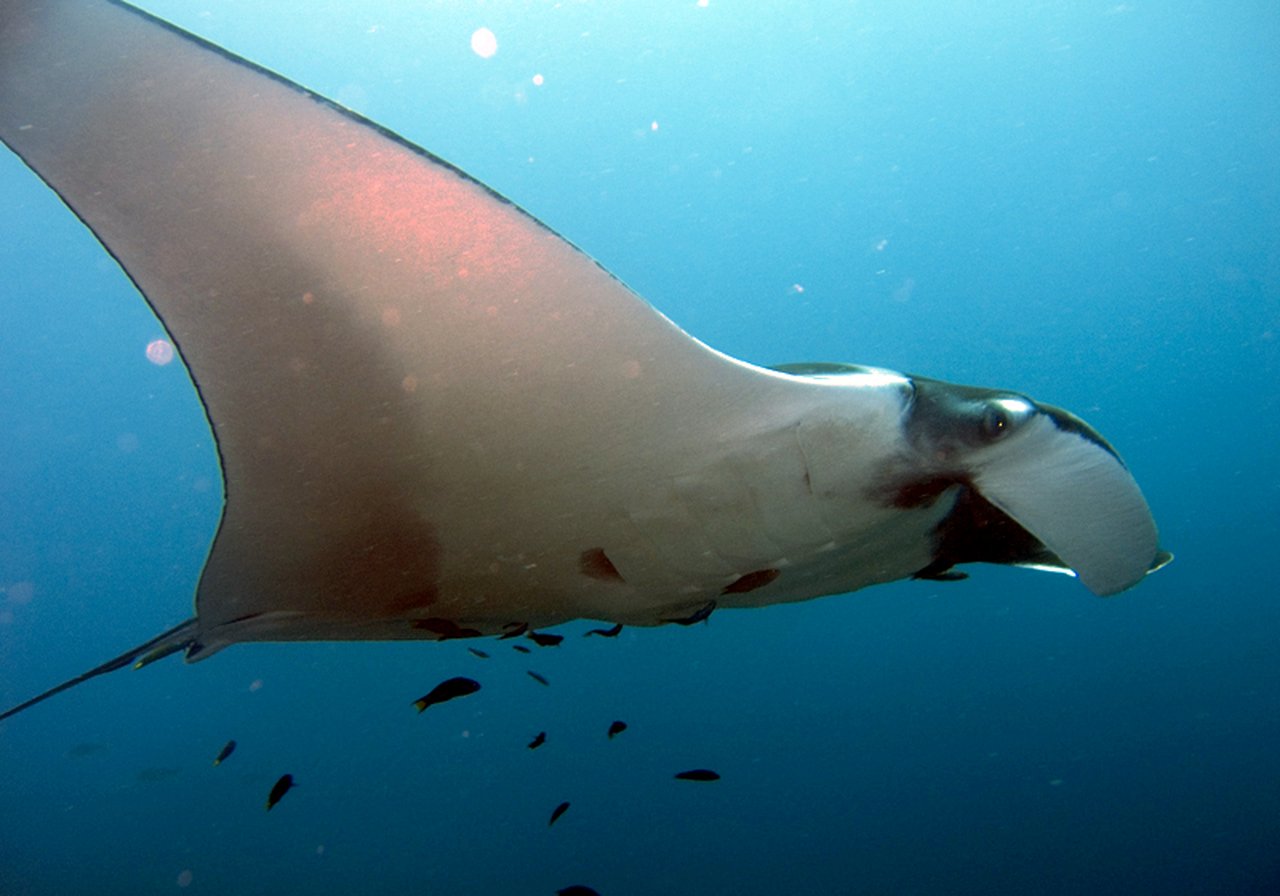
Manta rays belong to Mobulidae alongside devil rays. The giant manta Mobula birostris roams oceanic waters; reef manta Mobula alfredi stays closer to coasts and cleaning stations. Both possess cephalic lobes — paddle-like fins channeling food toward the mouth.
Filter feeding resembles whale sharks: swimming open-mouthed through plankton blooms or barrel-rolling in dense krill. Unlike stingrays, mantas lack a functional venomous spine on the tail.
Brain-to-body ratios and reported curiosity toward divers fuel interest in manta cognition, though research remains limited compared with marine mammals.
Migration, cleaning stations and tourism
Tagged mantas cross ocean basins — giants recorded travelling thousands of kilometres. Aggregations form at seamounts, reef channels and cleaning stations where smaller fish remove parasites.
Ecotourism at sites such as the Maldives, Indonesia and Mexico generates revenue when regulated. Touching mantas, excessive boats and propeller injury harm animals; many operators enforce no-contact codes.
Photo identification using belly spot patterns builds global databases linking individuals across years and sites — citizen science aids population monitoring.
Fisheries, gill plates and bycatch
Mantas are caught as bycatch in tuna and swordfish fisheries, especially gillnets and purse seines. Direct targeting for gill plates — marketed as peng yu sai — surged in the twenty-first century until CITES listing in 2013.
Slow reproduction magnifies losses: females mature late, bear one pup at a time and gestate about a year. Population declines estimated at 30 to 50 percent over three generations triggered Endangered listing for both species.
Enforcement of trade bans, bycatch reduction technologies and protected aggregation sites are priority conservation tools.
Manta rays and people
Indonesia and Malaysia — WARN partner regions — host major manta tourism and trade routes. Community benefit from live mantas often exceeds one-time sale value of dead animals, supporting arguments for protection.
Readers can choose operators with certification, avoid gill-plate products and support no-fishing zones at known aggregation sites. Mantas cannot survive captivity display long-term — they need vast water volumes and continuous swimming.
What WARN Does
WARN educates readers in Indonesia and Malaysia — global centres for manta tourism and historic gill-plate trade — about sustainable oceans and anti-trafficking principles. This guide is free public education linking marine giants to habitat protection across partner countries.
If this guide helps you understand wildlife and the pressures it faces, a gift to WARN supports habitat protection and free public education in our partner countries.
How can I help save the manta ray?
Explore practical ways to support the manta ray, from everyday choices and sharing reliable information to reviewing a related appeal before giving.
Explore ways to support
Read the related appeal’s purpose, recipient status and fund terms. Choose an affordable gift after checking what is proposed and what has been reported.
Ease the pressures
Avoid the wildlife trade and souvenirs, never buy wild animals as pets, and choose sustainable, habitat-friendly products — the threats behind the manta ray's decline fall when demand does.
Spread the word
Share accurate, sourced information about the manta ray. Wider awareness is what turns concern into lasting protection.
Manta Ray: Frequently Asked Questions
How can I help save the manta ray?
Are manta rays endangered?
How big is a manta ray?
Where can you see manta rays?
Where do manta rays live?
Are manta rays dangerous?
How long do manta rays live?
What do manta rays eat?
Sources & References
Population figures, conservation status and biological facts on this page are drawn from authoritative scientific and intergovernmental sources.
Terms used on this page
Plain-English definitions, from our wildlife and conservation glossary.
Latest Manta Ray Stories
Quick, fact-checked reads on the manta ray — amazing facts, key questions and the threats it faces.
Explore more animals
Discover more animals, their habitats and their conservation status in the WARN wildlife-guide library.