Wildlife Guide · Worldwide
Owl
Strigiformes
Silent-winged night hunters found on almost every continent.
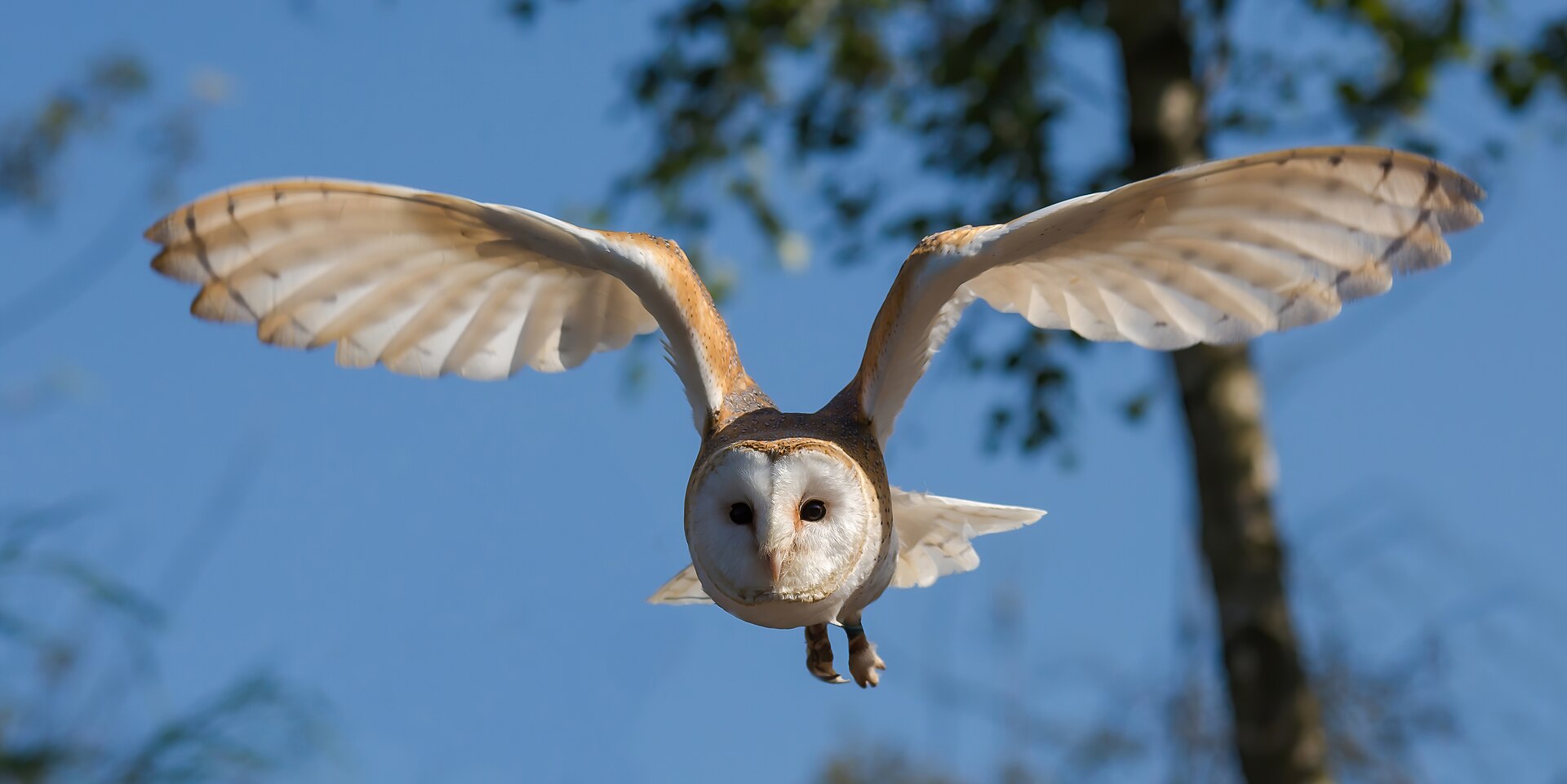
Photo: Dannymoore1973 / Wikimedia Commons (CC0)
In brief
An owl is a nocturnal bird of prey in the order Strigiformes, made up of about 250 species across two families, distinguished by forward-facing eyes, near-silent flight and the ability to rotate its head up to 270 degrees.
Also in Animals A to Z · Animals that start with O
By WARN Research & Conservation TeamLast updated
Owls are an order of roughly 250 nocturnal birds of prey known for their forward-facing eyes, swivelling heads and near-silent flight. Split into two families, the typical owls (Strigidae) and the barn and bay owls (Tytonidae), they range from the sparrow-sized elf owl to the powerful Eurasian eagle-owl. They live on every continent except Antarctica, hunting rodents and other small animals across forests, grasslands, deserts and farmland. Most owl species are stable, but habitat loss, rodenticide poisoning and forest clearance have pushed more than a dozen toward extinction, making owls an important indicator of ecosystem health worldwide.
~250
Species worldwide
270°
Head rotation
13.5 cm–71 cm
Body length range
6 CR / 7 EN
Species critically endangered or endangered
Figures sourced from IUCN Red List – Common Barn-owl (Tyto alba), Wikipedia – Owl, BirdLife DataZone – Spotted Owl (Strix occidentalis) and other references on this page.
Owl: Quick Facts
| Lifespan | Around 10 years in the wild; longer in larger species and captivity |
|---|---|
| Weight | ~31 g (elf owl) to over 4 kg (large eagle-owls) |
| Size | 13.5 cm to 71 cm in length; wingspans up to ~1.9 m |
| Diet | Carnivore: rodents, insects, birds, fish and reptiles |
| Incubation | Roughly 30 days, usually by the female |
| Young per clutch | Typically 3 to 4 eggs |
| Baby name | Owlet (or nestling) |
| Group name | A parliament of owls |
| Head rotation | Up to 270 degrees |
| CITES | Most owls listed on CITES Appendix II |
Scientific Classification
| Kingdom | Animalia |
|---|---|
| Phylum | Chordata |
| Class | Aves |
| Order | Strigiformes |
| Families | Strigidae (typical owls), Tytonidae (barn and bay owls) |
| Species | ~250 |
Conservation Status
- IUCN Status
- Varies by species; representative status Near Threatened (e.g. spotted owl); group ranges from Least Concern to Critically Endangered
- Population
- Not estimated for the order as a whole; varies widely by species
- Trend
- Mixed; many species stable but several declining
- Assessed
- 2021
- CITES
- Most species listed on CITES Appendix II
Around 6 owl species are assessed as Critically Endangered and 7 as Endangered on the IUCN Red List; key threats are habitat loss, deforestation and rodenticide poisoning.
Did you know?
An owl's eyes are so large and tubular that they cannot move in their sockets, which is exactly why owls evolved to swivel their heads up to 270 degrees instead.
Key Facts: Owl
- Owls form the order Strigiformes, with around 250 species split between the typical owls (Strigidae) and the barn and bay owls (Tytonidae).
- They are found on every continent except Antarctica, occupying forests, deserts, grasslands and farmland.
- Specialised feathers with serrated and velvety edges let owls fly almost silently while hunting.
- Owls can rotate their heads up to 270 degrees, compensating for eyes that are fixed in their sockets.
- Most owls are nocturnal carnivores, eating rodents, insects, birds and other small animals, often swallowing prey whole and coughing up pellets.
- While many owl species are stable, rodenticides, habitat loss and deforestation threaten several, with around 13 species classed as endangered or critically endangered.
What is an owl?
Owls are birds of prey that make up the order Strigiformes, comprising roughly 250 living species. They are divided into two families: the typical or true owls (Strigidae), which includes most species such as the great horned, snowy and scops owls, and the barn and bay owls (Tytonidae), recognised by their heart-shaped facial discs. Owls are characterised by large, forward-facing eyes set in a flat facial disc that channels sound to their ears, a hooked beak, sharp talons and feathers that camouflage them against bark and foliage. They range enormously in size, from the elf owl at about 13.5 cm and 31 grams to large eagle-owls reaching 71 cm in length with wingspans near 1.9 metres and weights of more than 4 kg.
Silent flight and night vision
Owls are built for hunting in low light and near silence. The leading edge of the wing carries a comb-like serration that breaks up turbulent air, while velvety feather surfaces and a soft trailing fringe muffle the sound of flapping, allowing many species to approach prey unheard. Because their tubular eyes cannot move within the skull, owls turn their heads instead, rotating up to 270 degrees thanks to extra neck vertebrae and a blood-vessel system that keeps the brain supplied during the twist. Asymmetrically placed ear openings in some species let them pinpoint prey by sound alone, even under snow or leaf litter.
Diet, breeding and life cycle
Owls are carnivores that feed mainly on small rodents, but their diet also includes insects, other birds, fish, reptiles and occasionally larger mammals. They typically swallow small prey whole and later regurgitate the indigestible fur and bones as compact pellets, which researchers study to learn what owls eat. Most species lay three to four rounded white eggs, which the female incubates for roughly a month using a bare brood patch. Chicks, called owlets, hatch blind and helpless and depend entirely on their parents before fledging. In the wild many owls live around 10 years, though larger species can survive much longer.
Conservation: a varied picture
As a group, owls range from very common to critically endangered. Widespread species such as the barn owl are listed as Least Concern, while forest specialists like the spotted owl are Near Threatened due to logging of old-growth habitat. Several island and tropical species are in serious trouble, with roughly six classed as Critically Endangered and seven as Endangered by global assessors. The biggest pressures are habitat loss and deforestation, secondary poisoning from rodenticides eaten by their prey, road collisions and persecution. Because owls sit near the top of local food chains, declines often signal wider problems in the ecosystems they depend on.
Typical owls vs barn owls
| Feature | Typical owls (Strigidae) | Barn and bay owls (Tytonidae) |
|---|---|---|
| Number of species | ~230 | ~20 |
| Facial disc | Rounded | Heart-shaped |
| Examples | Great horned, snowy, scops, eagle-owls | Common barn owl, bay owls, masked owls |
| Eyes | Often yellow or orange | Typically dark |
| Legs | Variable, often feathered | Long, lightly feathered |
| Distribution | Worldwide except Antarctica | Worldwide except polar regions |
What WARN Does
The World Animal Rescue Network does not currently fund field projects specifically for owls. Owls are a globally distributed group, and at this launch stage WARN's hands-on rescue and rehabilitation work is concentrated in partner-network countries (its partner-network countries). We publish this guide as free educational and search content to raise awareness of owls, the threats they face from habitat loss and rodenticides, and the value of protecting the wild places they share with the species WARN does support. Supporting WARN helps fund habitat protection and wildlife welfare work that benefits many species; we are clear that this does not include dedicated owl programmes today.
Owls remind us how fragile wild habitats can be. WARN does not yet run owl-specific projects, but your gift helps fund habitat protection and wildlife welfare in our focus countries, supporting the broader mission to keep wild places safe for the animals that depend on them.
Owl: Frequently Asked Questions
How many species of owl are there?
How far can an owl turn its head?
Why can owls fly silently?
What do owls eat?
What is a baby owl called?
Where do owls live?
Are owls dangerous?
How long do owls live?
How big is an owl?
Sources & References
Population figures, conservation status and biological facts on this page are drawn from authoritative scientific and intergovernmental sources.
Terms used on this page
Plain-English definitions, from our wildlife and conservation glossary.
Latest Owl Stories
Quick, fact-checked reads on the owl — amazing facts, key questions and the threats it faces.
Guides
Pet Adoption vs. Animal Rescue: How to Help When You Can't Adopt
Pet adoption, cat adoption, dog adoption, puppies for adoption — they all matter. But what about the animals you cannot bring home?
Read the storyGuides
Giving in Memory of a Pet: A Complete Guide to Tribute Donations and Pet Memorials
How to give in memory of a much-loved pet, what a tribute donation actually does, how memorial walls work, and how WARN matches your gift to the same species your animal belonged to.
Read the storySpecies
12 Amazing Facts About the Humpback Whale, the Ocean's Great Singer
From hours-long songs that only males sing to flippers longer than any other whale, here are 12 genuinely surprising facts about the humpback whale.
Read the storyExplore more animals
Discover more animals, their habitats and their conservation status in the WARN wildlife-guide library.