Wildlife Guide · South Asia
Peacock
Pavo cristatus
The dazzling display bird whose males turn courtship into a living work of art.
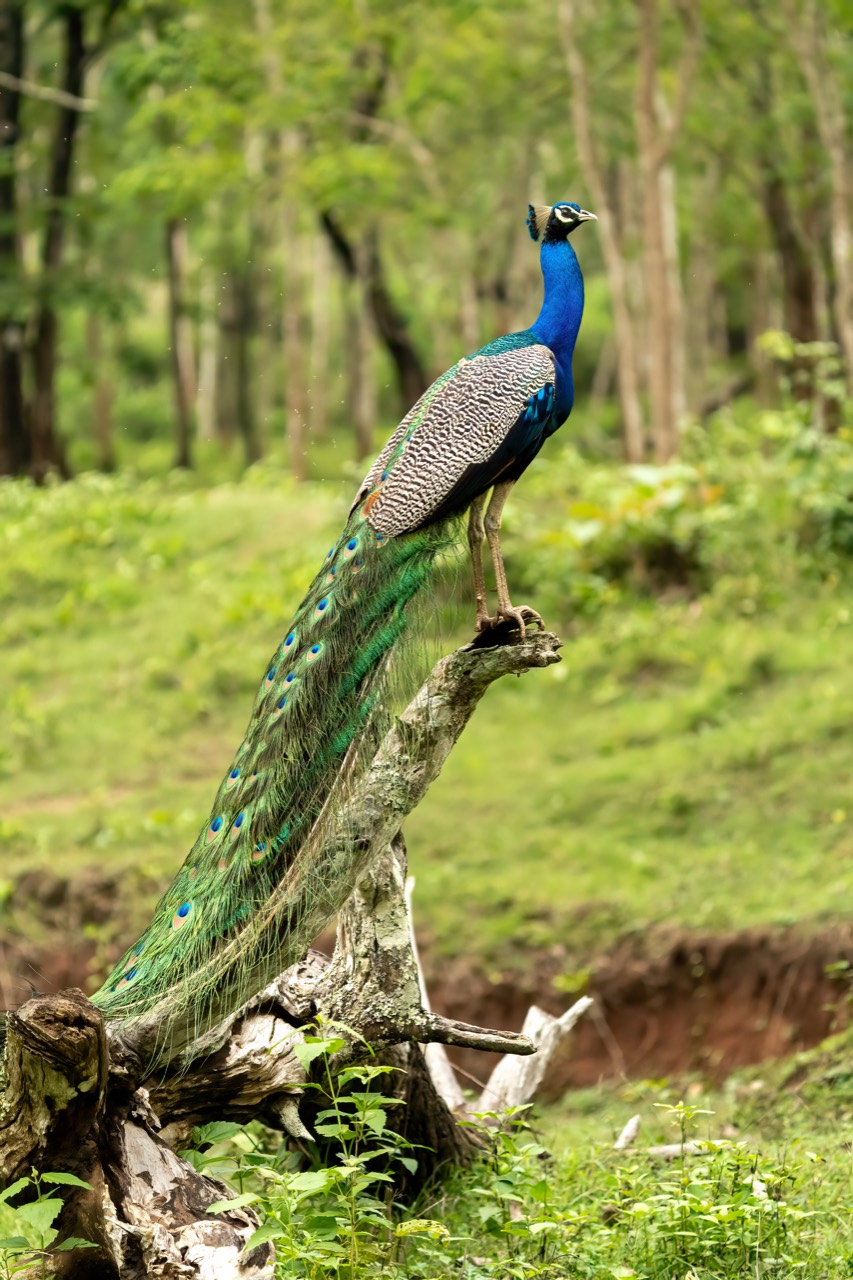
Source: Wikimedia Commons via Wikipedia “Indian peafowl”
In brief
A peacock is the male of the peafowl, a large ground-dwelling pheasant whose shimmering, eyespotted tail train is fanned out to attract mates; the Indian peafowl is Least Concern, but the green peafowl is Endangered.
Also in Animals A to Z · Animals that start with P
By WARN Research & Conservation TeamLast updated
The peacock is one of the most recognizable birds on Earth, famous for the male's enormous, jewel-toned tail train studded with eyespots. Strictly speaking, "peacock" refers only to the male; females are peahens, and together they are called peafowl. The word covers three distinct species: the Indian peafowl (Pavo cristatus) of South Asia, the green peafowl (Pavo muticus) of Southeast Asia, and the Congo peafowl (Afropavo congensis) of Central Africa. The Indian peafowl is by far the most widespread and well known, kept and admired around the world, while its two cousins are far rarer and under real pressure in the wild. This guide focuses on the Indian peafowl while keeping the wider peafowl picture in view.
3
Peafowl species worldwide
~200
Eyespots on a full male train
Up to 25 yrs
Lifespan in the wild
5-6 ft
Length of a male's train
Figures sourced from IUCN Red List: Indian peafowl (Pavo cristatus), IUCN Red List: Green peafowl (Pavo muticus), BirdLife DataZone: Green peafowl factsheet and other references on this page.
Peacock: Quick Facts
| Lifespan | Up to ~25 years in the wild; around 16-23 years in captivity |
|---|---|
| Weight | Males 4-6 kg (9-13 lb); females 2.75-4 kg (6-9 lb) |
| Size | Male up to ~1.1-1.2 m body with a 1.5-1.8 m (5-6 ft) train; wingspan ~1.4-1.6 m |
| Diet | Omnivore: seeds, grains, berries, insects, small reptiles |
| Incubation | About 28 days |
| Young per clutch | Typically 4-8 eggs |
| Baby name | Peachick |
| Group name | Ostentation, muster, party, or pride |
| Species count | 3 (Indian, green, Congo peafowl) |
| CITES | Indian peafowl not CITES-listed; green peafowl listed on CITES Appendix II |
Scientific Classification
| Kingdom | Animalia |
|---|---|
| Phylum | Chordata |
| Class | Aves |
| Order | Galliformes |
| Family | Phasianidae |
| Genus | Pavo |
| Species | Pavo cristatus (Indian peafowl) |
Conservation Status
- IUCN Status
- Least Concern (Indian peafowl); status varies by species
- Population
- Indian peafowl population large and not quantified precisely; green peafowl ~10,000-19,999 mature individuals; Congo peafowl ~2,500-9,000 individuals
- Trend
- Stable (Indian peafowl); decreasing (green and Congo peafowl)
- Assessed
- 2016 (Indian peafowl); green peafowl Endangered since 2009
- CITES
- Indian peafowl not listed; green peafowl on CITES Appendix II
Conservation status differs sharply across the three peafowl species, from Least Concern for the Indian peafowl to Endangered for the green peafowl.
Did you know?
A peacock's shimmering colors are largely "structural." The feathers contain microscopic crystal-like structures that bend light, so the same feather can flash blue, green, or gold depending on the angle you view it from.
Key Facts: Peacock
- "Peacock" is the male; the female is a peahen, and "peafowl" covers both. Babies are peachicks.
- There are three peafowl species: Indian, green, and Congo. The Indian peafowl is the famous blue bird most people picture.
- The male's spectacular train is not its actual tail. It is made of elongated upper-tail covert feathers raised over the true tail during display.
- Conservation status varies sharply: the Indian peafowl is Least Concern, the green peafowl is Endangered, and the Congo peafowl is Near Threatened.
- Indian peafowl are native to South Asia and are the national bird of India, where they are culturally protected.
- They are omnivores, eating seeds, grains, berries, insects, and small reptiles, and roost in trees at night to avoid predators.
What is a peacock, and what makes the train so famous?
A peacock is the male of the peafowl, a large member of the pheasant family. Its signature feature is the train: a fan of up to roughly 200 elongated covert feathers, each tipped with a colorful eyespot, or ocellus. These feathers are not the bird's true tail; the actual tail feathers sit beneath and prop the train upright during display. When courting, a male raises and quivers the train into a vast iridescent fan, the colors shifting with the angle of light because of microscopic structures in the feathers rather than pigment alone. Peahens are smaller and camouflaged in mottled brown, which helps them stay hidden while nesting on the ground. The train grows back each year after the breeding season and reaches full size when a male is several years old.
Where peafowl live and what they eat
The Indian peafowl is native to South Asia, ranging across India, Sri Lanka, and neighboring areas, in forests, farmland edges, and scrub where open ground meets cover. It has also been introduced to parks and estates in many other countries. Green peafowl live in Southeast Asia, and the Congo peafowl is restricted to rainforests in Central Africa. Peafowl are omnivorous ground foragers, feeding on seeds, grains, fruits, flower parts, insects, worms, and small reptiles or amphibians; near villages they will also raid cultivated crops. They feed mostly at dawn and dusk and fly up into trees to roost at night, which protects them from ground predators.
Breeding, peachicks, and behavior
During the breeding season males display to groups of peahens, and a female chooses a mate partly based on the quality of his train and display. The peahen alone builds a simple ground nest and lays a clutch of about 4 to 8 eggs, incubating them for roughly 28 days. The downy chicks, called peachicks, can walk and feed soon after hatching and follow their mother closely. Peafowl are loud, with a far-carrying call often heard before rain or at dawn. Although they spend most of their time on the ground, they are strong short-distance fliers, bursting upward to escape danger or reach a roost.
Conservation: a tale of three species
Peafowl conservation cannot be summed up by a single label, because the three species face very different futures. The Indian peafowl is widespread and assessed as Least Concern, with a large and stable population, helped by cultural reverence and legal protection in India. The green peafowl, by contrast, has been listed as Endangered since 2009, with its population fragmented and declining due to hunting, egg collection, and habitat loss across Southeast Asia. The Congo peafowl is Near Threatened, with a relatively small population in the Congo Basin threatened by deforestation and bushmeat hunting. So while the peacock you are most likely to see is doing well, two of its relatives need active protection.
The three peafowl species compared
| Species | Native region | IUCN status | Notable feature |
|---|---|---|---|
| Indian peafowl | South Asia (India, Sri Lanka) | Least Concern | Classic blue neck; national bird of India |
| Green peafowl | Southeast Asia | Endangered | Green-gold plumage; both sexes more similar |
| Congo peafowl | Central Africa (Congo Basin) | Near Threatened | Smaller, forest-dwelling; lacks long train |
What WARN Does
WARN publishes this guide for education and is developing support through assessed animal-welfare grants. A species range, source citation or photograph does not establish a recipient or funding agreement. Check /about/where-your-money-goes/#grant-register for published grant and payment records; records not yet published must not be read as zero activity. Browse /appeals/ for the purposes currently available to support.
Love the peacock's dazzling display? The wild places that birds like peafowl depend on are shrinking. While WARN does not yet fund peafowl projects directly, your gift to Support Habitat Protection helps safeguard the forests and ecosystems that wildlife everywhere needs to thrive.
Peacock: Frequently Asked Questions
What is the difference between a peacock and a peahen?
Are peacocks endangered?
What is a baby peacock called?
What is a group of peacocks called?
What do peacocks eat?
Where do peacocks live?
Are peacocks dangerous?
How long do peacocks live?
How big is a peacock?
Sources & References
Population figures, conservation status and biological facts on this page are drawn from authoritative scientific and intergovernmental sources.
Terms used on this page
Plain-English definitions, from our wildlife and conservation glossary.
Latest Peacock Stories
Quick, fact-checked reads on the peacock — amazing facts, key questions and the threats it faces.
Species
How Big Is a Markhor? Size, Weight and Those Giant Corkscrew Horns
The markhor is the largest wild goat on Earth. Here is exactly how big it gets — height, weight and the record-setting spiral horns.
Read the storySpecies
Markhor vs Ibex: How to Tell These Wild Mountain Goats Apart
Both are wild mountain goats with impressive horns, but the markhor and the ibex differ in size, horn shape and range. Here's how to tell them apart.
Read the storySpecies
12 Amazing Facts About the Snow Leopard, the Ghost of the Mountains
From a tail nearly as long as its body to leaps of up to 15 metres, here are 12 verified facts about the elusive snow leopard of Central and South Asia.
Read the storyExplore more animals
Discover more animals, their habitats and their conservation status in the WARN wildlife-guide library.