Wildlife Guide · The Americas & Europe
Pelican
Pelecanus (family Pelecanidae)
The big-billed fishers of the world's waters
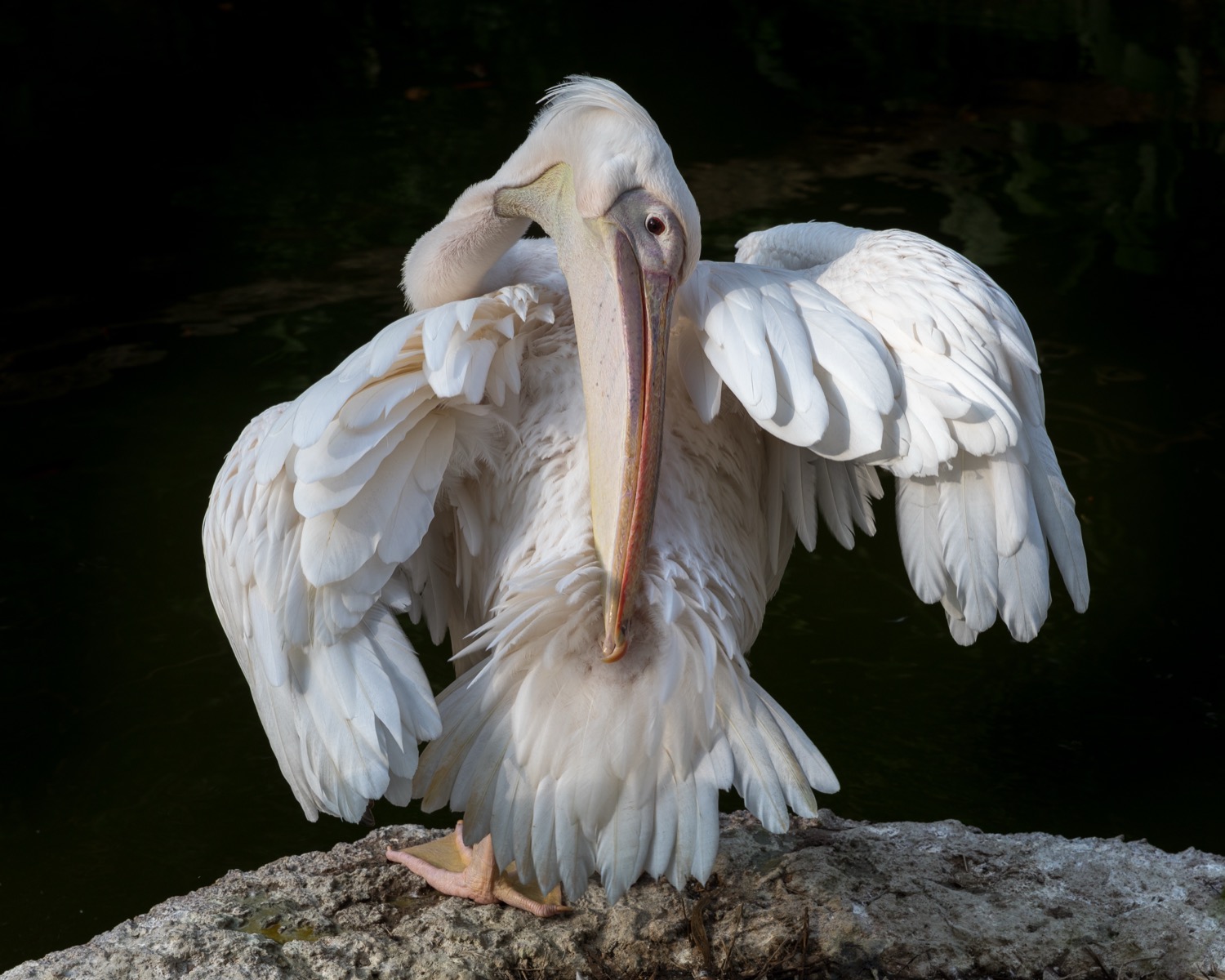
Source: Wikimedia Commons — “Pelecanus onocrotalus cleaning its feathers at sunset” by Basile Morin, CC BY-SA 4.0
In brief
A pelican is a large waterbird of the family Pelecanidae, recognised by its long bill and the expandable skin pouch beneath it, which it uses to scoop up fish. There are eight species in the genus Pelecanus, living on coasts and inland waters across every continent except Antarctica.
Also in Animals A to Z · Animals that start with P
By WARN Research & Conservation TeamLast updated
Pelicans are large, unmistakable waterbirds known for the huge expandable pouch slung beneath their long bill, which they use like a net to scoop fish from the water. The family Pelecanidae contains eight living species in a single genus, Pelecanus, found on every continent except Antarctica. They range from the snowy-white American white pelican to the grey-brown brown pelican of warm coasts. Among the heaviest flying birds in the world, pelicans are nonetheless graceful in the air, soaring on broad wings and often flying in long, orderly lines. They are highly social, nesting in colonies and feeding either cooperatively in shallow water or, in one species, by spectacular plunge-diving.
8
living species worldwide
~3 m
wingspan in the largest species
Up to ~13 kg
weight of the heaviest pelicans
6
continents inhabited (all but Antarctica)
Figures sourced from Pelican — Wikipedia, Pelican — Encyclopaedia Britannica, IUCN Red List (search by species) and other references on this page.
Pelican: Quick Facts
| Common name | Pelican |
|---|---|
| Scientific group | Genus Pelecanus, family Pelecanidae |
| Number of species | 8 living species |
| Diet | Mainly fish; sometimes amphibians, crustaceans, small birds |
| Defining feature | Long bill with an expandable throat pouch |
| Wingspan | Up to about 3 m in the largest species |
| Weight | Up to roughly 13 kg in the heaviest species |
| Habitat | Coasts, lakes, rivers, deltas and inland wetlands |
| Distribution | All continents except Antarctica |
| Social behaviour | Highly gregarious; nests and often feeds in colonies |
Scientific Classification
| Kingdom | Animalia |
|---|---|
| Phylum | Chordata |
| Class | Aves |
| Order | Pelecaniformes |
| Family | Pelecanidae |
| Genus | Pelecanus |
| Species | 8 living species |
Conservation Status
- IUCN Status
- Conservation status varies by species. Of the eight living pelican species, most are assessed by the IUCN Red List as Least Concern, including the brown, American white, great white, pink-backed, Australian and Peruvian pelicans. The Dalmatian pelican is listed as Near Threatened. Shared threats across the family include loss and degradation of wetlands, water pollution, declining fish stocks, human disturbance at colonies and entanglement in fishing gear.
- Population
- Varies by species; global totals are not pooled into a single figure, but several species number in the hundreds of thousands of individuals.
- Trend
- Mixed by species; several stable or increasing, some local populations declining
- Assessed
- Per-species IUCN Red List assessments (most recent available)
- CITES
- Some species listed on CITES Appendices (e.g. Dalmatian pelican on Appendix I); not all pelicans are CITES-listed
Because status differs between the eight species, always check the assessment for the specific pelican in question rather than treating the group as a whole.
Key Facts: Pelican
- Pelicans are large waterbirds in the family Pelecanidae, with eight species in the single genus Pelecanus.
- Their defining feature is an expandable throat pouch used to scoop fish and drain water before swallowing.
- They are among the heaviest flying birds, yet soar efficiently on broad wings, often in formation.
- Most species feed cooperatively by herding fish in shallow water; the brown pelican plunge-dives from the air.
- Most pelican species are assessed as Least Concern, though a few, such as the Dalmatian pelican, are Near Threatened.
- Pelicans nest in colonies and depend on healthy wetlands, lakes and coasts for breeding and feeding.
What does a pelican use its pouch for?
The pelican's most famous feature is the large, stretchy pouch of skin that hangs from the lower half of its bill, attached to the flexible bones of the lower mandible. Contrary to a common myth, pelicans do not store fish in this pouch for later; instead they use it as a dip net. When feeding, the bird plunges its open bill into the water and the pouch balloons outwards, scooping up fish along with several litres of water. The pelican then tips its bill down to drain the water out of the sides before tilting its head back to swallow the catch. The pouch is also used in other ways: it helps regulate body temperature, as the bird can flutter it to lose heat in hot weather, and it features in courtship displays, when in some species it flushes with bright colour. The skin is so thin and elastic that a feeding pelican's pouch can hold considerably more water than its stomach.
How do pelicans catch fish?
Pelicans are specialist fish-eaters and use two main hunting styles. Most species, including the great white and American white pelicans, feed cooperatively in shallow water. Groups swim in a line or horseshoe shape, beating the surface with their wings to drive shoals of fish into the shallows, then dip their bills in unison to scoop them up. This teamwork lets relatively slow-swimming birds corral fast fish efficiently. The brown pelican of the Americas hunts very differently: it is the great plunge-diver of the family, soaring above the sea and then folding its wings to crash bill-first into the water, stunning fish and trapping them in its pouch as it surfaces. A pelican's diet is dominated by fish, but it may also take amphibians, crustaceans and, occasionally, smaller birds. Because they need large quantities of fish, pelicans depend on productive, healthy waters, which makes them sensitive to overfishing and pollution.
Where do pelicans live and breed?
Pelicans are found on coasts, lakes, rivers, deltas and inland wetlands across every continent except Antarctica, favouring warm and temperate regions. Different species occupy different ranges: the brown and American white pelicans live in the Americas, the great white and Dalmatian pelicans across parts of Europe, Africa and Asia, the pink-backed and spot-billed pelicans in Africa and southern Asia, and the Australian pelican across Australia and nearby islands. They are highly gregarious and breed in colonies, sometimes numbering thousands of pairs, on islands, in trees or among dense reeds and vegetation. Nests range from simple scrapes on the ground to bulky stick structures. Both parents typically share incubation and feed the chicks by regurgitation, with young birds reaching into the adult's pouch to be fed. Many populations move seasonally between breeding and wintering sites, and some undertake long migrations, making safe stopover wetlands essential to their survival.
Brown pelican vs white pelicans: two ways to fish
| Feature | Brown pelican | White pelicans (e.g. American white, great white) |
|---|---|---|
| Main plumage | Grey-brown, darker overall | Largely white, often with black flight feathers |
| Typical habitat | Mainly coastal, marine waters | Often inland lakes and wetlands, plus coasts |
| Hunting style | Plunge-dives bill-first from the air | Herds fish cooperatively in shallow water |
| Relative size | Smaller pelican species | Among the largest, heaviest pelicans |
| Region | Americas | Americas, Europe, Africa, Asia depending on species |
What WARN Does
World Animal Rescue Network does not run field projects specifically for pelicans, which live mostly outside the countries where WARN's partners work; this guide is part of WARN's free, science-based educational library. The threats that affect pelicans most, including wetland loss, water pollution, overfishing and disturbance at breeding sites, are the same pressures that harm the species WARN's local teams do protect, so understanding them supports wider conservation.
If you value clear, honest wildlife guides like this one, a small gift helps keep our educational work free and supports the animals our local teams care for every day.
Pelican: Frequently Asked Questions
Do pelicans store fish in their pouch?
How big do pelicans get?
What do pelicans eat?
Are pelicans endangered?
How many species of pelican are there?
Can pelicans fly well despite their size?
Where do pelicans live?
Are pelicans dangerous?
How long do pelicans live?
Sources & References
Population figures, conservation status and biological facts on this page are drawn from authoritative scientific and intergovernmental sources.
Terms used on this page
Plain-English definitions, from our wildlife and conservation glossary.
Latest Pelican Stories
Quick, fact-checked reads on the pelican — amazing facts, key questions and the threats it faces.
Species
Slow Loris: Why the Internet's Favourite Pet Is a Conservation Disaster
The slow loris looks like a cartoon character — and that has nearly destroyed the species. Here is the truth behind the viral videos.
Read the storySpecies
The Snow Leopard: Why the Ghost of the Mountains Is Still Vulnerable
The snow leopard is one of the most elusive big cats on earth, with an estimated 4,000-6,500 individuals across twelve range states — including Pakistan, where WARN is preparing to operate. This briefing explains why the species was downlisted from Endangered to Vulnerable in 2017 and why that is not the success story it sounds like.
Read the storyGuides
Sun Bear vs Moon Bear: The Two Most Trafficked Asian Bears
The sun bear and the Asiatic black bear (moon bear) are the two most commonly trafficked bears in Asia — for the pet trade, for traditional medicine and for bear-bile farming. Here is how to tell them apart.
Read the storyExplore more animals
Discover more animals, their habitats and their conservation status in the WARN wildlife-guide library.