Wildlife Guide · Central Asia & East Asia
Pika
Ochotona spp.
The mountain's tiny alarm system — a round-eared lagomorph racing against a warming world.
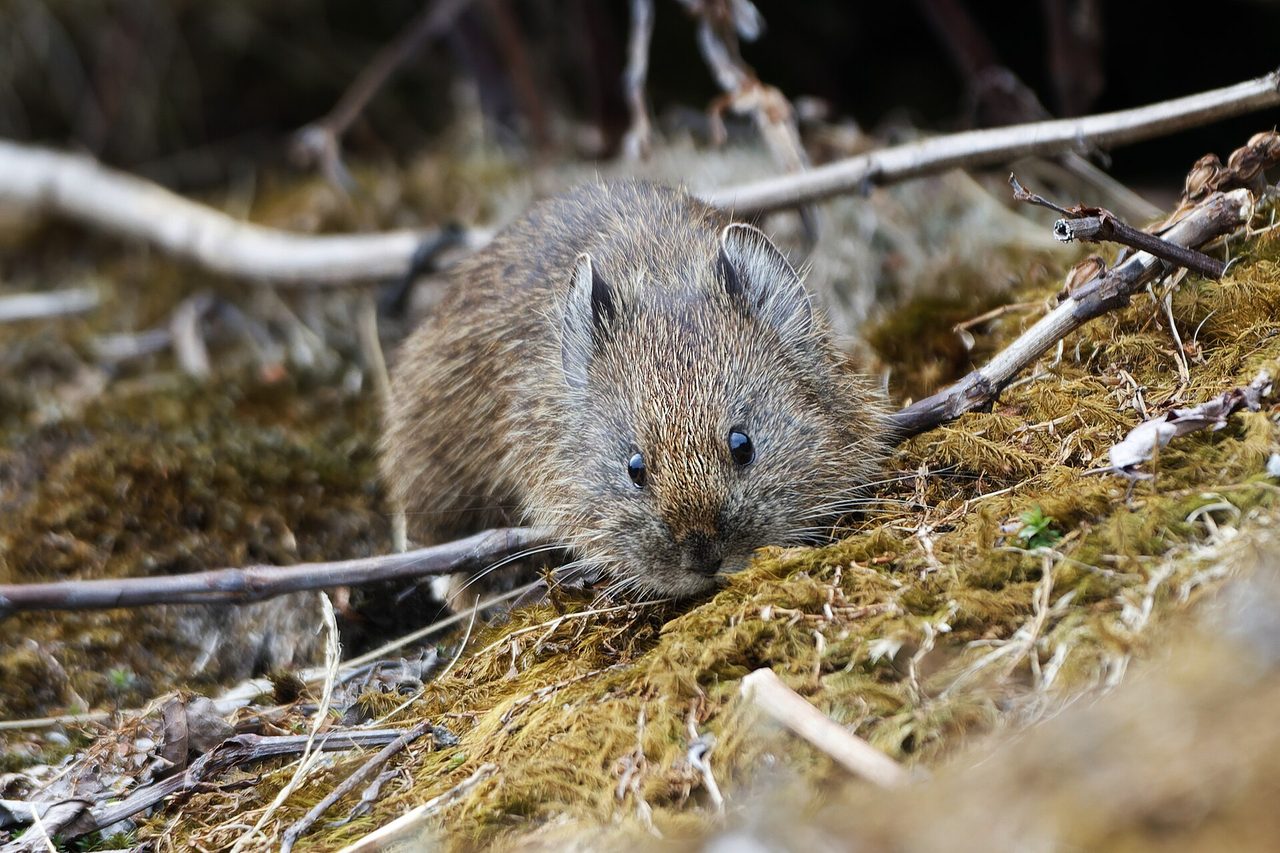
Photo: Shiv's fotografia / Wikimedia Commons (CC BY-SA 4.0)
In brief
Pikas (genus Ochotona) are small, round-eared alpine mammals related to rabbits that live on cold, rocky mountain slopes across Asia and western North America, where they are threatened by rising temperatures that their heat-sensitive bodies cannot tolerate.
Also in Animals A to Z · Animals that start with P
By WARN Research & Conservation TeamLast updated
Pikas are small, egg-shaped mammals of the genus Ochotona — the sole living genus in the family Ochotonidae — closely related to rabbits and hares within the order Lagomorpha. Don't let their mouse-like appearance fool you: pikas are not rodents. Roughly 37 species are currently recognised, though taxonomy is ongoing and some authorities place the count closer to 29–34; they range across the cold, rocky mountains of Asia and western North America, occupying talus slopes, boulder fields, and alpine meadows from the Himalayas and Tian Shan to the Rocky Mountains and Sierra Nevada. Most species are strictly associated with cold environments, unable to survive when air temperatures rise above roughly 25 °C (77 °F) for prolonged periods. Their loud, piercing calls — a sharp "eenk" that warns neighbours of approaching predators — make pikas one of the most audible yet often overlooked indicators of mountain ecosystem health. Several Asian species face serious decline; all species serve as sensitive barometers of climate change.
~37
living species (taxonomy ongoing)
~80–300 g
adult weight range
25–28 °C (77–82 °F)
heat stress to lethal threshold
>70%
Ili pika population decline since 1980s
Figures sourced from IUCN Red List — Ili pika (Ochotona iliensis), assessed 2018, IUCN Red List — American pika (Ochotona princeps), assessed 2016, Animal Diversity Web — Ochotona princeps (American pika) and other references on this page.
Pika: Quick Facts
| Body length | 14–25 cm (5.5–10 in) |
|---|---|
| Weight | ~80–300 g (2.8–10.6 oz) |
| Lifespan | 3–6 years in the wild |
| Litter size | 1–6 young; typically 3–4 |
| Gestation | 18–30 days (species dependent) |
| Elevation range | Up to 6,130 m (20,100 ft) above sea level |
| Diet | Herbivore: grasses, forbs, sedges, mosses |
| Activity | Diurnal; active year-round (no hibernation) |
Scientific Classification
| Kingdom | Animalia |
|---|---|
| Phylum | Chordata |
| Class | Mammalia |
| Order | Lagomorpha |
| Family | Ochotonidae |
| Genus | Ochotona |
| Species count | ~37 recognised species (taxonomy ongoing) |
Conservation Status
- IUCN Status
- Varies by species (Least Concern to Endangered)
- Population
- Varies; Ili pika estimated fewer than 1,000 individuals (2018)
- Trend
- Decreasing for most species under climate pressure
- Assessed
- 2018 (Ili pika); 2016 (American pika, Least Concern)
- CITES
- Not listed on any CITES Appendix
At least 4 of ~37 species are Endangered (Ili pika, Kozlov's pika, Hoffmann's pika, silver pika). The American pika has disappeared from over one-third of documented sites in Oregon and Nevada.
Did you know?
Pikas deliberately harvest plants that are toxic to them when fresh — including alpine avens — and layer them into their haypiles as a natural preservative. By the time winter arrives and the toxins have broken down, the same plants become safe and nutritious to eat.
Key Facts: Pika
- Pikas are lagomorphs — relatives of rabbits — not rodents, despite their mouse-like appearance.
- Most species cannot survive prolonged temperatures above roughly 25 °C (77 °F), and for the American pika exposure above 28 °C (82 °F) can be lethal within hours — making pikas acutely vulnerable to climate warming.
- Rather than hibernating, pikas spend summer building 'haypiles' — caches of dried vegetation that sustain them through winter under the snowpack.
- The Ili pika (Ochotona iliensis) of China's Tian Shan mountains has declined by more than 70 % since the 1980s and is listed as Endangered by the IUCN (assessed 2018), with fewer than 1,000 individuals believed to survive.
- Pikas act as ecosystem engineers: their burrows aerate soil and their haypiling behaviour distributes plant material across talus slopes.
- The American pika has already disappeared from more than a third of previously documented sites in Oregon and Nevada, signalling rapid range contraction even in a species currently listed as Least Concern.
What is a pika, and how does it differ from a rabbit or rodent?
Pikas belong to the order Lagomorpha — the same group as rabbits and hares — not to the rodents (Rodentia), despite superficially resembling large mice. The key distinction lies in dentition: lagomorphs possess a second, smaller pair of upper incisors directly behind the main pair, a feature absent in rodents. Within Lagomorpha, pikas form their own family, Ochotonidae, first formally described by Oldfield Thomas in 1897. All living pikas belong to the single genus Ochotona, which currently contains roughly 37 recognised species, though taxonomic revisions continue to add species — particularly from the Qinghai-Tibetan Plateau — and some authorities place the total closer to 29 to 34 depending on how subspecies are treated. Physically, pikas are compact and rounded, measuring 14–25 cm in body length, with large, round ears, dense fur, very short limbs, and no obvious external tail. Their weight spans approximately 80 g (Gansu pika) to about 300 g (Glover's pika). Unlike their rabbit cousins, pikas do not possess the elongated hind legs built for speed; instead, their robust forelimbs and non-slip foot pads are adapted for scrambling across loose rock. Their dense, soft fur provides insulation in environments where temperatures can plummet well below freezing — an adaptation that also makes them dangerously sensitive to heat. The genus is sometimes divided into four subgenera based on ecology and social behaviour: burrowing steppe pikas and rock-dwelling mountain pikas.
Where do pikas live, and what habitat do they need?
The majority of pika species are found across the mountain ranges of Central and East Asia: the Himalayas, Karakoram, Pamir, Tian Shan, Altai, and the vast Qinghai-Tibetan Plateau, which harbours the greatest species diversity. Two species — the American pika (Ochotona princeps) and the collared pika (Ochotona collaris) — inhabit the Rocky Mountains, Sierra Nevada, Cascade Range, and Alaska Range of North America. Most species are strict specialists of cold, rocky terrain. Rock-dwelling species occupy talus slopes — accumulations of frost-shattered boulders — and cliff faces, where deep crevices provide refuges from predators and insulating microclimates. The talus acts as a natural air conditioner: cold air pooling within the rock voids keeps the interior several degrees cooler than surface air, protecting pikas from heat stress. Burrowing species (such as the plateau pika, Ochotona curzoniae, of the Tibetan Plateau) instead excavate extensive burrow networks in alpine meadow soils. Regardless of strategy, pikas require proximity to diverse, productive meadow vegetation, as they are year-round residents that must accumulate large food stores before winter. Their elevation range commonly spans 2,500–6,130 m above sea level, making them among the highest-dwelling mammals on Earth.
How do pikas survive winter without hibernating?
Unlike many alpine mammals, pikas do not hibernate. This remarkable strategy places exceptional demands on their summer behaviour. From late spring through early autumn, pikas engage in a behaviour called haypiling: they make repeated foraging trips to surrounding meadows, harvesting grasses, sedges, forbs, thistles, mosses, and wildflowers, then carrying mouthfuls back to their territory boundaries, where they construct haystacks beneath overhanging rocks. A single haystack can contain up to a bushel (roughly 35 litres) of dried vegetation — a critical winter food reserve. Research has revealed a sophisticated chemical ecology in this process: American pikas selectively harvest alpine avens (Geum rossii), a plant that is actually toxic to them when fresh, and layer it into their haypiles because it contains compounds that inhibit bacterial decay, effectively acting as a natural preservative. By the time winter arrives and the toxins have degraded, the avens becomes safe to eat. Pikas also engage in coprophagy — re-ingesting their own soft faecal pellets — to maximise nutrient extraction from tough plant material, a practice shared with rabbits. Under the insulating snowpack, pikas remain active in their talus microhabitats throughout winter, feeding on their cached stores. This dependence on both snowpack insulation and summer food accumulation makes pikas doubly vulnerable to climate change: reduced snowpack exposes them to lethal cold snaps, while shortened growing seasons reduce haypile size.
Why are pikas threatened by climate change?
Pikas are among the world's most climate-vulnerable mammals. Most species begin to experience physiological heat stress at air temperatures of around 25 °C (77 °F), and research shows that American pikas can die from exposure to temperatures as low as 28 °C (82 °F) when unable to retreat into the talus, with death occurring within two hours under laboratory conditions. Unlike many mountain species that respond to warming by shifting their ranges upslope, pikas already inhabit the highest elevations available to them. At the summit, there is simply nowhere higher to go. The consequences are already measurable. American pikas have vanished from more than a third of their previously documented sites in Oregon and Nevada, representing one of the most extensive modern-era mammal extirpations recorded in the United States. Studies in the Sierra Nevada document habitat loss and fragmentation directly attributable to climate-mediated temperature increases. In Asia, the situation for some species is even more acute. The Ili pika (Ochotona iliensis), endemic to the Tian Shan mountains of China's Xinjiang province, has seen its population decline by more than 70 % since the 1980s and is listed as Endangered by the IUCN (assessed 2018), with fewer than 1,000 individuals believed to survive. Livestock grazing, air pollution, and reduced snowpack compound the climate signal for many Asian species. Because pikas are sensitive, early-responding indicators of warming, ecologists increasingly use their presence and distribution as a biological thermometer for mountain ecosystem health.
What role do pikas play in mountain ecosystems?
Despite their small size, pikas are ecologically disproportionate. On the Tibetan Plateau, the plateau pika (Ochotona curzoniae) is a keystone species whose burrow networks are fundamental to the functioning of the entire alpine grassland ecosystem. Their burrows aerate and turn over soil, improve water infiltration, and create microsites used for nesting by over 20 species of birds — including ground-nesting passerines and small raptors — as well as lizards and invertebrates. When plateau pika populations have been reduced through government-sponsored poisoning campaigns (aimed at protecting grazing land), the consequences have cascaded through the ecosystem: raptor populations crash, soil structure degrades, and erosion accelerates. Rock-dwelling pikas contribute differently: their haypiling deposits plant material in and around talus, redistributing nutrients and seeds across otherwise barren rocky terrain. As herbivores, pikas also serve as a critical prey base for a wide range of predators. Weasels, stoats, foxes, raptors such as golden eagles and kestrels, and mustelids all depend on pika populations. Their sharp alarm calls — described as a high, nasal 'eenk' — alert not only other pikas but also sympatric species to predator presence, functioning as a multi-species early-warning system. In this way, the pika's ecological role far exceeds what its modest frame might suggest.
What WARN Does
WARN publishes this guide for education and is developing support through assessed animal-welfare grants. A species range, source citation or photograph does not establish a recipient or funding agreement. Check /about/where-your-money-goes/#grant-register for published grant and payment records; records not yet published must not be read as zero activity. Browse /appeals/ for the purposes currently available to support.
Mountain ecosystems are warming faster than the global average, and species like the pika — with nowhere higher to retreat — are among the first to pay the price. Supporting WARN helps fund on-the-ground conservation and education that keeps wild habitats — and the species that depend on them — viable for the future.
Pika: Frequently Asked Questions
Are pikas endangered?
Do pikas hibernate in winter?
Can pikas survive in warm climates?
What do pikas eat?
How do pikas communicate?
Where do pikas live?
Are pikas dangerous?
How long do pikas live?
How big is a pika?
Sources & References
Population figures, conservation status and biological facts on this page are drawn from authoritative scientific and intergovernmental sources.
- IUCN Red List — Ili pika (Ochotona iliensis), assessed 2018
- IUCN Red List — American pika (Ochotona princeps), assessed 2016
- Animal Diversity Web — Ochotona princeps (American pika)
- Animal Diversity Web — Ochotonidae (pikas)
- U.S. National Park Service — Pikas in Peril
- PLOS ONE — Apparent climate-mediated loss of American pika habitat, Sierra Nevada
- Journal of Mammalogy — Conservation status of American pikas (Smith et al. 2020)
- Oryx / Cambridge Core — Dramatic decline of the Ili pika in Xinjiang, China
- Wikipedia — Pika
- Wikipedia — American pika
Terms used on this page
Plain-English definitions, from our wildlife and conservation glossary.
Latest Pika Stories
Quick, fact-checked reads on the pika — amazing facts, key questions and the threats it faces.
Species
Slow Loris: Why the Internet's Favourite Pet Is a Conservation Disaster
The slow loris looks like a cartoon character — and that has nearly destroyed the species. Here is the truth behind the viral videos.
Read the storyGuides
Sun Bear vs Moon Bear: The Two Most Trafficked Asian Bears
The sun bear and the Asiatic black bear (moon bear) are the two most commonly trafficked bears in Asia — for the pet trade, for traditional medicine and for bear-bile farming. Here is how to tell them apart.
Read the storySpecies
12 Amazing Facts About the Asian Elephant
From a 22-month pregnancy to a trunk with tens of thousands of muscles, here are 12 surprising, science-backed facts about Asia's largest land animal.
Read the storyExplore more animals
Discover more animals, their habitats and their conservation status in the WARN wildlife-guide library.