Wildlife Guide · Eastern Australia & Tasmania
Platypus
Ornithorhynchus anatinus
The egg-laying, venomous, electro-sensing mammal that defies every rule
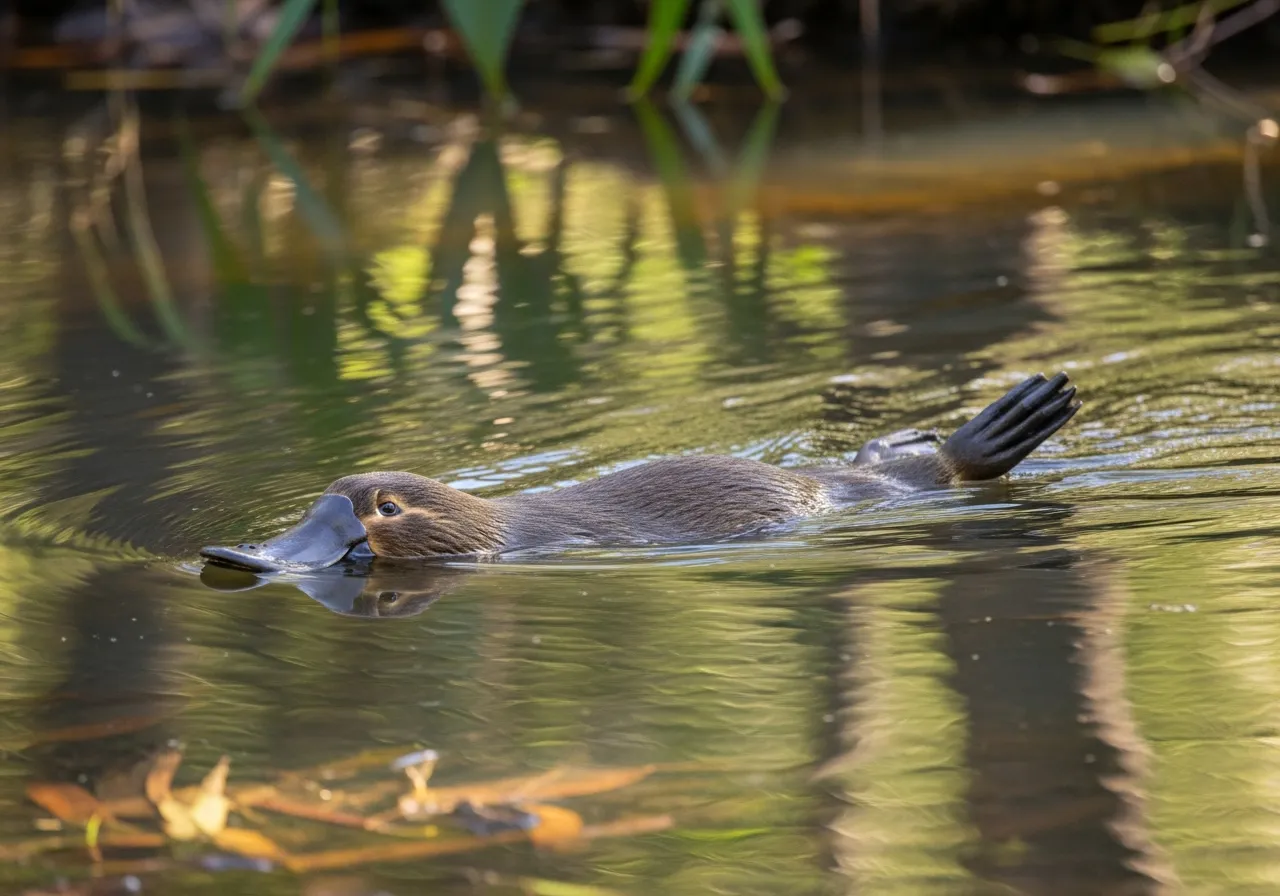
Source: Global Animal Guide (WARN)
In brief
A platypus is a semi-aquatic, egg-laying mammal (a monotreme) native to eastern Australia and Tasmania. It has a duck-like bill, webbed feet and a beaver-like tail, hunts underwater using electroreception, and males carry venomous ankle spurs. It is listed as Near Threatened on the IUCN Red List.
Also in Animals A to Z · Animals that start with P
How you can help
You can support the related appeal — read its purpose, recipient status and fund terms first — or give once to where it is needed most. Sharing accurate information helps too.
By WARN Research & Conservation TeamLast updated
The platypus (Ornithorhynchus anatinus) is one of the strangest mammals on Earth: a furry, duck-billed, beaver-tailed animal that lays eggs, carries venom and hunts by sensing electricity. Found only in the freshwater rivers and streams of eastern Australia and Tasmania, it is a monotreme, a tiny, ancient lineage of egg-laying mammals. So bizarre was the first preserved specimen sent to Britain that naturalists suspected a hoax, sewn together from several creatures. Today the platypus is listed as Near Threatened, with populations quietly declining as drought, dams and land clearing degrade the waterways it depends on. It remains a beloved emblem of Australia's unique wildlife.
1 of 5
living monotreme species
~40,000
electroreceptors in its bill
2
leathery eggs per clutch
~30%
estimated decline since 1800s
Figures sourced from IUCN Red List: Ornithorhynchus anatinus, Platypus — Wikipedia, Monotreme — Wikipedia and other references on this page.
Platypus: Quick Facts
| Scientific name | Ornithorhynchus anatinus |
|---|---|
| Size | Males ~50 cm, females ~43 cm long |
| Weight | ~0.7–2.4 kg (males larger) |
| Lifespan | Recorded to ~24 years in the wild; up to ~30 in captivity |
| Diet | Carnivorous: insect larvae, worms, shrimp, crayfish, small aquatic animals |
| Habitat | Freshwater rivers, streams and lakes |
| Range | Eastern Australia and Tasmania |
| Eggs | Usually 2 leathery eggs per clutch |
| Incubation | ~10 days external incubation in a burrow |
| Special trait | Egg-laying, venomous, electroreceptive mammal |
Scientific Classification
| Kingdom | Animalia |
|---|---|
| Phylum | Chordata |
| Class | Mammalia |
| Order | Monotremata |
| Family | Ornithorhynchidae |
| Genus | Ornithorhynchus |
| Species | O. anatinus |
Conservation Status
- IUCN Status
- Near Threatened on the IUCN Red List, with a decreasing population trend. The platypus remains widespread across eastern Australia and Tasmania but is in quiet decline, driven by drought and climate change, dams and river regulation, and land clearing that degrades its freshwater habitat. It is not listed under CITES. Some assessments and national reviews have argued for upgrading its protected status given local losses.
- Population
- No reliable total count; numbers estimated to have fallen by roughly 30% since European settlement
- Trend
- Decreasing
- Assessed
- 2016
- CITES
- Not listed
Platypuses are shy, nocturnal and hard to survey, so real declines may be greater than current records show.
Key Facts: Platypus
- The platypus is a monotreme, one of only five living mammal species that lay eggs rather than giving birth to live young.
- It is one of the very few venomous mammals: males have a spur on each hind ankle that delivers excruciating venom.
- Its rubbery bill detects the faint electric fields of prey, letting it hunt with eyes, ears and nostrils closed underwater.
- The platypus lives only in freshwater habitats of eastern Australia and Tasmania, from Queensland to the southern coast.
- Females lay around two leathery eggs and nurse their young with milk that oozes through the skin, as they have no nipples.
- Listed as Near Threatened, it is squeezed by drought, climate change, dams and land clearing that degrade its rivers.
A mammal that breaks all the rules
When the first platypus specimen reached Britain in the late 1790s, scientists were convinced it was a fraud, a duck's bill stitched onto the pelt of a mammal. It was real. The platypus belongs to the monotremes, an ancient order of mammals that diverged from the lineage leading to marsupials and placental mammals more than 100 million years ago. Today only five monotreme species survive: the platypus and four echidna species. Like all mammals, the platypus has fur and produces milk, yet it reproduces by laying eggs. Females usually lay two small, leathery eggs in a riverbank burrow and curl around them to incubate. After hatching, the blind, bean-sized young feed on milk, but the platypus has no nipples: milk seeps from pores onto the mother's belly, where the young lap it up. This blend of reptile-like and mammal-like traits makes the platypus a living window into mammalian evolution, and one of the most scientifically prized animals alive.
Built for the river: bill, fur and venom
Everything about the platypus is shaped for a life spent diving in cool freshwater. Its body is streamlined and covered in dense, waterproof fur that traps a layer of insulating air, keeping it warm in chilly streams. The front feet are strongly webbed for paddling, with the webbing folding back on land to free the claws for digging burrows. The famous bill is not hard like a duck's but soft, leathery and packed with sensory receptors. Males carry one of the animal kingdom's rarest mammalian weapons: a sharp, hollow spur on each hind ankle connected to a venom gland. The venom is not usually life-threatening to humans but causes severe, long-lasting pain that resists ordinary painkillers, and spur use peaks in the breeding season, suggesting it is mainly for competing with rival males. Males are noticeably larger than females, averaging around 50 cm in length against roughly 43 cm, and weighing up to about 1.7 kg.
Hunting by electricity
The platypus has a sixth sense most mammals lack: electroreception. When it dives, it closes its eyes, ears and nostrils, sealing itself off from the world above, and relies entirely on its bill to navigate and find food. The bill is studded with around 40,000 electroreceptors arranged in stripes, alongside thousands of mechanoreceptors that sense pressure and movement. Together these let the platypus detect the tiny electrical signals given off by the muscles of shrimp, insect larvae, worms and other small prey buried in the riverbed. Sweeping its bill from side to side as it forages, the animal builds a kind of electrical map of its surroundings in pitch darkness or murky water. It scoops up prey along with gravel, stores the food in cheek pouches, and surfaces to grind it using horny pads rather than teeth, which adults lack. A platypus may spend many hours a day foraging, eating a substantial fraction of its body weight to fuel this energetic lifestyle.
A quiet decline
The platypus is still found across much of eastern Australia and Tasmania, and for that reason has long been considered safe. But its outlook is darkening. The IUCN lists it as Near Threatened with a declining population trend, and researchers estimate numbers have fallen by roughly 30% since European settlement, with sharper local losses in some catchments. Because platypuses depend entirely on healthy freshwater, they are acutely vulnerable to anything that harms rivers. Prolonged drought and a warming, drying climate shrink and fragment their habitat; dams and river regulation alter natural flows and block movement between populations; and land clearing strips the vegetated banks they need for burrows and stable water quality. Platypuses are also drowned in illegal net and trap fishing and entangled in litter. The species is not listed under CITES, but conservationists increasingly argue for stronger national protection. Monitoring is difficult because the animals are shy, nocturnal and easily missed, so true declines may be greater than records suggest.
What WARN Does
WARN does not currently run dedicated field projects for the platypus, which lives outside the countries where our partners work. Instead, this guide is part of WARN's free educational and awareness work, helping people understand why even seemingly secure species are quietly slipping. The threats that drive platypus decline, habitat loss, drought, dammed and degraded waterways and land clearing, are the very same pressures bearing down on the animals WARN's partners do protect, which is why healthy habitats sit at the heart of our mission.
If the platypus's story moves you, a small gift helps fund WARN's wider work protecting wild habitats and the animals that depend on them.
How can I help save the platypus?
Explore practical ways to support the platypus, from everyday choices and sharing reliable information to reviewing a related appeal before giving.
Explore ways to support
Read the related appeal’s purpose, recipient status and fund terms. Choose an affordable gift after checking what is proposed and what has been reported.
Ease the pressures
Avoid the wildlife trade and souvenirs, never buy wild animals as pets, and choose sustainable, habitat-friendly products — the threats behind the platypus's decline fall when demand does.
Spread the word
Share accurate, sourced information about the platypus. Wider awareness is what turns concern into lasting protection.
Platypus: Frequently Asked Questions
How can I help save the platypus?
Is a platypus a mammal?
Is the platypus venomous?
How does a platypus find food underwater?
Where do platypuses live?
How big is a platypus and how long does it live?
Are platypuses endangered?
What do platypus eat?
Are platypus dangerous?
Sources & References
Population figures, conservation status and biological facts on this page are drawn from authoritative scientific and intergovernmental sources.
Terms used on this page
Plain-English definitions, from our wildlife and conservation glossary.
Latest Platypus Stories
Quick, fact-checked reads on the platypus — amazing facts, key questions and the threats it faces.
Explore more animals
Discover more animals, their habitats and their conservation status in the WARN wildlife-guide library.