Wildlife Guide · Arctic Canada & Greenland
Polar Bear
Ursus maritimus (Popham, 1774)
The Arctic's apex predator — built for ice that is disappearing.
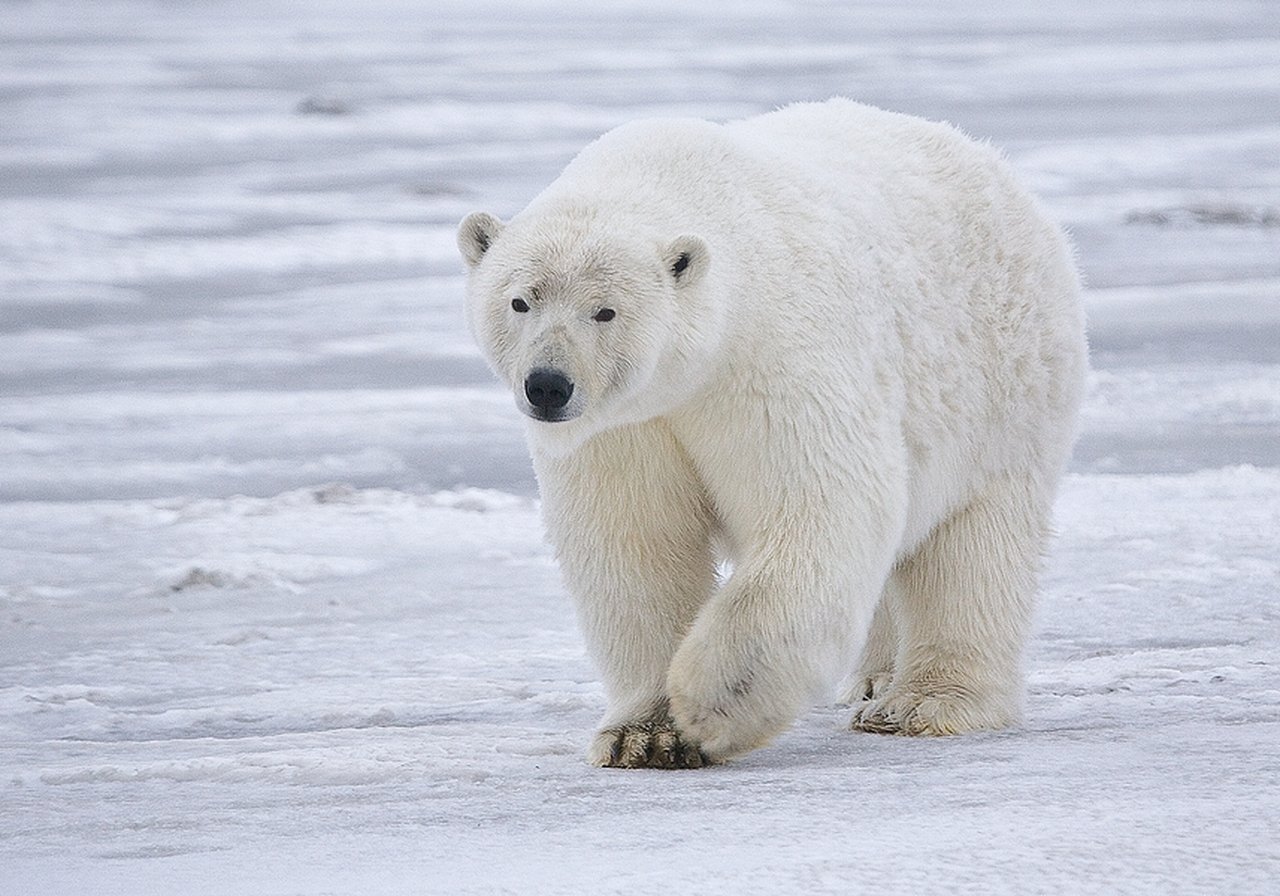
Source: Wikimedia Commons
In brief
The polar bear (Ursus maritimus) is listed as Vulnerable by the IUCN, with an estimated 22,000–31,000 individuals; climate change and the loss of Arctic sea ice are the primary threats to its survival.
Also in Animals A to Z · Animals that start with P
How you can help
You can support the related appeal — read its purpose, recipient status and fund terms first — or give once to where it is needed most. Sharing accurate information helps too.
By WARN Research & Conservation TeamLast updated
The polar bear is the largest land carnivore on Earth and a marine mammal uniquely adapted to life on Arctic sea ice. It hunts mainly ringed and bearded seals from the ice surface, swimming long distances between floes. Listed as Vulnerable by the IUCN, polar bears face an existential threat from climate change: Arctic sea ice is shrinking in extent and duration, shortening the hunting season and forcing bears ashore for longer periods. An estimated 22,000–31,000 polar bears remain across five range states — Canada, Greenland, Norway, Russia and the United States.
Vulnerable
IUCN Red List status (2015 assessment)
22–31k
Estimated global population
800 kg
Maximum recorded weight (large males)
Appendix II
CITES listing
Figures sourced from IUCN Red List — Ursus maritimus, IUCN Polar Bear Specialist Group, CITES — Checklist of CITES Species .
Polar Bear: Quick Facts
| Weight | 350–800 kg (large males); females ~150–300 kg |
|---|---|
| Habitat | Arctic sea ice and coastal tundra |
| Diet | Mainly ringed and bearded seals |
| Lifespan | Up to ~25–30 years in the wild |
| Range states | Canada, Greenland, Norway, Russia, USA |
| CITES | Appendix II |
Scientific Classification
| Kingdom | Animalia |
|---|---|
| Phylum | Chordata |
| Class | Mammalia |
| Order | Carnivora |
| Family | Ursidae |
| Genus | Ursus |
| Species | Ursus maritimus (Popham, 1774) |
Conservation Status
- IUCN Status
- Vulnerable (IUCN, 2015). Projected >30% population decline over three generations due to sea ice loss.
- Population
- 22,000–31,000 individuals across the Arctic
- Trend
- Decreasing overall; varies by subpopulation
- Assessed
- 2015
- CITES
- Appendix II
Climate change mitigation is the fundamental conservation action.
Key Facts: Polar Bear
- Polar bears are the largest bears and the largest land carnivores alive.
- They depend on sea ice to hunt seals — climate change is their primary threat.
- Polar bears are classified as marine mammals because they live on ocean ice.
- An estimated 22,000–31,000 polar bears remain across the Arctic.
- Longer ice-free seasons force bears ashore, increasing conflict with Arctic communities.
- Canada hosts roughly two-thirds of the world's polar bears.
Life on the sea ice
Polar bears are superbly adapted to the Arctic. A thick layer of blubber and dense fur provide insulation; large paws act as snowshoes and paddles for swimming. They hunt mainly at breathing holes and ice edges, where ringed seals surface. A successful seal hunt can provide enough energy for several days.
Females den in snow drifts on land, giving birth during the Arctic winter and fasting for months while nursing cubs. As sea ice forms later and melts earlier, the window for hunting shrinks, and bears must either swim farther or spend longer on land with limited food.
Climate change and sea ice loss
Arctic sea ice has declined by roughly 13% per decade since satellite records began in 1979. For polar bears, this means shorter hunting seasons, longer swims between floes and reduced body condition in some populations. Studies of western Hudson Bay bears show earlier ice break-up correlates with lower survival and reproduction.
Some populations — such as those in the southern Beaufort Sea — have declined markedly. Others, in areas where ice persists longer, remain stable for now. The IUCN projects a greater than 30% population decline over three generations if sea ice loss continues.
Polar bears and Arctic communities
Indigenous peoples in the Arctic have hunted polar bears for subsistence and cultural purposes for thousands of years. Today, regulated harvest continues in Canada, Greenland and Alaska under quotas agreed by range states. As bears spend more time on land during ice-free periods, encounters with northern communities increase — sometimes with tragic outcomes for both bears and people. Waste management and attractant control in Arctic towns reduce conflict. Tourism to view polar bears in Churchill, Manitoba and Svalbard generates significant revenue but requires strict distance rules to protect bears and visitors.
Conservation and international cooperation
All five polar bear range states — Canada, Greenland (Denmark), Norway, Russia and the United States — are parties to the 1973 Agreement on the Conservation of Polar Bears, which prohibits unregulated hunting and commits signatories to protect bear habitat. The IUCN Polar Bear Specialist Group coordinates population monitoring. CITES lists polar bears on Appendix II. Debate continues over whether international trade in polar bear skins from legal Canadian hunts affects poaching elsewhere. Reducing greenhouse gas emissions to limit Arctic warming is the fundamental conservation action for the species.
What WARN Does
WARN publishes this polar bear guide as free public education. Climate change and Arctic habitat loss are global challenges; this guide helps readers understand why sea ice matters and how polar bears serve as indicators of Arctic ecosystem health.
If this guide helps you understand wildlife and the pressures it faces, a gift to WARN supports habitat protection and free public education in our partner countries.
How can I help save the polar bear?
Explore practical ways to support the polar bear, from everyday choices and sharing reliable information to reviewing a related appeal before giving.
Explore ways to support
Read the related appeal’s purpose, recipient status and fund terms. Choose an affordable gift after checking what is proposed and what has been reported.
Ease the pressures
Avoid the wildlife trade and souvenirs, never buy wild animals as pets, and choose sustainable, habitat-friendly products — the threats behind the polar bear's decline fall when demand does.
Spread the word
Share accurate, sourced information about the polar bear. Wider awareness is what turns concern into lasting protection.
Polar Bear: Frequently Asked Questions
How can I help save the polar bear?
Are polar bears endangered?
How many polar bears are left?
What do polar bears eat?
Do polar bears hibernate?
How does climate change affect polar bears?
Where do polar bears live?
Are polar bears dangerous?
How long do polar bears live?
How big is a polar bear?
Sources & References
Population figures, conservation status and biological facts on this page are drawn from authoritative scientific and intergovernmental sources.
Terms used on this page
Plain-English definitions, from our wildlife and conservation glossary.
Latest Polar Bear Stories
Quick, fact-checked reads on the polar bear — amazing facts, key questions and the threats it faces.
Explore more animals
Discover more animals, their habitats and their conservation status in the WARN wildlife-guide library.