Wildlife Guide · Africa & Asia
Porcupine
Hystricidae (Old World) & Erethizontidae (New World)
The world's prickliest rodents, armoured head to tail in detachable quills.
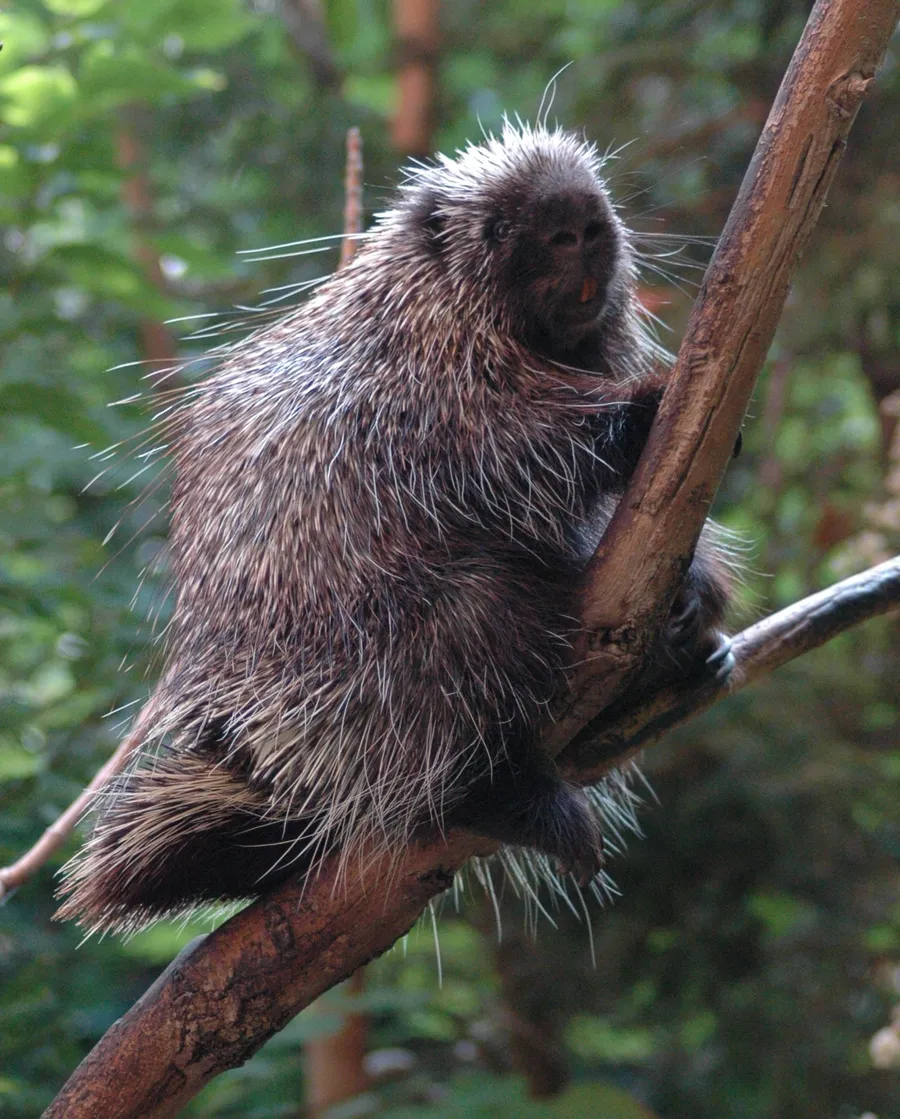
Source: Global Animal Guide (WARN)
In brief
A porcupine is a large herbivorous rodent covered in sharp quills — stiffened, modified hairs that defend it from predators. About 30 species exist in two distantly related families: Old World porcupines of Africa, Asia and Europe, and tree-climbing New World porcupines of the Americas.
Also in Animals A to Z · Animals that start with P
By WARN Research & Conservation TeamLast updated
Porcupines are large, slow-moving rodents famous for their coat of sharp quills — stiffened, modified hairs that defend them against almost any predator. There are around 30 species, split into two only distantly related families: the Old World porcupines (Hystricidae) of Africa, Asia and southern Europe, which are mostly ground-dwelling, and the New World porcupines (Erethizontidae) of the Americas, many of which climb trees. Despite the resemblance, the two groups evolved their quills independently. Contrary to a stubborn myth, porcupines cannot shoot or throw their quills; the barbed spines simply detach on contact. Most species are common and classed as Least Concern, though several are hunted or traded.
~30
species worldwide
2
distinct families (Old & New World)
30,000+
quills on a North American porcupine
0
quills they can actually throw
Figures sourced from Porcupine — Wikipedia, Porcupine — Encyclopaedia Britannica, Old World porcupines (Hystricidae) — Wikipedia and other references on this page.
Porcupine: Quick Facts
| Common name | Porcupine |
|---|---|
| Group | Rodents (two distinct families) |
| Number of species | Around 30 |
| Distribution | Africa, Asia, southern Europe, the Americas |
| Habitat | Forest, savanna, desert, woodland, mountains |
| Diet | Herbivore: bark, roots, leaves, fruit, crops |
| Defence | Sharp, detachable quills (modified hairs) |
| Activity | Mostly nocturnal and solitary |
| Can throw quills? | No — they detach on contact only |
| IUCN status | Varies; most species Least Concern |
Scientific Classification
| Kingdom | Animalia |
|---|---|
| Phylum | Chordata |
| Class | Mammalia |
| Order | Rodentia |
| Suborder | Hystricomorpha |
| Families | Hystricidae (Old World); Erethizontidae (New World) |
| Species | ~30 across both families |
Conservation Status
- IUCN Status
- Conservation status varies by species. The majority of the roughly 30 porcupine species are assessed as Least Concern on the IUCN Red List with stable populations, reflecting their adaptability, broad diet and effective defences. Some species face localised pressure from hunting for meat and quills, the pet and ornamental trade, and crop-protection killing, and a number are listed under CITES to regulate international trade.
- Population
- No global total; most species are common and not individually counted
- Trend
- Stable for most species; some local declines from hunting and habitat loss
- Assessed
- Assessments vary by species (IUCN Red List, ongoing)
- CITES
- Several species listed on CITES appendices to regulate trade
Because porcupines comprise around 30 species in two families, there is no single conservation figure — status must be read species by species via the IUCN Red List.
Key Facts: Porcupine
- Porcupines are rodents — the world's third-largest by body size after capybaras and beavers in some regions — defended by sharp quills.
- Quills are modified hairs that detach on contact; porcupines cannot shoot or throw them.
- The roughly 30 species fall into two families that evolved quills independently: Old World (Hystricidae) and New World (Erethizontidae).
- Old World porcupines are mainly ground-dwellers; many New World species climb trees.
- Most porcupines are herbivores, eating bark, roots, leaves, fruit and buds.
- Most species are Least Concern, but some are hunted for meat or quills and a few are CITES-listed.
What are porcupines and how many species are there?
Porcupines are herbivorous rodents instantly recognised by their armour of quills. They belong to two separate families totalling roughly 30 species. The Old World porcupines (family Hystricidae) live across Africa, Asia and parts of southern Europe and Italy; they include the large crested porcupines, whose dramatic black-and-white quills can exceed 30 centimetres. Most are terrestrial, sheltering in burrows or rock crevices and foraging at night. The New World porcupines (family Erethizontidae) are found from northern Canada to South America and include the North American porcupine and the prehensile-tailed porcupines, many of which are skilled climbers that feed and nest in trees. Although the two families look alike, they are only distantly related within the rodent order; their quills are a striking example of convergent evolution, where similar defences arose independently. Porcupines are among the largest rodents — a big crested porcupine can weigh well over 10 kilograms — making their spiny defence all the more important against lions, leopards and other predators.
How do porcupine quills work — and can they be thrown?
A quill is simply a hair that has become stiff, sharp and often barbed. A single North American porcupine may carry tens of thousands of them, lying flat until the animal is threatened. When alarmed, a porcupine raises its quills, turns its back, and may stamp, chatter or reverse rapidly into an attacker. Crucially, porcupines cannot shoot or throw their quills — this is a long-standing myth. Instead, the quills are loosely attached and detach easily on contact, lodging in the skin of whatever touches them. In many New World species the quill tips bear microscopic backward-facing barbs that make them painful and difficult to remove and help them work inwards over time. The defence is highly effective: predators that tangle with a porcupine can be left with a face full of spines, sometimes with fatal consequences. Lost quills regrow, much like ordinary hair. Porcupines themselves are largely immune to their own spines, and some research suggests a natural antibiotic coating on the quills may reduce infection from accidental self-pricks.
Where do porcupines live and what do they eat?
Porcupines occupy an enormous range of habitats, from tropical rainforest and savanna to deserts, temperate woodland and cold northern forests. Old World species are widespread across Africa and southern Asia, with the crested porcupine reaching as far as Italy. New World species range from the Arctic treeline of Canada down through Central and South America. Most are nocturnal and solitary, though some shelter or feed in loose groups. The diet is overwhelmingly plant-based: bark, twigs, roots, bulbs, leaves, buds, fruit and crops. North American porcupines are well known for gnawing tree bark in winter, occasionally girdling and killing trees, and they crave salt — sometimes chewing tool handles, plywood or vehicle parts for the sodium. Old World porcupines often gnaw bones and shed antlers, which sharpen their ever-growing incisors and supply minerals. Because they raid gardens, plantations and farmland, porcupines can come into conflict with people, which in some regions adds to hunting pressure.
Are porcupines endangered?
As a group, porcupines are not endangered, and the majority of species are assessed as Least Concern on the IUCN Red List, with stable populations. They are adaptable, breed steadily and have few natural predators thanks to their defences. However, conservation status varies considerably between species. Some porcupines are hunted heavily for bushmeat, for their quills, or because they damage crops, and certain species are caught for the pet and ornamental trade. A number of porcupines are listed on the appendices of CITES, the international convention regulating wildlife trade, to keep that trade sustainable. Localised declines occur where forests are cleared or hunting is intense, and a few less-studied species are considered data-poor. Overall, though, porcupines remain a conservation success story compared with many large mammals — a reminder that effective natural defences, broad diets and flexible habitat use help species persist alongside people, provided hunting and habitat loss are kept in check.
What WARN Does
WARN does not run field projects specifically for porcupines — most species live outside the countries where our partners work and are not globally threatened. This guide is part of our free educational work to help people understand the world's wildlife. The same pressures that affect some porcupines, especially habitat loss and unsustainable hunting, also threaten the animals WARN does protect, so building public understanding of all species supports our wider mission.
If you value clear, science-based wildlife guides like this one, a small gift helps us keep them free and continue caring for the animals in our partner countries.
Porcupine: Frequently Asked Questions
Can porcupines shoot or throw their quills?
Are porcupines rodents?
What is the difference between Old World and New World porcupines?
What do porcupines eat?
Do porcupine quills grow back?
Are porcupines dangerous to humans or pets?
Where do porcupines live?
How long do porcupines live?
How big is a porcupine?
Sources & References
Population figures, conservation status and biological facts on this page are drawn from authoritative scientific and intergovernmental sources.
Terms used on this page
Plain-English definitions, from our wildlife and conservation glossary.
Latest Porcupine Stories
Quick, fact-checked reads on the porcupine — amazing facts, key questions and the threats it faces.
Species
Slow Loris: Why the Internet's Favourite Pet Is a Conservation Disaster
The slow loris looks like a cartoon character — and that has nearly destroyed the species. Here is the truth behind the viral videos.
Read the storySpecies
The Snow Leopard: Why the Ghost of the Mountains Is Still Vulnerable
The snow leopard is one of the most elusive big cats on earth, with an estimated 4,000-6,500 individuals across twelve range states — including Pakistan, where WARN is preparing to operate. This briefing explains why the species was downlisted from Endangered to Vulnerable in 2017 and why that is not the success story it sounds like.
Read the storyGuides
Sun Bear vs Moon Bear: The Two Most Trafficked Asian Bears
The sun bear and the Asiatic black bear (moon bear) are the two most commonly trafficked bears in Asia — for the pet trade, for traditional medicine and for bear-bile farming. Here is how to tell them apart.
Read the storyExplore more animals
Discover more animals, their habitats and their conservation status in the WARN wildlife-guide library.