Wildlife Guide · Tropical and temperate seas worldwide — coral reefs, estuaries and open coast
Pufferfish
Tetraodontidae (Bonaparte, 1831)
Inflated defence and lethal toxin — reef fish caught between cuisine and collapse.
Source: Wikimedia Commons
In brief
Pufferfish (Tetraodontidae) are roughly 200 species of toxic, inflatable fish worldwide; IUCN status varies — Chinese puffer Critically Endangered — threatened by overfishing, habitat loss and bycatch.
Also in Animals A to Z · Animals that start with P
By WARN Research & Conservation TeamLast updated
Pufferfish — family Tetraodontidae — are among the ocean's most distinctive fish. When threatened, they inflate their elastic stomachs with water or air, transforming into spiny balls too large for most predators to swallow. Many species carry tetrodotoxin — one of nature's most potent neurotoxins — in skin, liver and ovaries. Roughly 200 species inhabit tropical and temperate seas worldwide. IUCN status varies sharply: the Chinese puffer is Critically Endangered from overfishing; many reef species are Data Deficient. Pufferfish are traded for aquariums and consumed as fugu in Japan — a delicacy requiring licensed preparation. Habitat loss, overfishing and bycatch threaten populations across their range.
Critically Endangered
IUCN status — Chinese puffer (Takifugu chinensis)
~200
Pufferfish species worldwide
1,200×
Tetrodotoxin potency vs cyanide
Varies
CITES listing by species
Figures sourced from IUCN Red List — Takifugu chinensis, FAO — pufferfish fisheries, Encyclopaedia Britannica — pufferfish .
Pufferfish: Quick Facts
| Species | Roughly 200 worldwide |
|---|---|
| Defence | Inflation and tetrodotoxin |
| Chinese puffer | Critically Endangered |
| Diet | Crustaceans, molluscs, algae |
| Aquarium lifespan | 10+ years with proper care |
| CITES | Varies by species — most not listed |
Scientific Classification
| Kingdom | Animalia |
|---|---|
| Phylum | Chordata |
| Class | Actinopterygii |
| Order | Tetraodontiformes |
| Family | Tetraodontidae (Bonaparte, 1831) |
| Genera | Takifugu, Arothron, Canthigaster and ~20 others |
Conservation Status
- IUCN Status
- Varies by species. Chinese puffer Critically Endangered (IUCN). Many reef species Data Deficient.
- Population
- Unknown for most species; Chinese puffer severely depleted
- Trend
- Decreasing for heavily fished species
- Assessed
- Varies — Chinese puffer assessed 2014
- CITES
- Varies by species
Key Facts: Pufferfish
- Pufferfish inflate with water when threatened — a defence against swallowing.
- Tetrodotoxin in skin and organs is lethal; fugu chefs require years of training.
- Chinese puffer is Critically Endangered from overfishing in East Asia.
- Many reef pufferfish are popular aquarium species — wild collection threatens some populations.
- Pufferfish graze coral and algae — important reef herbivores in healthy ecosystems.
- Bycatch in trawl and seine fisheries kills non-target pufferfish across tropical seas.
The inflatable defence
Pufferfish belong to order Tetraodontiformes alongside porcupinefish and boxfish. Their name reflects four fused teeth forming a beak-like plate — ideal for crushing crustaceans, molluscs and hard coral. When alarmed, muscles pump water into a distensible stomach, expanding the body two to three times normal size. Spines erect; fins lock. Most predators retreat.
Tetrodotoxin — TTX — blocks sodium channels in nerve tissue. A single fish can carry enough toxin to kill dozens of people. Pufferfish do not produce TTX themselves; symbiotic bacteria in the gut synthesise it. Some populations are more toxic than others depending on bacterial communities and diet.
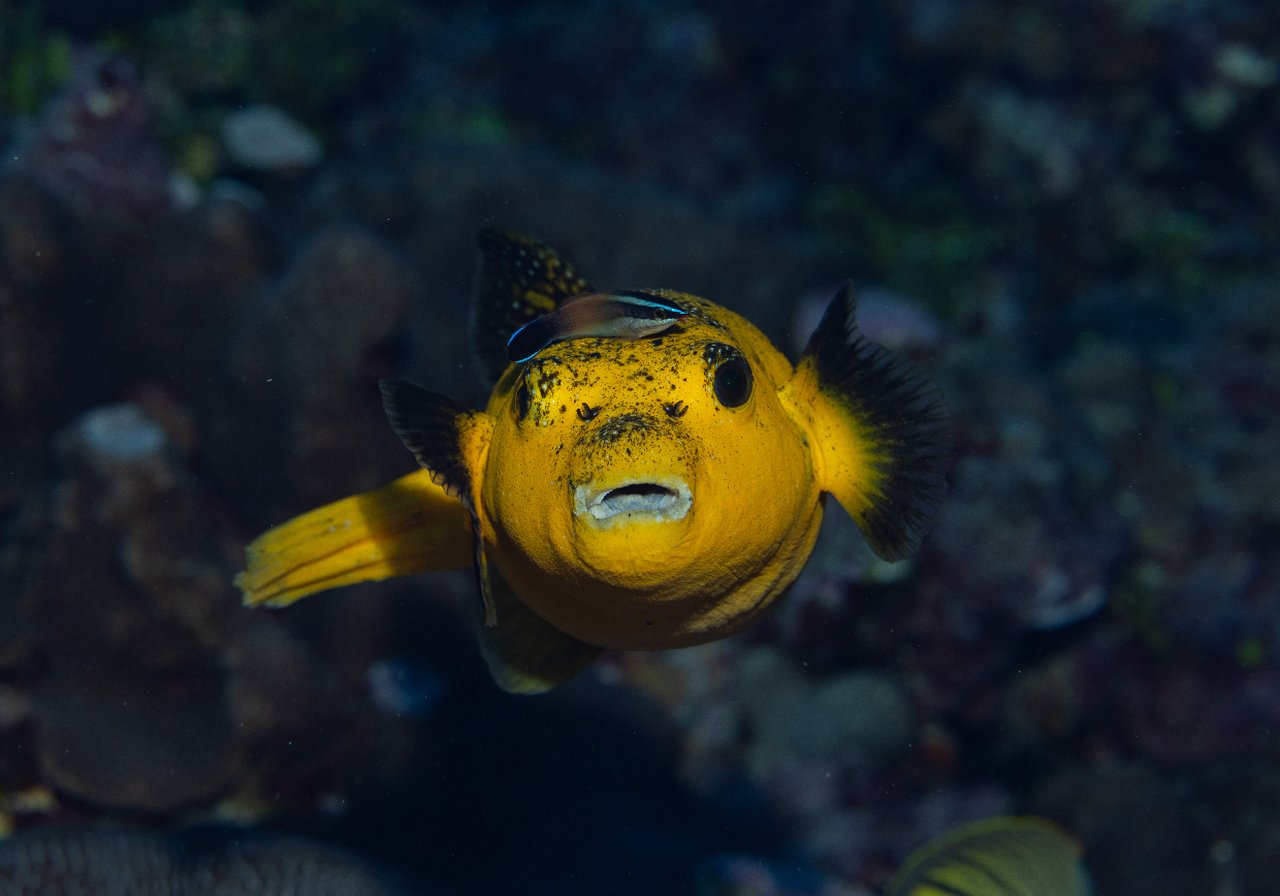
Species range from 2 cm dwarfs to 60 cm giants. Colours span cryptic browns to vivid blues and yellows advertising toxicity.
Reef ecology and behaviour
On coral reefs, pufferfish occupy niches as herbivores and invertebrate predators. Species like the stars-and-stripes puffer graze algae that would otherwise smother coral. Others hunt crabs, snails and sea urchins on sand flats and seagrass beds.
Behaviour varies from solitary territorial species to shoaling estuarine forms. Some pufferfish create circular sand nests — males fan sediments with fins and mouth to expose clean substrate for egg laying, a behaviour studied as evidence of fish intelligence and tool use.
Reproduction typically involves demersal eggs guarded by males. Larvae drift in plankton before settling to reef or estuary habitat. Slow growth and late maturity make populations vulnerable to overfishing.
Fugu, fisheries and overfishing
In Japan, pufferfish — fugu — is a prized delicacy. Chefs train for years and hold licences to remove toxic organs safely. Despite precautions, deaths occur annually from improperly prepared fish. Illegal fugu trade persists.
East Asian fisheries have devastated several species. The Chinese puffer (Takifugu chinensis) is Critically Endangered — overfished for food across the Yellow Sea and East China Sea. Populations of the Japanese pufferfish (Takifugu rubripes) have also declined from intensive harvest.
Bycatch in shrimp trawls and seine nets kills pufferfish across Indo-Pacific reefs. Trawl fisheries discard or land non-target pufferfish with little monitoring. Data Deficient status for most species masks potential declines.
Aquarium trade and habitat loss
Colourful species — figure-eight puffers, green spotted puffers, Valentini puffers — are popular in marine and brackish aquariums. Wild collection from reefs in Indonesia, the Philippines and Sri Lanka supplies the trade. Captive breeding is limited; most aquarium puffers are wild-caught.
Coral reef degradation from bleaching, pollution and dynamite fishing removes pufferfish habitat. Estuarine species face mangrove clearance and coastal development. Climate change and ocean acidification threaten reef ecosystems that support reef-associated puffers.
Responsible aquarium keeping requires large tanks, species-appropriate salinity and permanent commitment — pufferfish live 10+ years and need hard-shelled food to wear down ever-growing teeth.
Conservation outlook
Conservation action must be species-specific. The Chinese puffer needs fishing moratoria and stock recovery programmes. Reef pufferfish benefit from marine protected areas, sustainable aquarium certification and bycatch reduction in trawl fisheries.
Improved taxonomy and Red List assessment for Data Deficient species is urgent. Without baseline data, declines go unnoticed until populations collapse — as with the Chinese puffer.
Readers can support pufferfish conservation through sustainable seafood choices, avoiding wild-caught aquarium fish without traceability and advocating for marine protected areas. WARN publishes this pufferfish guide as free public education about reef fish facing pressure from fisheries, trade and habitat loss.
What WARN Does
WARN publishes this pufferfish guide as free public education. Reef fish like pufferfish depend on healthy coral ecosystems — the same habitats WARN's coastal education programmes help readers understand and protect.
If this guide helps you understand wildlife and the pressures it faces, a gift to WARN supports habitat protection and free public education in our partner countries.
Pufferfish: Frequently Asked Questions
Are pufferfish poisonous?
Why do pufferfish inflate?
Are pufferfish endangered?
Where do pufferfish live?
Are pufferfish dangerous?
How long do pufferfish live?
How big is a pufferfish?
Sources & References
Population figures, conservation status and biological facts on this page are drawn from authoritative scientific and intergovernmental sources.
Terms used on this page
Plain-English definitions, from our wildlife and conservation glossary.
Latest Pufferfish Stories
Quick, fact-checked reads on the pufferfish — amazing facts, key questions and the threats it faces.
Explore more animals
Discover more animals, their habitats and their conservation status in the WARN wildlife-guide library.