Wildlife Guide · Worldwide (all continents except Antarctica) & Europe
Brown Rat
Rattus norvegicus
One of the planet's most successful mammals, living quietly alongside us almost everywhere people do.
Source: Global Animal Guide (WARN)
In brief
A brown rat (Rattus norvegicus) is a large, adaptable rodent that lives alongside humans worldwide. Native to Asia, it has spread to every continent except Antarctica. Highly intelligent and social, it is the wild ancestor of both pet "fancy rats" and laboratory rats, and is listed as Least Concern.
Also in Animals A to Z · Animals that start with B
By WARN Research & Conservation TeamLast updated
The brown rat (Rattus norvegicus) is a stocky, blunt-nosed rodent that has become one of the most widespread mammals on Earth, found on every continent except Antarctica. Also called the common rat, Norway rat or sewer rat, it most likely originated in northern China and Mongolia before spreading along human trade routes worldwide. Highly intelligent, social and adaptable, it thrives wherever people live, from city sewers and farmland to ships and rubbish tips. The brown rat is the ancestor of both the affectionate pet "fancy rat" and the laboratory rat, making it one of science's most important animals. The IUCN lists it as Least Concern.
Every continent
except Antarctica where brown rats now live
~21 days
gestation, with up to 14 pups per litter
16
teeth, including ever-growing incisors
Least Concern
IUCN Red List status
Figures sourced from Brown rat — Wikipedia, IUCN Red List — Rattus norvegicus, Rat — Encyclopaedia Britannica and other references on this page.
Brown Rat: Quick Facts
| Common names | Brown rat, common rat, Norway rat, sewer rat |
|---|---|
| Scientific name | Rattus norvegicus |
| Likely origin | Northern China and Mongolia |
| Distribution | Worldwide; every continent except Antarctica |
| Head & body length | About 15-28 cm, plus a shorter tail |
| Weight | Typically 140-500 g |
| Diet | Opportunistic omnivore; cereals, fruit, seeds, insects, refuse |
| Lifespan | Up to ~3 years; most under 1 year in the wild |
| Litter size | Up to 14 pups (about 7 typical); ~21-day gestation |
| IUCN status | Least Concern (not CITES-listed) |
Scientific Classification
| Kingdom | Animalia |
|---|---|
| Phylum | Chordata |
| Class | Mammalia |
| Order | Rodentia |
| Family | Muridae |
| Genus | Rattus |
| Species | Rattus norvegicus |
Conservation Status
- IUCN Status
- Least Concern (IUCN Red List). The brown rat has an extremely large, stable and widespread global population and benefits directly from living alongside humans. It is not listed under CITES. In many parts of the world it is an introduced, invasive species that can threaten native wildlife, especially ground-nesting birds on islands.
- Population
- Not quantified, but extremely abundant; one of the most numerous mammals on Earth
- Trend
- Stable
- Assessed
- Assessed by the IUCN as Least Concern (most recent assessment)
- CITES
- Not listed in any CITES Appendix
The conservation concern around brown rats is usually their impact as an invasive species on vulnerable island wildlife, rather than any threat to the rat itself.
Key Facts: Brown Rat
- The brown rat is among the most successful mammals alive, living wherever humans do across all continents except Antarctica.
- It most likely originated in northern China and Mongolia, despite the misleading name 'Norway rat'.
- Brown rats are highly intelligent, social animals that live in hierarchical groups and groom one another.
- They are the wild ancestor of both pet fancy rats and laboratory rats, central to modern medical research.
- The IUCN lists the brown rat as Least Concern, with a large and stable global population.
- As a non-native species in many regions, brown rats can threaten ground-nesting birds and other wildlife on islands.
What does a brown rat look like?
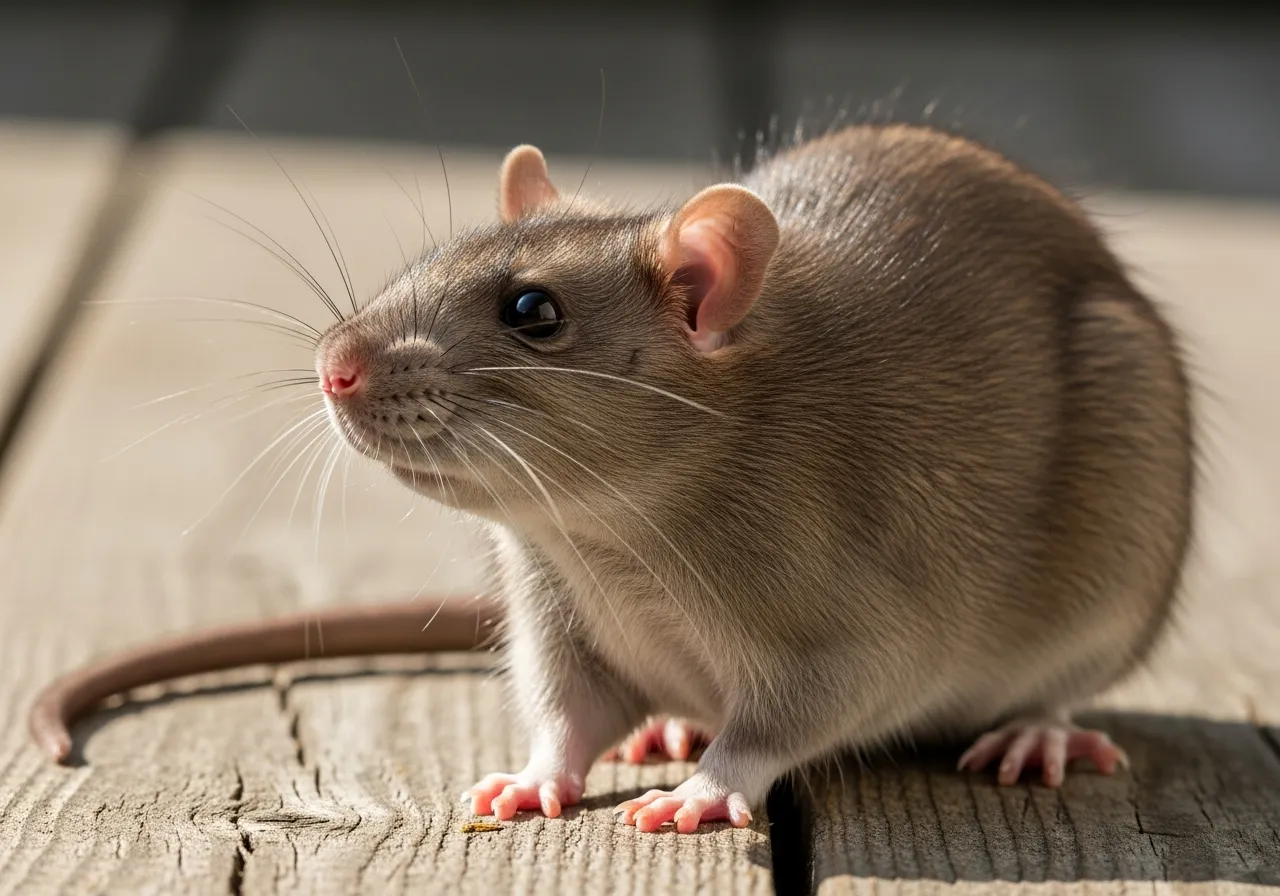
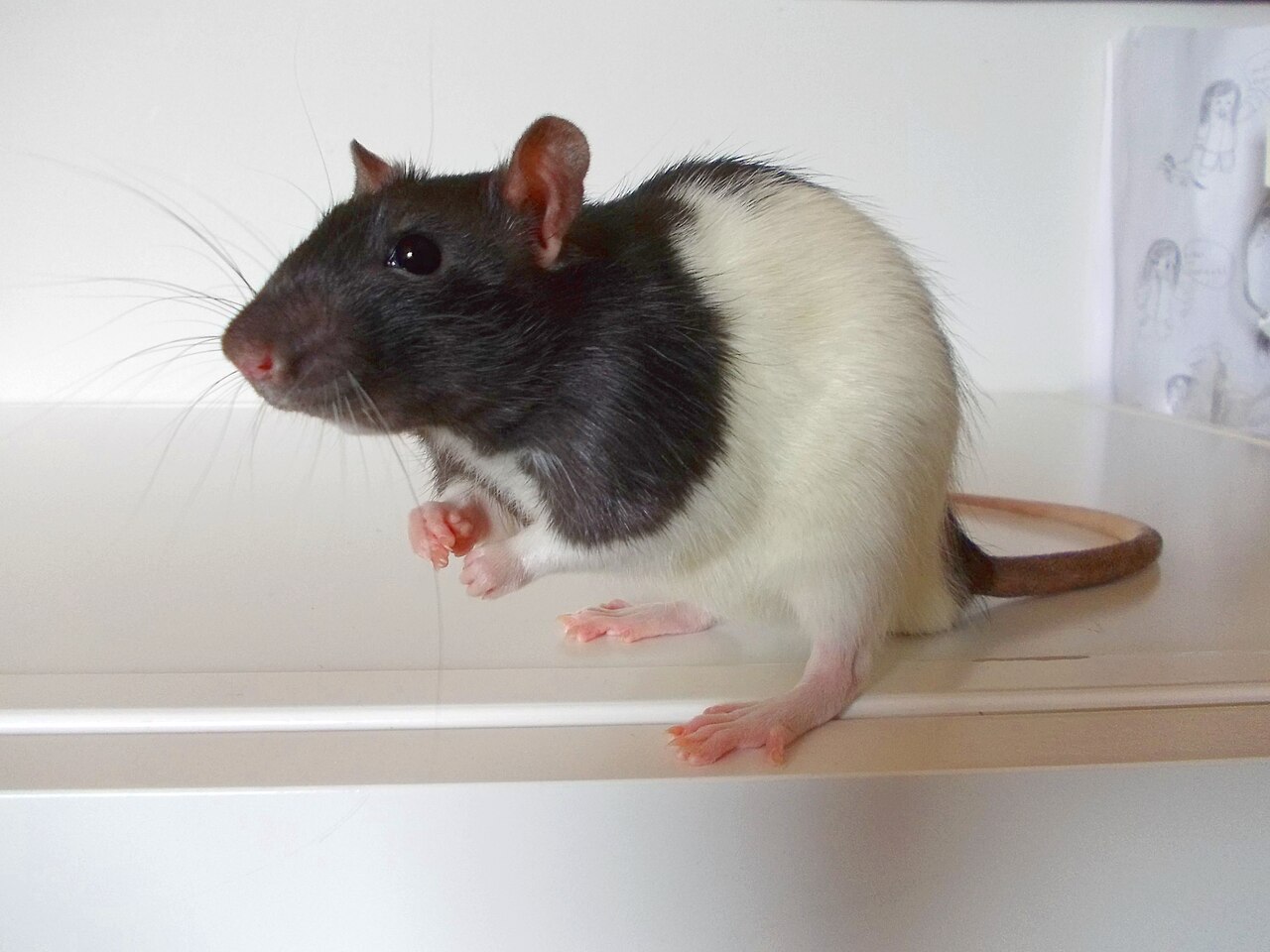
The brown rat is a robust, heavy-bodied rodent with coarse grey-brown fur, a paler grey or off-white underside, small rounded ears and a blunt nose. Adults typically measure 15-28 cm in head and body length, with a scaly, sparsely haired tail of 10.5-24 cm that is shorter than the head and body combined, a useful feature for telling it apart from the black rat. Most weigh between 140 and 500 g, though exceptional individuals have reached over 800 g. Like all rodents, it has a single pair of continuously growing incisors in each jaw, kept in check by constant gnawing; in total it has 16 teeth, with a wide gap (the diastema) separating the incisors from the grinding molars. Its eyesight is relatively poor, but it has an excellent sense of smell, sensitive whiskers and acute hearing that extends well into the ultrasonic range. These senses, together with its agility, climbing ability and willingness to swim, help the brown rat exploit an enormous variety of habitats.
Where do brown rats live and what do they eat?
Brown rats are commensal animals, meaning they live in close association with people. They are found in cities, farms, warehouses, sewers, riverbanks and rubbish tips, and have colonised every continent except Antarctica by stowing away on ships and in cargo. Despite the name 'Norway rat', genetic and historical evidence points to an origin in northern China and Mongolia, from where the species spread along human trade routes, reaching Europe in the 1700s. They are strong burrowers, digging extensive systems of tunnels and chambers near reliable food and water. The brown rat is an opportunistic omnivore that will eat almost anything, including grain, fruit, seeds, insects, eggs, refuse and carrion, though cereals form a large part of its natural diet. This dietary flexibility, combined with a willingness to try new foods cautiously, is a key reason for its remarkable global success. Living so close to people, brown rats can damage stored food and structures and can carry diseases, which is why much of their interaction with humans has historically been as a pest species.
Are brown rats endangered or a conservation concern?
The brown rat is in no danger of extinction. The IUCN lists it as Least Concern, reflecting an enormous, stable and widespread population that benefits directly from human activity. It is not listed under CITES, as it faces no trade-related threat. If anything, the conservation story runs the other way: in many parts of the world the brown rat is an introduced, invasive species, and on islands in particular it can devastate populations of ground-nesting seabirds, reptiles and native insects that evolved without such predators. Conservation programmes on vulnerable islands sometimes focus on removing introduced rats to allow native wildlife to recover. For the animal itself, the brown rat is a model of adaptability rather than fragility, a reminder that 'conservation status' is about a species' place in an ecosystem as much as its raw numbers. Understanding the difference between a thriving commensal species and the threatened wildlife it can affect is an important part of reading any animal's story honestly.
Brown rat vs black rat
| Feature | Brown rat (Rattus norvegicus) | Black rat (Rattus rattus) |
|---|---|---|
| Build | Larger, heavier, stocky | Smaller, slimmer, lighter |
| Nose | Blunt | Pointed |
| Ears | Small, close to head | Large, prominent |
| Tail vs body | Shorter than head and body | Longer than head and body |
| Preferred level | Ground, burrows, sewers | Roofs, upper storeys, climbing |
| Typical setting | Cities, farms, waterways worldwide | Warmer regions; more arboreal |
Fancy Rat Varieties Guide
From the Standard and big-eared Dumbo to the white-bodied Hooded and the near-bald Hairless — explore the main fancy rat varieties, classified by coat, ear, tail and markings, with honest welfare notes, common health issues and care for these clever, sociable companions.
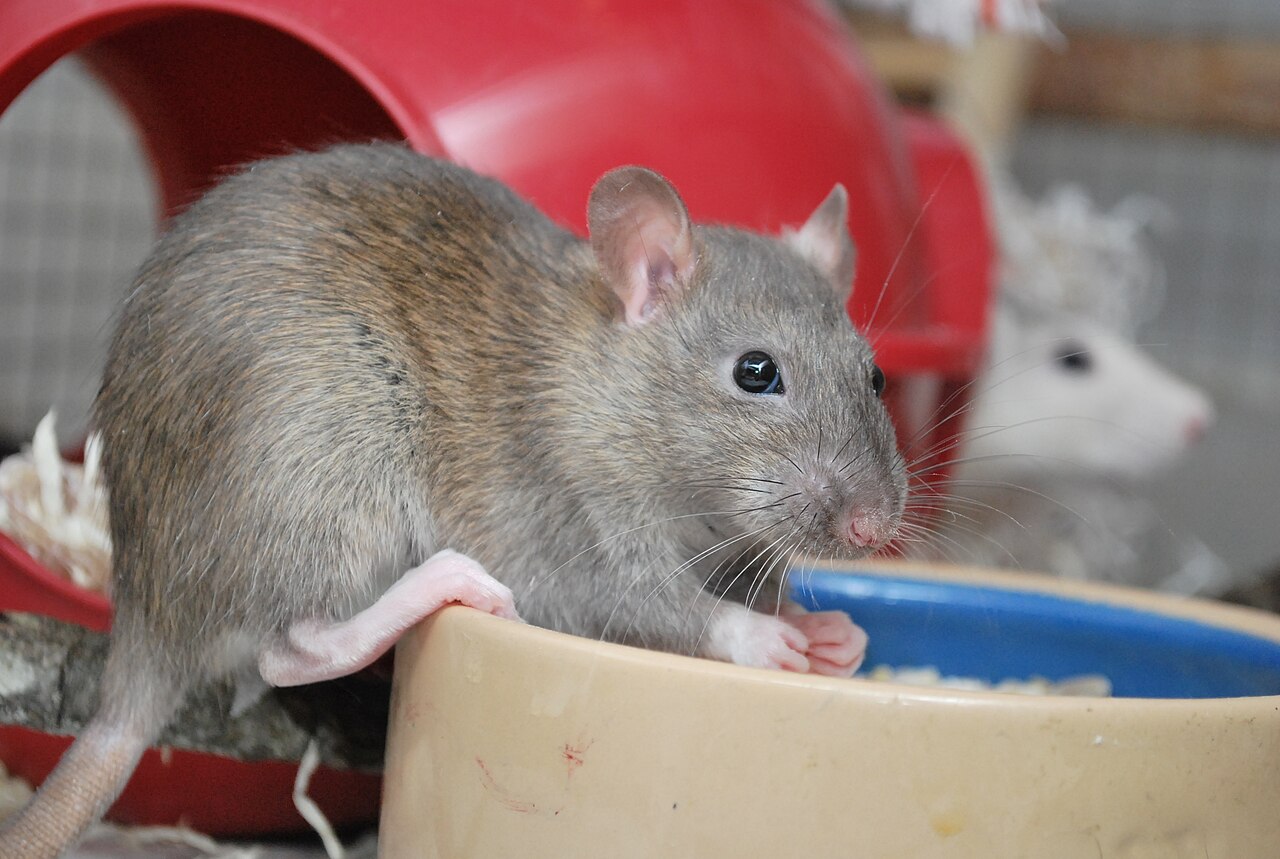
Standard
Domesticated brown rat (variety, not a separate breed)
Intelligent, affectionate, curious
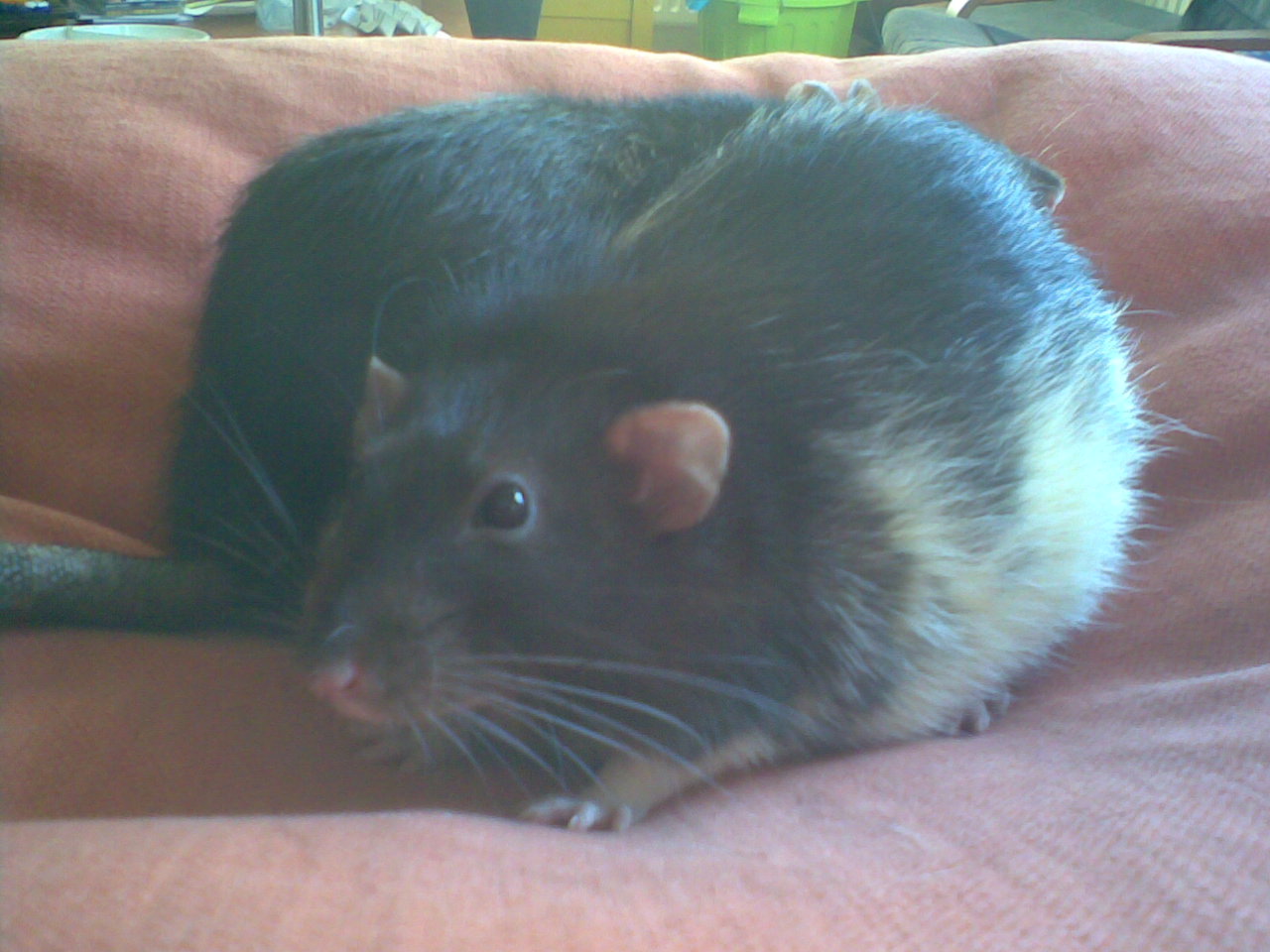
Dumbo
Domesticated brown rat (variety, not a separate breed)
Gentle, sociable, affectionate
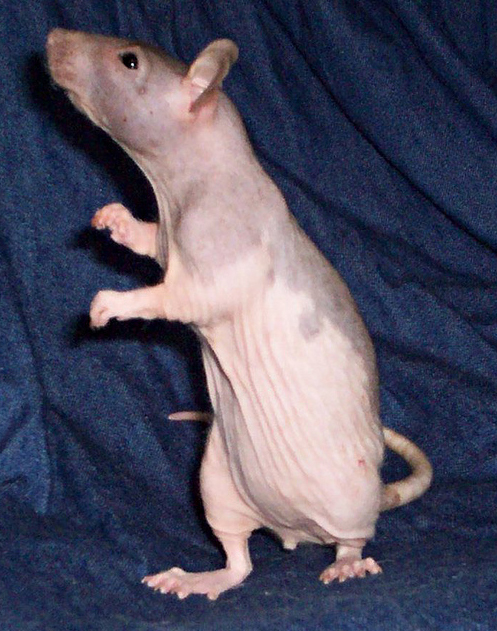
Hairless
Domesticated brown rat (variety, not a separate breed)
Affectionate, sensitive, warmth-seeking
Hooded
Domesticated brown rat (variety, not a separate breed)
Curious, friendly, playful
What WARN Does
WARN does not run field projects specifically for brown rats, which are abundant and listed as Least Concern, and in many regions are an introduced species rather than threatened wildlife. This guide is part of WARN's free educational work, helping people understand animals accurately and kindly. The wider threats woven through the rat's story, especially habitat change and the pressure invasive species place on vulnerable native animals, are exactly the kinds of challenges that affect the wildlife WARN does work to protect.
If you have found this guide useful, supporting WARN's free educational work helps us keep telling honest animal stories and caring for the vulnerable wildlife behind them.
Brown Rat: Frequently Asked Questions
Why is the brown rat also called the Norway rat?
What is the difference between a brown rat and a black rat?
Are pet rats and laboratory rats the same species as wild brown rats?
Are brown rats dangerous to humans?
How fast do brown rats reproduce?
What do brown rats eat?
Where do brown rats live?
How long do brown rats live?
How big is a brown rat?
Sources & References
Population figures, conservation status and biological facts on this page are drawn from authoritative scientific and intergovernmental sources.
Terms used on this page
Plain-English definitions, from our wildlife and conservation glossary.
Latest Brown Rat Stories
Quick, fact-checked reads on the brown rat — amazing facts, key questions and the threats it faces.
Species
Why Are Dugongs Disappearing — and What's Being Done to Save Them?
Dugongs are vanishing from waters where they once thrived, declared functionally extinct in China and critically endangered in East Africa. Here's why — and the work that offers hope.
Read the storySpecies
12 Amazing Facts About Grey Wolves (And Why Alpha Wolves Aren't Real)
A howl that carries 16 km, a pack that is really a family, and the debunked study behind the 'alpha wolf' myth. Twelve verified facts.
Read the storySpecies
12 Amazing Facts About Koalas (They Are Not Bears, and They Have Fingerprints)
Fingerprints indistinguishable from ours, 20 hours of sleep a day, and a diet that would poison most animals. Twelve koala facts.
Read the storyExplore more animals
Discover more animals, their habitats and their conservation status in the WARN wildlife-guide library.