Wildlife Guide · Europe & United Kingdom
Red Kite
Milvus milvus
The forked-tailed raptor that came back from the brink in Britain.
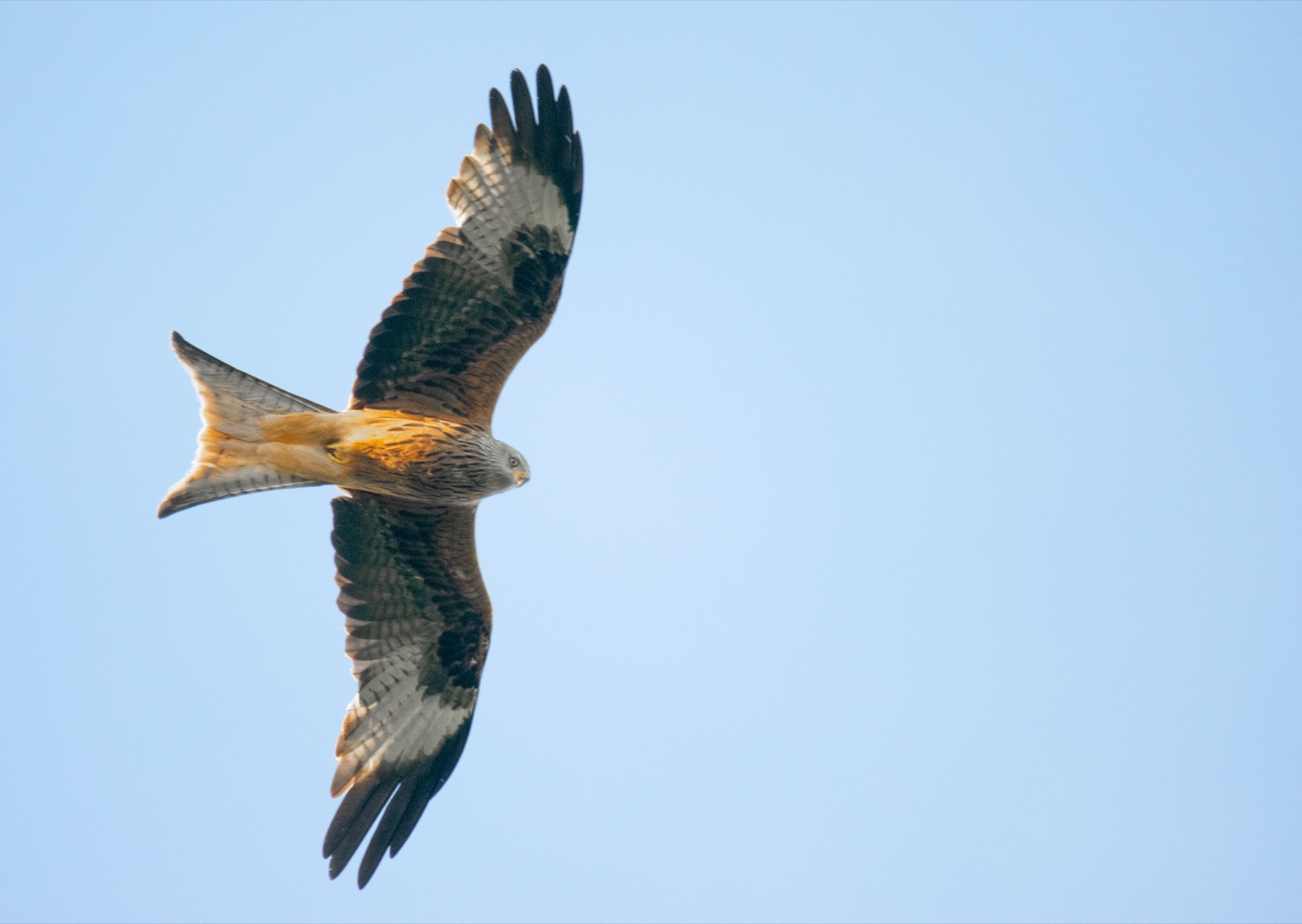
Source: Wikimedia Commons — “Red kite (Milvus milvus) 2020” by TRinaud, CC BY 4.0
In brief
A red kite (Milvus milvus) is a medium-large European bird of prey with rufous-brown plumage, long angled wings and a distinctive deeply forked tail. Mainly a scavenger feeding on carrion, it is famous in Britain for its dramatic recovery from near-extinction through legal protection and reintroduction.
Also in Animals A to Z · Animals that start with R
By WARN Research & Conservation TeamLast updated
The red kite (Milvus milvus) is a graceful, medium-large bird of prey instantly recognised by its deeply forked, twisting tail and warm rufous-brown plumage. A buoyant, agile flier, it soars on long, angled wings, riding thermals as it searches for food. Red kites are mainly scavengers, gliding low over fields, woodland edges and roadsides in search of carrion, alongside small mammals, birds and earthworms. Almost entirely confined to Europe, the species suffered catastrophic declines from persecution and poisoning, vanishing from much of Britain by the late nineteenth century. Decades of legal protection and reintroduction have since made it one of conservation's great recovery stories, and today red kites are once again a familiar sight over many parts of the UK.
~1.8 m
Wingspan, on wings up to about 175-195 cm
60-70 cm
Body length from bill to tail tip
60,000-70,000
Mature individuals worldwide (IUCN)
1989
Year UK reintroduction began
Figures sourced from Red kite - Wikipedia, IUCN Red List - Milvus milvus, CITES Appendices and other references on this page.
Red Kite: Quick Facts
| Common name | Red kite |
|---|---|
| Scientific name | Milvus milvus |
| Type | Bird of prey (raptor) |
| Diet | Mainly carrion; also small mammals, birds, earthworms |
| Wingspan | About 175-195 cm (up to ~1.8 m) |
| Length | 60-70 cm |
| Weight | Roughly 0.8-1.3 kg |
| Distribution | Almost entirely Europe |
| IUCN status | Least Concern (formerly Near Threatened) |
| CITES | Appendix II |
Scientific Classification
| Kingdom | Animalia |
|---|---|
| Phylum | Chordata |
| Class | Aves |
| Order | Accipitriformes |
| Family | Accipitridae |
| Genus | Milvus |
| Species | Milvus milvus |
Conservation Status
- IUCN Status
- Least Concern on the IUCN Red List. The species was previously listed as Near Threatened but was downgraded following population recovery across much of its European range, aided by legal protection and reintroduction programmes. It remains sensitive to poisoning and persecution.
- Population
- Approximately 60,000-70,000 mature individuals worldwide (around 32,000-38,000 breeding pairs), almost all in Europe.
- Trend
- Increasing overall
- Assessed
- 2020
- CITES
- Appendix II
Despite its overall recovery, the red kite remains vulnerable to illegal poisoning, secondary poisoning from rodenticides, persecution and collisions, so continued legal protection is important.
Key Facts: Red Kite
- The red kite is unmistakable in flight, with a long, deeply forked tail it twists like a rudder to steer.
- It is primarily a scavenger, feeding heavily on carrion as well as small mammals, birds and earthworms.
- Almost the entire world population breeds in Europe, with strongholds in Germany, Spain and France.
- By the late 1800s the species was nearly wiped out in Britain, surviving only in remote mid-Wales.
- Legal protection and reintroductions from 1989 onward restored red kites across much of the UK.
- The IUCN now lists the red kite as Least Concern, having previously rated it Near Threatened.
What does a red kite look like?
The red kite is a striking raptor built for effortless soaring. Adults measure roughly 60-70 cm from bill to tail, with a wingspan of about 175-195 cm, yet weigh only around 0.8-1.3 kg, females being slightly heavier than males. Their plumage is a rich, warm rufous-brown, streaked with darker markings, while the head is paler, often appearing greyish-white. The most diagnostic feature is the long, deeply forked tail, which is reddish above and constantly flexed and twisted in flight to steer. In the air the long, angled wings show a complex pattern: large pale patches near the wingtips contrast with dark 'fingers' and darker secondaries. The eye is amber-yellow and the bill is yellow at the base with a dark, hooked tip. Red kites are far more buoyant and manoeuvrable than buzzards, rocking and tilting as they glide low over open ground. Juveniles are similar but duller, with paler feather edges and a less deeply forked tail. A very small proportion of birds show leucistic, pale or whitish feathering, a rare natural variation.
What do red kites eat and how do they hunt?
Red kites are opportunistic feeders and, above all, scavengers. Carrion forms a large part of their diet, including dead sheep, deer, rabbits and other animals, as well as roadkill, which is one reason they are often seen patrolling motorway verges and field edges. They also take live prey within their power: small mammals such as voles, mice and young rabbits, small or injured birds, amphibians, and large numbers of earthworms, which they gather from freshly turned soil. Unlike fast, powerful hunters such as peregrines, the red kite relies on patient, low, quartering flight, dropping onto food it spots from above rather than pursuing agile prey. This scavenging lifestyle made the species historically valued in medieval towns, where kites helped clear streets of refuse and carrion. The same habits, however, leave red kites highly vulnerable to poisoning, whether from illegal baits laid for predators, secondary poisoning from rodenticides, or contaminated carcasses. In some areas supplementary feeding at dedicated sites now provides reliable food and a chance to see the birds gathering in spectacular numbers.
Why did red kites nearly disappear, and how did they recover?
For centuries red kites were common and even protected as urban scavengers, but attitudes changed sharply. From the sixteenth century onward they were treated as vermin, persecuted alongside other birds of prey, while egg collecting, habitat loss and later poisoning drove steep declines. By the late nineteenth century the red kite had been wiped out across most of Britain, clinging on only in the remote wooded valleys of mid-Wales, where at one point just a handful of pairs survived. This tiny Welsh population became one of the longest-running protection efforts in the world. The major turnaround came with reintroduction: from 1989 birds from continental Europe and Wales were released at sites in England and Scotland, supported by strong legal protection against killing and poisoning. The reintroduced birds thrived, spreading widely and breeding successfully, so that red kites are now a familiar sight over the Chilterns and many other regions. Globally the species' recovery, helped by protection across Europe, led the IUCN to downgrade its status from Near Threatened to Least Concern.
Red kite vs common buzzard
| Feature | Red kite | Common buzzard |
|---|---|---|
| Tail | Long and deeply forked, constantly twisted | Short and fan-shaped |
| Wings | Long, narrow and angled | Broad and rounded |
| Body colour | Warm rufous-brown, paler head | Variable brown, often paler below |
| Flight style | Buoyant, rocking, agile glides | Steady soaring in circles |
| Main diet | Carrion plus small prey | Small mammals, birds, carrion |
What WARN Does
WARN does not run field projects specifically for red kites, which live almost entirely in Europe, outside the countries where our partners work. This guide is part of our free educational mission to help people understand and value wildlife. The threats behind the red kite's historic decline, persecution, poisoning and habitat loss, are the same pressures that endanger raptors and scavengers in the regions WARN does protect, where vultures and other birds of prey face poisoning and shrinking habitat.
If the red kite's comeback inspires you, your support helps us keep producing free wildlife education and protect at-risk animals in the countries where we work.
Red Kite: Frequently Asked Questions
Are red kites birds of prey?
Are red kites dangerous to humans or pets?
What is the difference between a red kite and a buzzard?
Where do red kites live?
How big is a red kite?
Why are red kites a conservation success story?
What do red kites eat?
How long do red kites live?
Sources & References
Population figures, conservation status and biological facts on this page are drawn from authoritative scientific and intergovernmental sources.
Terms used on this page
Plain-English definitions, from our wildlife and conservation glossary.
Latest Red Kite Stories
Quick, fact-checked reads on the red kite — amazing facts, key questions and the threats it faces.
Guides
UK Animal Charities Explained: A Friendly Guide to 10 of the Biggest, and How They Differ
Who does what across UK animal welfare? A neutral, supporter-friendly guide to ten of the biggest UK animal charities — RSPCA, Dogs Trust, Battersea, Cats Protection, Blue Cross, PDSA, The Donkey Sanctuary, Brooke, Wood Green and Mayhew — with each charity's own donate link, and an honest section on where international field rescue fits in.
Read the storyGuides
What Is an Animal Sanctuary? How Sanctuaries Work, Who They Help, and How to Support One
Animal sanctuary, animal shelter, animal rescue — the terms are often used interchangeably, but they mean different things. This guide explains the difference, what life inside a sanctuary looks like, and how you can support sanctuaries in the UK and internationally.
Read the storyGuides
Fostering a Rescue Dog in the UK: A Complete Guide for New and Experienced Foster Carers
Fostering a rescue dog gives a dog in a shelter or rescue centre a temporary home while they wait for adoption — and it can make an enormous difference to their behaviour, health and chances of finding a permanent family. This guide covers how dog fostering works, what to expect, and how to get started.
Read the storyExplore more animals
Discover more animals, their habitats and their conservation status in the WARN wildlife-guide library.