Wildlife Guide · Europe & North America
Seagull (Gull)
Family Laridae
The clever, adaptable coastal birds we all call seagulls.
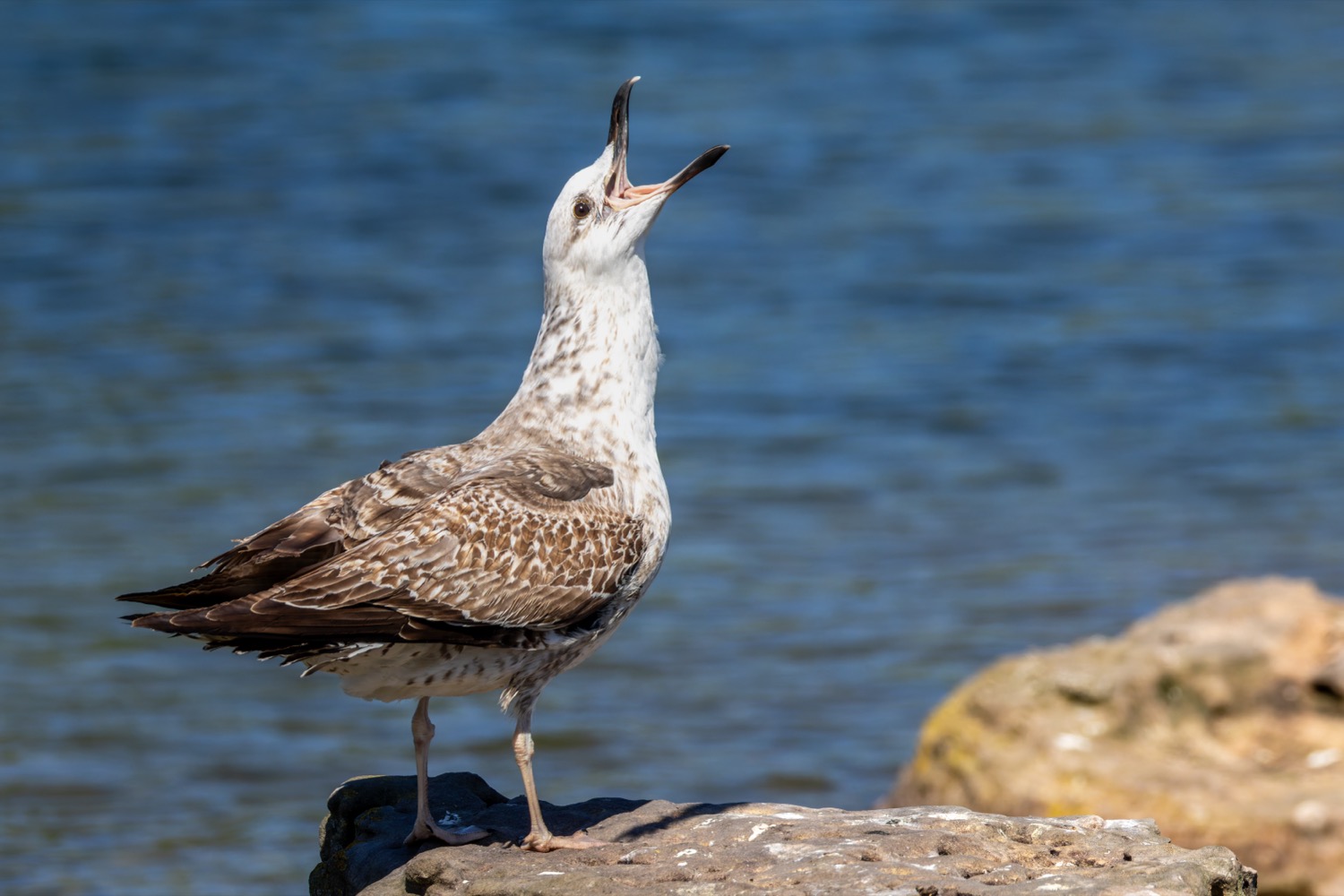
Source: Wikimedia Commons — “Herring gull 2024 04 23” by Alexis Lours, CC BY 4.0
In brief
A seagull is any of around 50 species of gull, seabirds in the family Laridae. Typically white and grey with black wingtips and webbed feet, gulls are adaptable, intelligent coastal birds that scavenge, fish and increasingly thrive in towns and cities worldwide.
Also in Animals A to Z · Animals that start with S
By WARN Research & Conservation TeamLast updated
"Seagull" is an everyday name rather than a species: the birds we mean belong to the family Laridae, which holds around 50 living gull species worldwide. Gulls are medium to large seabirds, typically white and grey with black wingtips, webbed feet and stout bills, found on coasts, lakes, farmland and increasingly in towns. They are among the most adaptable and intelligent of birds, scavenging, fishing and learning to exploit human food sources with ease. Most gull species are common and classed as Least Concern, yet some are declining: in the UK the familiar herring gull is actually a bird of conservation concern, listed and legally protected despite its noisy, confident reputation.
~50
living gull species in family Laridae
Up to ~1.7 m
wingspan of the great black-backed gull, the largest gull
~30 yrs
lifespan of larger gulls in the wild
Red-listed
UK herring gull, a bird of conservation concern
Figures sourced from Gull — Wikipedia, European herring gull — Wikipedia, Great black-backed gull — Wikipedia and other references on this page.
Seagull (Gull): Quick Facts
| Common name | Seagull (gull) |
|---|---|
| Family | Laridae |
| Number of species | Around 50 living gull species |
| Typical appearance | White and grey plumage, black wingtips, webbed feet, stout bill |
| Diet | Omnivorous and opportunistic: fish, invertebrates, scraps, eggs |
| Habitat | Coasts, lakes, rivers, farmland, towns and cities |
| Largest species | Great black-backed gull, wingspan up to ~1.7 m |
| Lifespan | Larger gulls can live around 30 years in the wild |
| Distribution | Worldwide, on every continent including Antarctica |
| UK status note | Herring gull is red-listed and legally protected |
Scientific Classification
| Kingdom | Animalia |
|---|---|
| Phylum | Chordata |
| Class | Aves |
| Order | Charadriiformes |
| Family | Laridae |
| Subfamily | Larinae (gulls) |
| Species | ~50 living gull species |
Conservation Status
- IUCN Status
- Varies by species. Most gulls are assessed by the IUCN as Least Concern thanks to large ranges and adaptable habits, but conservation status differs from species to species. Several populations are declining: in the UK the herring gull is a bird of conservation concern and is legally protected, and a small number of gull species worldwide are genuinely threatened.
- Population
- Not meaningful as a single figure across ~50 species; common species number in the millions globally, while some regional populations have fallen sharply.
- Trend
- Mixed; stable or increasing for many species, but declining for several, including the UK herring gull.
- Assessed
- Assessed per species on the IUCN Red List; most common species listed as Least Concern.
- CITES
- Gulls are not generally listed on the CITES appendices.
Because the family spans roughly 50 species, no single status applies; threats such as habitat loss, reduced food at sea, pollution and disease affect particular species more than others.
Key Facts: Seagull (Gull)
- "Seagull" is a colloquial term; there is no single species, but around 50 gull species in the family Laridae.
- Gulls are highly adaptable and intelligent, exploiting coasts, wetlands, farmland and urban areas alike.
- Most gull species are globally Least Concern, but conservation status varies and several are declining.
- In the UK the herring gull is a bird of conservation concern and is legally protected, despite seeming abundant in towns.
- The great black-backed gull is the world's largest gull, with a wingspan approaching 1.7 metres.
- Many gull problems people notice in cities trace back to habitat loss and changing food supplies at sea.
Is a seagull a real species?
Strictly speaking, there is no bird called a "seagull." The word is an informal catch-all for gulls, a group of seabirds making up the family Laridae, which contains roughly 50 living species spread across about ten genera. They range from small, delicate birds such as the little gull to the bulky great black-backed gull, the largest of them all. Familiar examples include the herring gull, common gull, black-headed gull, lesser black-backed gull and ring-billed gull. Most gulls share a recognisable look: white and pale-grey plumage, black-marked wingtips, webbed feet and a strong, slightly hooked bill, often with a red spot on the lower mandible in larger species. Young gulls are mottled brown and can take two to four years to gain full adult plumage, which is why many "different" birds on a beach are really the same species at different ages. Calling them all "seagulls" is also slightly misleading, since many species spend much of their lives well inland, on lakes, rivers, farmland and rubbish tips, returning to the coast only to breed or roost.
Why are gulls so clever and adaptable?
Gulls are widely regarded as among the most intelligent birds. They are opportunistic generalists: they fish, scavenge, follow ploughs for worms, raid other seabirds' nests, drop shellfish onto rocks to crack them, and have learned to paddle their feet on grass to mimic rain and bring earthworms to the surface. In towns they exploit discarded food, open bins and outdoor dining, and individuals can become bold enough to snatch food from the hand. Studies have shown that herring gulls watch human cues and are more likely to peck at food a person has handled or looked at, suggesting they read our behaviour. This flexibility lets gulls thrive in habitats many seabirds cannot. It also explains their move into cities, where flat roofs mimic the cliff ledges they nest on, street lighting extends foraging time, and food is plentiful and predictable. The same adaptability that makes gulls successful, however, can bring them into conflict with people during the breeding season, when adults defend chicks robustly.
Are seagulls endangered or thriving?
It depends entirely on the species, which is why a single conservation label does not fit. Globally, most gulls are assessed by the IUCN as Least Concern, reflecting large ranges and adaptable habits. Yet that worldwide average can hide sharp regional declines. In the UK, for example, the herring gull, one of the most recognisable "seagulls", is a bird of conservation concern and is legally protected; its breeding population has fallen substantially over recent decades. Drivers include changes in fishing practices and discards, reduced food at sea, disturbance, disease such as avian influenza, and loss of natural nesting habitat, which partly explains the shift to roofs in towns. A handful of gull species worldwide are genuinely threatened. So the honest answer is that gulls as a group are not endangered, but particular species and populations can be vulnerable even while appearing common in everyday life.
Gull vs tern (both family Laridae)
| Feature | Gull | Tern |
|---|---|---|
| Build | Heavier body, broad wings | Slimmer, longer, more pointed wings |
| Bill | Stout, often slightly hooked | Slender and sharply pointed |
| Tail | Usually squarer | Often deeply forked |
| Feeding | Scavenges and fishes opportunistically | Mostly plunge-dives for fish |
| Flight | Strong, soaring, gliding | Light, buoyant, hovering |
What WARN Does
WARN does not run field projects specifically for gulls, which are widespread and mostly fall outside the countries where WARN's partners work. This guide is part of WARN's free educational work, helping people understand and value commonly misunderstood wildlife. The threats that affect declining gull populations, such as habitat loss, pollution and pressure on food supplies, are the same pressures facing many of the animals WARN does help protect.
If this guide helped you see the humble seagull a little differently, a small gift helps keep WARN's free wildlife education and frontline animal protection going.
Seagull (Gull): Frequently Asked Questions
Is a seagull a real bird species?
What is the largest type of gull?
Are seagulls endangered?
Why are seagulls moving into towns and cities?
What do seagulls eat?
Where do seagulls live?
Are seagulls dangerous?
How long do seagulls live?
How big is a seagull?
Sources & References
Population figures, conservation status and biological facts on this page are drawn from authoritative scientific and intergovernmental sources.
Terms used on this page
Plain-English definitions, from our wildlife and conservation glossary.
Latest Seagull (Gull) Stories
Quick, fact-checked reads on the seagull (gull) — amazing facts, key questions and the threats it faces.
Species
Slow Loris: Why the Internet's Favourite Pet Is a Conservation Disaster
The slow loris looks like a cartoon character — and that has nearly destroyed the species. Here is the truth behind the viral videos.
Read the storySpecies
The Snow Leopard: Why the Ghost of the Mountains Is Still Vulnerable
The snow leopard is one of the most elusive big cats on earth, with an estimated 4,000-6,500 individuals across twelve range states — including Pakistan, where WARN is preparing to operate. This briefing explains why the species was downlisted from Endangered to Vulnerable in 2017 and why that is not the success story it sounds like.
Read the storyGuides
Sun Bear vs Moon Bear: The Two Most Trafficked Asian Bears
The sun bear and the Asiatic black bear (moon bear) are the two most commonly trafficked bears in Asia — for the pet trade, for traditional medicine and for bear-bile farming. Here is how to tell them apart.
Read the storyExplore more animals
Discover more animals, their habitats and their conservation status in the WARN wildlife-guide library.