Wildlife Guide · Tropical and temperate coastal waters worldwide
Seahorse
Genus Hippocampus — ~46 recognised species
Upright fish with prehensile tails — monogamous, slow and heavily over-exploited.
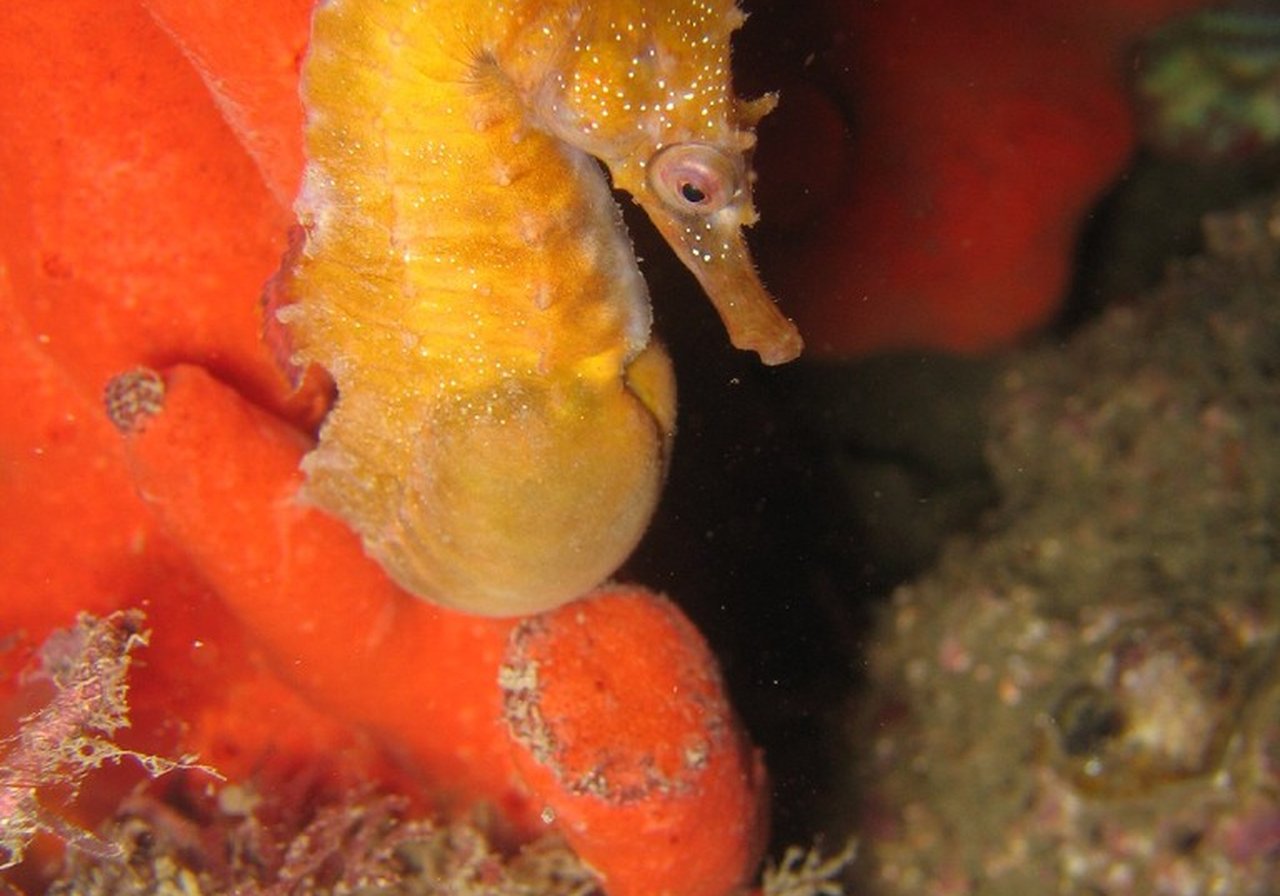
Source: Wikimedia Commons
In brief
Seahorses are upright coastal fish (genus Hippocampus) with ~46 species — males carry eggs in a pouch; many are Vulnerable or Endangered due to habitat loss and huge dried trade for traditional medicine.
Also in Animals A to Z · Animals that start with S
By WARN Research & Conservation TeamLast updated
Seahorses are fish of the genus Hippocampus, instantly recognised by horse-like heads, upright posture and grasping tails wrapped around seagrass and coral. Roughly 46 species inhabit shallow coastal waters globally. Males carry eggs in a brood pouch until young hatch — rare male pregnancy in vertebrates. Seahorses are slow swimmers, poor dispersers and heavily traded dried for traditional medicine and live for aquaria. More than a third of species are threatened on the IUCN Red List.
46
Recognised seahorse species
37 M+
Seahorses traded annually (historic estimate)
Vulnerable+
Many species on IUCN Red List
CITES II
All Hippocampus species listed since 2004
Figures sourced from IUCN Red List — Hippocampus assessments, Project Seahorse, Smithsonian Ocean — seahorse and other references on this page.
Seahorse: Quick Facts
| Genus | Hippocampus (~46 species) |
|---|---|
| Reproduction | Male brood pouch |
| Swimming | Upright; weak swimmer |
| Habitat | Seagrass, mangrove, coral |
| Trade | CITES Appendix II |
| Main threats | Dried trade, bycatch, habitat loss |
Scientific Classification
| Kingdom | Animalia |
|---|---|
| Phylum | Chordata |
| Class | Actinopterygii |
| Order | Syngnathiformes |
| Family | Syngnathidae |
| Genus | Hippocampus (~46 species) |
Conservation Status
- IUCN Status
- At least 14 species Vulnerable or Endangered; entire genus on CITES Appendix II due to unsustainable trade and habitat decline.
- Population
- Unknown globally; local declines documented across range
- Trend
- Decreasing for many species
- Assessed
- Varies by species (genus listed CITES 2004)
- CITES
- Appendix II — all Hippocampus species
Bottom trawling bycatch may exceed targeted harvest in some regions.
Key Facts: Seahorse
- Seahorses are fish — related to pipefish and seadragons in family Syngnathidae.
- Males brood embryos in a pouch; females deposit eggs and males fertilise internally.
- They anchor to seagrass, mangroves and coral — habitats declining worldwide.
- Dried seahorse trade for traditional medicine drives over-exploitation.
- Seahorses mate monogamously for a season and perform daily greeting dances.
- Bycatch in shrimp trawls kills millions as 'unwanted' catch.
Anatomy of an upright fish
Seahorses lack scales, armoured instead by bony plates. A prehensile tail grips holdfasts in currents they cannot swim against. The tubular snout creates suction feeding on tiny crustaceans and plankton.
Independent eye movement allows scanning for prey and predators simultaneously. Dorsal fin beats rapidly — up to 70 times per second — while pectoral fins on the neck steer.
Camouflage and slow movement hide seahorses from predators including crabs, rays and fish. Some species grow skin flaps mimicking seagrass blades.
Reproduction and pair bonding
Courtship involves colour changes, synchronised swimming and tail linking. Females transfer eggs to the male brood pouch; males nourish embryos and undergo labour-like contractions at birth.
Broods range from dozens to hundreds of miniature seahorses expelled over hours. Juveniles drift planktonically before settling on habitat — high mortality in open water.
Monogamy within a breeding season may improve coordination of pregnancies. Widowed seahorses take days to weeks before new pairing.
Trade, bycatch and habitat loss
Project Seahorse estimates tens of millions of seahorses traded yearly, mostly dried for East Asian medicine as tonics — without proven efficacy. Live trade for aquaria adds pressure.
Bottom trawling for shrimp catches seahorses as bycatch, often discarded dead. Seagrass dredging, mangrove clearance and coral damage remove attachment sites.
CITES Appendix II requires export permits demonstrating sustainable source — enforcement gaps allow laundering. Captive breeding supplies some aquarium trade but does not offset wild dried demand.
Seahorses and people
Indonesia and Malaysia — WARN partner countries — are among the largest historic exporters. Community-managed no-take zones and seagrass protection show local recovery where enforced.
Never buy dried seahorses or souvenirs. Choose shrimp certified for bycatch reduction where available. Report seahorses in trade without permits.
Seahorses need live food and specialist saltwater care in captivity — poor survival for impulse purchases. Wild seahorses belong in seagrass meadows, not medicine markets.
What WARN Does
WARN supports habitat protection and anti-trafficking education in Indonesia and Malaysia — key seahorse range and trade states. This guide explains why coastal ecosystems and enforcement matter for species traded by the million.
If this guide helps you understand wildlife and the pressures it faces, a gift to WARN supports habitat protection and free public education in our partner countries.
Seahorse: Frequently Asked Questions
Are seahorses fish?
Do male seahorses get pregnant?
Are seahorses endangered?
Are seahorses dangerous?
How long do seahorses live?
How big is a seahorse?
What do seahorses eat?
Sources & References
Population figures, conservation status and biological facts on this page are drawn from authoritative scientific and intergovernmental sources.
Terms used on this page
Plain-English definitions, from our wildlife and conservation glossary.
Latest Seahorse Stories
Quick, fact-checked reads on the seahorse — amazing facts, key questions and the threats it faces.
Explore more animals
Discover more animals, their habitats and their conservation status in the WARN wildlife-guide library.