Snake Species · South & South-east Asia
King Cobra
The world's longest venomous snake — builds nests and eats other snakes.
By WARN Research & Conservation TeamLast updated
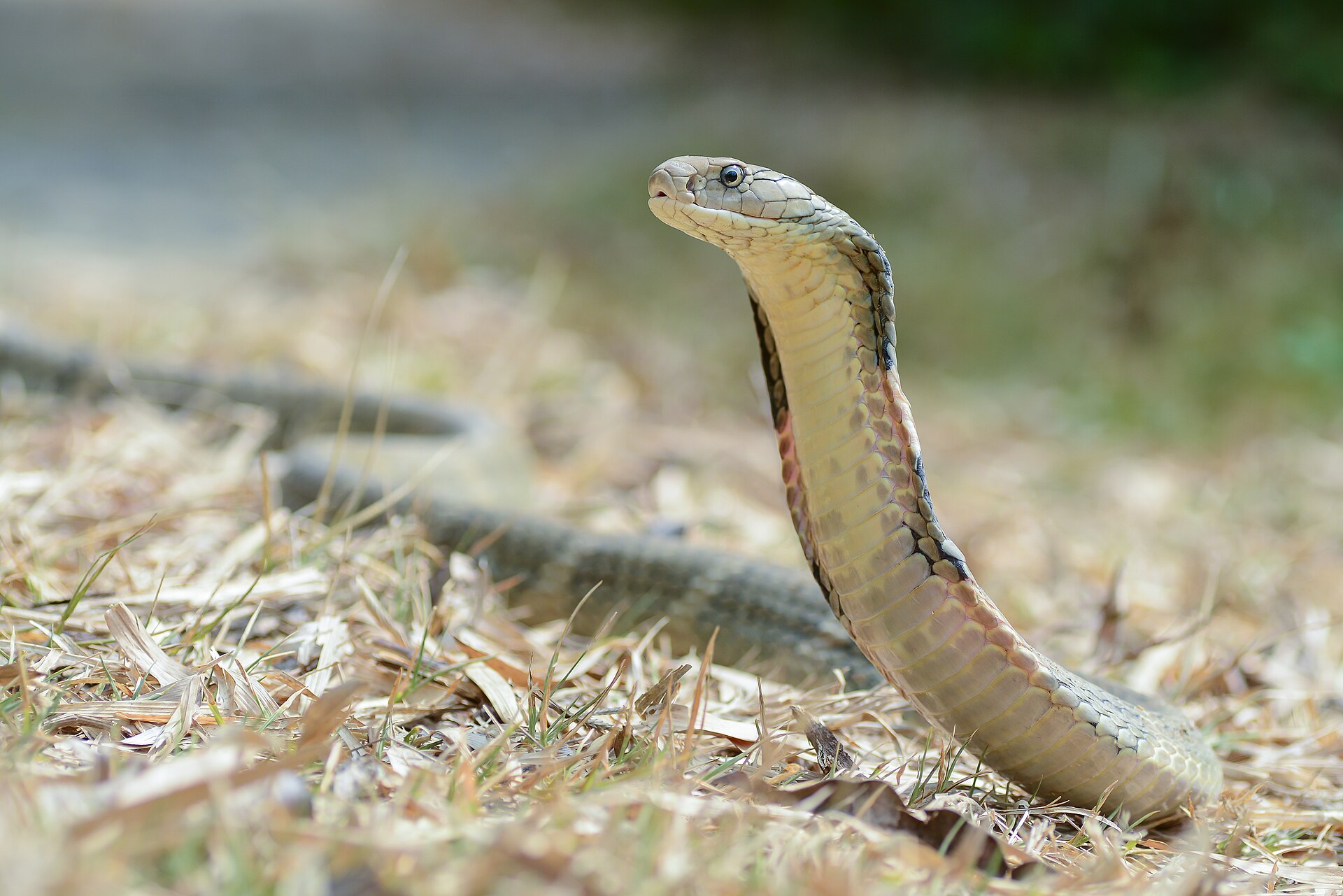
Photo: Rushenb / Wikimedia Commons (CC BY-SA 4.0)
In brief
The King Cobra is the world's longest venomous snake — reaching 5 m or more across forest from India through Indonesia and Malaysia. Its defining trait is nest-building behaviour; females construct mound nests of leaf litter and guard eggs — rare parental care among snakes. The IUCN lists the species as Vulnerable from habitat loss and persecution.
What are the key facts about a King Cobra?
The King Cobra is a snake species from South & South-east Asia: very large (3–5 m), elapid, nest-guarding, iconic hood. The world's longest venomous snake — builds nests and eats other snakes.
| Origin | South & South-east Asia |
|---|---|
| Size | Very large (3–5 m) |
| Typical length | 3–5 m (10–16 ft) typical; exceptional specimens exceed 5.5 m with slender build relative to pythons |
| Lifespan | 10–30 years depending on species |
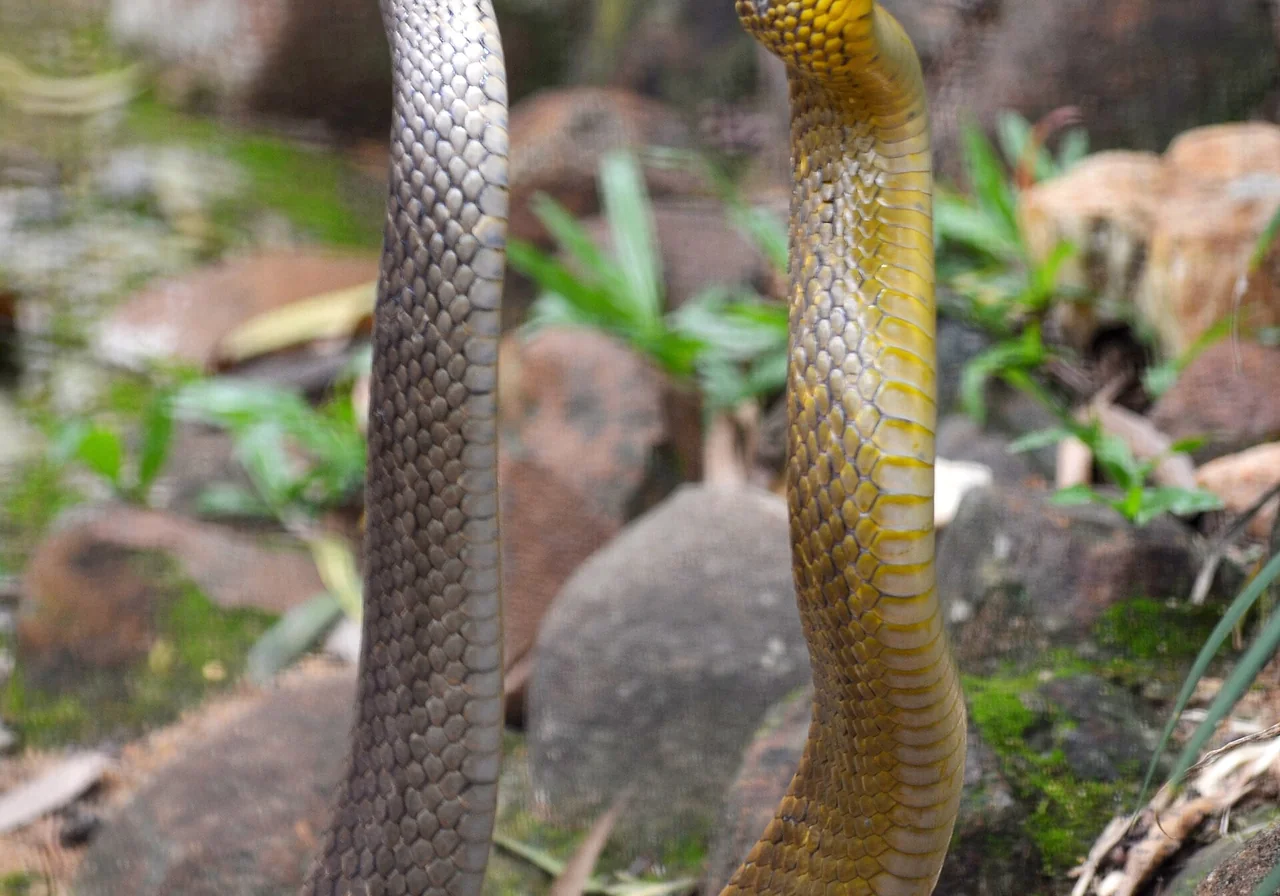
| Scales & pattern | Olive-green, brown or black body with pale crossbands; hood shows oval or circular spectacle mark on expanded neck. Smooth scales with iridescent sheen. Juveniles show bold black and white banding that fades with age. Hood expansion displays when threatened — iconic cobra posture. |
| Temperament | Elapid, nest-guarding, iconic hood |
| Conservation note | Wild king cobras belong in protected forest — not pet enclosures. Zoological collections and venom research programmes maintain specimens under strict safety protocols. Habitat protection in India, Indonesia and Malaysia supports wild populations; education reduces persecution more than captive keeping. |
Should you keep a King Cobra?
A King Cobra is a wild snake from South & South-east Asia. This page is a species briefing, not a shopping guide. Most people should not keep one; many species here are unsafe, illegal, or both as pets.
Fear, fashion and the exotic-pet trade all distort this animal. The King Cobra belongs in South & South-east Asia, in the habitat that produced a very large (3–5 m) elapid, nest-guarding, iconic hood species. Killing “pests”, buying wild-caught animals, or posing with them for photos all make the conservation problem worse.
If a King Cobra is already in accredited care, follow specialist veterinary and licensing rules. If it is not, do not start. The honest next step is the species guide and, where WARN funds relevant work, the appeal linked from this page.
What is a King Cobra?
The world's longest venomous snake — builds nests and eats other snakes. Origin is South & South-east Asia; coat or markings are described as Olive-green, brown or black body with pale crossbands; hood shows oval or circular spectacle mark on expanded neck. Smooth scales with iridescent sheen. Juveniles show bold black and white banding that fades with age. Hood expansion displays when threatened — iconic cobra posture..
Treat “species” here as a library label for a wild species or distinct form, not as a kennel-club product.
Where does the King Cobra come from?
King Cobras come from South & South-east Asia. King cobras inhabit lowland and montane forest, bamboo thickets and mangrove edge from India through Nepal, Bangladesh, Myanmar, Thailand, Cambodia, Laos, Vietnam, Malaysia, Indonesia and the Philippines.
They prey chiefly on other snakes — including venomous species — earning the genus name Ophiophagus, snake-eater. Females gather leaf litter into mound nests up to a metre high and remain nearby during incubation. Habitat loss, road mortality and deliberate killing drive decline across the range. King cobras are revered in Indian culture yet persecuted when encountered near villages. Venom yields support antivenom research — king cobra antivenom is essential where the species occurs. CITES Appendix II listing applies. The IUCN assesses the species as Vulnerable with fragmented populations across South and South-east Asia.
What does a King Cobra actually need?
A wild King Cobra needs the habitat and social system of South & South-east Asia, not a spare room. Size (Very large (3–5 m)) and a elapid, nest-guarding, iconic hood life history are why private keeping fails.
In the wild that means connected habitat, a diet the species evolved with, and distance from the pet and selfie trades. Captive “care sheets” for wild snakes are how trafficking gets laundered as husbandry.
If you already work in accredited rescue, follow specialist protocols and licensing. Everyone else: do not acquire a King Cobra. Support habitat and anti-trafficking work instead.
What surprises people about the King Cobra?
A few details about the breed, alongside the practical care information in this guide.
- King cobras build mound nests and guard eggs — the only snake with significant parental care.
- They prey primarily on other snakes, including kraits and rat snakes.
- A king cobra can raise a third of its body length off the ground when displaying.
- They are the only snake species that builds a nest for egg incubation.
What health issues should you know about in a King Cobra?
Health concerns to discuss with your vet, including changes to watch for and everyday care. This is general guidance, not veterinary advice — always speak to your vet.
Habitat loss
Forest clearing in Indonesia, Malaysia and India fragments king cobra range and reduces prey snake populations.
Care: Support protected area expansion and corridor connectivity. Report road-killed specimens to local herpetological surveys.
Persecution
Villagers kill king cobras on sight despite legal protection in most range countries. Fear-driven killing removes apex predators from ecosystems.
Care: Support snake education programmes and safe relocation services. Never kill — contact trained handlers for removal from human habitation.
Snakebite envenoming (medical importance)
King cobra bites cause progressive paralysis and respiratory failure. Antivenom is essential and not universally available.
Care: Improve antivenom access in range countries. First aid: immobilise limb, transport to hospital — never cut, suck or apply tourniquets.
Who should skip a King Cobra?
Skip a King Cobra if you are anyone hoping to keep a King Cobra as a pet or photo prop. This South & South-east Asia snake is very large (3–5 m) and elapid, nest-guarding, iconic hood — the mismatch is usually lifestyle, not a missing accessory.
This page is allowed to say no. Skip if you are anyone hoping to keep a King Cobra as a pet or photo prop. Skip if you are anyone who will pay for a wild-caught or roadside animal. Skip if you are tourists looking for handling or selfies.
A different snake species on this site may fit. Wanting “a King Cobra” after a film or a colour photo is not a reason to ignore the skip list.
What are the hidden catches with a King Cobra?
The hidden cost of a King Cobra is usually not the purchase price. It is years of care, the health list on this page, and the mismatch between a elapid, nest-guarding, iconic hood animal and a busy home.
The pet-trade catch
Cute infant King Cobras in ads were usually taken from wild families. The adult you cannot house is then dumped, euthanised, or passed on. Do not create that demand.
The tourism catch
Paying to hold, ride, or selfie with a King Cobra funds the next capture or a stressed ambassador animal. Distance and accredited viewing are the ethical default.
The habitat loss catch
Forest clearing in Indonesia, Malaysia and India fragments king cobra range and reduces prey snake populations. Support protected area expansion and corridor connectivity. Report road-killed specimens to local herpetological surveys.
The persecution catch
Villagers kill king cobras on sight despite legal protection in most range countries. Fear-driven killing removes apex predators from ecosystems. Support snake education programmes and safe relocation services. Never kill — contact trained handlers for removal from human habitation.
How does a King Cobra compare with Indian Cobra and Western Diamondback Rattlesnake?
A King Cobra is not interchangeable with Indian Cobra and Western Diamondback Rattlesnake. Compare origin, size, lifespan and temperament before you choose — those four lines prevent most regret.
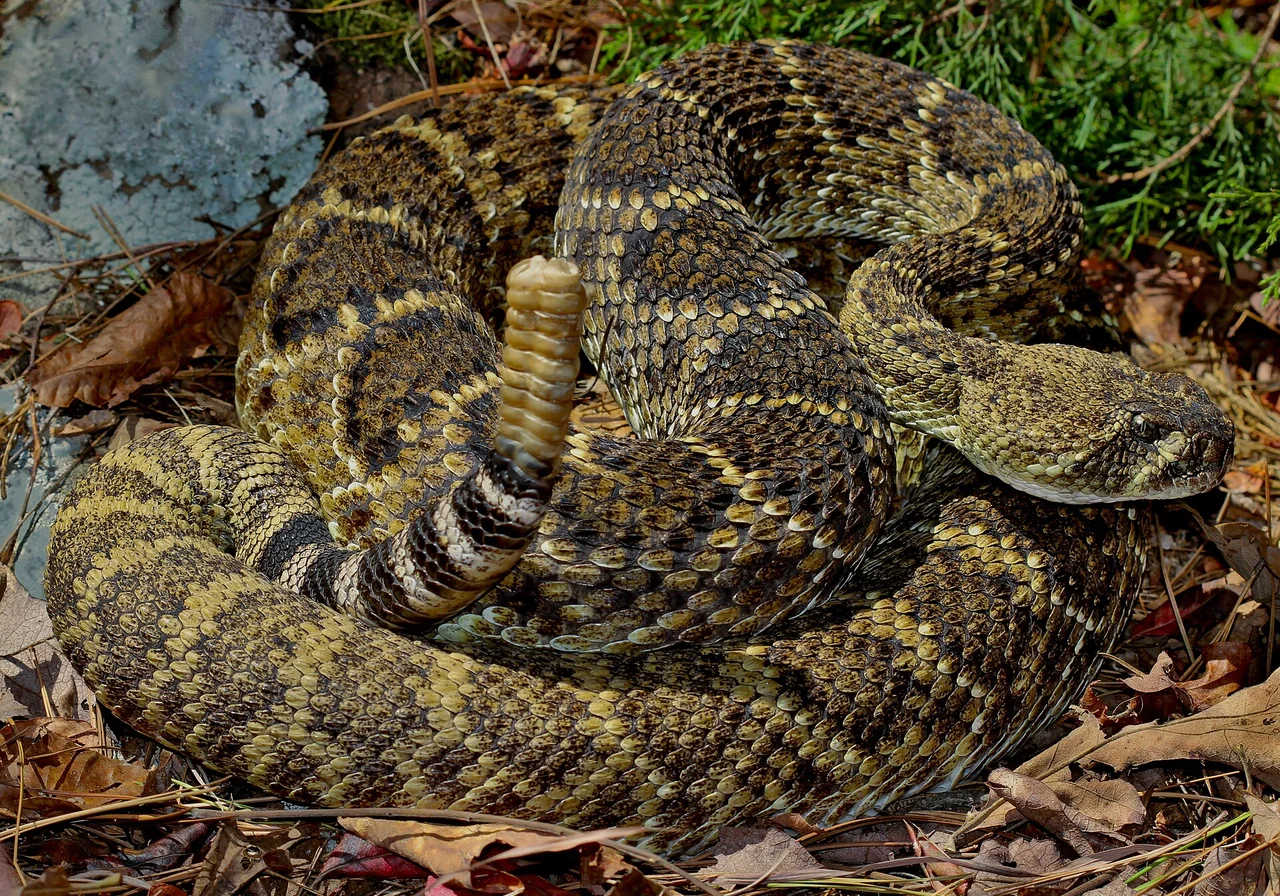
| Snake fact | King Cobra | Indian Cobra | Western Diamondback Rattlesnake |
|---|---|---|---|
| Origin | South & South-east Asia | India, Pakistan, Bangladesh, Sri Lanka | South-western United States, Mexico |
| Size | Very large (3–5 m) | Medium (1.5–2 m) | Large (1.2–1.8 m) |
| Lifespan | 10–30 years depending on species | 10–30 years depending on species | 10–30 years depending on species |
| Temperament | Elapid, nest-guarding, iconic hood | Venomous, hood display, synanthropic | Venomous, rattling warning, ambush predator |
What is the verdict on the King Cobra?
A King Cobra is a wild snake to understand and protect, not a pet to acquire. If you came here to buy one, the verdict is no. If you came here to learn, use the species guide next.
Help looks like habitat, enforcement and refusing the trade — not a cage in a spare room. WARN is a CIC, not a charity; donate only if you want to fund partner work in our network countries, and do not expect Gift Aid.
Snakes keep ecosystems healthy
Snakes control rodents and serve as prey for raptors — yet persecution and habitat loss remove them silently. WARN publishes these guides to reduce fear-driven killing in Pakistan, Brazil, Colombia and beyond.