Wildlife Guide · Europe & North Africa
Common Starling
Sturnus vulgaris
The speckled mimic behind winter's swirling murmurations
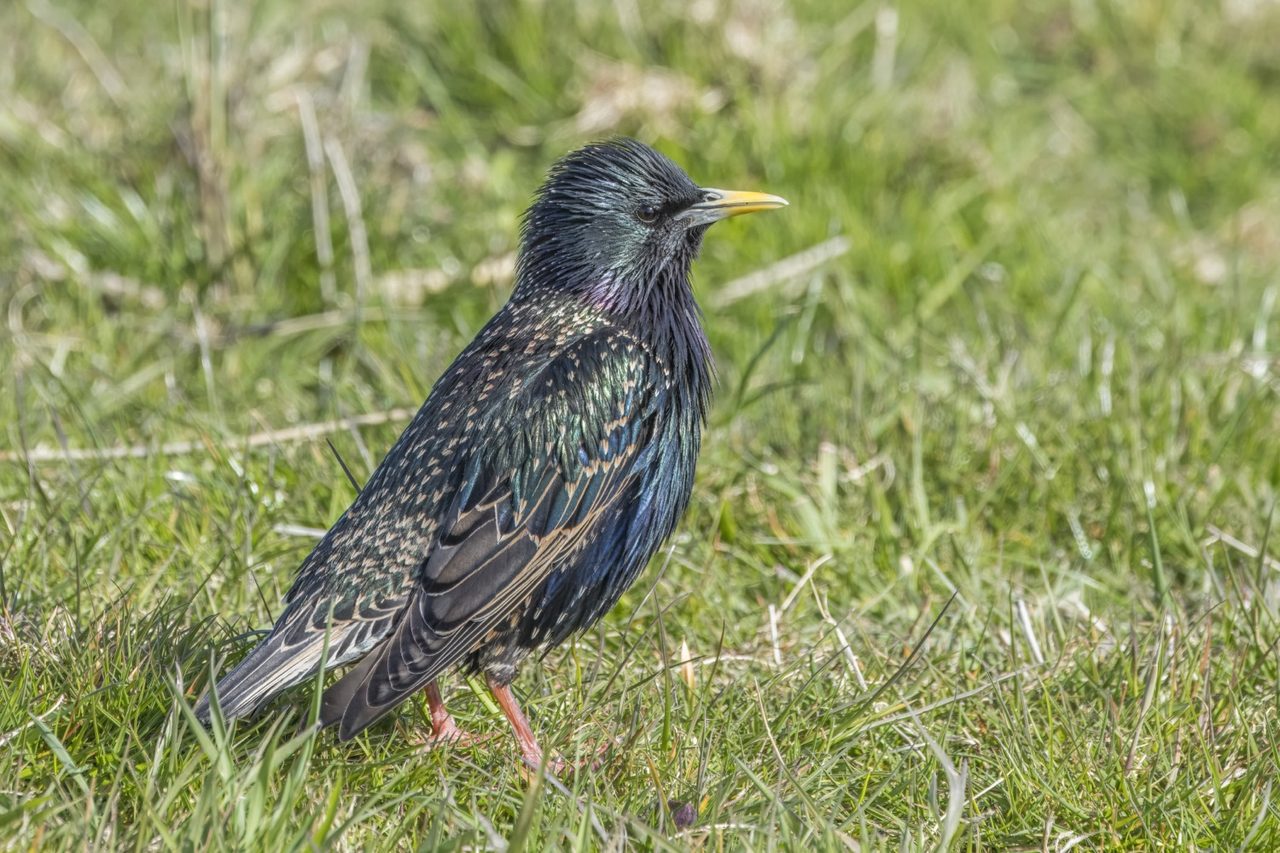
Source: Wikimedia Commons — “Common starling (Sturnus vulgaris) breeding male Marken” by Charles J. Sharp, CC BY-SA 4.0
In brief
The common starling (Sturnus vulgaris) is a stocky, glossy black songbird native to Eurasia and North Africa, famous for vast swirling winter flocks called murmurations and for skilled vocal mimicry. Globally common and rated Least Concern, it has declined sharply in Britain and is UK Red-listed.
Also in Animals A to Z · Animals that start with C
By WARN Research & Conservation TeamLast updated
The common starling (Sturnus vulgaris), also called the European starling, is a stocky, medium-sized songbird native to Eurasia and North Africa and introduced widely across the world. Up close its dark plumage glitters with an iridescent green and purple sheen, speckled with pale stars in winter. Starlings are famous for two things: dazzling winter "murmurations", in which tens of thousands of birds wheel together in shifting clouds before roosting, and a remarkable gift for mimicry. Although still abundant worldwide and rated Least Concern by the IUCN, the starling has declined steeply in Britain and now sits on the UK Red List of birds of conservation concern.
19-23 cm
Body length (about 31-44 cm wingspan)
1.5 million
Birds recorded in a single murmuration
>80%
UK population decline, 1966-2004
22 yrs
Maximum recorded lifespan in the wild
Figures sourced from Wikipedia: Common starling, IUCN Red List: Sturnus vulgaris, Encyclopaedia Britannica: Starling and other references on this page.
Common Starling: Quick Facts
| Common name | Common starling (European starling) |
|---|---|
| Scientific name | Sturnus vulgaris |
| Family | Sturnidae (starlings) |
| Length | About 19-23 cm |
| Wingspan | About 31-44 cm |
| Weight | About 58-101 g |
| Diet | Omnivorous: invertebrates, seeds, fruit and scraps |
| Typical clutch | Usually 4-5 pale blue eggs |
| Native range | Eurasia and North Africa; introduced worldwide |
| Global status | Least Concern (IUCN); UK Red-listed |
Scientific Classification
| Kingdom | Animalia |
|---|---|
| Phylum | Chordata |
| Class | Aves |
| Order | Passeriformes |
| Family | Sturnidae |
| Genus | Sturnus |
| Species | Sturnus vulgaris |
Conservation Status
- IUCN Status
- Least Concern globally on the IUCN Red List, reflecting a very large and widely distributed population. Despite this, the species is of serious regional concern: in the UK it sits on the Red List of birds of conservation concern after a decline of more than 80 percent between 1966 and 2004, with similar falls in parts of north-west Europe. It is not listed under CITES.
- Population
- Global population numbers in the hundreds of millions of mature individuals
- Trend
- Decreasing globally; declining steeply in the UK and parts of Europe, but abundant and often increasing where introduced
- Assessed
- 2019
- CITES
- Not listed
The Least Concern global rating reflects huge numbers worldwide, but masks severe declines in Britain and north-west Europe driven largely by agricultural intensification and loss of insect-rich habitat.
Key Facts: Common Starling
- The common starling is globally abundant and rated Least Concern by the IUCN, yet has declined by more than 80% in the UK since the 1960s.
- Steep British and north-west European declines have placed it on the UK Red List of birds of conservation concern.
- Winter murmurations can involve hundreds of thousands of birds and occasionally more than a million, wheeling in unison before they roost.
- Starlings are accomplished mimics, weaving copied sounds, including other birds and mechanical noises, into their own warbling songs.
- Native to Eurasia and North Africa, the species was introduced to North America, Australia, New Zealand and South Africa, where it is often considered invasive.
- It is not listed under CITES, as international trade is not a significant threat to the species.
What does a starling look like and how do you identify it?
The common starling is a compact, short-tailed songbird roughly 19 to 23 centimetres long, with a wingspan of about 31 to 44 centimetres and a weight of around 58 to 101 grams, so a little smaller and dumpier than a blackbird. In flight it shows distinctive triangular, pointed wings and a fast, direct, arrow-like profile. At a distance starlings can look plain black, but in good light the plumage is richly iridescent, glossed with green and purple. Plumage changes with the seasons: in fresh winter feathering, pale buff and white tips create a heavily speckled, star-spangled appearance, while by spring these wear away to leave glossier breeding dress. The bill is a useful clue, turning bright yellow in the breeding season and darker outside it. Adults walk and run busily across lawns rather than hopping, often probing the turf for grubs. Juveniles are a duller greyish-brown and lack the spangling, which can confuse beginners. The voice is a chattering, wheezing medley of whistles, clicks and imitations, frequently delivered from a rooftop or aerial.
Why do starlings form murmurations?
A murmuration is the swirling, shape-shifting cloud formed by starlings gathering at dusk before they settle to roost, typically in autumn and winter. Flocks may number from a few hundred to tens of thousands of birds, and exceptional gatherings have been estimated in the hundreds of thousands, with the largest figures cited reaching towards a million or more. The birds turn, ripple and condense in near-perfect coordination, with each individual responding to the movements of a handful of its closest neighbours, so that waves of motion sweep across the whole flock. Scientists think murmurations serve several purposes. Massing together offers safety in numbers, making it far harder for a hunting bird of prey such as a peregrine or sparrowhawk to single out one target, an effect sometimes called predator confusion. The gatherings may also help birds share warmth on cold nights and exchange information about good feeding sites. Whatever the precise mix of reasons, the spectacle is one of the natural world's great free shows, drawing watchers to reedbeds, piers and city centres on winter evenings across the starling's range.
Can starlings really mimic sounds?
Yes. The common starling is one of the natural world's most accomplished vocal mimics. Its song is a long, rambling sequence of whistles, rattles, clicks, gurgles and warbles, and woven through it are imitations of other species and ambient sounds. Wild starlings copy the calls of other birds, and individuals have been recorded reproducing a sound they had apparently heard only once. In settings close to people, captive and urban birds have learned to imitate human-made noises, from car alarms and telephones to fragments of human speech. Males sing most, and a varied, complex song appears to help them attract mates and defend territory, so mimicry may serve as a kind of vocal display of fitness. The starling's talents put it in the company of other gifted avian mimics such as mockingbirds and lyrebirds. This adaptability of voice mirrors the bird's broader behavioural flexibility, which is part of why the species has spread and thrived across so many landscapes, even as it has declined in some of its native heartlands.
Why is the starling declining if it is so common?
It is a striking paradox: the common starling remains one of the most numerous birds on the planet, yet in parts of its native range it has crashed. In the United Kingdom the breeding population fell by more than 80 percent between 1966 and 2004, a decline severe enough to place the species on the UK Red List of birds of conservation concern. Similar downward trends have been noted in several north-west European countries. The leading suspected cause is agricultural intensification, which has reduced the supply of the soil invertebrates, such as leatherjackets and other grubs, that adult starlings need to feed their chicks. Loss of permanent pasture, changes in farming practice and fewer nesting cavities in modern buildings and tidier landscapes are all thought to play a part. Because the global population is enormous and the bird is abundant where introduced, the IUCN still classifies the species as Least Concern overall. The contrast is a reminder that a healthy world total can mask serious regional losses, and that a familiar garden bird is not necessarily a secure one.
What WARN Does
WARN does not run field projects specifically for the common starling, which is abundant across much of its global range and largely lives outside the countries where WARN's partners work partner countries. This guide is part of WARN's free public-education work, helping people understand and value the wildlife around them. The pressures behind the starling's regional decline, especially habitat loss and the disappearance of insect-rich farmland, are the same forces that threaten many of the animals WARN does protect on the ground.
If guides like this deepen your appreciation of wildlife, a small gift helps WARN keep producing free education and protecting threatened animals where it works.
Common Starling: Frequently Asked Questions
Are starlings native to North America?
What is a group of starlings called?
What do starlings eat?
How long do starlings live?
Why are starlings declining in the UK?
Are starlings good or bad for the environment?
Where do common starlings live?
Are common starlings dangerous?
How big is a common starling?
Sources & References
Population figures, conservation status and biological facts on this page are drawn from authoritative scientific and intergovernmental sources.
Terms used on this page
Plain-English definitions, from our wildlife and conservation glossary.
Latest Common Starling Stories
Quick, fact-checked reads on the common starling — amazing facts, key questions and the threats it faces.
Species
12 Amazing Facts About Grey Wolves (And Why Alpha Wolves Aren't Real)
A howl that carries 16 km, a pack that is really a family, and the debunked study behind the 'alpha wolf' myth. Twelve verified facts.
Read the storySpecies
12 Amazing Facts About Flamingos (They Are Born Grey and Eat Upside Down)
Pink from diet, a bill that filters upside down, and milk produced by both parents. Twelve verified flamingo facts.
Read the storySpecies
12 Amazing Facts About Hyenas (They Are Not Dogs, and Females Rule)
Closer to cats than dogs, female-dominated clans, and hunting far more than they scavenge. Twelve verified facts.
Read the storyExplore more animals
Discover more animals, their habitats and their conservation status in the WARN wildlife-guide library.