Wildlife Guide · Europe & Asia
Swan
Cygnus
The largest of the waterfowl, famed for grace, devotion and lifelong pair bonds.
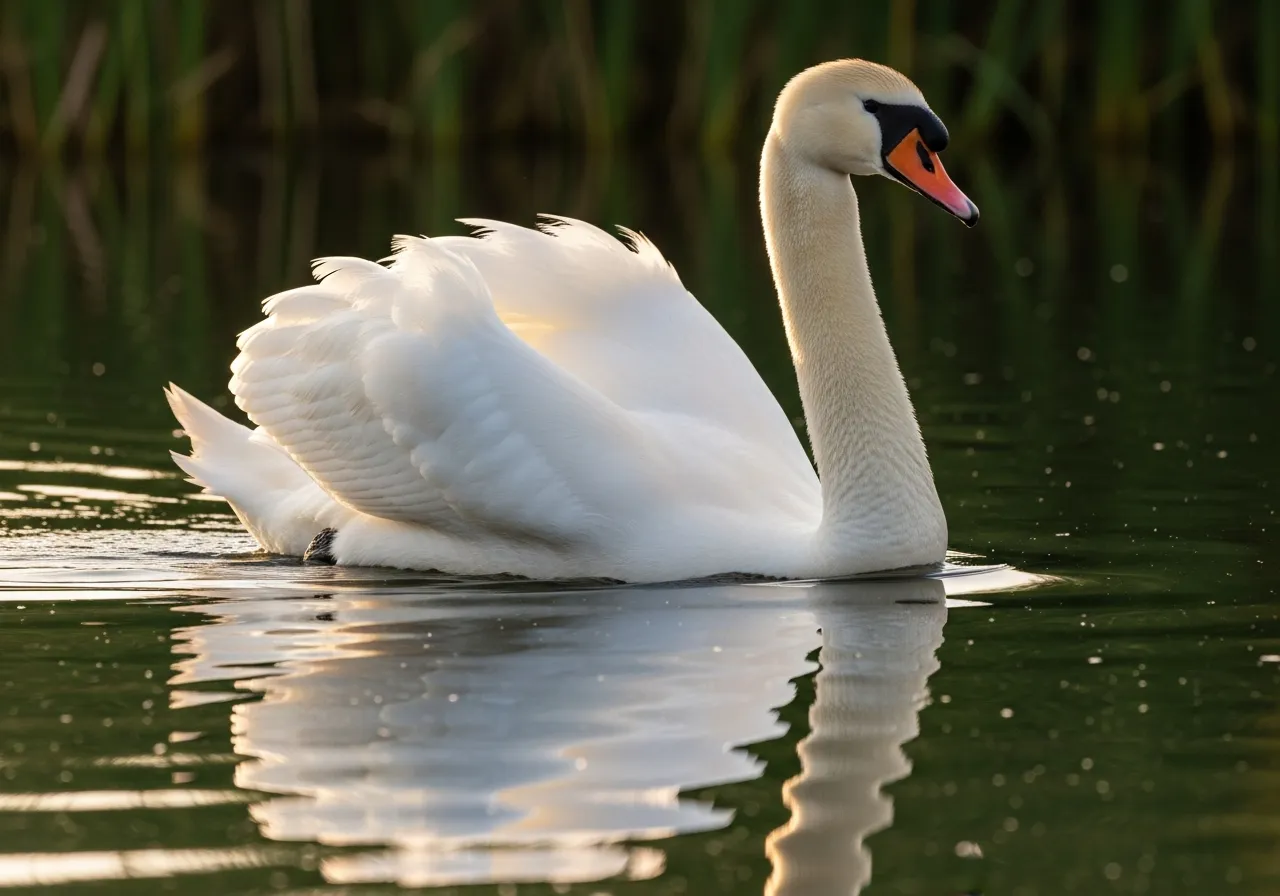
Source: Global Animal Guide (WARN)
In brief
A swan is a large, long-necked waterbird of the genus Cygnus and the biggest member of the duck and goose family. There are six living species worldwide. Swans feed mainly on aquatic plants, form strong, often lifelong pair bonds, and are renowned for their graceful appearance.
Also in Animals A to Z · Animals that start with S
By WARN Research & Conservation TeamLast updated
Swans are large, long-necked waterbirds of the genus Cygnus, the biggest members of the duck, goose and swan family. There are six living species, including the mute, whooper, black, trumpeter, tundra and black-necked swans, found across Europe, Asia, the Americas and Australia. Among the heaviest flying birds, they glide on lakes and slow rivers, feeding mostly on water plants reached by upending their long necks. Swans are celebrated for their grace and for forming strong, often lifelong pair bonds. In the UK the mute swan carries a long royal tradition, and the common species are not currently threatened, though wetland loss affects them everywhere.
6
Living species in genus Cygnus
Up to ~15 kg
Mass of the largest swans
Over 3 m
Maximum recorded wingspan
Mostly life
Duration of pair bonds
Figures sourced from Swan — Wikipedia, Mute swan — Wikipedia, Trumpeter swan — Wikipedia and other references on this page.
Swan: Quick Facts
| Common name | Swan |
|---|---|
| Genus | Cygnus |
| Living species | 6 |
| Largest species | Trumpeter and mute swans |
| Length (mute swan) | About 1.4–1.6 m |
| Weight | Up to ~15 kg in large birds |
| Wingspan | Can exceed 3 m |
| Diet | Mainly aquatic plants (herbivorous) |
| Young called | Cygnet |
| Distribution | Europe, Asia, the Americas, Australia |
Scientific Classification
| Kingdom | Animalia |
|---|---|
| Phylum | Chordata |
| Class | Aves |
| Order | Anseriformes |
| Family | Anatidae |
| Subfamily | Anserinae |
| Genus | Cygnus |
Conservation Status
- IUCN Status
- No single status applies to the genus. The widespread species, including the mute, whooper, black, trumpeter, tundra and black-necked swans, are all assessed by the IUCN as Least Concern, with several showing stable or increasing populations. Localised threats such as wetland drainage, pollution, collisions with power lines and lead poisoning still affect some populations even where the species overall is secure.
- Population
- Not assessed as a single genus; individual species range from tens of thousands to several hundred thousand mature individuals
- Trend
- Stable to increasing for most species
- Assessed
- Most recent IUCN assessments
- CITES
- Not generally listed on the CITES appendices
Because the common swan species are not threatened, swans are often a conservation success story; the main concern is protecting the wetlands they and many other waterbirds depend on.
Key Facts: Swan
- Swans (genus Cygnus) are the largest waterfowl and among the heaviest flying birds, with the trumpeter and mute swans the biggest species.
- There are six living species, ranging from the all-white northern swans to the black swan of Australia and the South American black-necked swan.
- They are largely herbivorous, feeding on aquatic vegetation reached by dipping or upending their long necks.
- Swans usually pair for life, and both parents help raise their grey cygnets, which can stay with the family for months.
- In the UK, unmarked mute swans on open water are traditionally Crown property, a custom dating back centuries.
- The common species are assessed as Least Concern, but wetland drainage, pollution and disturbance still threaten swans and other waterbirds.
What does a swan look like, and how big do they get?
Swans are unmistakable: very large waterbirds with long, slender necks, broad webbed feet and heavy bodies. The northern species, the mute, whooper, trumpeter and tundra swans, are white as adults, while the Australian black swan is sooty-black with a red bill, and the South American black-necked swan has a white body and a dark neck. Size is part of what sets swans apart from their goose and duck relatives. The mute swan typically measures around 1.4 to 1.6 metres in length, with large males reaching well over 1.5 metres and occasionally weighing more than 15 kilograms, while wingspans can exceed three metres. The trumpeter swan of North America is generally considered the largest waterfowl species, although heavy male mute swans rival it in mass. Young swans, called cygnets, hatch covered in greyish-brown down and only gradually acquire adult plumage over their first year, which is why a flock often shows a mix of pristine white birds and mottled grey juveniles.
What do swans eat and how do they live?
Swans are almost entirely herbivorous. They feed mainly on aquatic plants, taking the roots, tubers, stems and leaves of submerged and floating vegetation, and will also graze on grasses and crops in fields near water. Their long necks are a feeding adaptation, letting them reach plants on the bottom of lakes, ponds and slow rivers by dipping the head under or upending the body so the tail points skyward. They may also eat small quantities of aquatic insects and other tiny animals, particularly as growing cygnets need protein. Swans are strong fliers despite their bulk, and northern species such as the whooper and tundra swan are long-distance migrants, travelling between breeding grounds and milder wintering wetlands. On the ground and water they can be surprisingly assertive, defending nests and young vigorously. Outside the breeding season many swans gather in flocks on lakes, estuaries and reservoirs, sometimes numbering in the hundreds where food is plentiful.
Do swans really mate for life?
Swans are famous for their devotion, and the reputation is largely deserved. Pairs usually form strong, long-lasting bonds and often stay together for life, returning to the same territory year after year to breed. Both the male, called a cob, and the female, called a pen, share in raising the family: they build a large nest of vegetation near or over water, take turns incubating the eggs, and then guard and guide the cygnets together for months after hatching. This long period of parental care gives young swans a strong start. Pair bonds are not absolutely unbreakable, and separations do occur, more often after a failed breeding attempt, but lifelong fidelity is the norm rather than the exception. The image of two swans facing each other with their necks forming a heart shape has become a widespread symbol of loyalty and love, rooted in genuine, observable behaviour rather than pure myth.
Why are swans linked to the British Crown?
In Britain, the mute swan carries a centuries-old royal tradition. By long-standing custom, the reigning monarch holds the right to ownership of all unmarked mute swans swimming in open water, a status that earned the swan the nickname 'Royal Bird'. In practice this right is now exercised only along certain stretches of the River Thames and its tributaries, where the Crown shares ownership with two ancient livery companies, the Vintners and the Dyers, who were granted rights to keep swans in the fifteenth century. Each year a ceremonial count and health-check of swans on the Thames, known as Swan Upping, takes place, during which young birds are weighed, measured and assessed before being released. It is worth correcting a common myth: the monarch does not own every swan in the country, only unmarked mute swans on certain open waters. Elsewhere, swans are wild birds protected under ordinary wildlife law.
Swan vs goose: how to tell them apart
| Feature | Swan | Goose |
|---|---|---|
| Size | Largest waterfowl; very heavy | Smaller and lighter |
| Neck | Very long, often curved | Shorter, held straighter |
| Main diet | Mostly aquatic plants | More grazing on land |
| Feeding style | Dips or upends to reach underwater plants | Often grazes grass on shore |
| Pair bonds | Often lifelong | Long-lasting but more variable |
What WARN Does
WARN does not run field projects dedicated specifically to swans, which are mostly common and live well beyond the countries where our partners work; instead this guide is part of our free public education work. The wetland loss, pollution and disturbance that affect swans are the same pressures bearing down on many waterbirds and other species we do help protect, so understanding one connects to caring for all.
If this guide deepened your wonder at the natural world, supporting WARN's free education and animal-welfare work helps us keep telling these stories.
Swan: Frequently Asked Questions
How many species of swan are there?
What is a baby swan called?
Do swans mate for life?
Does the Queen or King own all swans in the UK?
Are swans dangerous or aggressive?
What do swans eat?
Where do swans live?
How long do swans live?
How big is a swan?
Sources & References
Population figures, conservation status and biological facts on this page are drawn from authoritative scientific and intergovernmental sources.
Terms used on this page
Plain-English definitions, from our wildlife and conservation glossary.
Latest Swan Stories
Quick, fact-checked reads on the swan — amazing facts, key questions and the threats it faces.
Species
Slow Loris: Why the Internet's Favourite Pet Is a Conservation Disaster
The slow loris looks like a cartoon character — and that has nearly destroyed the species. Here is the truth behind the viral videos.
Read the storySpecies
The Snow Leopard: Why the Ghost of the Mountains Is Still Vulnerable
The snow leopard is one of the most elusive big cats on earth, with an estimated 4,000-6,500 individuals across twelve range states — including Pakistan, where WARN is preparing to operate. This briefing explains why the species was downlisted from Endangered to Vulnerable in 2017 and why that is not the success story it sounds like.
Read the storyGuides
Sun Bear vs Moon Bear: The Two Most Trafficked Asian Bears
The sun bear and the Asiatic black bear (moon bear) are the two most commonly trafficked bears in Asia — for the pet trade, for traditional medicine and for bear-bile farming. Here is how to tell them apart.
Read the storyExplore more animals
Discover more animals, their habitats and their conservation status in the WARN wildlife-guide library.