Wildlife Guide · Tropical and temperate oceans worldwide — Atlantic, Pacific and Indian
Swordfish
Xiphias gladius (Linnaeus, 1758)
Billfish of the open ocean — Least Concern globally, overfished regionally.
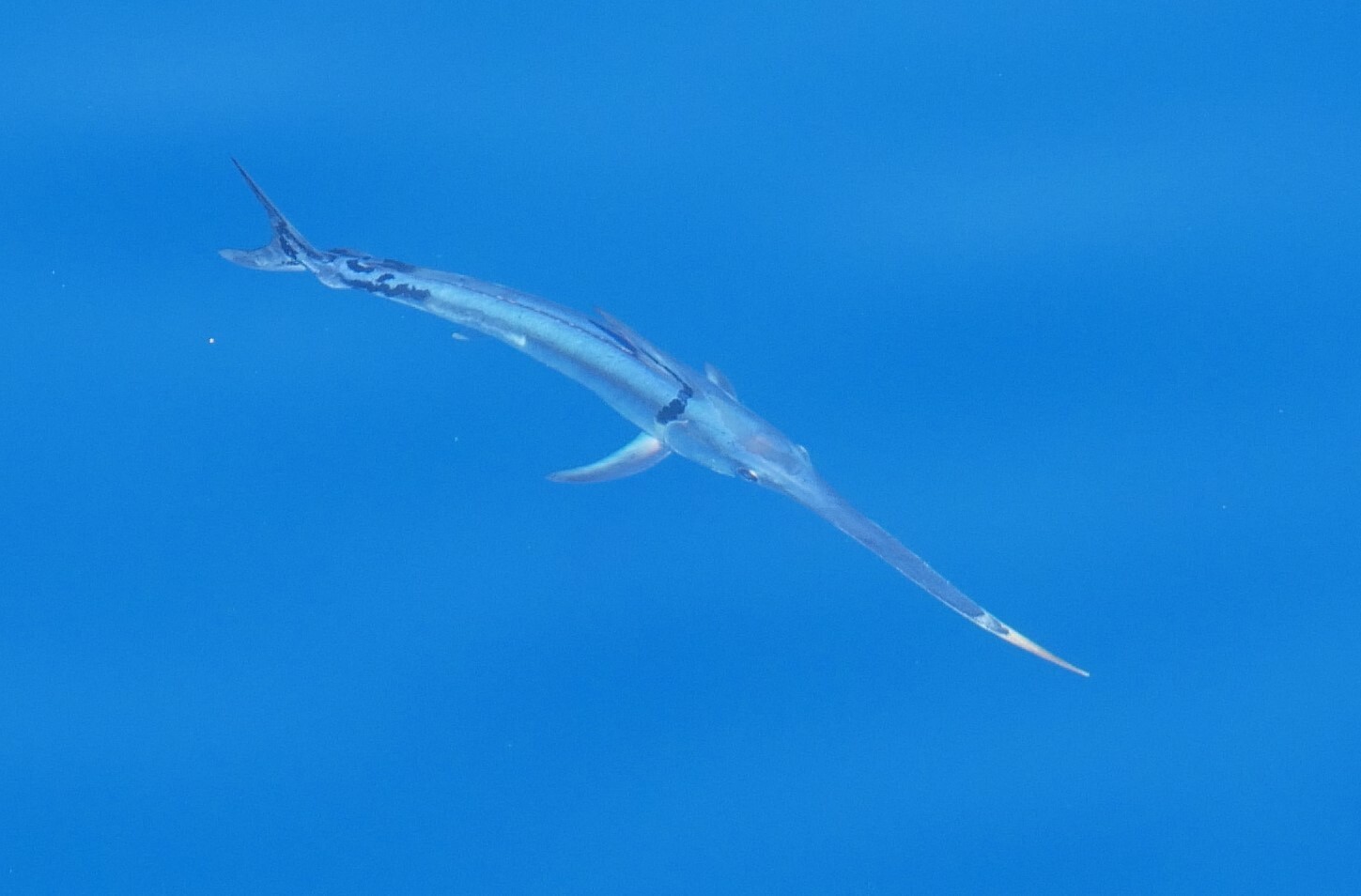
Photo: sylvain_eichhorn / Wikimedia Commons (CC BY 4.0)
In brief
The swordfish (Xiphias gladius) is a Least Concern billfish of global oceans, managed in the Atlantic but overfished in the Mediterranean; longline fisheries cause shark and turtle bycatch.
Also in Animals A to Z · Animals that start with S
By WARN Research & Conservation TeamLast updated
The swordfish is one of the ocean's most recognisable predators — a large, fast billfish named for its elongated, flat rostrum used to slash through schools of prey. Capable of depths exceeding 800 metres and speeds over 80 km/h, swordfish roam tropical and temperate seas worldwide. Listed as Least Concern by the IUCN in 2021, global populations appear stable or recovering under management in the Atlantic. Regional overfishing persists in the Mediterranean and parts of the Pacific. Longline fisheries targeting swordfish and tuna kill significant bycatch — sharks, turtles and marlin. Swordfish steaks are widely consumed; mercury accumulation in large individuals raises human health concerns.
Least Concern
IUCN Red List status (2021 assessment)
4.5 m
Maximum length including bill
800 m
Diving depth — among deepest of billfish
Not listed
CITES status
Figures sourced from IUCN Red List — Xiphias gladius, ICCAT — swordfish stock assessments, FAO — swordfish fisheries .
Swordfish: Quick Facts
| Length | Up to 4.5 m including bill |
|---|---|
| Weight | Up to 650 kg |
| Speed | Over 80 km/h |
| Diving | Over 800 m depth |
| Mediterranean | Overfished — below scientific advice |
| CITES | Not listed |
Scientific Classification
| Kingdom | Animalia |
|---|---|
| Phylum | Chordata |
| Class | Actinopterygii |
| Order | Istiophoriformes |
| Family | Xiphiidae |
| Species | Xiphias gladius (Linnaeus, 1758) |
Conservation Status
- IUCN Status
- Least Concern globally (IUCN, 2021). Mediterranean stock overfished. Bycatch of sharks and turtles on longlines.
- Population
- Atlantic stock recovered; Mediterranean and Pacific poorly assessed
- Trend
- Stable to increasing in managed Atlantic; decreasing in Mediterranean
- Assessed
- 2021
- CITES
- Not listed under CITES
Key Facts: Swordfish
- Swordfish use their bill to slash through schools of fish and squid.
- They are Least Concern globally but overfished in the Mediterranean.
- Longline fisheries targeting swordfish kill sharks, turtles and marlin as bycatch.
- Swordfish are among the fastest fish — exceeding 80 km/h in short bursts.
- Large swordfish accumulate mercury — consumption advisories apply in many countries.
- Night fishing reduces turtle bycatch compared with daytime longline sets.
The billfish predator
Xiphias gladius is the sole species in family Xiphiidae — distinct from marlin and sailfish in family Istiophoridae. The rostrum — the 'sword' — is flat, sharp-edged and roughly one-third body length. Swordfish slash sideways through schools of mackerel, herring and squid, stunning or injuring prey before swallowing.
Swordfish are endothermic — maintaining brain and eye temperatures above ambient water for sharp vision during deep dives. They descend to over 800 metres pursuing squid and deep-water fish — among the deepest-diving billfish.
Adults exceed 200 kg; the largest recorded approached 650 kg. Females grow larger than males. Lifespan reaches 15 years; maturity at 4–5 years.
Global fisheries and overfishing
Swordfish support commercial fisheries worldwide — longlines, harpoons and gillnets. The Atlantic stock — managed by ICCAT — recovered from overfishing in the 1990s to sustainable levels under quota management. The 2021 IUCN reassessment to Least Concern reflects this Atlantic recovery.
The Mediterranean stock tells a different story — chronically overfished with catches exceeding scientific advice for decades. Mediterranean swordfish are smaller and younger at capture, indicating serial depletion. Pacific and Indian Ocean stocks lack comprehensive assessment; data deficiency masks potential decline.
Drift gillnets — banned on the high seas but persisting illegally — entangle swordfish alongside whales, dolphins and sharks. Harpoon fisheries off California and the Azores catch swordfish selectively with minimal bycatch.
Bycatch on longlines
Pelagic longlines — kilometres of baited hooks set at varying depths — are the primary swordfish capture method. They also kill enormous bycatch. Blue sharks, shortfin mako and other shark species dominate longline catch — often finned and discarded. Loggerhead and leatherback turtles drown on hooks; seabirds take baits near the surface.
Research shows circle hooks and fish bait reduce turtle capture compared with J-hooks and squid bait. Night setting — deploying lines after dusk — reduces turtle bycatch substantially. Mandatory observer coverage improves compliance but remains below 100% on most fleets.
Billfish bycatch is significant — blue marlin, striped marlin and sailfish caught incidentally on swordfish and tuna longlines. Many are released dead or discarded.
Mercury and consumption
Swordfish accumulate methylmercury — a neurotoxin biomagnified through food chains. Large, old individuals carry concentrations exceeding safe consumption limits set by the US FDA and European food safety authorities. Pregnant women and children are advised to avoid swordfish entirely.
Mercury enters oceans from coal burning, mining and industrial discharge. Climate change may alter mercury methylation rates in marine systems. Swordfish, as apex predators, concentrate toxins over decades of feeding.
Sustainable consumption means choosing smaller fish, limiting portion frequency and preferring harpoon-caught or well-managed Atlantic stock. Certification programmes help identify lower-impact sources.
Conservation and responsible fishing
Global Least Concern status should not obscure regional overfishing and bycatch crises. Mediterranean swordfish need stricter quotas and enforcement. Longline fleets must adopt circle hooks, night setting and shark retention bans.
Marine protected areas and time-area closures reduce fishing pressure on spawning aggregations. Electronic monitoring and vessel tracking combat IUU fishing.
Readers can reduce impact by choosing harpoon-caught or certified swordfish, avoiding Mediterranean stock, and supporting fisheries reform that addresses shark bycatch. WARN publishes this swordfish guide as free public education about open-ocean fisheries and their hidden toll on sharks and turtles.
What WARN Does
WARN publishes this swordfish guide as free public education. Open-ocean fisheries affect swordfish, sharks, turtles and marlin — understanding bycatch helps readers make informed seafood choices.
If this guide helps you understand wildlife and the pressures it faces, a gift to WARN supports habitat protection and free public education in our partner countries.
Swordfish: Frequently Asked Questions
Are swordfish endangered?
Do swordfish stab prey with their bill?
What is swordfish bycatch?
Is swordfish safe to eat?
What do swordfish eat?
Where do swordfish live?
Are swordfish dangerous?
How long do swordfish live?
How big is a swordfish?
Sources & References
Population figures, conservation status and biological facts on this page are drawn from authoritative scientific and intergovernmental sources.
Terms used on this page
Plain-English definitions, from our wildlife and conservation glossary.
Explore more animals
Discover more animals, their habitats and their conservation status in the WARN wildlife-guide library.