Wildlife Guide · Americas & Africa
Tarantula
Family Theraphosidae
Ancient, gentle giants — the world's mightiest spiders are more at risk than most people realise.
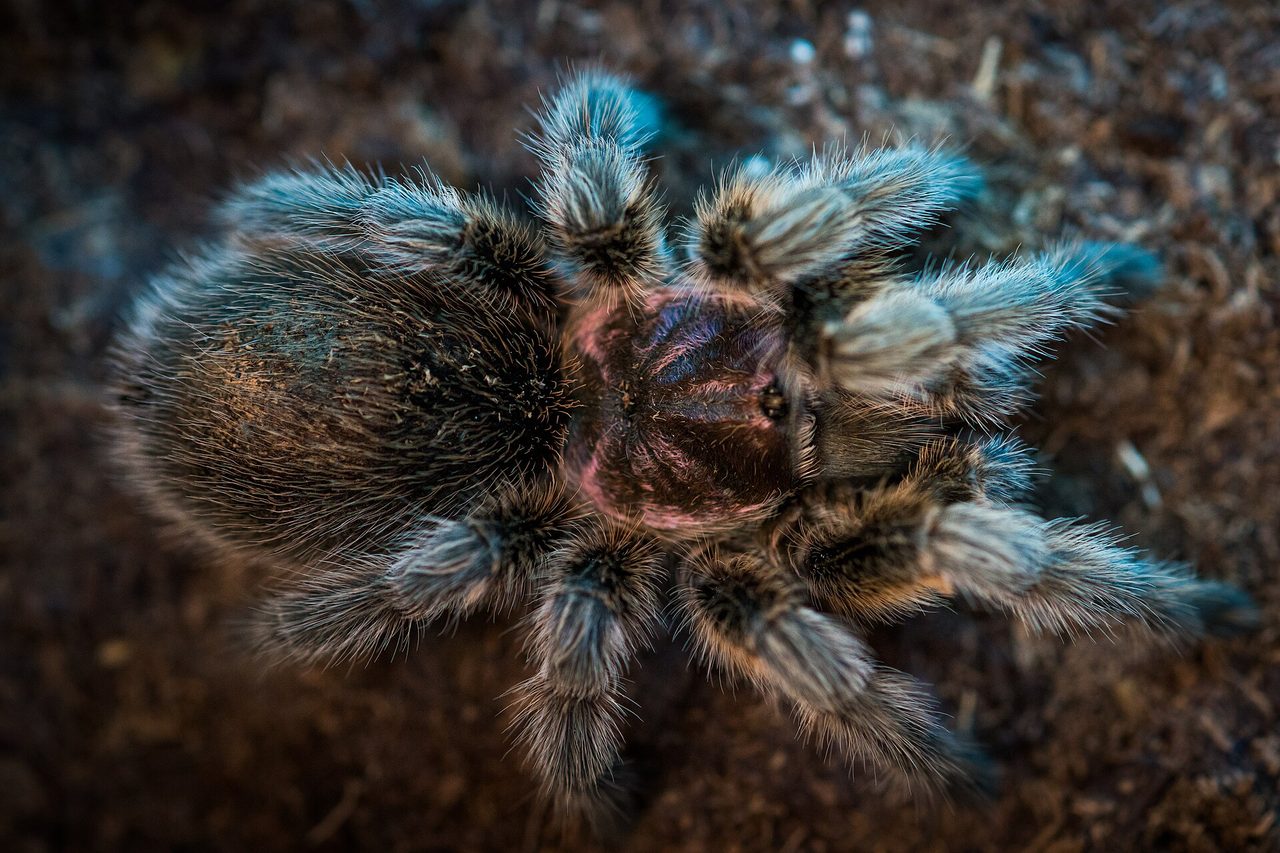
Photo: Fucesa / Wikimedia Commons (CC BY-SA 4.0)
In brief
Tarantulas are large, hairy spiders of the family Theraphosidae, with over 1,180 species found worldwide; while most are not individually evaluated by the IUCN, species such as Poecilotheria tarantulas from India and Sri Lanka are listed as Critically Endangered due to habitat loss and the illegal pet trade.
Also in Animals A to Z · Animals that start with T
By WARN Research & Conservation TeamLast updated
Tarantulas are the gentle giants of the spider world — massive, hairy, and armed with a fearsome reputation that science has consistently debunked. Belonging to the family Theraphosidae, they encompass more than 1,180 valid species across roughly 182 genera, making them one of the most species-rich spider families on Earth. Found on every continent except Antarctica, they range from the rainforests of Brazil and Colombia to the dry scrublands of Mexico, the cloud forests of India and Sri Lanka, the savannas of Africa, and the arid outback of Australia. Despite their imposing size — the record-holding Goliath birdeater (Theraphosa blondi) can weigh over 175 g and span 28 cm leg-tip to leg-tip — most tarantulas pose little danger to humans. Their venom is typically milder than a bee's sting, yet these remarkable arachnids are losing ground fast to deforestation, climate change, and a largely unregulated global pet trade.
1,180+
Valid species worldwide
28 cm
Leg span of the Goliath birdeater
25 years
Maximum lifespan of female tarantulas
~3%
CITES-protected tarantula species
Figures sourced from World Spider Catalog — Theraphosidae species list, Frontiers in Arachnid Science — History of Theraphosidae systematics (2024), NCBI/PMC — Species conservation profiles of tarantula spiders listed on CITES and other references on this page.
Tarantula: Quick Facts
| Total species | ~1,180–1,192 recognised (as of 2025) |
|---|---|
| Largest species | Goliath birdeater (Theraphosa blondi) — up to 175 g, 28 cm leg span |
| Female lifespan | 10–25 years in the wild; up to 40 years in captivity |
| Male lifespan | 3–7 years; often dies shortly after mating |
| Egg clutch size | ~50 to several hundred eggs per sac (varies greatly by species) |
| Venom potency | Generally milder than a bee sting for most species |
| Primary defence | Urticating hairs (New World) or fast movement/bite display (Old World) |
| CITES protection | ~3% of species listed on Appendix II (Brachypelma spp. and all Poecilotheria spp.) |
Scientific Classification
| Kingdom | Animalia |
|---|---|
| Phylum | Arthropoda |
| Class | Arachnida |
| Order | Araneae |
| Suborder | Opisthothelae |
| Infraorder | Mygalomorphae |
| Family | Theraphosidae |
Conservation Status
- IUCN Status
- Varies — most Not Evaluated; key genera Critically Endangered
- Population
- Unknown globally; some Poecilotheria species have fewer than 500 individuals
- Trend
- Declining for assessed species due to habitat loss and trade
- Assessed
- 2024
- CITES
- Appendix II (all Brachypelma spp. and all Poecilotheria spp.; also Aphonopelma pallidum and select Sericopelma)
Only ~3% of Theraphosidae species carry CITES protection; all Poecilotheria were added to Appendix II at CITES CoP18 (2019). The majority of species remain tradeable without permit or monitoring requirements.
Did you know?
The Goliath birdeater tarantula produces a hissing sound audible from up to 5 metres away by stridulating — rubbing specialised bristles on its pedipalps and first two legs together — warning off predators without spending a drop of venom.
Key Facts: Tarantula
- Tarantulas belong to the family Theraphosidae, which contains over 1,180 species in roughly 182 genera distributed across tropical and subtropical regions worldwide.
- Most tarantula venom is no more dangerous to healthy adults than a bee sting; their bark is far worse than their bite.
- New World tarantulas defend themselves by flicking barbed urticating hairs from their abdomen — a trait entirely absent in Old World species, which rely instead on speed and a more potent defensive bite.
- Females of some species can live 25 years or more in the wild, while males rarely survive past 7 years, often dying shortly after mating.
- The Indian and Sri Lankan ornamental tarantulas of genus Poecilotheria — around 15 recognised species — are among the world's most threatened spiders, with some numbering only a few hundred individuals due to deforestation and wild collection.
- Only around 3% of tarantula species carry any CITES protection, leaving many species vulnerable to an inadequately monitored global pet trade that has shipped tens of thousands of wild-caught specimens per decade.
What is a tarantula and how is it classified?
Tarantulas are mygalomorph (primitive) spiders belonging to the family Theraphosidae within the order Araneae. Unlike the more familiar araneomorph spiders, mygalomorphs have fangs that strike downward in a parallel motion rather than closing like pincers, and they retain two pairs of book lungs for breathing. As of late 2025, the World Spider Catalog recognises approximately 1,180 to 1,192 valid species placed in around 182 to 186 genera, with new species still being formally described each year; around 650 of those species are found in the Americas alone. Twelve to thirteen extant subfamilies are widely accepted, with a landmark 2019 molecular phylogenetic study using transcriptome data from 99 exemplars across 68 genera helping to clarify deep evolutionary relationships within the family. The name 'tarantula' itself is a misnomer borrowed from the Italian city of Taranto, where a large wolf spider (Lycosa tarantula) was historically — and incorrectly — blamed for causing 'tarantism,' a hysterical dancing condition. True tarantulas were only later assigned the name as European naturalists encountered these imposing spiders in the Americas and elsewhere. Within Theraphosidae, species range enormously in size, colour, temperament, and ecological niche, from tiny, cryptic burrowers in desert soils to large, jewel-coloured arboreal specialists living high in tropical forest canopy.
Where do tarantulas live and how do they behave?
Tarantulas occupy an extraordinary range of habitats. Terrestrial species — the majority — excavate silk-lined burrows in soil, using trip-lines of silk radiating outward from the entrance to detect approaching prey or threats through vibrations. Arboreal species, including the ornamental tarantulas of genus Poecilotheria and the Avicularia 'pinktoe' tarantulas of South America, construct silken tube retreats in tree hollows and bark crevices. A third group makes use of rock faces, riverbanks, and even man-made structures. Because tarantulas lack ears entirely, vibration is their primary window on the world: thousands of microscopic sensory setae covering their legs and body detect air currents and ground vibrations with remarkable precision. Although they possess eight eyes, most species use vision only for detecting broad motion and changes in light. Tarantulas are ambush hunters, lying in wait for large insects, centipedes, millipedes, and other arthropods; the largest species occasionally take small frogs, lizards, or mice. Prey is seized with the chelicerae, venom is injected to immobilise and begin pre-digesting tissue, and the liquefied meal is then consumed. Females produce egg sacs wrapped in tough silk, containing anywhere from around 50 to several hundred eggs depending on the species, which hatch after a period of several weeks to a few months into spiderlings that initially cluster in the maternal burrow before dispersing.
How do tarantulas defend themselves?
Tarantulas have evolved two markedly different defensive strategies depending on whether they originate from the New World or the Old World. New World species from the Americas carry a unique arsenal: urticating hairs — not true hairs but barbed, microscopic setae — packed onto the dorsal abdomen. When threatened, the spider rapidly kicks its hindlegs against its abdomen, launching a cloud of these irritants toward the aggressor. The barbed tips embed in skin, eyes, and mucous membranes, causing intense itching, inflammation, and in some cases severe eye damage (ophthalmia nodosa). Urticating hairs are absent at birth and develop progressively with each moult, becoming more potent with age. Old World tarantulas — from Africa, Asia, and Australia — lack urticating hairs entirely, and compensate with faster movement, more conspicuous warning postures, and, in genera such as Poecilotheria and Cyriopagopus, venom that produces more pronounced systemic effects than their New World counterparts, including muscle cramps and fever, though fatalities in healthy adults remain unrecorded. Both groups perform a threat display (rearing up on hindlegs, exposing the fangs) as a last warning before striking. Silk also plays a quiet defensive role: burrow-dwelling species line their tunnel entrances with silk and urticating hairs, creating a tactile alarm system against parasitic wasps such as Pepsis — the legendary 'tarantula hawks' — which paralyse tarantulas and lay eggs inside them.
Why are some tarantula species endangered?
The conservation picture across Theraphosidae is deeply uneven. The vast majority of the family's 1,180-plus species have never been formally assessed by the IUCN, leaving their status unknown. Among those that have been evaluated, the picture is alarming. The Poecilotheria genus — around 15 ornamental tree spiders endemic to India and Sri Lanka — contains several species listed as Critically Endangered on the IUCN Red List, including Poecilotheria hanumavilasumica, which is confined to fragmented forest patches with an estimated total population of fewer than 500 individuals. In Brazil, arboreal species of Pachistopelma and Typhochlaena face Critically Endangered listings tied to the Atlantic Forest, which has been reduced to approximately 7–16% of its original extent. Colombia, one of the world's tarantula diversity hotspots, faces intensifying habitat pressure from agricultural expansion. The illegal pet trade compounds habitat pressures dramatically: U.S. imports of Poecilotheria tarantulas rose from roughly 2,700 individuals between 1995 and 1999 to around 16,500 between 2013 and 2017. Despite this surge, only around 3% of tarantula species carry any CITES protection — Appendix II listings covering all Brachypelma species and the entire Poecilotheria genus (the latter added at the 2019 CITES CoP18 conference) — leaving the majority of species tradeable without any permit or monitoring. Deforestation for agriculture, road construction, urbanisation, pesticide use, and intentional killing driven by unfounded fear further reduce populations of tarantulas whose slow reproductive rates and highly specific habitat requirements make recovery difficult.
What ecological role do tarantulas play?
Tarantulas are far more than curiosities; they are keystone invertebrate predators whose removal can cascade through entire ecosystems. As voracious hunters of large insects — including agricultural pests such as grasshoppers, crickets, and beetles — they function as free-of-charge pest controllers in tropical and subtropical ecosystems. By suppressing insect populations, they reduce pressure on plants and help maintain plant community structure. Burrowing tarantulas contribute to soil health in a manner analogous to earthworms: their tunnels aerate compacted soil, improve water infiltration, and facilitate nutrient cycling. Their silk retreats — whether burrow linings or arboreal tube tents — create microhabitats colonised by small invertebrates, fungi, and even certain commensal organisms, quietly expanding local biodiversity. In the opposite direction, tarantulas are prey for a suite of specialist predators: Pepsis wasps, large centipedes, scorpions, coatis, skunks, ground-feeding birds, and parasitoid flies. The spider-hunting pompilid wasps in particular have co-evolved elaborate behaviours specifically to overcome tarantula defences, representing a remarkable evolutionary arms race. The loss of large tarantula populations therefore simultaneously removes a predation pressure on prey species and a food resource for specialist predators, creating ripples that ultimately affect vegetation, soil structure, and the broader web of forest life. Their role is especially significant in tropical rainforests — among the most biodiverse and most threatened ecosystems on the planet.
What WARN Does
WARN does not currently operate tarantula-specific rescue or field projects; this guide is offered as free educational content to help the public understand and appreciate these misunderstood arachnids. That said, the rainforest habitats of Brazil and Colombia — both WARN partner countries — shelter extraordinary tarantula diversity, and protecting those forests benefits countless species, tarantulas included. Every action that defends tropical forest habitat helps secure a future for the hundreds of spider species that depend on it.
The forests that shelter the rarest tarantulas — from the Atlantic Forest fragments of Brazil to the cloud forests of Colombia — are the same forests WARN's partners are working to protect. Supporting habitat conservation supports every species that depends on it.
Tarantula: Frequently Asked Questions
Are tarantulas dangerous to humans?
How long do tarantulas live?
How many species of tarantula are there?
Do tarantulas use webs to catch prey?
Why are Poecilotheria tarantulas so threatened?
Can tarantulas be kept as pets legally?
What do tarantulas eat?
Where do tarantulas live?
How big is a tarantula?
Sources & References
Population figures, conservation status and biological facts on this page are drawn from authoritative scientific and intergovernmental sources.
- World Spider Catalog — Theraphosidae species list
- Frontiers in Arachnid Science — History of Theraphosidae systematics (2024)
- NCBI/PMC — Species conservation profiles of tarantula spiders listed on CITES
- ScienceDirect — Poecilotheria hanumavilasumica, Critically Endangered tarantula
- Smithsonian's National Zoo — Goliath bird-eating tarantula
- US Fish & Wildlife Service — Tarantulas (Theraphosidae)
- National Geographic — Inside the illegal tarantula market
- Federal Register — Endangered Species Status for Five Poecilotheria Tarantula Species (2018)
- CITES CoP18 Prop. 46 — Inclusion of all Poecilotheria in Appendix II (2019)
- Foley et al. (2019) — Tarantula phylogenomics: transcriptome data sheds light on urticating setae evolution
Terms used on this page
Plain-English definitions, from our wildlife and conservation glossary.
Latest Tarantula Stories
Quick, fact-checked reads on the tarantula — amazing facts, key questions and the threats it faces.
Species
Slow Loris: Why the Internet's Favourite Pet Is a Conservation Disaster
The slow loris looks like a cartoon character — and that has nearly destroyed the species. Here is the truth behind the viral videos.
Read the storySpecies
The Snow Leopard: Why the Ghost of the Mountains Is Still Vulnerable
The snow leopard is one of the most elusive big cats on earth, with an estimated 4,000-6,500 individuals across twelve range states — including Pakistan, where WARN is preparing to operate. This briefing explains why the species was downlisted from Endangered to Vulnerable in 2017 and why that is not the success story it sounds like.
Read the storyGuides
Sun Bear vs Moon Bear: The Two Most Trafficked Asian Bears
The sun bear and the Asiatic black bear (moon bear) are the two most commonly trafficked bears in Asia — for the pet trade, for traditional medicine and for bear-bile farming. Here is how to tell them apart.
Read the storyExplore more animals
Discover more animals, their habitats and their conservation status in the WARN wildlife-guide library.