Wildlife Guide · Indonesia & Malaysia
Tiger
Panthera tigris (Linnaeus, 1758)
Asia's largest cat — Endangered as a species, Critically Endangered in WARN's range countries.
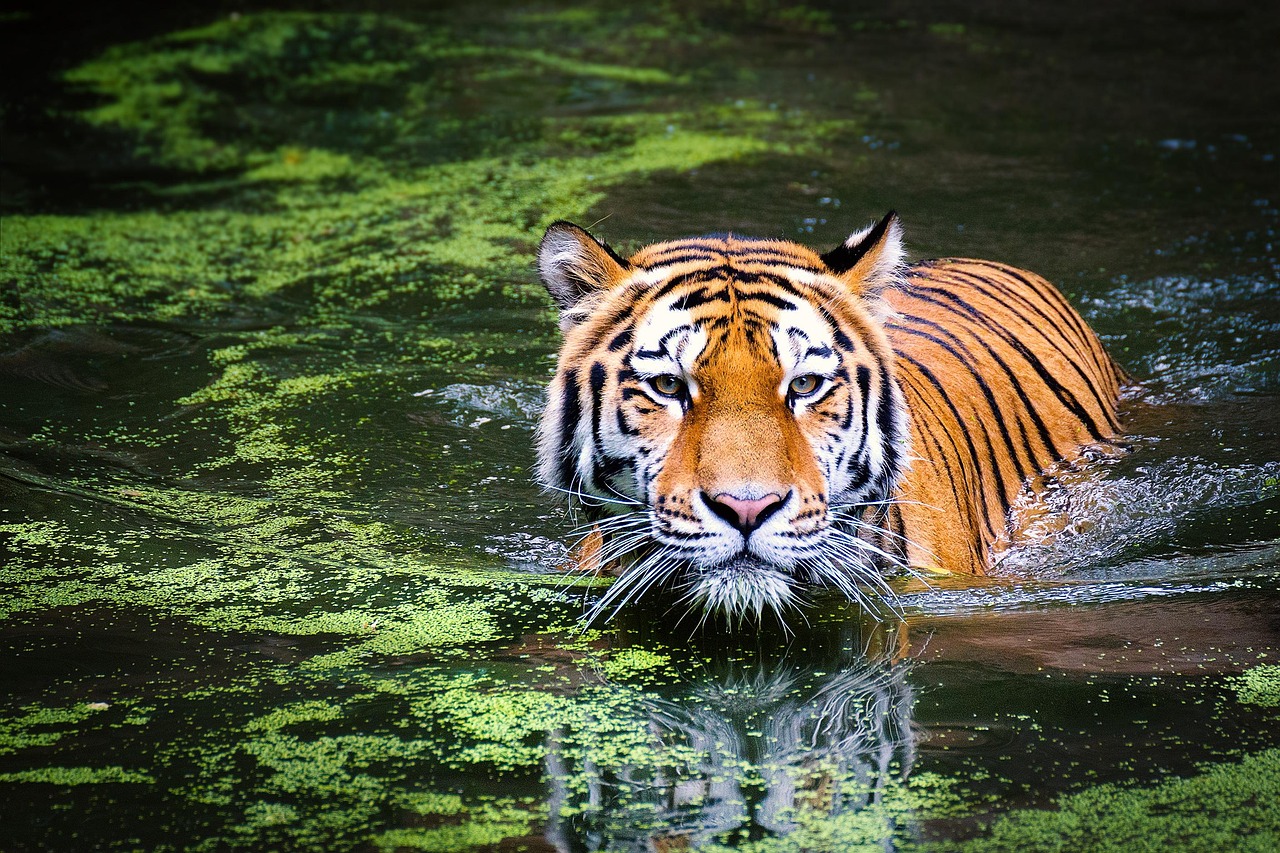
Photo: Nyonyofoto / Wikimedia Commons (CC BY-SA 4.0)
In brief
A tiger (Panthera tigris) is the largest living cat, listed Endangered by the IUCN in 2022. Sumatran and Malayan tigers are Critically Endangered. Fewer than 600 Sumatran tigers and about 80–120 mature Malayan tigers remain. Tigers are not lions. They are solitary forest hunters, not social like African lions.
Also in Animals A to Z · Animals that start with T
How you can help
You can symbolically adopt a tiger from £5 a month — a donation to WARN’s wild tiger appeal, with a personalised certificate you can keep or give as a gift — or give once to where it is needed most.
By WARN Research & Conservation TeamChecked against IUCN Red List Panthera tigris 2022 assessment and CITES Appendix ILast updated
The tiger (Panthera tigris) is the largest living cat, a striped solitary hunter native to Asia. The species is Endangered (IUCN 2022). Sumatran and Malayan tigers — the populations in Indonesia and Malaysia — are Critically Endangered, with only a few hundred animals between them. This page is the species guide: biology, subspecies and why snares and trade matter. The related appeal explains potential support and the current funding status; this guide does not confirm a WARN grant. Symbolic adoption: adopt a tiger. Donor path: donate tiger conservation. Side-by-side with lions: lion vs tiger.
Looking for something specific?
These notes clarify the guide’s scope, common mix-ups and related information.
- A named zoo tiger with photo updates. WARN does not offer that.
- India or Russian Far East fieldwork. The related appeal explains potential support and the current funding status; this guide does not confirm a WARN grant.
- Treating every tiger as if it were already extinct. The species is Endangered, not Extinct in the Wild.
- Volunteer snare-cutting trips or posting parcels — use tiger appeal.
< 600
Wild Sumatran tigers remaining
~80–120
Mature Malayan tigers (IUCN)
Endangered
Species listing (IUCN 2022)
~100 days
Gestation before cubs are born
Figures sourced from IUCN Red List — Panthera tigris (2022, Endangered), IUCN Red List — Malayan tiger (P. t. jacksoni), CITES — Appendices (Panthera tigris, Appendix I) and other references on this page.
Tiger: Quick Facts
| Scientific name | Panthera tigris |
|---|---|
| Lifespan | ~10–15 years in the wild |
| Gestation | ~100 days |
| Litter | Typically 2–4 cubs |
| Baby name | Cub |
| CITES | Appendix I |
Scientific Classification
| Kingdom | Animalia |
|---|---|
| Phylum | Chordata |
| Class | Mammalia |
| Order | Carnivora |
| Family | Felidae |
| Genus | Panthera |
| Species | Panthera tigris |
Conservation Status
- IUCN Status
- Endangered (species, 2022); Critically Endangered (Sumatran and Malayan subspecies)
- Population
- Fewer than 600 wild Sumatran tigers; roughly 80–120 mature Malayan tigers; a few thousand globally
- Trend
- Decreasing in the 2021 global assessment, published in 2022
- Assessed
- 15 December 2021 (species; published 2022)
- CITES
- Appendix I
The species badge understates Sumatran and Malayan risk. The related appeal explains potential support and the current funding status; this guide does not confirm a WARN grant.
Where these figures come from
The main Red List record assesses Panthera tigris globally. Population figures for individual countries or subspecies describe different scopes.
Assessment records (1)
-
Tiger · Endangered
Panthera tigris · Global species assessment
15 December 2021; published in 2022
IUCN tiger assessment
Population sources and dates
-
Wild tigers: 3,726–5,578 individuals, excluding cubs
Global estimate used in the species assessment
2021 assessment, published in 2022; underlying national surveys cover different years
The assessment separately estimates 2,608–3,905 mature individuals. These ranges must not be added together or presented as a live 2026 census.
IUCN tiger assessment
An assessment date records when extinction risk was evaluated. A survey period records when population data were collected; publication can follow later. The date this guide was updated is separate from all three.
Did you know?
A tiger's stripe pattern is unique, and the same pattern is printed on the skin beneath the fur.
Key Facts: Tiger
- Panthera tigris is Endangered (IUCN 2022). Sumatran and Malayan tigers are Critically Endangered.
- Fewer than 600 Sumatran tigers and about 80–120 mature Malayan tigers remain.
- Tigers are solitary ambush hunters. Lions are the social big cat. See /compare/lion-vs-tiger/.
- Poaching, snares, plantation habitat loss and prey depletion drive the decline.
- The related appeal explains potential support and the current funding status; this guide does not confirm a WARN grant.
- Figures are illustrations, not a named-tiger invoice.
How to use this tiger species guide
Match the query to the right WARN page. This URL is species facts: what a tiger is, how many remain, Sumatran versus Malayan, and the lion comparison. Zoo visits, India reserves and parcel volunteering are different jobs. Use the table and the links below rather than mixing those intents.
- 1
Confirm the goal
Stay here for biology and status. The related appeal explains potential support and the current funding status; this guide does not confirm a WARN grant. India and Siberia are education on this page, not WARN grants.
- 2
Compare subspecies or lions if that is the query
Use the on-page table for Sumatran versus Malayan versus mainland. For lion versus tiger, open lion vs tiger.
- 3
Do not confuse Endangered with Critically Endangered
The species is Endangered. Sumatran and Malayan tigers are Critically Endangered. Those are different IUCN badges.
- 4
Help through partner grants, not parcels
Give at tiger appeal or donate tiger conservation. Do not invent a price for one snare pulled.
What is a tiger?
A tiger is a large wild cat, Panthera tigris, native to Asia. It is the largest living felid. Every living tiger — Bengal, Amur, Sumatran, Malayan — is one species. The IUCN listed the species Endangered in 2022. Several subspecies are far closer to extinction.
Tigers are solitary, territorial ambush hunters with unique stripe patterns, including on the skin. They swim more readily than most cats. A baby is a cub. A group is rarely a social pride.
This page is the species encyclopaedia. Lion comparison: lion vs tiger. WARN's appeal: tiger appeal.
The related appeal explains potential support and the current funding status; this guide does not confirm a WARN grant. It does not run a tiger reserve and does not place cubs in UK homes.
How many tigers are left in the wild?
Globally only a few thousand wild tigers survive — the appeal figure "fewer than 5,000" matches that order of magnitude. Among the rarest, fewer than 600 Sumatran tigers remain in Indonesia, and the IUCN estimates about 80–120 mature Malayan tigers in Peninsular Malaysia.
Mainland populations in India are larger than those two, which is why a global total can sound less desperate than a Sumatran total. Both facts can be true.
Counts are estimates. Camera-trap surveys move. Do not treat a round number as a census of named animals.
WARN does not publish a weekly headcount. Programme work is snares, conflict and trade — tiger appeal.
Are tigers endangered?
Yes. The species Panthera tigris is Endangered (IUCN 2022). Sumatran tigers (P. t. sondaica) and Malayan tigers (P. t. jacksoni) are Critically Endangered. That is one step more severe than the species badge. Tigers still breed in forests; they are not Extinct in the Wild.
Extinct in the Wild is a different category. Tigers still breed in forests. The honest urgency is small, fragmented populations losing animals to snares and trade.
CITES Appendix I bans commercial international trade in tigers. Illegal trade continues.
This page will not rank wildlife NGOs. It will not pretend a UK gift buys a named wild tiger.
How is a Sumatran tiger different from a Malayan tiger?
Both are Critically Endangered subspecies of Panthera tigris. Sumatran tigers live only on Sumatra, Indonesia, and are the smallest surviving tigers. Malayan tigers live in Peninsular Malaysia, with roughly 80–120 mature animals. Mainland tigers (for example Bengal) are typically larger.
They are not different species. They do not need a fake "which is rarer" trophy. Both are in The related appeal explains potential support and the current funding status; this guide does not confirm a WARN grant.
Habitat loss to oil palm and pulp, plus snaring, hit both. Prey depletion follows.
See the comparison table on this page. Do not mix them up with lions or leopards.
How long do tigers live?
Wild tigers usually live about 10–15 years. Animals in managed care can live around 20 years. Poaching and snares cut many lives shorter than biology would allow. Small, fragmented populations cannot absorb those adult deaths. WARN does not run a UK tiger collection.
Cubs stay with the mother for about two years while they learn to hunt. Litters are typically two to four after roughly 100 days' gestation.
Lifespan is not an IUCN generation length you can ignore. Small populations cannot absorb adult deaths.
This is not a zoo-longevity advert. WARN does not operate a UK tiger collection.
How long are tigers pregnant?
Gestation is about 100 days — roughly three months. Litters are typically two to four cubs. Females raise cubs alone. That is slower than a domestic cat and far slower than a rodent, which is why poaching of breeding females collapses a forest.
If you searched because of a cub in the news, the field job is keeping the mother alive and the forest connected, not flying the cub to Britain.
Speak to a veterinary specialist for any captive-animal question. This guide does not replace clinical advice.
Programme context: tiger appeal.
What do tigers eat?
Tigers are carnivores. Wild boar and deer make up most of the diet, plus smaller mammals and sometimes larger prey. They hunt mainly by night, stalking and rushing rather than running for kilometres. When prey is snared out of a forest, conflict with livestock rises.
When prey is snared out of a forest, tigers starve or turn to livestock, and people retaliate. Prey recovery is tiger conservation, not a side issue.
Do not post meat from Britain to a partner. Give at tiger appeal so partners buy locally.
Tigers are not vegetarians and not scavenger-only. They are ambush predators.
Are tigers dangerous to people?
Tigers can kill people. They generally avoid humans. Conflict rises where forests shrink, prey is depleted and livestock graze the edge. That is a coexistence and patrol problem, not a reason to treat every tiger as a man-eater. Location matters: a Siberian incident is not a Sumatra programme report.
Lions have a different social hunting story. Do not copy lion-attack headlines onto Sumatran tigers.
The related appeal explains potential support and the current funding status; this guide does not confirm a WARN grant. It is not a promise that gifts stop every incident.
If you asked after a viral video, read the location. A Siberian incident is not a Sumatra programme report.
How is a tiger different from a lion?
Tigers are solitary forest hunters with stripes, listed Endangered. Lions are social savanna cats with prides and manes on males, listed Vulnerable. Tigers swim readily. Lions live in groups. They are different species in the same genus, Panthera. A liger is a captive hybrid, not a wild conservation target.
A liger is a captive hybrid, not a wild conservation target.
Full comparison: lion vs tiger. Lion biology: lion. WARN's lion appeal geography is Kenya, Tanzania and South Africa — not interchangeable with Sumatra.
Do not donate to the tiger appeal expecting African pride work, or the reverse.
Why are tigers poached?
Skins, bones and other parts enter illegal luxury and medicine markets. Wire snares set for other animals maim tigers and their prey indiscriminately. Even a few adult deaths can collapse a tiny population. CITES Appendix I has not made that trade vanish.
CITES Appendix I does not make the trade vanish. Patrols, snare removal, demand reduction and prosecutions do the slow work.
The related appeal explains potential support and the current funding status; this guide does not confirm a WARN grant. It does not claim to police every Asian market.
Read donate tiger conservation before you pay. No named-tiger invoice.
Can tigers swim?
Yes. Tigers are strong, willing swimmers, unusual among big cats. They enter rivers to cool off, to hunt, and to cross between forest patches. Stripes continue onto the skin. Swimming is not proof they are semi-aquatic like otters or seals.
Swimming is not proof they are "semi-aquatic" like otters. It is one reason fragmented Sumatran forests still need intact riverine cover.
A viral pool video is not a welfare standard. Captive tigers in swimming shows are a different ethical job from wild forest swimming.
This fact is biology, not a fundraising product.
How can I help tigers?
Fund partner-led anti-poaching, snare removal and conflict response in Indonesia and Malaysia rather than posting parcels or volunteering untrained. Give at tiger appeal or donate tiger conservation.
Do not invent a unit cost for one snare pulled or one named tiger. Appeal figures are illustrations. Symbolic adoption: adopt a tiger.
US donors: WARN is not a 501(c)(3). See adopt a tiger us.
If you want a UK zoo visit, stop here. If you want field grants, use the appeal URLs.
Sumatran vs Malayan vs mainland tigers
| Feature | Sumatran tiger | Malayan tiger | Mainland (e.g. Bengal) |
|---|---|---|---|
| Subspecies | P. t. sondaica | P. t. jacksoni | P. t. tigris |
| Range | Sumatra, Indonesia | Peninsular Malaysia | India and mainland Asia |
| IUCN status | Critically Endangered | Critically Endangered | Endangered (species level) |
| Appeal scope and funding status | Yes — partner grants | Yes — partner grants | Education only on this site |
What WARN Does
WARN publishes this guide for education and is developing support through assessed animal-welfare grants. A species range, source citation or photograph does not establish a recipient or funding agreement. Check /about/where-your-money-goes/#grant-register for published grant and payment records; records not yet published must not be read as zero activity. Review /appeals/tigers/ separately for the appeal purpose and terms.
A gift at /appeals/tigers/ helps fund partner snare removal and conflict response where Sumatran and Malayan tigers survive. Illustrations, not a named-tiger invoice. Not India or Russia field grants.
How can I help save the tiger?
Explore practical ways to support the tiger, from everyday choices and sharing reliable information to reviewing a related appeal before giving.
Explore ways to support
Read the related appeal’s purpose, recipient status and fund terms. Choose an affordable gift after checking what is proposed and what has been reported.
Ease the pressures
Avoid the wildlife trade and souvenirs, never buy wild animals as pets, and choose sustainable, habitat-friendly products — the threats behind the tiger's decline fall when demand does.
Spread the word
Share accurate, sourced information about the tiger. Wider awareness is what turns concern into lasting protection.
Tiger: Frequently Asked Questions
How can I help save the tiger?
What is a tiger?
How many tigers are left in the wild?
Are tigers endangered?
How is a Sumatran tiger different from a Malayan tiger?
How long do tigers live?
How long are tigers pregnant?
What do tigers eat?
Are tigers dangerous to people?
How is a tiger different from a lion?
Why are tigers poached?
Can tigers swim?
How can I help tigers?
Sources & References
Population figures, conservation status and biological facts on this page are drawn from authoritative scientific and intergovernmental sources.
Related Rescue Guides
Selected guides that explain this animal’s rescue, habitat needs or ways to help. Check each appeal for its current funding status.
Wildlife rescue · Tigers
Donate to Tiger Conservation
You can donate to tiger conservation through WARN at /appeals/tigers — gifts are intended to support partner-led anti-poaching patrols, human–tiger conflict response and habitat protection for Sumatran tigers in Indonesia and Malayan tigers in Malaysia. Review the appeal for its purpose and recipient-selection status.
Habitat · Forest corridors
Donate to Rainforest Habitat Protection
You can donate to rainforest habitat protection through WARN at /appeals/habitats. Gifts are intended for assessed partner-led forest protection: orangutan habitat in Borneo and jaguar habitat in the Americas. Check the appeal for recipient status, fund terms and any published grant payments.
Terms used on this page
Plain-English definitions, from our wildlife and conservation glossary.
Latest Tiger Stories
Quick, fact-checked reads on the tiger — amazing facts, key questions and the threats it faces.
Briefings
White Tiger Breeding: Welfare, Evidence and Responsible Support
Understand the concerns about breeding for rare tiger colours, how to assess conservation claims and why caring for existing animals remains important.
Read the storySpecies
12 Amazing Facts About Tigers (That Sound Made Up But Aren't)
From striped skin and swimming big cats to a roar you can hear three kilometres away, here are 12 verified facts about the world's largest cat.
Read the storySpecies
How Big, Fast and Strong Is a Tiger? The Numbers Explained
Tigers are the largest cats alive, with a bite force around 1,000 PSI and short-burst speeds up to 65 km/h. Here are the real measurements.
Read the storyExplore more animals
Discover more animals, their habitats and their conservation status in the WARN wildlife-guide library.