Wildlife Guide · Atlantic Ocean and Mediterranean Sea — spawns in Gulf of Mexico and Mediterranean
Tuna
Thunnus thynnus (Linnaeus, 1758)
Warm-blooded ocean athletes — rebuilt Atlantic stocks, Southern bluefin still in peril.
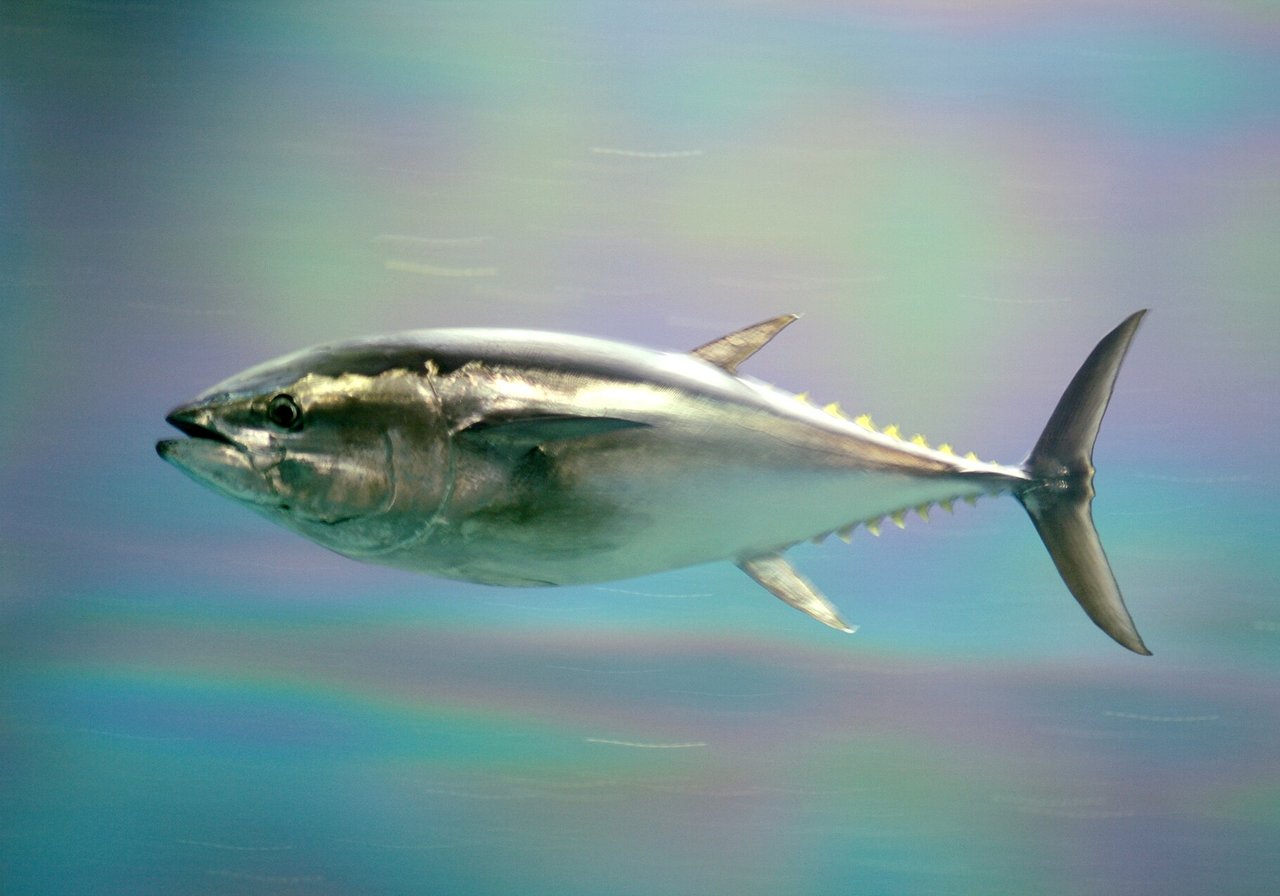
Source: Wikimedia Commons
In brief
Atlantic bluefin tuna (Thunnus thynnus) is Least Concern after stock recovery (IUCN, 2021); Southern bluefin is Endangered. Global tuna fisheries face overfishing, bycatch of sharks and turtles, and IUU fishing.
Also in Animals A to Z · Animals that start with T
By WARN Research & Conservation TeamLast updated
Tuna are among the ocean's most powerful fish — streamlined, warm-blooded predators capable of sustained speeds exceeding 70 km/h. Atlantic bluefin tuna, the largest tunas, reach over 450 kg and fetch extraordinary prices at Tokyo fish markets. Decades of overfishing collapsed Atlantic bluefin to Critically Endangered levels before management recovered eastern Atlantic and Mediterranean stocks sufficiently for the IUCN to reassess as Least Concern in 2021. Southern bluefin tuna remains Endangered. Pacific bluefin is Near Threatened. Longline and purse-seine fisheries target tuna globally; bycatch of sharks, turtles and seabirds on tuna gear is a major conservation crisis. Illegal, unreported and unregulated fishing persists.
Least Concern
IUCN status — Atlantic bluefin (2021 reassessment)
Endangered
IUCN status — Southern bluefin tuna
450 kg
Maximum weight — large Atlantic bluefin
Appendix II
CITES listing — Atlantic bluefin
Figures sourced from IUCN Red List — Thunnus thynnus, IUCN Red List — Thunnus maccoyii (Southern bluefin), ICCAT — International Commission for the Conservation of Atlantic Tunas .
Tuna: Quick Facts
| Weight | Up to 450 kg (Atlantic bluefin) |
|---|---|
| Speed | Sustained swimming over 70 km/h |
| Atlantic bluefin | Least Concern (IUCN, 2021) |
| Southern bluefin | Endangered |
| Bycatch | 100,000+ sharks on longlines annually |
| CITES | Appendix II (Atlantic bluefin) |
Scientific Classification
| Kingdom | Animalia |
|---|---|
| Phylum | Chordata |
| Class | Actinopterygii |
| Order | Scombriformes |
| Family | Scombridae |
| Genus | Thunnus |
| Species | Thunnus thynnus (Linnaeus, 1758) |
Conservation Status
- IUCN Status
- Atlantic bluefin Least Concern (IUCN, 2021). Southern bluefin Endangered. Pacific bluefin Near Threatened.
- Population
- Atlantic bluefin recovering; Southern bluefin at ~7% of historic biomass
- Trend
- Increasing for managed Atlantic stocks; decreasing for Southern bluefin
- Assessed
- 2021 (Atlantic bluefin)
- CITES
- Appendix II (Atlantic bluefin)
Key Facts: Tuna
- Tuna are warm-blooded — maintaining body temperature above surrounding water.
- Atlantic bluefin recovered to Least Concern after decades of quota management.
- Southern bluefin tuna remains Endangered with roughly 7% of historic biomass.
- Longline tuna fisheries kill an estimated 100,000+ sharks annually as bycatch.
- A single Atlantic bluefin sold for over $3 million at Tokyo auction in 2019.
- MSC-certified pole-and-line tuna reduces bycatch compared with purse seines.
Ocean athletes
Tuna belong to family Scombridae — mackerels and bonitos. Their fusiform bodies, crescent tails and retractable fins minimise drag. A vascular counter-current heat exchanger — rete mirabile — retains muscle heat, allowing tuna to maintain body temperatures 10–15 °C above ambient water. Warm muscles sustain high-speed pursuit of mackerel, herring, squid and sardines.
Atlantic bluefin spawn in warm waters — Gulf of Mexico and Mediterranean Sea — then migrate to rich feeding grounds in the North Atlantic. Fish tagged off Ireland have crossed the Atlantic within weeks. Lifespan reaches 40 years; sexual maturity takes 8–12 years, making populations slow to recover from overfishing.
Eight Thunnus species range across global oceans. Yellowfin, skipjack and albacore support the canned tuna industry — the world's most consumed fish after shrimp.
Overfishing and stock collapse
Industrial tuna fishing expanded after the Second World War. Purse seines encircled entire schools; longlines set kilometres of baited hooks. Atlantic bluefin populations in the western Atlantic fell to roughly 20% of historic levels by the 2000s — assessed as Endangered, then Critically Endangered.
The International Commission for the Conservation of Atlantic Tunas — ICCAT — sets quotas. Controversial management allowed overfishing for decades; improved enforcement and quota cuts from 2008 enabled eastern Atlantic and Mediterranean recovery. The 2021 IUCN reassessment to Least Concern reflects this partial recovery — not universal security.
Southern bluefin tuna — spawning in Indonesian waters — remains Endangered at roughly 7% of unfished biomass. Pacific bluefin is Near Threatened. Illegal fishing and under-reporting persist across all oceans.
Bycatch and fisheries impact
Tuna fisheries kill vast numbers of non-target species. Longline gear — billions of hooks set annually — catches sharks, marlin, seabirds and turtles. An estimated 100,000+ sharks die on tuna longlines each year; many finned and discarded. Purse seines using fish-aggregating devices entangle turtles and juvenile tuna alongside target species.
Dolphin-safe tuna labels address one bycatch issue — purse seines setting on dolphin-associated yellowfin schools in the eastern Pacific — but do not cover shark, turtle or seabird mortality on longlines.
Pole-and-line and handline fisheries — traditional methods in the Maldives, Indonesia and the Azores — catch tuna individually with minimal bycatch. MSC certification helps consumers identify lower-impact products, though certification standards remain debated.
Trade, CITES and management
Atlantic bluefin trade is regulated under CITES Appendix II — export permits required since 2010 after conservation pressure. A single fish sold for ¥333 million (over $3 million) at Tokyo's Toyosu Market in 2019 — publicity that drives fishing pressure despite stock recovery.
Regional Fisheries Management Organisations — ICCAT, IOTC, WCPFC — coordinate quotas across ocean basins. Enforcement varies; IUU fishing supplies an estimated 20% of global tuna catch. Electronic monitoring and observer programmes improve compliance but coverage remains incomplete.
Aquaculture fattening — capturing wild bluefin and growing them in pens — still depends on wild capture for stock. Closed-cycle captive breeding is advancing but not yet commercially dominant.
Choosing sustainable tuna
Consumers shape tuna fisheries through purchasing choices. Pole-and-line, handline and troll-caught tuna minimise bycatch. MSC and similar certifications indicate independently audited fisheries — though standards and enforcement vary.
Avoiding bluefin tuna — particularly from overfished stocks — reduces pressure on the most valuable and historically depleted species. Canned skipjack from well-managed purse-seine fisheries offers a lower-impact option when sourcing is verified.
WARN publishes this tuna guide as free public education about fisheries that feed billions while driving shark declines, turtle mortality and the industrial extraction of ocean predators.
What WARN Does
WARN publishes this tuna guide as free public education for readers in coastal nations where tuna fisheries, bycatch and food security intersect.
If this guide helps you understand wildlife and the pressures it faces, a gift to WARN supports habitat protection and free public education in our partner countries.
Tuna: Frequently Asked Questions
Are tuna endangered?
Why is bluefin tuna so expensive?
What is tuna bycatch?
What is the most sustainable tuna?
Where do tunas live?
Are tunas dangerous?
How long do tunas live?
Sources & References
Population figures, conservation status and biological facts on this page are drawn from authoritative scientific and intergovernmental sources.
Terms used on this page
Plain-English definitions, from our wildlife and conservation glossary.
Explore more animals
Discover more animals, their habitats and their conservation status in the WARN wildlife-guide library.