Wildlife Guide · Mexico & Gulf of California
Vaquita
Phocoena sinus
The world's rarest marine mammal — fewer than ten survive in a single Mexican bay
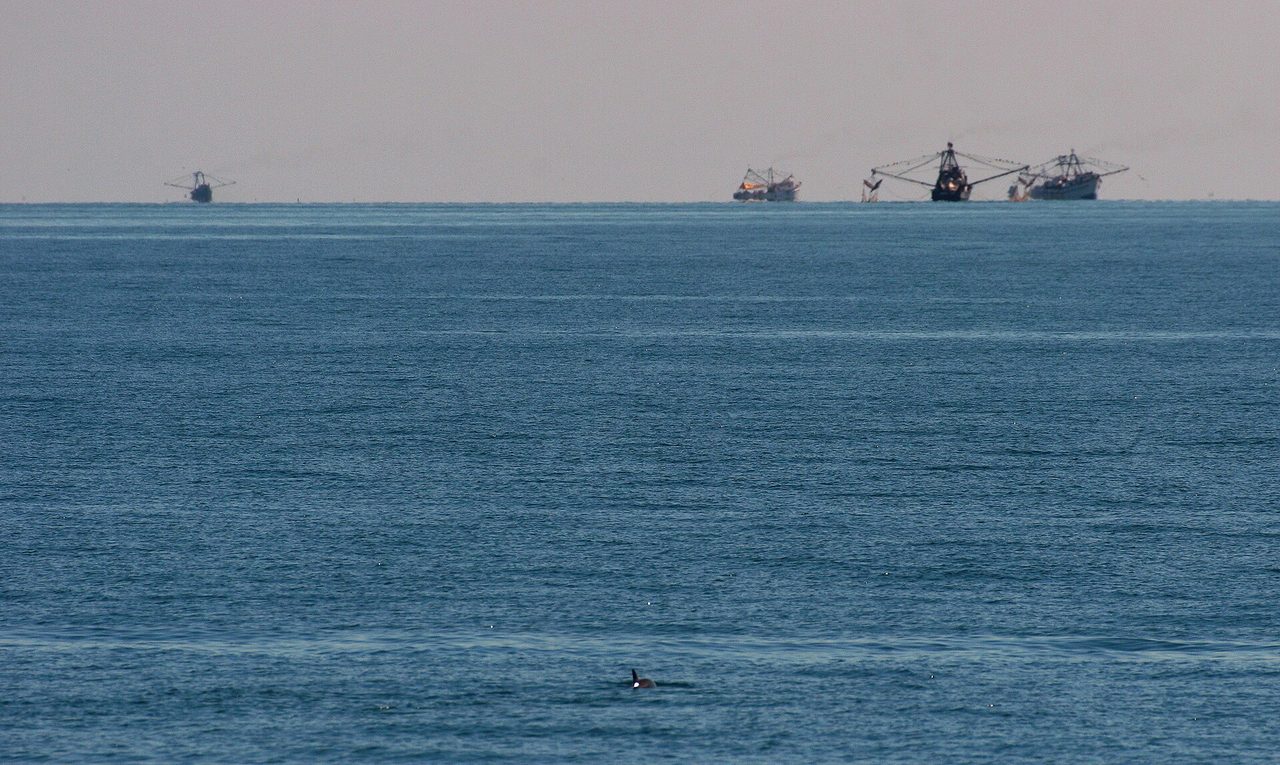
Photo: Paula Olson, NOAA / Wikimedia Commons (Public domain)
In brief
The vaquita (Phocoena sinus) is the world's rarest marine mammal, a small porpoise found only in Mexico's Gulf of California, with fewer than ten individuals remaining as of 2025 due to drowning in illegal gillnets.
Also in Animals A to Z · Animals that start with V
How you can help
You can support the related appeal — read its purpose, recipient status and fund terms first — or give once to where it is needed most. Sharing accurate information helps too.
By WARN Research & Conservation TeamLast updated
The vaquita — Spanish for "little cow" — is the world's smallest porpoise and the most critically endangered marine mammal on Earth. Endemic to a tiny corner of Mexico's northern Gulf of California, this elusive, shy cetacean has been driven to the very edge of extinction within a single human generation. As recently as 1997, approximately 567 individuals were estimated to exist; by 2025, acoustic and visual surveys detected between seven and ten individuals, including at least two calves. The primary culprit is not deliberate hunting but incidental drowning in illegal gillnets set for the totoaba, a large fish whose swim bladder commands black-market prices rivalling gold. With reproduction confirmed and calves still being born, scientists insist the vaquita is not yet beyond saving — but time is measured in months, not years.
~7–10
individuals left (2025 survey)
>99%
population decline since 1997
~4,000 km²
total known historical range
$20,000–$80,000+
black-market price per kg of totoaba swim bladder
Figures sourced from IUCN Red List — Phocoena sinus (2022 assessment), IUCN CSG — 2025 Vaquita Acoustic and Visual Survey Report (November 2025), IUCN CSG — New Findings: Vaquitas Outside Protected Areas (2024 survey) and other references on this page.
Vaquita: Quick Facts
| Adult length | 140–150 cm (4.6–4.9 ft) |
|---|---|
| Adult weight | 27–55 kg (60–120 lb) |
| Lifespan | ~20 years |
| Diet | Demersal fish (grunts, croakers), crustaceans, squid |
| Gestation | 10–11 months; 1 calf every 1–2 years |
| Habitat depth | Shallow water, typically 10–50 m |
| Range | Northern Upper Gulf of California, Mexico only |
| CITES status | Appendix I |
Scientific Classification
| Kingdom | Animalia |
|---|---|
| Phylum | Chordata |
| Class | Mammalia |
| Order | Artiodactyla |
| Infraorder | Cetacea |
| Family | Phocoenidae |
| Genus | Phocoena |
| Species | Phocoena sinus |
Conservation Status
- IUCN Status
- Critically Endangered
- Population
- 7–10 individuals (2025 survey)
- Trend
- Decreasing (>99% decline since 1997)
- Assessed
- 2022
- CITES
- Appendix I
Two calves confirmed in the September 2025 survey indicate the species is still reproducing; in-situ gillnet elimination is the only viable recovery pathway.
Did you know?
The totoaba swim bladder driving the vaquita toward extinction is sometimes called "the cocaine of the sea" — gram for gram, it has sold on Chinese black markets at prices between USD 20,000 and USD 80,000 per kilogram, making it one of the most valuable wildlife products on Earth.
Key Facts: Vaquita
- The vaquita is the world's smallest porpoise, reaching just 1.5 m (5 ft) in length, and is found nowhere else on Earth except the northern Gulf of California.
- Fewer than ten individuals were detected in the 2025 IUCN survey, making it the rarest marine mammal alive — and possibly the rarest vertebrate of any kind.
- Vaquitas do not die from poaching directly; they drown as bycatch in illegal gillnets targeting the totoaba fish, whose prized swim bladder fuels an international black-market trade worth tens of thousands of dollars per kilogram.
- Despite the catastrophically small number, scientists confirmed two calves in the 2025 survey, proving the species is still reproducing and has not yet crossed a biological point of no return.
- Both the vaquita and the totoaba are listed on CITES Appendix I, making international trade in either species illegal — yet enforcement in the remote Upper Gulf remains deeply challenging.
- Mexican authorities have established a Zero Tolerance Area (ZTA) covering 288 km² where no vessels are permitted, patrolled by the Mexican Navy and international observers using drones and acoustic monitoring.
What is a vaquita and what does it look like?
The vaquita (Phocoena sinus) is the smallest member of the family Phocoenidae — the true porpoises — and the smallest cetacean species on the planet. Females are slightly larger than males, reaching up to 150 cm (4.9 ft) in length and weighing between 27 and 55 kg (60–120 lb). Males average around 140 cm (4.6 ft). Calves are born at roughly 70–80 cm and about 7 kg.
The vaquita's appearance is unmistakable among porpoises. Its body is pale grey on the dorsal surface, grading to white on the belly, with striking dark grey patches encircling the eyes and edging the lips — facial markings that lend it an almost spectacled appearance. The dorsal fin is tall and triangular relative to body size, unusually prominent compared to other phocoenids.
Like all porpoises, the vaquita lacks a true beak and produces high-frequency clicks for echolocation rather than the whistles used by dolphins. It is profoundly shy, consistently avoiding boats and human activity, which has made direct observation extraordinarily difficult. Most confirmed sightings have come from dedicated research vessels moving slowly and quietly through its preferred shallow, turbid waters. This evasiveness also means population surveys must rely heavily on passive acoustic monitoring — underwater microphones that detect the characteristic click trains of vaquita echolocation — combined with careful visual observation.
Where does the vaquita live?
The vaquita occupies the smallest geographic range of any cetacean species in the world. It is found exclusively in the shallow, murky waters of the northern Upper Gulf of California — also called the Sea of Cortez — in the Mexican state of Baja California. Its total historical range encompasses roughly 4,000 square kilometres, centered on a zone of nutrient-rich, highly turbid water created by sediment from the Colorado River delta. Surviving individuals are now concentrated in a smaller area near the Rocas Consag archipelago, close to San Felipe.
Vaquitas consistently choose water depths of less than 50 metres close to shore, typically in the shallowest 10–50 m band. The species is uniquely tolerant of large annual temperature swings, from around 14°C in winter to over 30°C in summer — remarkable for a phocoenid, most of which are restricted to cool waters below 20°C. This thermal tolerance appears to be an evolutionary adaptation to the extreme seasonality of the Upper Gulf.
The Mexican government designated a Vaquita Refuge covering 1,263 km² in 2005, and in 2020 created a stricter 288 km² Zero Tolerance Area (ZTA) within it, where all vessel traffic is prohibited. A 2024 survey revealed that some individuals are now venturing beyond the ZTA into adjacent areas of the larger refuge, indicating the remaining animals use a wider swathe of habitat than previously assumed — and underscoring the urgency of expanding protection beyond the inner sanctuary.
Why is the vaquita endangered?
The vaquita's collapse has a single, well-documented cause: entanglement in gillnets as accidental bycatch. Gillnets — walls of near-invisible mesh suspended vertically in the water column — are used extensively by local fishermen to catch shrimp, corvina, and other commercial species. When a vaquita swims into such a net, it becomes entangled and cannot surface to breathe, drowning within minutes.
The catastrophic acceleration of the decline is linked directly to the illegal market for the swim bladder of the totoaba (Totoaba macdonaldi), a large endangered fish that shares the vaquita's habitat. Totoaba swim bladders — known as buche — are smuggled primarily to China, where they are sold in traditional medicine markets at prices of USD 20,000 to over USD 80,000 per kilogram, rivalling or exceeding the price of gold. Criminal trafficking networks, including organised crime cartels operating in the region, deploy large gillnets specifically for totoaba during the fish's spring spawning season, placing enormous pressure on the Upper Gulf precisely at the time vaquitas are most active.
The totoaba is itself listed on CITES Appendix I alongside the vaquita, making international trade illegal — yet enforcement in the remote, underfunded Upper Gulf has proved persistently inadequate. Both animals share the same small patch of ocean; the vaquita has nowhere else to go. Modelling suggests the population declined by a cumulative 99% between 1998 and 2018 alone. Despite a Mexican government fishing ban introduced in 2015 and subsequent naval patrols, illegal gillnet activity has continued, driving numbers to their current nadir of fewer than ten individuals.
Can the vaquita be saved from extinction?
The answer, according to the scientists closest to the problem, is a cautious yes — but only if gillnet entanglement is eliminated immediately and completely. The critical indicator is reproduction: surveys in 2021, 2022, 2023, and 2025 have all confirmed the presence of calves — with two calves documented in the September 2025 survey — meaning the remaining animals are still breeding. Female vaquitas produce a calf every one to two years after a gestation of roughly ten to eleven months, and life expectancy is around twenty years. If even five or six reproductively active females survive, a slow recovery is mathematically possible, provided mortality stops.
Conservation efforts are multifaceted. Mexico's Zero Tolerance Area, established in 2020, is patrolled continuously by the Mexican Navy and international monitoring teams using acoustic arrays, drones, and long-range surveillance vessels. In March 2025, authorities seized over nine kilometres of illegal gillnets containing 72 dead totoaba in a single operation, illustrating both the scale of ongoing illegal activity and the enforcement response.
An alternative fishing-gear programme has been developed — vaquita-safe trawls and hook-and-line methods that allow local fishermen to catch corvina and shrimp without gillnets — but uptake has been uneven due to economic pressures on fishing communities.
A 2017 attempt to capture vaquitas and breed them in a temporary sanctuary ended when one individual died of capture stress, convincing scientists that ex-situ breeding is not a viable option. The only viable path is in-situ protection: making the Gulf of California safe for vaquitas to breed in the wild.
What is the vaquita's relationship to the totoaba, and why does it matter globally?
The fate of the vaquita is inseparable from that of the totoaba (Totoaba macdonaldi), a massive drum fish that can reach 2 metres in length and 100 kg in weight. Like the vaquita, the totoaba is endemic to the Gulf of California and is itself Critically Endangered, listed on CITES Appendix I since 1976. The two species share overlapping habitat in the Upper Gulf, and both decline together when illegal gillnets proliferate.
The totoaba's swim bladder — a gas-filled organ used for buoyancy control — has been traded in Chinese markets for well over a century, prized in traditional medicine for purported benefits including reproductive health and longevity. As China's middle class expanded in the 2000s and 2010s, demand surged and prices soared to between USD 20,000 and USD 80,000 per kilogram or more, creating a lucrative trade route from small Mexican fishing villages through international smuggling networks to Hong Kong and mainland China. The CITES-illegal trade is estimated to have involved hundreds of millions of dollars.
This interconnection carries an important global lesson: the extinction of one charismatic megafauna species is rarely caused by a single local actor. It involves transnational criminal networks, demand from distant consumer markets, enforcement gaps across multiple jurisdictions, and the economic vulnerability of local fishing communities caught between poverty and law. The vaquita's plight has become a case study in how wildlife trade policy, fisheries management, poverty alleviation, and international diplomacy must be coordinated simultaneously. Its survival — or loss — will shape how the world responds to the next species on this same precipice.
What WARN Does
WARN does not currently run conservation projects for the vaquita, whose range is restricted to Mexico — outside WARN's in-network focus countries of its partner-network countries. This guide is offered as free educational content, because public awareness of critically endangered species like the vaquita strengthens the global political will that all marine conservation ultimately depends on. Understanding what drives a species to the brink — illegal wildlife trade, bycatch, and enforcement failures — informs action everywhere, including in the countries where WARN does work.
The vaquita's story shows how quickly a species can slide from thousands to single digits when illegal wildlife trade goes unchecked. Supporting WARN helps fund the education campaigns and habitat-protection work that keep other vulnerable species from reaching the same precipice.
How can I help save the vaquita?
Explore practical ways to support the vaquita, from everyday choices and sharing reliable information to reviewing a related appeal before giving.
Explore ways to support
Read the related appeal’s purpose, recipient status and fund terms. Choose an affordable gift after checking what is proposed and what has been reported.
Ease the pressures
Avoid the wildlife trade and souvenirs, never buy wild animals as pets, and choose sustainable, habitat-friendly products — the threats behind the vaquita's decline fall when demand does.
Spread the word
Share accurate, sourced information about the vaquita. Wider awareness is what turns concern into lasting protection.
Vaquita: Frequently Asked Questions
How can I help save the vaquita?
How many vaquitas are left in 2025?
Why is the vaquita going extinct?
Where does the vaquita live?
Can the vaquita recover from such a small population?
Are vaquitas and dolphins the same thing?
What do vaquitas eat?
Are vaquitas dangerous?
How long do vaquitas live?
How big is a vaquita?
Sources & References
Population figures, conservation status and biological facts on this page are drawn from authoritative scientific and intergovernmental sources.
- IUCN Red List — Phocoena sinus (2022 assessment)
- IUCN CSG — 2025 Vaquita Acoustic and Visual Survey Report (November 2025)
- IUCN CSG — New Findings: Vaquitas Outside Protected Areas (2024 survey)
- Smithsonian Ocean — A History Entwined: Vaquita, Totoaba, Fishermen
- NOAA Fisheries — Vaquita Species Profile
- Animal Diversity Web — Phocoena sinus
- CITES — Vaquita and Totoaba Fact Sheet
- Mongabay — Conservation groups look for new strategies to halt vaquita decline (2025)
Terms used on this page
Plain-English definitions, from our wildlife and conservation glossary.
Latest Vaquita Stories
Quick, fact-checked reads on the vaquita — amazing facts, key questions and the threats it faces.
Species
11 Amazing Facts About the Harpy Eagle, the Rainforest's Apex Raptor
From talons as long as a grizzly bear's claws to a single chick every two to three years, here are 11 fact-checked things that make the Harpy Eagle the most powerful bird of prey in the Americas.
Read the storySpecies
12 Amazing Facts About Grey Wolves (And Why Alpha Wolves Aren't Real)
A howl that carries 16 km, a pack that is really a family, and the debunked study behind the 'alpha wolf' myth. Twelve verified facts.
Read the storySpecies
12 Amazing Facts About Axolotls (They Regrow Their Own Brains)
Limb, spinal cord and partial brain regeneration, permanent larval form, and near-extinction in the wild. Twelve facts.
Read the storyExplore more animals
Discover more animals, their habitats and their conservation status in the WARN wildlife-guide library.