Wildlife Guide · Africa & Asia
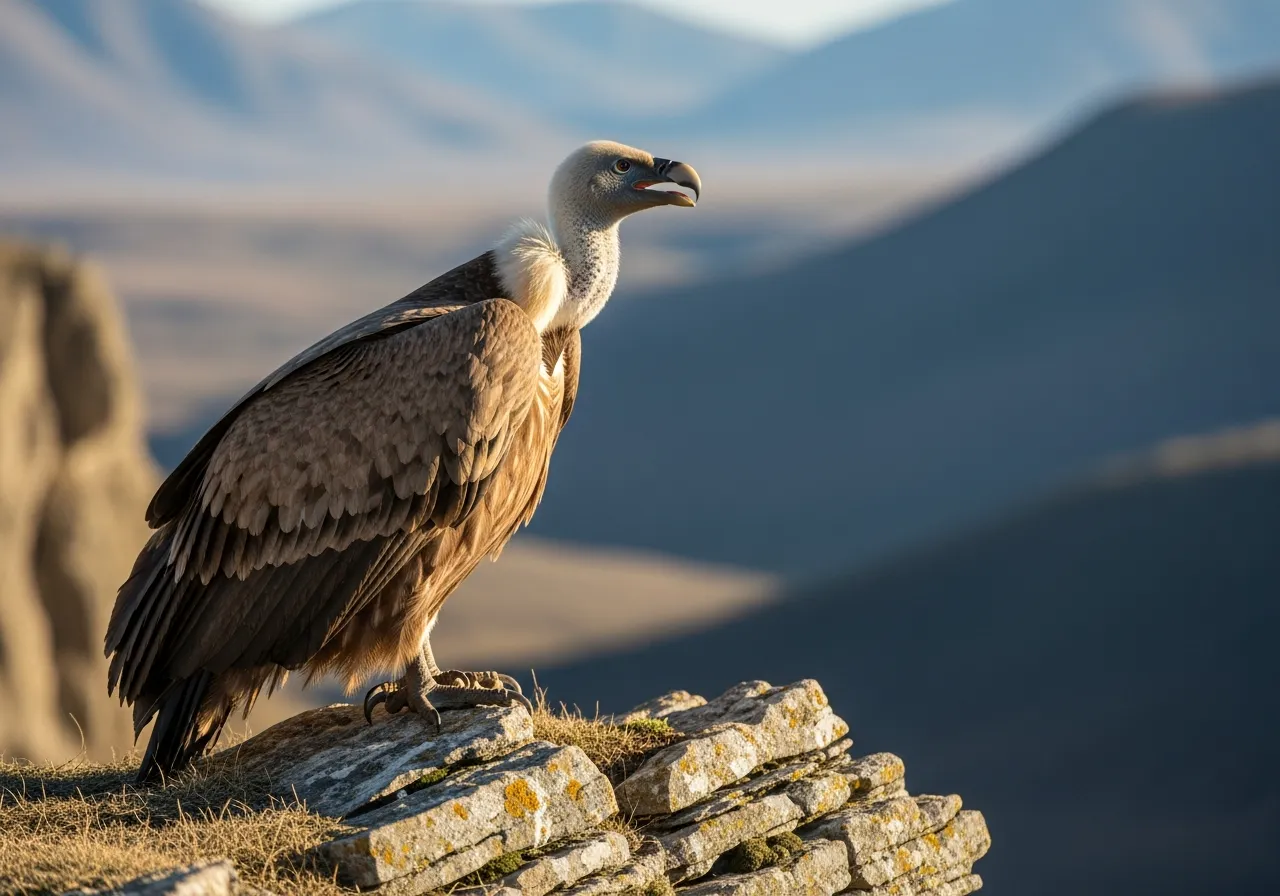
Vulture
Old World vultures (family Accipitridae) and New World vultures (family Cathartidae)
Nature's clean-up crew, vanishing fast in parts of Asia and Africa
Source: Global Animal Guide (WARN)
In brief
A vulture is a large scavenging bird of prey that feeds mainly on carrion. There are two unrelated groups: Old World vultures of Africa, Asia and Europe, and New World vultures of the Americas, which evolved similar features independently. Most have a bald head and soar to find food.
Also in Animals A to Z · Animals that start with V
By WARN Research & Conservation TeamLast updated
Vultures are large scavenging birds of prey that feed mainly on carrion, the carcasses of dead animals. They fall into two unrelated groups: Old World vultures of Africa, Asia and Europe, which belong to the same family as eagles and hawks, and New World vultures of the Americas, which form a separate family. The two groups look strikingly similar because they evolved the same scavenging lifestyle independently, an example of convergent evolution. Most share a bald head, keen eyesight and a remarkable ability to soar for hours on rising warm air while scanning the ground below. By consuming carcasses quickly, vultures remove disease before it spreads, making them one of the most ecologically valuable birds on Earth.
23
living vulture species worldwide
~99%
decline of some Asian vulture populations since the 1990s
pH ~1
stomach acidity that destroys deadly pathogens
16 + 7
Old World species plus New World species
Figures sourced from Vulture - Wikipedia, Old World vulture - Wikipedia, New World vulture - Wikipedia and other references on this page.
Vulture: Quick Facts
| Common name | Vulture |
|---|---|
| Groups | Old World and New World vultures |
| Living species | About 23 worldwide |
| Diet | Carrion (scavenger) |
| Distribution | Every continent except Antarctica and Australia |
| Habitat | Open country, savanna, mountains, forest edges, deserts |
| Key feature | Bald head, broad soaring wings, keen eyesight |
| Stomach acidity | Around pH 1, kills most pathogens |
| Behaviour | Soars on thermals; feeds in groups called wakes |
| Conservation | Varies; several Old World species Critically Endangered |
Scientific Classification
| Kingdom | Animalia |
|---|---|
| Phylum | Chordata |
| Class | Aves |
| Order | Accipitriformes |
| Families | Accipitridae (Old World vultures); Cathartidae (New World vultures) |
| Groups | Old World vultures; New World vultures |
| Living species | About 23 (16 Old World, 7 New World) |
Conservation Status
- IUCN Status
- Status varies enormously across the roughly 23 vulture species. Many are still relatively widespread, but a large proportion of Old World vultures are now classed as Vulnerable, Endangered or Critically Endangered by the IUCN, including several South Asian and African species that have suffered some of the steepest declines recorded in any birds. New World vultures are generally more secure, though the California condor remains Critically Endangered after near-extinction.
- Population
- No reliable global total; trends are tracked per species. Several Critically Endangered Asian and African species number only in the thousands or fewer.
- Trend
- Declining overall, with severe crashes in parts of Asia and Africa, though a few species are stable or recovering through intervention.
- Assessed
- Assessed individually by species on the IUCN Red List; group status reflects recent assessments through the 2010s and 2020s.
- CITES
- Many vulture species are listed on CITES Appendix I or II, restricting international trade.
Status is reported per species on the IUCN Red List rather than for vultures as a whole, because the two unrelated groups span many separate species.
Did you know?
A Ruppell's griffon vulture was recorded flying at about 11,000 metres, the highest altitude ever confirmed for any bird, roughly the cruising height of a passenger jet.
Key Facts: Vulture
- Vultures are specialised scavengers that feed almost entirely on carrion, the carcasses of dead animals.
- There are two unrelated groups: Old World vultures (Africa, Asia, Europe) and New World vultures (the Americas), which evolved similar traits independently.
- Conservation status varies enormously: several Old World species are Critically Endangered while some are still relatively secure.
- The veterinary painkiller diclofenac, fatal to vultures that eat treated livestock carcasses, caused South Asian populations to collapse by up to 99% from the 1990s.
- Extremely acidic stomachs let vultures safely digest carcasses carrying anthrax, botulism and other pathogens, limiting the spread of disease.
- By clearing carcasses rapidly, vultures provide a free, natural sanitation service that protects both wildlife and people.
What is a vulture and what makes it different?
A vulture is a large bird of prey that has specialised in scavenging rather than hunting live prey. Instead of strong gripping talons like a hawk or eagle, most vultures have relatively weak, flattened feet better suited to walking around a carcass than seizing prey. Their most recognisable feature is a bald or sparsely feathered head and neck. Feeding deep inside a carcass would foul any feathers there, so bare skin stays cleaner and is easier to keep free of bacteria; it also helps the bird regulate its temperature. Vultures are superb soarers, riding columns of warm rising air called thermals so they can patrol vast areas while using very little energy. Old World vultures locate food almost entirely by sight, scanning the ground from great height. Several New World vultures, such as the turkey vulture, add an unusually keen sense of smell, detecting gases from decay even under forest cover. A flock circling in the air is called a kettle, a group feeding at a carcass a wake, and birds resting together a committee.
Why are so many vultures endangered?
Vulture conservation status varies dramatically by species. Some remain reasonably widespread, but a large share of Old World species are now Vulnerable, Endangered or Critically Endangered, and the group as a whole has suffered some of the steepest declines of any birds. The most notorious cause is diclofenac, a cheap anti-inflammatory drug given to livestock. When cattle treated with it die, vultures that feed on the carcasses suffer fatal kidney failure. From the early 1990s this collapsed populations of several South Asian species by up to 99% in only a couple of decades, one of the fastest declines ever recorded in a wild bird. In Africa, deliberate and accidental poisoning is the leading threat: poachers sometimes lace carcasses to stop circling vultures revealing the location of illegal kills, killing hundreds of birds at once. Other pressures include collisions with power lines, loss of large wild grazing animals, and use of vulture body parts in traditional medicine. Because vultures breed slowly, often raising a single chick at a time, recovery is painfully slow once a population crashes.
Why do vultures matter to ecosystems and people?
Vultures are among nature's most important recyclers. A group can strip a large carcass in hours, removing rotting flesh before it becomes a breeding ground for disease. Their stomachs are extraordinarily acidic, with a pH close to 1, which destroys dangerous pathogens such as anthrax, botulism and cholera that would sicken other animals. By consuming infected carcasses safely, vultures break chains of transmission that could otherwise reach livestock and humans. When vultures disappear, the consequences ripple outward. After the Asian vulture collapse, carcasses lingered longer and populations of feral dogs and rats rose, which is linked to greater risks of rabies and other diseases. Vultures therefore provide a vast, free sanitation service that would be almost impossible and hugely expensive to replace. Protecting them means tackling shared threats such as poisoning, habitat loss and the disappearance of the large wild and domestic animals whose carcasses they depend on, exactly the kinds of pressures that also harm many other species.
Old World vs New World vultures
| Feature | Old World vultures | New World vultures |
|---|---|---|
| Where they live | Africa, Asia, Europe | North and South America |
| Family | Accipitridae (with eagles, hawks) | Cathartidae (separate family) |
| Finding food | By eyesight only | Sight, plus strong smell in some species |
| Voice | Can produce varied calls | No voice box; mostly hiss and grunt |
| Cooling habit | Pant and seek shade | Some urinate on their own legs to cool |
| Relationship | Both look alike through convergent evolution, not close kinship | Both look alike through convergent evolution, not close kinship |
What WARN Does
World Animal Rescue Network does not run dedicated field projects for vultures, most of which live outside the countries where WARN and its partners work. This guide is part of WARN's free educational mission to help people understand and value wildlife. The threats that have pushed many vultures towards extinction, such as poisoning, habitat loss and the decline of the animals they feed on, are the same pressures that harm species WARN does help protect, which is why raising awareness of them matters.
If you value clear, science-based wildlife guides like this one, a small gift helps keep WARN's educational work free for everyone.
Vulture: Frequently Asked Questions
What do vultures eat?
Why do vultures have bald heads?
Are vultures dangerous to humans?
What is the difference between Old World and New World vultures?
Why are vultures endangered?
How high and how far can vultures fly?
Where do vultures live?
How long do vultures live?
How big is a vulture?
Sources & References
Population figures, conservation status and biological facts on this page are drawn from authoritative scientific and intergovernmental sources.
Terms used on this page
Plain-English definitions, from our wildlife and conservation glossary.
Latest Vulture Stories
Quick, fact-checked reads on the vulture — amazing facts, key questions and the threats it faces.
Species
Slow Loris: Why the Internet's Favourite Pet Is a Conservation Disaster
The slow loris looks like a cartoon character — and that has nearly destroyed the species. Here is the truth behind the viral videos.
Read the storySpecies
The Snow Leopard: Why the Ghost of the Mountains Is Still Vulnerable
The snow leopard is one of the most elusive big cats on earth, with an estimated 4,000-6,500 individuals across twelve range states — including Pakistan, where WARN is preparing to operate. This briefing explains why the species was downlisted from Endangered to Vulnerable in 2017 and why that is not the success story it sounds like.
Read the storyGuides
Sun Bear vs Moon Bear: The Two Most Trafficked Asian Bears
The sun bear and the Asiatic black bear (moon bear) are the two most commonly trafficked bears in Asia — for the pet trade, for traditional medicine and for bear-bile farming. Here is how to tell them apart.
Read the storyExplore more animals
Discover more animals, their habitats and their conservation status in the WARN wildlife-guide library.