Wildlife Guide · All oceans from Arctic to Antarctic
Whale
Infraorder Cetacea — ~90 species of baleen and toothed whales
Giants of the deep — baleen filter-feeders and toothed hunters of every ocean.
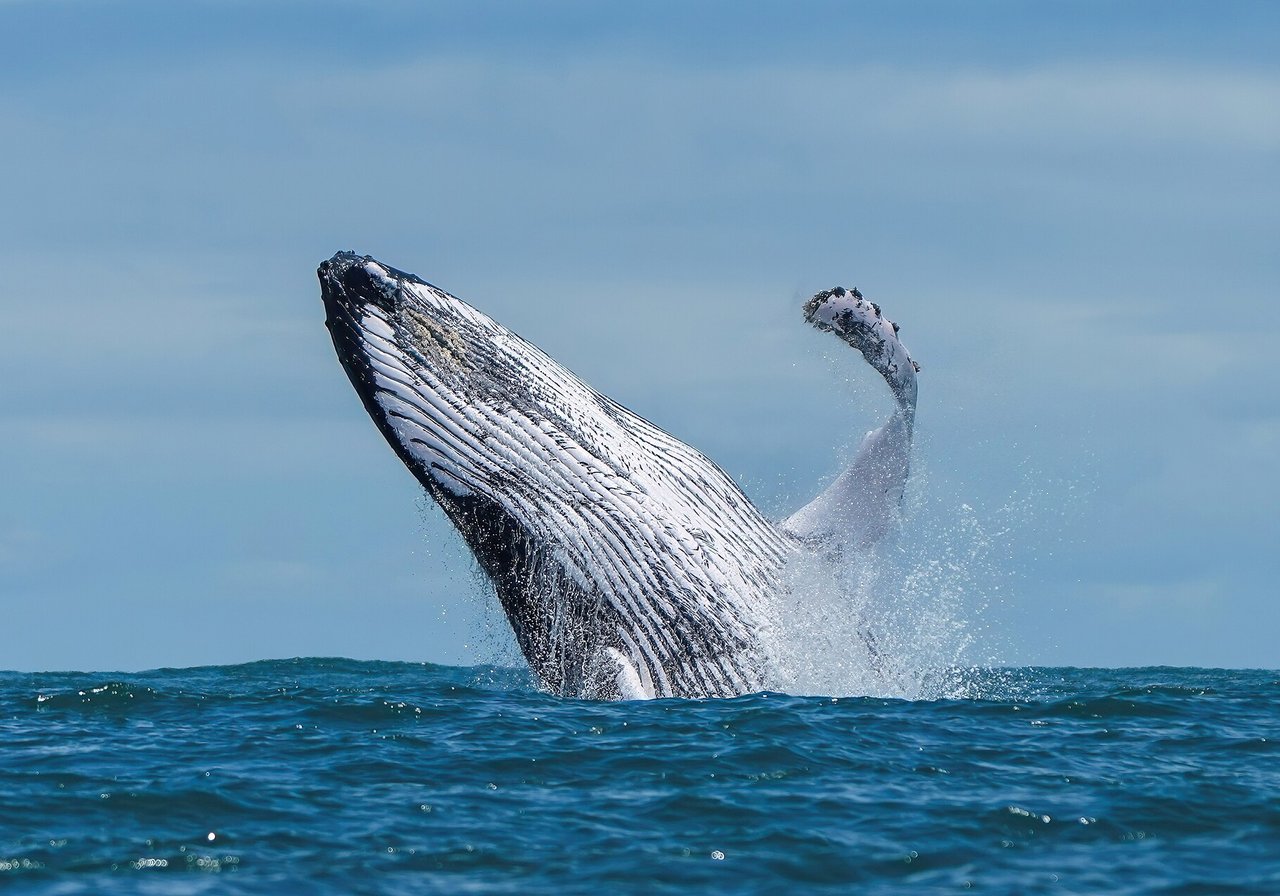
Source: Wikimedia Commons
In brief
Whales are cetacean mammals (~90 species) including baleen and toothed forms — from the blue whale to sperm whales and orcas; status ranges from recovering humpbacks to Critically Endangered vaquita and North Atlantic right whale.
Also in Animals A to Z · Animals that start with W
By WARN Research & Conservation TeamLast updated
Whales are fully aquatic mammals of the infraorder Cetacea, divided into baleen whales (Mysticeti) that filter krill and small fish, and toothed whales (Odontoceti) that include sperm whales, orcas and dolphins. Roughly 90 species range from the 30-metre blue whale — the largest animal ever known — to the 2.7-metre vaquita porpoise, Critically Endangered in the Gulf of California. Whales evolved from land mammals roughly 50 million years ago; they breathe air, nurse young with milk and many migrate thousands of kilometres seasonally. This page is the whale family hub — see WARN guides for humpback whale, blue whale, sperm whale and orca.
90
Recognised whale and dolphin species (Cetacea)
30 m
Maximum length of the blue whale
~190 t
Heaviest recorded blue whale — the largest animal that has ever lived
~2,992 m
Deepest recorded cetacean dive (Cuvier's beaked whale)
~3 h 42 m
Longest recorded cetacean breath-hold
~200 yr
Estimated bowhead whale lifespan — the longest-lived mammal
Varies
IUCN status from Least Concern to Critically Endangered
CITES I/II
International trade regulated by species
Figures sourced from IUCN Red List — Cetacea, International Whaling Commission, NOAA Fisheries — whales .
Whale: Quick Facts
| Groups | Baleen (Mysticeti) & toothed (Odontoceti) whales |
|---|---|
| Largest | Blue whale — up to ~30 m and ~190 tonnes |
| Deepest diver | Cuvier's beaked whale, recorded near 3,000 m |
| Longest-lived | Bowhead whale, estimated around 200 years |
| Closest land relative | The hippopotamus |
| Breathing | Air-breathing; blowholes on top of the skull |
| Sleep | Unihemispheric — one brain hemisphere at a time |
| Baleen | Keratin plates, the same material as fingernails |
| Main threats | Entanglement, ship strikes, noise, whaling |
| CITES | Appendix I or II by species |
Scientific Classification
| Kingdom | Animalia |
|---|---|
| Phylum | Chordata |
| Class | Mammalia |
| Order | Artiodactyla |
| Infraorder | Cetacea |
Conservation Status
- IUCN Status
- Varies. Humpback Least Concern after recovery; North Atlantic right whale and vaquita Critically Endangered.
- Population
- Varies — blue whale ~10,000–25,000; humpback ~84,000 mature individuals
- Trend
- Increasing for many baleen species post-moratorium; decreasing for some right whales and vaquita
- Assessed
- Varies by species
- CITES
- Appendix I or II depending on species
Did you know?
Whales evolved from four-legged land mammals, and their closest living relative is the hippopotamus.
Key Facts: Whale
- Whales include baleen whales (blue, humpback, fin) and toothed whales (sperm, orca, beaked whales).
- The blue whale is the largest animal ever known — up to 30 metres and 200 tonnes.
- Commercial whaling devastated populations; many species are recovering under moratoria.
- Ship strikes, entanglement in fishing gear and ocean noise are major modern threats.
- WARN publishes species guides for humpback, blue, sperm whale and orca.
- All cetaceans are protected in varying degrees — many on CITES Appendix I.
Baleen whales versus toothed whales
Cetaceans split into mysticetes — baleen whales with keratin filter plates — and odontocetes — toothed whales with echolocation. Baleen whales include blue, fin, humpback, minke and right whales. They gulp or skim plankton and small fish. Toothed whales include sperm whales diving beyond 2,000 metres, orcas hunting in pods, and beaked whales of the deep ocean.
Dolphins and porpoises are odontocetes — WARN's dolphin hub covers oceanic bottlenose and common dolphins separately from this whale overview. Size spans four orders of magnitude: blue whale hearts alone weigh 180 kg.
Understanding the split helps explain diet, diving behaviour and conservation — baleen whales face ship strikes in migration corridors; sperm whales accumulate pollutants in blubber.
Migration, song and culture
Many baleen whales migrate between high-latitude feeding grounds and tropical breeding lagoons. Humpbacks travel up to 8,000 km annually and produce complex songs that evolve year to year. Sperm whale clans carry distinct click dialects passed culturally between generations.
Orcas form matrilineal pods with specialised hunting traditions — fish-eating residents versus mammal-hunting transients in the Pacific North-west. Such culture makes local population loss irreversible even when the species globally persists.
Whale watching generates billions in ecotourism revenue when conducted at respectful distances — a conservation incentive when migration routes are protected.
Whaling history and modern threats
Twentieth-century industrial whaling killed an estimated three million whales, pushing blue whales from an estimated 350,000 to roughly 10,000–25,000 today. The 1986 International Whaling Commission moratorium halted commercial whaling for most species; humpbacks and fin whales have rebounded in many regions.
Modern threats include entanglement in ghost nets and active fishing gear, ship strikes in busy shipping lanes, ocean noise masking communication, plastic ingestion and climate change shifting prey distribution. The North Atlantic right whale numbers fewer than 350; the vaquita may be functionally extinct with fewer than ten individuals.
Japan, Norway and Iceland conduct limited commercial or research whaling under IWC objections or reservations — a continuing conservation controversy.
Whales and people
Whales feature in creation stories from the Pacific North-west to Iceland. Today they are flagship species for marine protected areas and shipping speed limits. Reducing single-use plastic, supporting sustainable fisheries and advocating quieter oceans benefit whales and human food security alike.
Readers should explore WARN's humpback whale, blue whale, sperm whale and orca guides for species-level detail, population trends and regional conservation work.
What WARN Does
WARN publishes free marine education for readers worldwide. Healthy oceans underpin fisheries and climate stability in our partner countries — its partner-network countries — all with coastal communities affected by marine ecosystem decline.
If this guide helps you understand wildlife and the pressures it faces, a gift to WARN supports habitat protection and free public education in our partner countries.
Whale: Frequently Asked Questions
How many whale species are there?
What is the biggest whale?
Are whales endangered?
Is an orca a whale or a dolphin?
How long do whales live?
What do whales eat?
Where do whales live?
Are whales dangerous?
How big is a whale?
Sources & References
Population figures, conservation status and biological facts on this page are drawn from authoritative scientific and intergovernmental sources.
Terms used on this page
Plain-English definitions, from our wildlife and conservation glossary.
Explore more animals
Discover more animals, their habitats and their conservation status in the WARN wildlife-guide library.