Wildlife Guide · Europe & Asia
Wild Boar
Sus scrofa (Linnaeus, 1758)
The ancestor of the domestic pig — rooting, wallowing and reshaping landscapes worldwide.
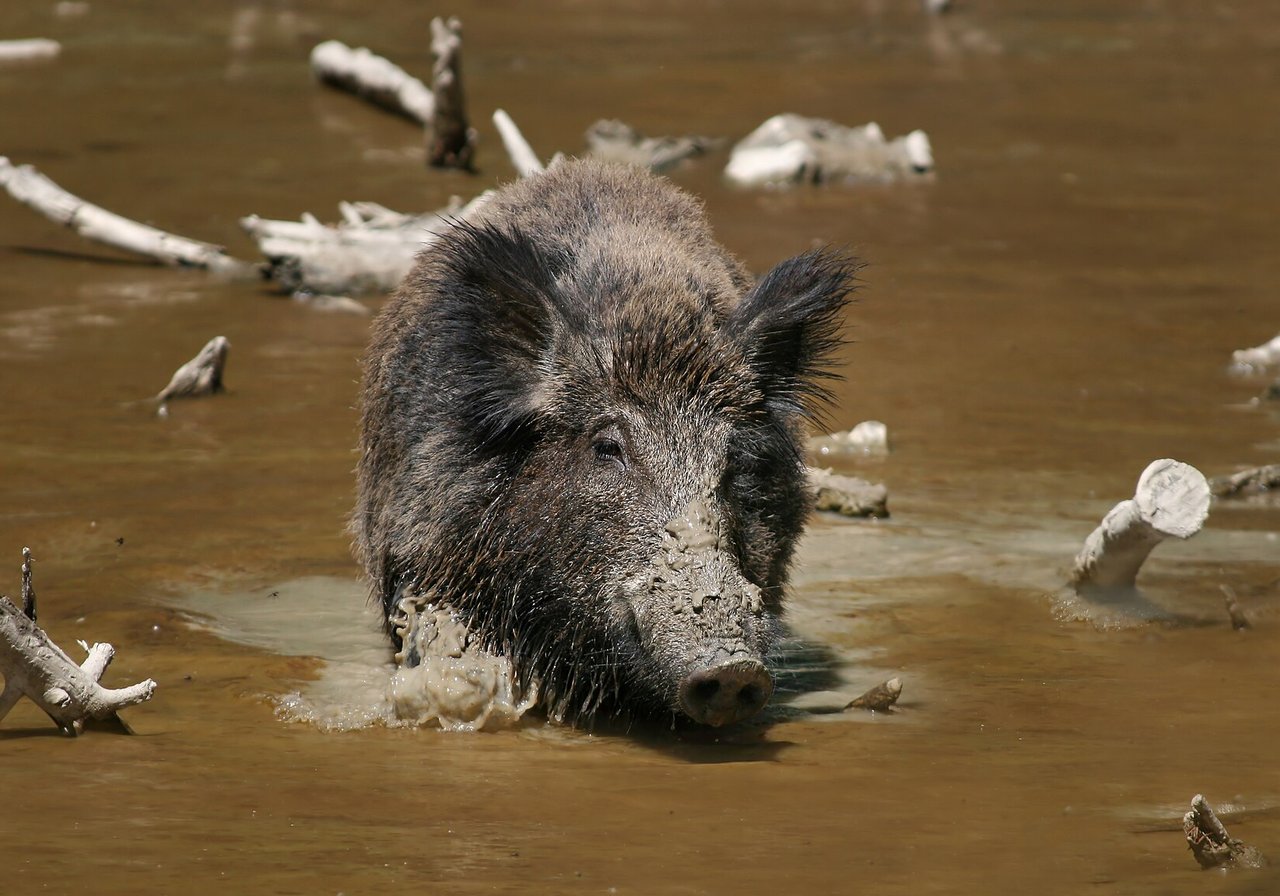
Source: Wikimedia Commons
In brief
The wild boar (Sus scrofa) is a Least Concern suid native across Europe, Asia and North Africa — ancestor of the domestic pig, widespread from Pakistan to Indonesia and increasing across Europe.
Also in Animals A to Z · Animals that start with W
By WARN Research & Conservation TeamLast updated
The wild boar is the ancestor of the domestic pig and one of the widest-ranging mammals on Earth. Native across Europe, Asia and North Africa, Sus scrofa inhabits forest, scrub, grassland and farmland from the British Isles to Japan, Indonesia and Pakistan. Boars are powerful omnivores that root soil for tubers, invertebrates and fungi, wallow in mud and form matriarchal groups called sounders. Listed as Least Concern, wild boar populations are increasing across much of Europe. In Brazil and Colombia, feral populations of domestic pig origin damage crops; in Malaysia and Indonesia, wild boar are native forest species hunted for bushmeat.
Least Concern
IUCN Red List status (2018 assessment)
50–200 kg
Adult weight range (males larger)
16 subspecies
Recognised across the global range
Not listed
CITES status
Figures sourced from IUCN Red List — Sus scrofa, Encyclopaedia Britannica — wild boar, Woodland Trust — wild boar .
Wild Boar: Quick Facts
| Weight | 50–200 kg (males larger) |
|---|---|
| Social unit | Sounder — matriarchal female group |
| Diet | Omnivorous — roots, fruit, invertebrates, carrion |
| Distinctive feature | Tusks — lower canines in males |
| Domestic ancestor | All domestic pig breeds descend from wild boar |
| CITES | Not listed |
Scientific Classification
| Kingdom | Animalia |
|---|---|
| Phylum | Chordata |
| Class | Mammalia |
| Order | Artiodactyla |
| Family | Suidae |
| Genus | Sus |
| Species | Sus scrofa (Linnaeus, 1758) |
Conservation Status
- IUCN Status
- Least Concern (IUCN, 2018). Stable or increasing globally.
- Population
- No global count; hundreds of thousands in Europe; widespread across Asia
- Trend
- Increasing in Europe; stable across most of Asia
- Assessed
- 2018
- CITES
- Not listed under CITES
Key Facts: Wild Boar
- Wild boar are the ancestor of all domestic pig breeds worldwide.
- Sounders are matriarchal groups of females and young led by an older sow.
- Male boars develop sharp lower canines — tusks — used in dominance fights.
- Wild boar root soil, creating disturbance that benefits some plants and invertebrates.
- Populations are increasing across Europe after decades of legal protection.
- In Malaysia and Indonesia, wild boar are native forest species and bushmeat targets.
An ancestor with global reach
Wild boar belong to the family Suidae alongside warthogs, babirusas and pygmy hogs. Sus scrofa is the only suid native to Europe and much of Asia. Domestic pigs descend from wild boar domesticated roughly 9,000 years ago in Anatolia and China. Sixteen subspecies are recognised across the native range.
Boars are stocky, bristly animals with a cartilaginous disc on the snout used for rooting. Coat colour varies from black to reddish-brown to striped in piglets. Males develop prominent lower canines that curve upward — tusks used in ritualised fights during the rut. Adults weigh 50–200 kg; males exceed females substantially.
The species ranges from the British Isles and Scandinavia through the Middle East, Pakistan, India, South-east Asia, Malaysia and Indonesia to Japan and Taiwan. North African populations persist in Morocco and Tunisia. Introduced feral pigs occur in the Americas, Australia and New Zealand.
Sounders, rooting and ecology
Wild boar society centres on sounders — matriarchal groups of related females and their offspring. Adult males are solitary outside the breeding season, joining sounders during the rut. Females give birth to striped piglets in a nest of vegetation; the sow defends young aggressively against predators including wolves, leopards and tigers.
Rooting behaviour — turning soil with the snout disc — is ecologically significant. It aerates soil, exposes invertebrates and seeds, and creates wallows that hold water for other species. In European forests, boar rooting increases plant diversity by disturbing dominant species. In agricultural landscapes, the same behaviour damages crops and draws farmer persecution.
Boars are omnivorous, eating roots, tubers, acorns, fruit, earthworms, insects, eggs, small vertebrates and carrion. They visit salt licks and mineral-rich soil. Nocturnal and crepuscular activity patterns help avoid human disturbance.
Range, hunting and bushmeat
In Europe, wild boar were hunted to near extinction by the nineteenth century before legal protection and reintroduction restored populations. Germany, France and Poland now hold hundreds of thousands of boar. Vehicle collisions and regulated hunting manage numbers in some regions.
In South Asia, wild boar range across Pakistan, India and Nepal in forest, scrub and agricultural margins. They are a major prey species for tigers and leopards. Crop raiding generates conflict with farmers; retaliatory killing and snaring persist.
In Malaysia and Indonesia, wild boar inhabit rainforest and forest edge. Hunting for bushmeat is widespread — boar meat is valued in rural communities. Sustainable hunting can coexist with conservation when protected areas maintain source populations. In Brazil and Colombia, feral pigs of domestic origin — not native Sus scrofa — damage crops and spread disease to native wildlife.
Conservation and management
The IUCN lists wild boar as Least Concern with a stable or increasing global population trend. European populations are expanding northward, aided by milder winters and agricultural food sources. Wild boar are not listed under CITES.
Management challenges differ by region. In Europe, debate centres on hunting quotas, crop damage compensation and disease — African swine fever outbreaks in eastern Europe threaten both wild and domestic pigs. In Asia, maintaining forest habitat and reducing indiscriminate snaring benefit boar populations and the predators that depend on them.
Feral pig control in the Americas and Australia is a separate issue from native wild boar conservation. Preventing domestic pig releases and managing feral populations protects native ecosystems in WARN partner countries Brazil and Colombia.
What WARN Does
WARN works in Brazil, Colombia, Malaysia and Indonesia where wild boar and feral pigs interact with forest ecosystems, bushmeat trade and agricultural conflict. This wild boar guide is free public education about a globally widespread suid.
If this guide helps you understand wildlife and the pressures it faces, a gift to WARN supports habitat protection and free public education in our partner countries.
Wild Boar: Frequently Asked Questions
Are wild boar the same as domestic pigs?
What is a sounder?
Are wild boar dangerous?
Are wild boar endangered?
Where do wild boar live?
What do wild boar eat?
How long do wild boars live?
How big is a wild boar?
Sources & References
Population figures, conservation status and biological facts on this page are drawn from authoritative scientific and intergovernmental sources.
Terms used on this page
Plain-English definitions, from our wildlife and conservation glossary.
Latest Wild Boar Stories
Quick, fact-checked reads on the wild boar — amazing facts, key questions and the threats it faces.
Species
Slow Loris: Why the Internet's Favourite Pet Is a Conservation Disaster
The slow loris looks like a cartoon character — and that has nearly destroyed the species. Here is the truth behind the viral videos.
Read the storySpecies
The Snow Leopard: Why the Ghost of the Mountains Is Still Vulnerable
The snow leopard is one of the most elusive big cats on earth, with an estimated 4,000-6,500 individuals across twelve range states — including Pakistan, where WARN is preparing to operate. This briefing explains why the species was downlisted from Endangered to Vulnerable in 2017 and why that is not the success story it sounds like.
Read the storyGuides
Sun Bear vs Moon Bear: The Two Most Trafficked Asian Bears
The sun bear and the Asiatic black bear (moon bear) are the two most commonly trafficked bears in Asia — for the pet trade, for traditional medicine and for bear-bile farming. Here is how to tell them apart.
Read the storyExplore more animals
Discover more animals, their habitats and their conservation status in the WARN wildlife-guide library.