Wildlife Guide · North America & Europe
Wolf
Canis lupus (Linnaeus, 1758) and related subspecies
The wild ancestor of dogs — pack hunters restored to Yellowstone and still persecuted.
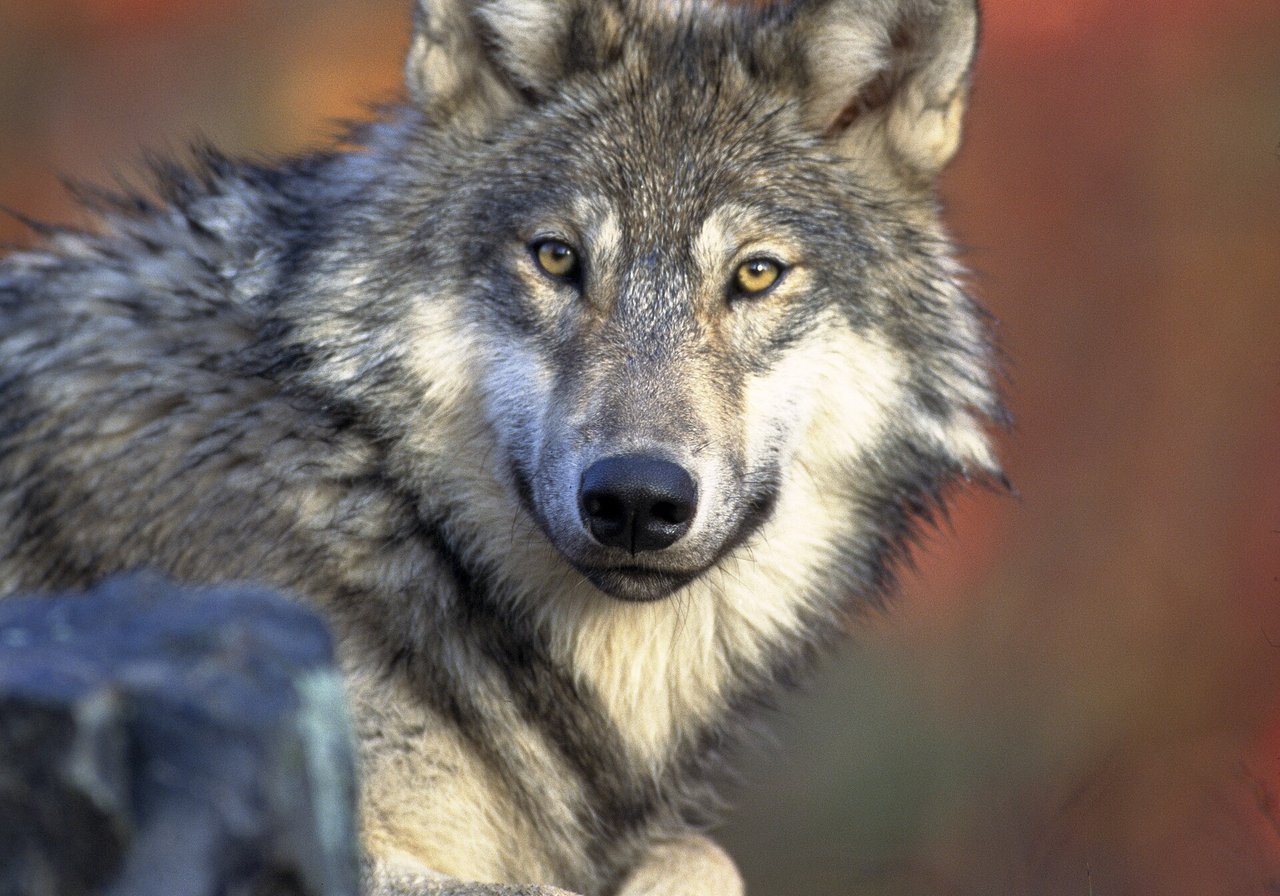
Source: Wikimedia Commons
In brief
The grey wolf (Canis lupus) is a Least Concern pack-hunting canid of the Northern Hemisphere and wild ancestor of dogs — regionally extirpated in much of Europe and North America but recovering where reintroduced.
Also in Animals A to Z · Animals that start with W
By WARN Research & Conservation TeamLast updated
The wolf (Canis lupus) is the largest wild member of the dog family, native to North America, Europe and Asia. Wolves live in cooperative packs led by a breeding pair, hunting deer, elk, moose and smaller prey. They are the wild ancestor of domestic dogs. Globally the IUCN lists grey wolves as Least Concern, but regional populations were exterminated across much of western Europe and the lower 48 United States before reintroductions — notably Yellowstone — began recovery. WARN also publishes guides for the grey wolf and maned wolf as distinct pages. This hub covers wolves as a species complex.
Least Concern
IUCN global status (2021)
300,000+
Estimated wolves worldwide
40–175 kg
Weight range across subspecies
CITES II
International trade regulated
Figures sourced from IUCN Red List — Canis lupus, International Wolf Center, Yellowstone National Park — wolves .
Wolf: Quick Facts
| Species | Canis lupus (grey wolf) |
|---|---|
| Related guides | Grey wolf, maned wolf |
| Social unit | Pack — breeding pair + offspring |
| Diet | Large ungulates, beavers, smaller prey |
| Domestic relative | Dog (Canis familiaris) |
| CITES | Appendix II |
Scientific Classification
| Kingdom | Animalia |
|---|---|
| Class | Mammalia |
| Order | Carnivora |
| Family | Canidae |
| Species | Canis lupus |
Conservation Status
- IUCN Status
- Least Concern globally; regional populations Endangered or recovering.
- Population
- Roughly 300,000 wolves worldwide
- Trend
- Increasing in parts of Europe and North America; decreasing where persecuted
- Assessed
- 2021
- CITES
- Appendix II
Key Facts: Wolf
- Grey wolves are the wild ancestor of all domestic dogs.
- Packs are family groups — usually a breeding pair and offspring.
- Wolves were eradicated from much of western Europe and the US before partial recovery.
- Yellowstone wolf reintroduction restored ecosystem balance via trophic cascade.
- WARN guides cover grey wolf and maned wolf separately.
- Conflict with livestock drives ongoing persecution despite legal protection in many countries.
What is a wolf — and how is it different from a dog?
Grey wolves (Canis lupus) are wild canids — larger, longer-legged and narrower-chested than most dogs, with straight tails and upright ears. Genetic studies show dogs diverged from wolves roughly 20,000 to 40,000 years ago through domestication. Wolves retain fear of humans and vast territory requirements — hundreds of square kilometres per pack in some regions.
Subspecies and local names abound: timber wolf, tundra wolf, Arabian wolf, Mexican wolf. The maned wolf of South America is a separate species (Chrysocyon brachyurus) covered in WARN's dedicated maned wolf guide — not a true wolf despite the name.
Distinguishing wolf from coyote, jackal or large dog requires expert assessment — misidentification drives unnecessary killing.
Pack life and hunting
Wolf packs are typically extended families: a dominant breeding pair and their offspring from several years. Packs hunt cooperatively, testing weak elk or deer through endurance chases. Single wolves can kill moose or bison in deep snow. Howling maintains contact across territory and may reduce conflict between neighbouring packs.
Pups are born in dens in spring; the pack feeds lactating mothers and later regurgitates meat for pups. Dispersing young adults seek new territory and mates — critical for genetic exchange between populations.
Where wolves were removed, deer and elk overbrowsing damaged riparian vegetation until reintroduction restored balance — the classic Yellowstone trophic cascade.
Persecution, recovery and conflict
Centuries of bounties, poisoning and habitat loss eliminated wolves from Britain, Japan and most of western Europe and the contiguous United States. Legal protection under the US Endangered Species Act and EU Habitats Directive enabled recovery in parts of Spain, Italy, Scandinavia and the Rocky Mountains.
Livestock depredation remains the main conflict. Non-lethal tools — fladry, guard dogs, range riders, compensation schemes — reduce losses more sustainably than indiscriminate culling. Illegal poisoning still kills wolves and scavenging raptors.
Hunting seasons resume in some US states when populations exceed targets — a politically charged management debate.
Wolves and people
Wolves loom large in folklore — from Little Red Riding Hood to the she-wolf of Rome. Today they divide opinion between rewilding advocates and ranchers. Science supports coexistence where governance is fair and non-lethal tools are funded.
Read WARN's grey wolf guide for North American detail and maned wolf guide for South America's fox-like canid. This hub orients searchers who query 'wolf' before choosing a specific page.
What WARN Does
WARN does not run wolf field programmes but publishes free education on apex predators and ecosystem health — principles that apply to habitat work in Brazil, Colombia and beyond.
If this guide helps you understand wildlife and the pressures it faces, a gift to WARN supports habitat protection and free public education in our partner countries.
Wolf: Frequently Asked Questions
Are wolves endangered?
What is the difference between a wolf and a dog?
Do wolves attack people?
What is a wolf pack?
Is the maned wolf a real wolf?
What do wolfs eat?
Where do wolfs live?
How long do wolfs live?
How big is a wolf?
Sources & References
Population figures, conservation status and biological facts on this page are drawn from authoritative scientific and intergovernmental sources.
Terms used on this page
Plain-English definitions, from our wildlife and conservation glossary.
Latest Wolf Stories
Quick, fact-checked reads on the wolf — amazing facts, key questions and the threats it faces.
Species
Slow Loris: Why the Internet's Favourite Pet Is a Conservation Disaster
The slow loris looks like a cartoon character — and that has nearly destroyed the species. Here is the truth behind the viral videos.
Read the storySpecies
The Snow Leopard: Why the Ghost of the Mountains Is Still Vulnerable
The snow leopard is one of the most elusive big cats on earth, with an estimated 4,000-6,500 individuals across twelve range states — including Pakistan, where WARN is preparing to operate. This briefing explains why the species was downlisted from Endangered to Vulnerable in 2017 and why that is not the success story it sounds like.
Read the storyGuides
Sun Bear vs Moon Bear: The Two Most Trafficked Asian Bears
The sun bear and the Asiatic black bear (moon bear) are the two most commonly trafficked bears in Asia — for the pet trade, for traditional medicine and for bear-bile farming. Here is how to tell them apart.
Read the storyExplore more animals
Discover more animals, their habitats and their conservation status in the WARN wildlife-guide library.