Animal Comparison
Beaver vs Muskrat
Beavers are large dam-building rodents with flat tails; muskrats are smaller wetland rodents with laterally flattened tails.
By WARN Research & Conservation TeamLast updated
In brief — Beaver vs Muskrat
Beavers are big flat-tailed dam builders; muskrats are smaller wetland rodents with skinny flattened tails.
Beavers are large semi-aquatic rodents that fell trees and build dams and lodges with flat, paddle-like tails. Muskrats are much smaller wetland rodents with vertically flattened, rat-like tails and more modest lodges of vegetation. Both swim in the same marshes, which is why distant sightings get confused.
See the difference
Images are shown at different scales. Read each caption for the species, source and context.
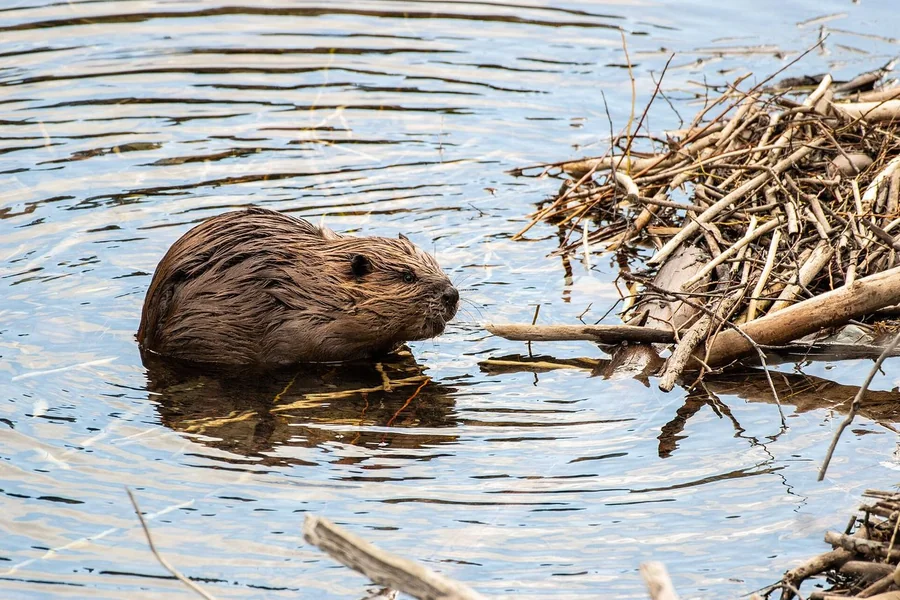
Beaver — flat paddle tail
AI-generated educational wildlife portrait — World Animal Rescue Network
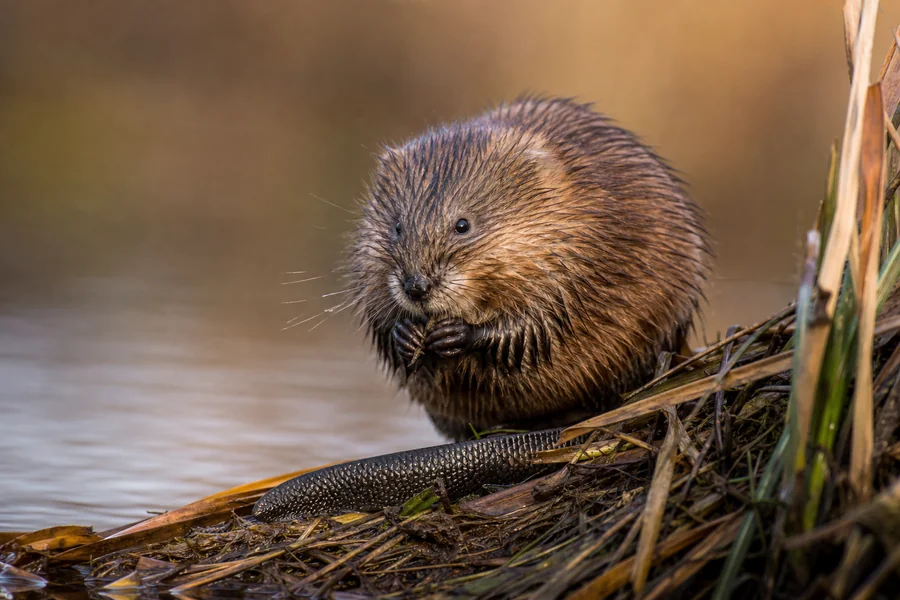
Muskrat — vertically flattened scaly tail
AI-generated educational wildlife portrait — World Animal Rescue Network
Beaver vs Muskrat: At a Glance
| Feature | Beaver | Muskrat |
|---|---|---|
| Adult mass | Roughly 16–30 kg | Roughly 0.7–1.8 kg |
| Tail | Broad, flat paddle | Long, laterally flattened |
| Engineering | Dams, canals, large lodges | Push-up lodges; no true dams |
| Teeth work | Fells trees | Cuts plants; not tree-felling |
| Hind feet | Large, webbed | Partly webbed; smaller |
| Family | Castoridae | Cricetidae |
| Winter strategy | Lodge and food cache | Active under ice; plant foods |
| Trackway clue | Large webbed prints; dragged tail | Smaller prints; thin tail mark |
| Vocal/slap | Tail slap alarm | No beaver-style slap |
| Range note | Native Eurasia/N. America (by species) | Native N. America; introduced elsewhere |
Size and physical differences
Adult beavers commonly weigh about 16–30 kg; muskrats are typically around 0.7–1.8 kg — an order of magnitude lighter.
Beaver versus muskrat is a wetland lookalike problem scaled by body mass. Beavers (Castor) are among the largest rodents, famous for transforming streams with dams. Muskrats (Ondatra zibethicus) are smaller cricetid rodents that also build houses in marshes and eat aquatic plants, but they do not engineer landscapes at beaver scale.
Tail shape is the classic field mark. A beaver’s tail is broad, flat and scaly — a rudder and alarm signal. A muskrat’s tail is long, slender and flattened side-to-side, more like a rat adapted for swimming. Size seals the identification when the animal is seen clearly.
This comparison sticks to marks you can use without laboratory gear: size, shape, behaviour and the words people actually type into a search box. Scientific names are given where they prevent a regional mix-up. Where published measurements disagree, this page gives the range rather than a single tidy figure that implies more certainty than the sources support.
Tail and size end most arguments
If the tail looks like a scaly paddle, it is a beaver. If it looks like a skinny rudder flattened from side to side, it is a muskrat. Combine that with body size: a swimming beaver shows a heavy back and broad head; a muskrat looks more like an oversized vole in the water. Poor light at dusk creates false "baby beaver" reports that are muskrats. True beaver kits are still chunkier than adult muskrats. Field observers should combine silhouette, behaviour and habitat before naming what they see. Where published measurements disagree, this page gives the range rather than a single tidy figure. Treat a single trait as supporting evidence rather than a complete identification. Local field guides remain the final check when similar species share a landscape.
Dams versus marsh houses
Beavers cut woody stems and build dams that raise water levels, creating ponds that benefit many other species and sometimes flood human infrastructure. Muskrats build dome lodges or bank burrows from plants and mud without beaver-scale hydrology. Finding felled trees with distinctive chisel tooth marks is beaver evidence. Finding chewed cattails and a smaller vegetation mound is muskrat evidence. Both can occupy the same marsh complex. Field observers should combine silhouette, behaviour and habitat before naming what they see. Where published measurements disagree, this page gives the range rather than a single tidy figure. Treat a single trait as supporting evidence rather than a complete identification. Local field guides remain the final check when similar species share a landscape. When evidence is thin, prefer a broader label over a false precise name.
Ecology roles
Beavers are textbook ecosystem engineers. Their ponds change nutrient cycling, bird habitat and fish communities. Muskrats influence vegetation by intensive herbivory and provide prey for mink, foxes and raptors. Management responses differ: beaver conflicts often involve water level devices and dam management; muskrat issues more often involve bank burrows in dikes or dense vegetation cutting. Using one word for both animals scrambles those toolkits. Field observers should combine silhouette, behaviour and habitat before naming what they see. Where published measurements disagree, this page gives the range rather than a single tidy figure. Treat a single trait as supporting evidence rather than a complete identification. Local field guides remain the final check when similar species share a landscape. When evidence is thin, prefer a broader label over a false precise name.
Why people confuse them
Both leave V-shaped wakes, both dive when startled, and both occur near cattails and willow edges. Binoculars on the tail solve more disputes than arguments about colour. In Europe, introduced muskrats and recovering beavers can share catchments, which renews the comparison for a new audience. Photograph the tail if you can do so without disturbance. Field observers should combine silhouette, behaviour and habitat before naming what they see. Where published measurements disagree, this page gives the range rather than a single tidy figure. Treat a single trait as supporting evidence rather than a complete identification. Local field guides remain the final check when similar species share a landscape. When evidence is thin, prefer a broader label over a false precise name.
Why the comparison matters
Wetland surveys, damage reports and school field trips need the right rodent. Accurate names keep advice attached to the animal present. WARN publishes these comparisons so high-intent questions get a sourced answer instead of an unsourced listicle. Field observers should combine silhouette, behaviour and habitat before naming what they see. Where published measurements disagree, this page gives the range rather than a single tidy figure. Treat a single trait as supporting evidence rather than a complete identification. Local field guides remain the final check when similar species share a landscape. When evidence is thin, prefer a broader label over a false precise name. Field observers should combine silhouette, behaviour and habitat before naming what they see. Where published measurements disagree, this page gives the range rather than a single tidy figure.
Did you know?
A beaver’s tail slap on water is an alarm signal that can send an entire family diving for the lodge entrance.
Beaver vs Muskrat: FAQs
What is the difference between a beaver and a muskrat?
Do muskrats build dams?
Is a muskrat a baby beaver?
Which tail is flat?
Can they live in the same pond?
Are beavers and muskrats related?
Help protect animals
Learning about animals can help more people understand their needs. WARN raises funds for eligible animal-welfare organisations. Read the relevant appeal’s purpose, recipient status and fund terms, or share this free guide to raise awareness.